Kirjojen hintavertailu. Mukana 12 595 353 kirjaa ja 12 kauppaa.

Kirjailija

Joe Sacco

Kirjat ja teokset yhdessä paikassa: 28 kirjaa, julkaisuja vuosilta 2002-2026, suosituimpien joukossa Gazan sota. Vertaile teosten hintoja ja tarkista saatavuus suomalaisista kirjakaupoista.

28 kirjaa

Kirjojen julkaisuhaarukka 2002-2026.

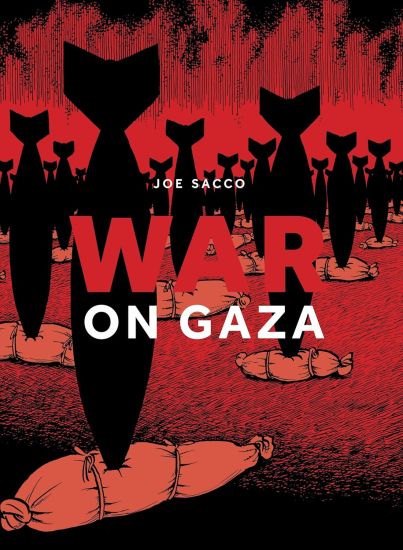
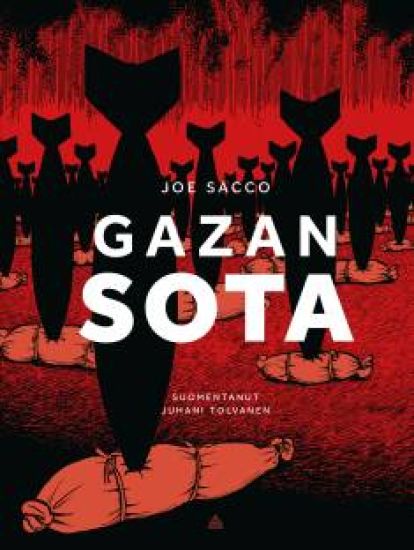
Gazan sota

Gazan sota

Joe Sacco

WSOY
2025
sidottu
Voimakas sarjakuvakommentti Gazan tapahtumiin.Gazan sota on aikamme arvostetuimman sarjakuvajournalistin ajankohtainen, satiirinen sarjakuvaessee Israelin tuoreista sotatoimista Gazassa.Joe Saccon uusi sarjakuva Gazan sota kuvaa viiltävän terävästi tuhoa ja palestiinalaisten sortoa Gazan kaistalla Hamasin lokakuun 2023 terrori-iskun jälkeen.Gazan sota paljastaa konfliktin moraalittomuuden ja sen kauheat ja traagiset seuraukset. Israelin ja USA:n toimintaa kritisoiva teos on Saccolle ominainen yhdistelmä rehellisyyttä, myötätuntoa ja mustaa huumoria.”Joskus kuva ja sana ovat yhdessä enemmän kuin osiensa summa. Ja joskus sarjakuva on juuri oikea muoto sotajournalismille.” Arla Kanerva, Helsingin Sanomat.Joe Sacco (s. 1960) on maltalaissyntyinen sarjakuvapiirtäjä ja journalisti. Yhdysvaltoihin 12-vuotiaana muuttanut Sacco tunnetaan palkituista reportaasisarjakuvistaan, joista on aiemmin suomennettu Palestiina (WSOY 2004).
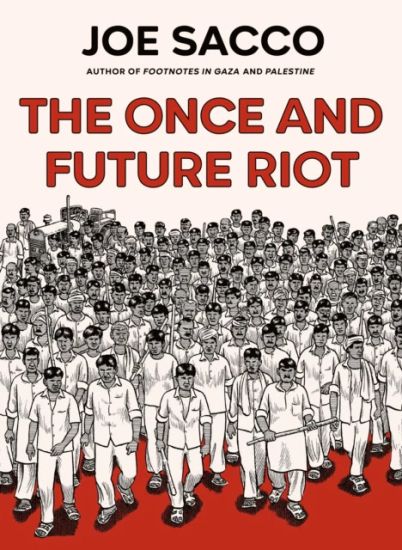
The Once and Future Riot

The Once and Future Riot

Joe Sacco

Vintage Publishing
2025
sidottu
From luminary graphics journalist, a revelatory investigation of the deadly sectarian riots in 2013 Uttar Pradesh, India, and their urgent global significanceCompared to other episodes of lethal Indian communal violence, the clashes in Uttar Pradesh in 2013, the Muzaffarnagar Riot, were a relatively small-scale affair. It had happened before and will probably happen again: Hindus and Muslims, armed with guns and swords, riled up by vitriolic rhetoric and a tangle of accusations, turn on one another. The truth fragments along religious lines, both in the lead-up to the rampage and in its bloody aftermath.Joe Sacco immerses himself in Uttar Pradesh, speaking to government officials, political leaders, village chiefs, and especially the victims, who were mostly landless peasants, in a quest to understand this riot as an archetype of political violence. In the process, he probes the role of savagery in a democracy; the power of crowds, rather than leaders, to influence the course of events; the collision of competing narratives; and the accounts that perpetrators construct to explain away their participation in bloodshed.Sacco has chronicled the urgent histories that define the world around us, from the Great War to Gaza. Here, he turns his masterful visual reportage to a story that is specific to India but with implications and resonance for us all.
The Once and Future Riot

The Once and Future Riot

Joe Sacco

Metropolitan Books
2025
sidottu
From "our greatest living comics journalist" (Minneapolis Star Tribune), a revelatory investigation of deadly sectarian riots in Uttar Pradesh, India, that explores the mechanics, dynamics, mythologies, uses, and abuses of political violence everywhere Compared to other episodes of lethal Indian communal violence, the clashes in Uttar Pradesh in 2013, the Muzaffarnagar Riot, were a relatively small-scale affair--some scores of people were killed and several tens of thousands displaced. It had happened before and will probably happen again: Hindus and Muslims, armed with guns and swords, riled up by vitriolic rhetoric and a tangle of accusations, turn on one another. The truth fragments along religious lines, both in the lead-up to the rampage and in its bloody aftermath. In The Once and Future Riot, Joe Sacco immerses himself in Uttar Pradesh, speaking to government officials, political leaders, village chiefs, and especially the victims, who were mostly landless peasants, in a quest to understand this riot as an archetype of political violence. In the process, he probes the role of savagery in a democracy; the power of crowds, rather than leaders, to influence the course of events; the collision of competing narratives; and the accounts that perpetrators construct to explain away their participation in bloodshed. Hailed as "the heir to R. Crumb and Art Spiegelman" (Economist), Sacco has chronicled the urgent histories that define the world around us, from the Great War to Gaza. Here, he turns his masterful visual reportage to a story that is specific to India but with implications and resonance for all precarious multiethnic, multiracial societies everywhere.
Paying the Land

Paying the Land

Joe Sacco

Metropolitan Books
2025
nidottu
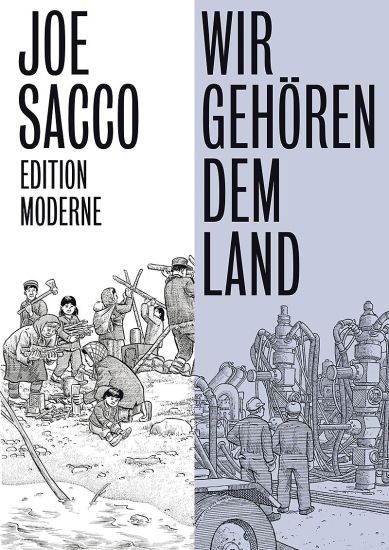
NAMED A BEST BOOK OF 2020 BY THE NEW YORK TIMES, THE GUARDIAN, THE BROOKLYN RAIL, THE GLOBE AND MAIL, POP MATTERS, COMICS BEAT, AND PUBLISHERS WEEKLYFrom the "heir to R. Crumb and Art Spiegelman" (The Economist), a masterful work of comics journalism about indigenous North America, resource extraction, and our debt to the natural world The Dene have lived in the vast Mackenzie River Valley since time immemorial, by their account. To the Dene, the land owns them, not the other way around, and it is central to their livelihood and very way of being. But the subarctic Canadian Northwest Territories are home to valuable resources, including oil, gas, and diamonds. With mining came jobs and investment, but also road-building, pipelines, and toxic waste, which scarred the landscape, and alcohol, drugs, and debt, which deformed a way of life. In Paying the Land, Joe Sacco travels the frozen North to reveal a people in conflict over the costs and benefits of development. The mining boom is only the latest assault on indigenous culture: Sacco recounts the shattering impact of a residential school system that aimed to "remove the Indian from the child"; the destructive process that drove the Dene from the bush into settlements and turned them into wage laborers; the government land claims stacked against the Dene Nation; and their uphill efforts to revive a wounded culture. Against a vast and gorgeous landscape that dwarfs all human scale, Paying the Land lends an ear to trappers and chiefs, activists and priests, to tell a sweeping story about money, dependency, loss, and culture--recounted in stunning visual detail by one of the greatest cartoonists alive.
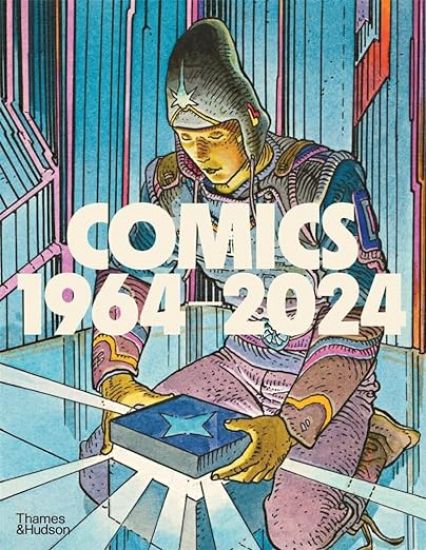
Comics (1964–2024)

Comics (1964–2024)

Joe Sacco; Lucas Hureau; Marguerite Demoëte

THAMES HUDSON LTD
2024
nidottu
A brilliantly illustrated survey of the international comic book landscape over the past sixty years. Published to accompany a major exhibition at Centre Pompidou, Paris in May 2024, this is a timely reframing of the international comics landscape over the past six decades. From the mid-1960s, the world of comics rapidly evolved into a highly creative art form for a sophisticated readership: in France, the magazine Hara-Kiri provided new terrains for graphical humour, while the adventures of Jean-Claude Forest’s Barbarella were published in albums by Éric Losfeld; the launch in Japan of Garo in 1964, an avant-garde monthly, presented the concept of auteur comics; and the release of Robert Crumb’s Zap Comix in 1968 established his reputation as the leader of the underground comics movement in the United States. For the first time, this major historical survey of the ninth art establishes a dialogue between the three leading regions of comic book culture – Europe, Asia and America – and offers an immersive odyssey of the medium through its development over six decades ranging from the explosion of the twentieth-century counterculture scene to the most abstract contemporary styles. Built around twelve themes encompassing the many worlds of the comics imagination, Comics: 1964–2024 features artists including André Franquin, Gotlib, Claire Bretécher, Osamu Tezuka, Moebius, Edmond Baudoin, Alison Bechdel, Ulli Lust, Art Spiegelman, Marjane Satrapi and Chris Ware, as well as introductions on each theme by leading authorities of the form, a brand new interview with renowned cartoonist and journalist Joe Sacco, and a foreword by Paul Gravett.
Paying the Land

Paying the Land

Joe Sacco

Jonathan Cape Ltd
2020
sidottu
In his first full-length work of journalism in a decade, the 'heir to R. Crumb and Art Spiegelman' (Economist) brings his comics mastery to a story of indigenous North America, resource extraction, and our debt to the natural world*A GUARDIAN BOOK OF THE YEAR* The Dene have lived in the vast Mackenzie River Valley since time immemorial, by their account. To the Dene, the land owns them, not the other way around-it is central to their livelihood and their very way of being. But the subarctic Canadian Northwest Territories are also home to valuable natural resources, including oil, gas and diamonds. With mining came jobs and investment-but also road-building, pipelines and toxic waste, which scarred the landscape; and alcohol, drugs, and debt, which deformed a way of life.In Paying the Land, Joe Sacco travels the frozen North to reveal a people in conflict over the costs and benefits of development. Resource extraction is only part of Canada's colonial legacy: Sacco recounts the shattering impact of a residential school system that aimed to remove the Indian from the child; the destructive process that drove the Dene from the bush into settlements and turned them into wage labourers; the government land claims stacked against the Dene Nation; and their uphill efforts to revive a wounded culture.Against a vast and gorgeous landscape that dwarfs all human scale, Paying the Land lends an ear to trappers and chiefs, activists and priests, telling a sweeping story about money and dependency, loss and culture, with stunning visual detail by one of the greatest comics reporters alive.
Paying the Land

Paying the Land

Joe Sacco

Metropolitan Books
2020
sidottu
NAMED A BEST BOOK OF 2020 BY THE NEW YORK TIMES, THE GUARDIAN, THE BROOKLYN RAIL, THE GLOBE AND MAIL, POP MATTERS, COMICS BEAT, AND PUBLISHERS WEEKLYFrom the "heir to R. Crumb and Art Spiegelman" (The Economist), a masterful work of comics journalism about indigenous North America, resource extraction, and our debt to the natural world The Dene have lived in the vast Mackenzie River Valley since time immemorial, by their account. To the Dene, the land owns them, not the other way around, and it is central to their livelihood and very way of being. But the subarctic Canadian Northwest Territories are home to valuable resources, including oil, gas, and diamonds. With mining came jobs and investment, but also road-building, pipelines, and toxic waste, which scarred the landscape, and alcohol, drugs, and debt, which deformed a way of life. In Paying the Land, Joe Sacco travels the frozen North to reveal a people in conflict over the costs and benefits of development. The mining boom is only the latest assault on indigenous culture: Sacco recounts the shattering impact of a residential school system that aimed to "remove the Indian from the child"; the destructive process that drove the Dene from the bush into settlements and turned them into wage laborers; the government land claims stacked against the Dene Nation; and their uphill efforts to revive a wounded culture. Against a vast and gorgeous landscape that dwarfs all human scale, Paying the Land lends an ear to trappers and chiefs, activists and priests, to tell a sweeping story about money, dependency, loss, and culture--recounted in stunning visual detail by one of the greatest cartoonists alive.
Footnotes in Gaza

Footnotes in Gaza

Joe Sacco

Jonathan Cape Ltd
2019
nidottu
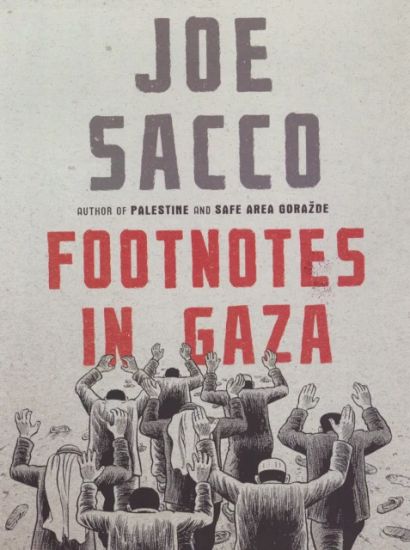
Rafah, a town at the southernmost tip of the Gaza Strip, is a squalid place. Raw concrete buildings front rubbish-strewn alleys. The narrow streets are crowded with young children and unemployed men. Situated on the border with Egypt, swaths of Rafah have been reduced to rubble. Rafah is today and has always been a notorious flashpoint in this most bitter of conflicts.Buried deep in the archives is one bloody incident, in 1956, that left 111 Palestinian refugees dead, shot by Israeli soldiers. Seemingly a footnote to a long history of killing, that day in Rafah - coldblooded massacre or dreadful mistake - reveals the competing truths that have come to define an intractable war. In a quest to get to the heart of what happened, Joe Sacco arrives in Gaza and, immersing himself in daily life, uncovers Rafah, past and present. Spanning fifty years, moving fluidly between one war and the next, alive with the voices of fugitives and schoolchildren, widows and sheikhs, Footnotes in Gaza captures the essence of a tragedy.As in Palestine and Safe Area Goražde, Joe Sacco's unique visual journalism has rendered a contested landscape in brilliant, meticulous detail. Footnotes in Gaza, his most ambitious work to date, transforms a critical conflict of our age into intimate and immediate experience.
Journalism

Journalism

Joe Sacco

Vintage Publishing
2018
pokkari
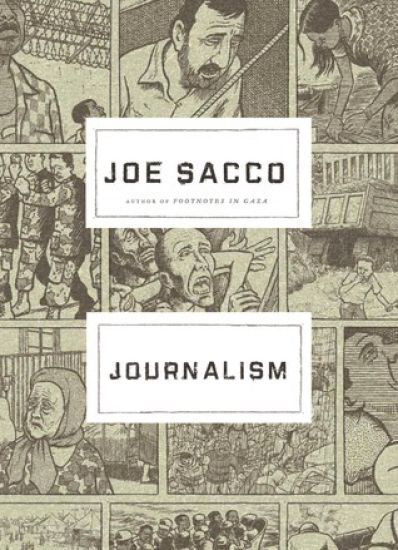
In my view, that is part of its message' - from the preface by Joe SaccoOver the past decade, Joe Sacco has increasingly turned to short-form com-ics journalism to report from conflict zones around the world.
Bumf

Bumf

Joe Sacco

Vintage
2014
pokkari
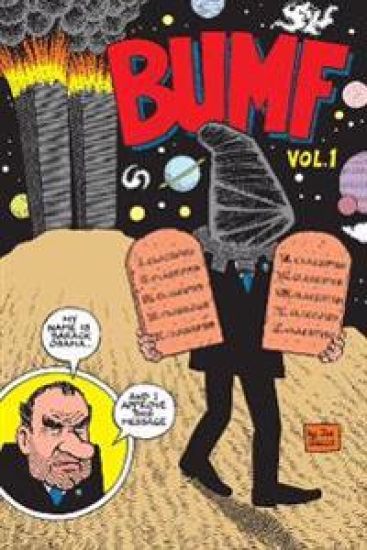
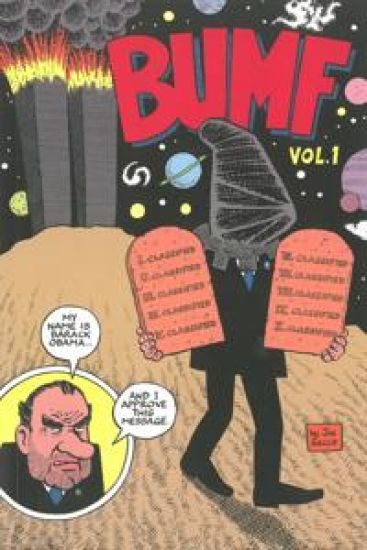
Joe Sacco is renowned for his non-fiction books of comics journalism like Palestine, Safe Area Gorazde and Footnotes in Gaza. In the vein of the old underground comix like ZAP or Weirdo, Bumf will be puerile, disgusting, and beyond redemption. It will go where it wants to go, and do what it wants to do.
Bumf Volume 1

Bumf Volume 1

Joe Sacco

Fantagraphics
2014
nidottu
In the vein of the old underground comix like ZAP or Weirdo, author Joe Sacco promises that BUMF will go where it needs to go, and do what it needs to do. Though world-famous for his serious, journalistic books like Palestine, Safe Area Gorazde, and Footnotes in Gaza, Bumf promises to echo back to Sacco s earlier days as a satirist and underground cartoonist. Bumf is a project that Sacco has been working on in between larger projects like Footnotes in Gaza, indulging his love of satire and cartooning. Often puerile, disgusting, and beyond redemption, Sacco apologized in advance, saying he couldn t help himself. They expect better things from me. They ll never put me on a stamp now. "
Days of Destruction, Days of Revolt

Days of Destruction, Days of Revolt

Chris Hedges; Joe Sacco

Nation Books
2014
pokkari
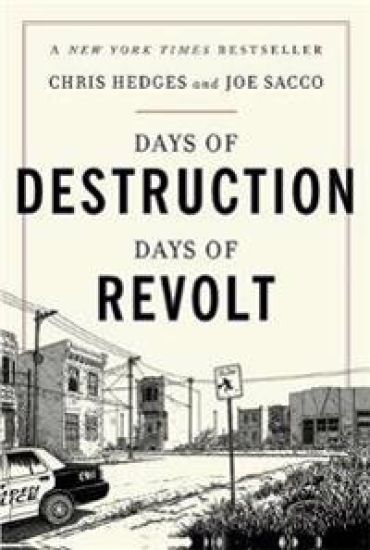
Named a Best Book of the Year by Amazon.com and the Washington Post Three years ago, Pulitzer Prize-winner Chris Hedges and award-winning cartoonist and journalist Joe Sacco set out to take a look at the sacrifice zones, those areas in America that have been offered up for exploitation in the name of profit, progress, and technological advancement. They wanted to show in words and drawings what life looks like in places where the marketplace rules without constraints, where human beings and the natural world are used and then discarded to maximize profit. Days of Destruction, Days of Revolt is the searing account of their travels.
Journalism

Journalism

Joe Sacco

Metropolitan Books
2013
nidottu
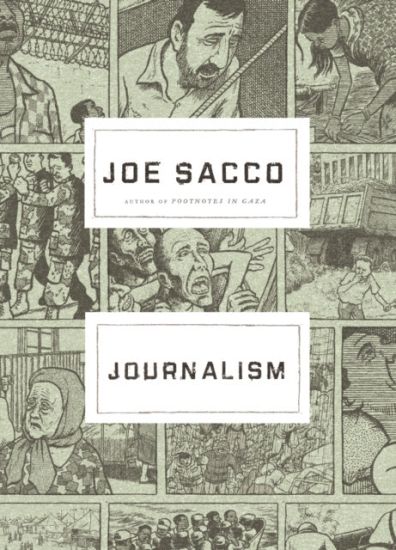
"The images Sacco draws are so powerful that they burn deep into your retina and reconfigure how you see the world... Journalism displays Sacco at the top of his game." National Post (Toronto)Over the past decade, Joe Sacco has increasingly turned to short-form comics journalism to report from conflict zones around the world. Collected here for the first time, Sacco's darkly funny, revealing reportage confirms his standing as one of the foremost war correspondents working today. Journalism takes readers from the smuggling tunnels of Gaza to war crimes trials in The Hague, from the lives of India's "untouchables" to the ordeal of Saharan refugees washed up on the shores of Malta. And in pieces never published before in the United States, Sacco confronts the misery and absurdity of the war in Iraq, including the darkest chapter in recent American history the torture of detainees.Vividly depicting Sacco's own interactions with the people he meets, the stories in this remarkable collection argue for the essential truth in comics reportage, an inevitably subjective journalistic endeavor. Among Sacco's most mature and accomplished work, Journalism demonstrates the power of our premier cartoonist to chronicle lived experience with a force that often eludes other media."
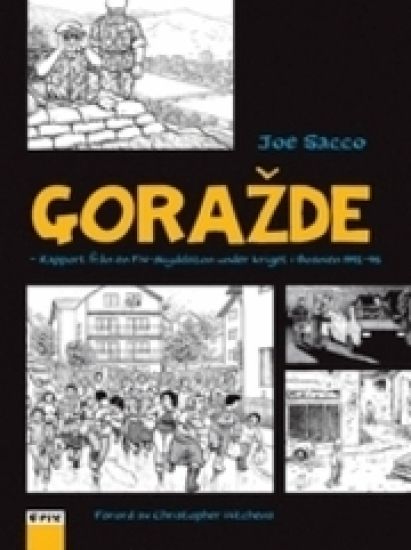
Gorazde : rapport från en FN-skyddszon under kriget i Bosnien 1992-95
Det skulle inte kunna hända igen efter andra världskriget. Inte efter kalla krigets slut. Inte nu, när kommunismen, detta ondskans imperium, äntligen besegrats av Demokratin och Den fria marknaden. Inte mitt i Europa. Men det hände igen ändå. I Jugoslavien 1991-1999. Krig mitt i Europa. Världssamfundet verkade stå handfallet när grannar massakrerade, torterade, fördrev grannar. Maktlöst inför alla sönderskjutna byar och etniska rensningar. Uppgivet inför allt fler rapporter om mass-slakter, koncentrationsläger och systematiska våldtäkter. Som bäst kunde man skicka lite hjälpsändningar och inrätta skyddade zoner i FN:s regi. Utan att ge FN mandat att försvara dessa skyddade zoner. Däremot förstod politiker, journalister, historiker, experter och de tongivande professionella intellektuella snart varför det som inte skulle kunna hända igen, mitt i Europa, hade hänt igen ändå: Det berodde förstås på den primitiva, grälsjuka Balkan-mentaliteten. På Tysklands sammansvärjning med storkroatiska fascister mot Serbien. På folkmordiska drömmar om ett Storserbien. På USA som ville slå sönder Europas sista socialistiska stat och inlemma spillrorna i sitt globala imperium. På Balkans Hitler, den serbiske presidenten Milosevic. Eller bara på ett ödesdigert utbrott av ren och skär ondska. Efter att ha läst seriejournalisten Joe Saccos intensiva, gripande och märkligt upplyftande porträtt av människorna i skyddszonen Gorazde, som i över tre år hållit stånd mot bosnienserbernas belägring och tunga angrepp, förstår man inte längre varför det som inte skulle kunna hända igen hände ändå. Däremot har man kanske blivit lite klokare. På ett djupt oroande och skrämmande sätt. Och man anar att det som inte ska kunna hända igen, inte efter Jugoslavien, kan hända igen. Även mitt i Europa.
Palestina - Ockuperad nation : rapporter från Gaza och Västbanken
Västbanken och Gazaremsan är sedan 1967 ockuperade av Israel. En av de längsta ockupationerna i modern historia. Kampen mot ockupationen fördes länge av palestinska organisationer i exil. Men 1987 reser sig folket på de ockuperade områdena i den första intifadan. Vintern 1991, när intifadan är på väg att ebba ut, reser journalisten och serietecknaren Joe Sacco, som växt upp med USA:s ensidigt proisraeliska medier, till Palestina för att själv ta reda på hur den andra sidan upplever saken. Han möter människor vars vardag präglas av terror, ockupation, förnedring, trakasserier, fängelse, förstörelse och markstöld. Han talar med bönder och handlare i basarerna, med stenkastande ungdomar och sörjande mödrar, med människor i flyktinglägren, med feminister, lärare, poliser. Sacco hymlar inte med sina egna förutfattade meningar, sina klavertramp och en stor dos självcynism i sin jakt efter nästa sensation att exploatera i sin serie. Resultatet är ett serieportage på över 300 sidor en klassiker i seriekonsten och den politiska dokumentären. Och trots att det har gått 15 år sedan Saccos reportage gjordes är det fortfarande rykande aktuellt. För efter ytterligare en rad av misslyckade "fredsprocesser" har palestiniernas situation blivit än värre, och fred mellan israeler och palestinier, som båda har rätten på sin sida, verkar idag ännu mera avlägsen än den tedde sig då.