Kirjailija
Joe Sonderman
Kirjat ja teokset yhdessä paikassa: 15 kirjaa, julkaisuja vuosilta 2008-2019, suosituimpien joukossa Route 66 in Missouri. Vertaile teosten hintoja ja tarkista saatavuus suomalaisista kirjakaupoista.
15 kirjaa
Kirjojen julkaisuhaarukka 2008-2019.

Route 66 is the "Main Street of America," heralded in song and popular culture. It took a maze of different routes through St. Louis before slashing diagonally across the "Show-Me State" through the beauty of the Ozarks. In between, there are classic motels, diners, tourist traps, and gas stations bathed in flashing and whirling neon lights. Natural wonders include crystal-clear streams, majestic bluffs, and wondrous caverns. Roadside marketers concocted legends about Jesse James, painted advertisements on barns, lived with deadly snakes, or offered curios such as pottery and handwoven baskets. That spirit is alive today at the Wagon Wheel and the Munger-Moss, the Mule, Meramec Caverns, and Ted Drewes Frozen Custard, just to name a few. Their stories are included here.
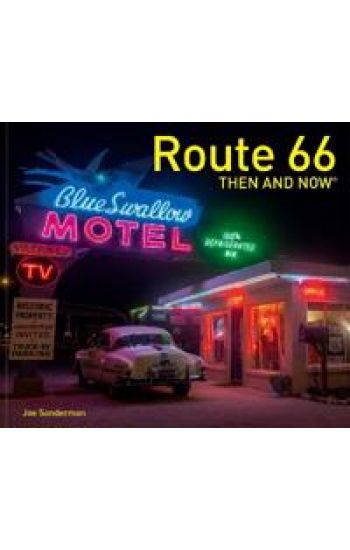
The ‘Mother Road’ or the ‘Will Rogers Highway’ has been open since 1926. Its heyday was the WWII and post-war era and many roadside structures sprang up to cater for the “tin-can tourists” making the journey from East to West. Gas stations, motels, and diners all had to compete for business and what better way to attract attention than with a wacky feature such as a wigwam motel, an iceberg cafe, or a whale-themed diner. Route 66 Then and Now revisits some of these bizarre (and not-so-bizarre) structures to see what’s left before time takes its toll. Some, such as the Magnolia Service Station in Kansas, have been preserved on the National Historic Register; others, such as the Aztec Motel in Albuquerque, are still doing a thriving business; while others have simpy vanished from the landscape. Starting in Chicago, Route 66 Then and Now takes in the motels, cafes, gas stations, roadside attractions and key towns and sites along the route. From the Blue Whale in Catoosa, past Angel Delgadillo’s store in Seligman, Arizona, to the end point in Santa Monica, Route 66 historian Joe Sonderman takes readers on the 2,500-mile trip, illustrated by his fabulous postcard collection. Includes: Illinois: Chicago, Joliet, Dwight, Pontiac, Logan County. Missouri: St. Louis, Lebanon, Springfield, Joplin. Kansas: Galena, Baxter Springs. Oklahoma: Catoosa, Tulsa, Sayre. Texas:Shamrock, Amarillo, Glenrio. New Mexico: Santo Domingo, Gravel Hill, Albuquerque. Arizona: Holbrook, Winslow, Two Guns, Flagstaff, Seligman, Kingman. California: Needles, Amboy, Barstow, Cajon Pass, San Bernadino, Pasadena, Santa Monica.
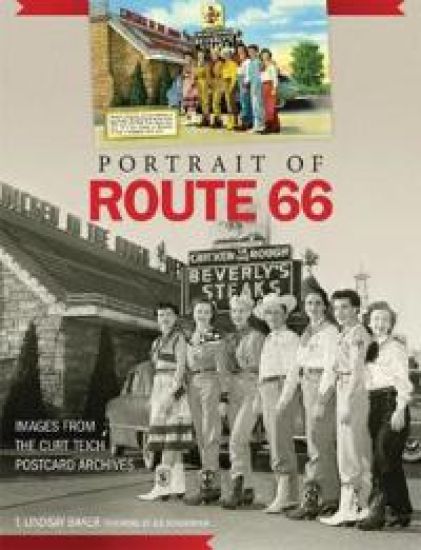
By the time Route 66 received its official numerical designation in 1926, picture postcards had become popular travel souvenirs. At the time, these postcards with colorful images served as advertisements for roadside businesses. While cherished by collectors, these postcard depictions do not always reflect reality. They often present instead a view enhanced for promotional purposes. Portrait of Route 66 lets us see for the first time the actual photographs from which the postcards were made, and in describing how the production process worked, introduces us to an extraordinary archival collection, adding new history to this iconic road. The Curt Teich Postcard Archives, held at the Lake County Discovery Museum in Wauconda, Illinois, contains one of the nation's largest collections of Route 66 images, including thousands of job files for postcards produced by Curt Teich and Company of Chicago. T. Lindsay Baker combed these files to choose the best examples of postcards and their accompanying photographs not only to reflect well-known sites along the route but also to demonstrate the relationships between photographs and their resulting postcards. The photographs show the reality of the locations that customers sometimes wanted ""improved"" for aesthetic purposes in creating the postcards. Such alterations included removing utility poles or automobile traffic and rendering overcast skies partly cloudy. This book will interest historians of art and design as well as the worldwide audiences of Route 66 aficionados and postcard collectors. For its mining of an invaluable and little-known photographic archive and depiction of high-quality photographs that have not been seen before, Portrait of Route 66 will be irresistible to all who are interested in American history and culture.
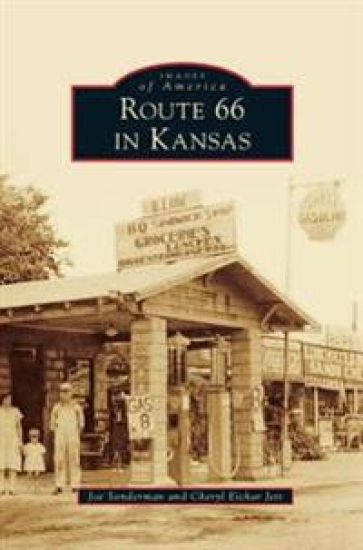
Route 66 in Kansas
Joe Sonderman; Cheryl Eichar Jett
Arcadia Publishing Library Editions
2016
sidottu
There are only 13.2 miles of Route 66 in Kansas, but the Sunflower State packs in as much history and adventure per mile as any of the eight Route 66 states. Route 66 in Kansas includes the wild tales from the days of Red Hot Street and the First Cowtown in Texas. Blood was spilled here during the Civil War and when workers in the mines fought for their rights. Travelers will meet a beloved character from the motion picture Cars, cross a rare Rainbow Bridge, and see classic scenes along the Main Streets. Kansas was completely bypassed and was not even mentioned in the Bobby Troup song (Get Your Kicks) on Route 66, but it would be a major mistake to pass it by today. It deserves to be experienced slowly with the top down and the radio up."

Route 66 in Illinois
Joe Sonderman; Cheryl Eichar Jett
Arcadia Publishing Library Editions
2014
sidottu

Oklahoma is where East and West collide on Route 66, where the rolling hills that reach across its borders from Missouri and Arkansas give way to red earth and Big Sky Country. It is a land of agriculture, oil, and Native America. Route 66 stamped itself into the landscape here in 1926, extending from the state's northeast corner through Tulsa and Oklahoma City to the Texas Panhandle in the west. It was Oklahoma Highway commissioner Cyrus Avery, now known as the "Father of Route 66," who originally championed a major route stretching from Chicago to Los Angeles. Today, its pathway in Oklahoma is rich with small-town ambiance and landmarks, including many of the route's most popular attractions. From the magnificent Coleman Theatre in Miami to the Oklahoma Route 66 Museum in Clinton, the Mother Road across the Sooner State is an explorer's feast.
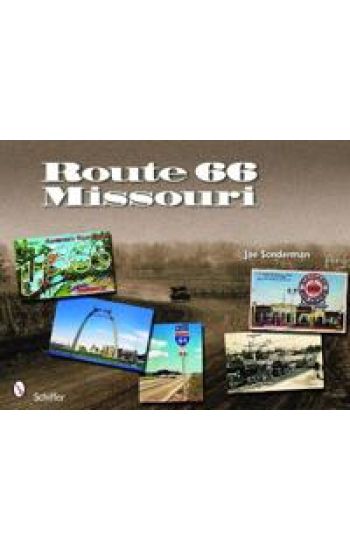
Route 66 Highway, first built in 1926-32, offers a fantastic variety of scenery and history. This segment of the highway, from the Gateway to the West through the beautiful Ozarks, is organized in over 300 vintage postcards and color photos that capture travel on "The Mother Road" across the "Show Me State." There are stops at "no-tell motels," gas stations, cafes, roadside stands, and good, old-fashioned tourist traps. The detailed text provides histories at each stop, including icons such as Coral Court, The Diamonds, Meramec Caverns, and many more. This book is organized first chronologically and then features a tour through the Meramec Valley, from Leasburg to Rolla, the Ozarks, Lebanon to Springfield, and Springfield to the "Ghost Section." Postcard values are included in the captions. For all who enjoy the romance of the open road, this book is a treasure.
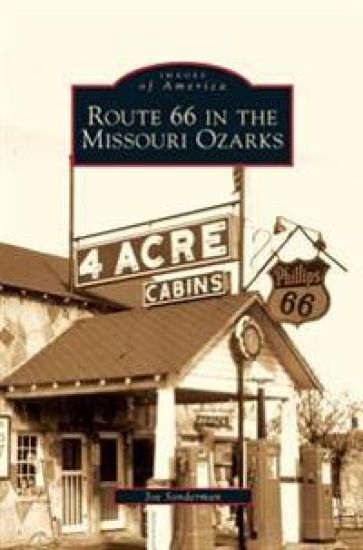
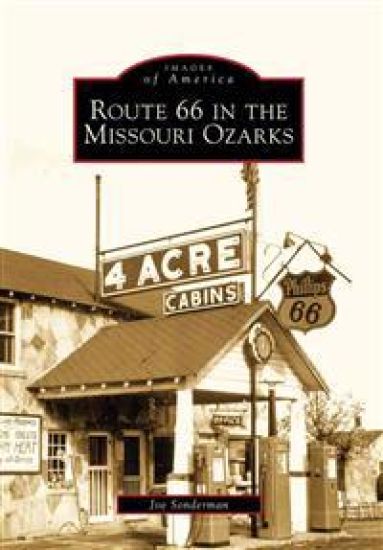
Route 66 in the Missouri Ozarks picks up the journey west where its companion book, Route 66 in St. Louis, leaves off. As Bobby Troup's song says, Route 66 travels "more than 2,000 miles all the way." But one would be hard-pressed to "Show Me" a more scenic and historic segment than the Missouri Ozarks. The highway is lined with buildings covered with distinctive Ozark rock. It winds through a region of deep forests, sparkling streams, hidden caves, and spectacular bluffs. This book will take the traveler from Crawford County to the Kansas line. Along the way, there are small towns and urban centers, hotels and motels, caf s and souvenir stands. Take the time to explore Missouri's Route 66--it is waiting at the next exit.