Kirjojen hintavertailu. Mukana 12 123 475 kirjaa ja 12 kauppaa.

Kirjailija

Joel H. Rosenthal

Kirjat ja teokset yhdessä paikassa: 5 kirjaa, julkaisuja vuosilta 2001-2015, suosituimpien joukossa Ethics and Statecraft. Vertaile teosten hintoja ja tarkista saatavuus suomalaisista kirjakaupoista.

5 kirjaa

Kirjojen julkaisuhaarukka 2001-2015.

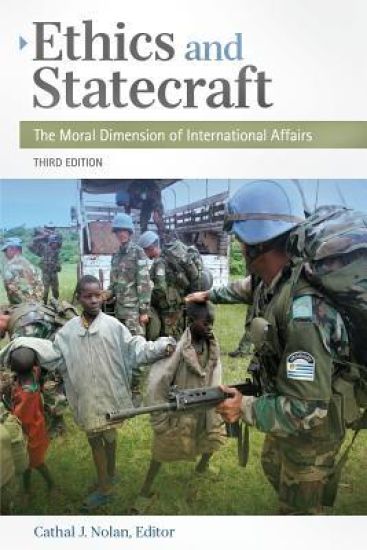
Ethics and Statecraft

Ethics and Statecraft

Joel H. Rosenthal

Praeger Publishers Inc
2015
nidottu
This collection of essays cuts to the quick of the most pressing moral issues facing decision-makers today, from the actions of ordinary soldiers in a combat zone to presidents deciding when and where to use force.Ethics lie at the heart of human and therefore also international affairs, compelling nations to get involved "over there" and dedicate resources to intervention or to justify detachment. The politics and rhetoric of ethics constrain decision-makers, greatly complicating international situations. This third edition of Ethics and Statecraft addresses the moral reasoning behind the art of peacemaking as well as the ethics and statecraft of conducting war. The coverage ranges from historical transformations of whole eras of diplomatic and international history to issues of ethics of bombing and the laws of war. Specific attention is paid to emerging issues such as armed humanitarian intervention and sanctions, drone wars, war crimes, and economic justice. The work is ideally suited for undergraduate and graduate students of international relations, history, political science, and ethics. It will also be useful for NGO officials and military officers struggling with these issues in the field. General readers will find illumination of highly relevant historical issues—including Allied bombing of civilians during World War II—that set precedents for both expansion and limitations on the laws of war. They will also encounter pressing modern-day quandaries, such as the conditions that permit or even require military or humanitarian intervention, and the impact of new technologies on old moral problems.
Ethics and Statecraft

Ethics and Statecraft

Joel H. Rosenthal

Praeger Publishers Inc
2015
sidottu
This collection of essays cuts to the quick of the most pressing moral issues facing decision-makers today, from the actions of ordinary soldiers in a combat zone to presidents deciding when and where to use force.Ethics lie at the heart of human and therefore also international affairs, compelling nations to get involved "over there" and dedicate resources to intervention or to justify detachment. The politics and rhetoric of ethics constrain decision-makers, greatly complicating international situations. This third edition of Ethics and Statecraft addresses the moral reasoning behind the art of peacemaking as well as the ethics and statecraft of conducting war. The coverage ranges from historical transformations of whole eras of diplomatic and international history to issues of ethics of bombing and the laws of war. Specific attention is paid to emerging issues such as armed humanitarian intervention and sanctions, drone wars, war crimes, and economic justice. The work is ideally suited for undergraduate and graduate students of international relations, history, political science, and ethics. It will also be useful for NGO officials and military officers struggling with these issues in the field. General readers will find illumination of highly relevant historical issues—including Allied bombing of civilians during World War II—that set precedents for both expansion and limitations on the laws of war. They will also encounter pressing modern-day quandaries, such as the conditions that permit or even require military or humanitarian intervention, and the impact of new technologies on old moral problems.
Ethics and International Relations

Ethics and International Relations

Joel H. Rosenthal

Ashgate Publishing Limited
2009
sidottu
This volume offers a new dimension to realist theories about world politics. It questions both the theoretical and empirical foundations of much of traditional realist thought by offering realist-oriented analyses that emphasize the possibilities of cooperation and accommodation through agreement over common motivations and concerns. The articles in this volume demonstrate that moral considerations can and do play a significant role in shaping state behavior and that despair about the possibility of improving the systems and institutions within which we live is unwarranted. Specific points of normative convergence are raised in some detail, especially on issues of war, membership and authority, humanitarian concern and the social consequences of globalization. Three ethical concepts form the core of the 'realism reconsidered' argued for here, namely, the ideas of pluralism, rights and fairness.
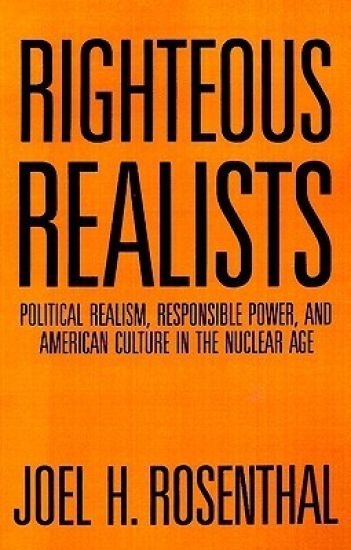
Righteous Realists

Righteous Realists

Joel H. Rosenthal

Louisiana State University Press
2002
nidottu
Political realism in post-World War II America has not been about power alone, but about reconciling power with moral and ethical considerations. The caricature of realism as an expression of amoral realpolitik has been inadequate and false, for realism in the nuclear age has pivoted as much on moral principles as on power politics. Joel H. Rosenthal's survey of five noteworthy self-proclaimed political realists explores the realists' overarching commitment to transforming traditional power politics into a form of ""responsible power"" commensurate with American values.Hans Morgenthau, George Kennan, Reinhold Niebuhr, Walter Lippman, and Dean Acheson, the most important and prolific of the American realists, all fought the excesses of crusading moralism while simultaneously promoting a concept of power politics that retained a moral component at its core. This is the story of how architects of containment, present at the creation of the new bipolar world shaped by the threat of ""mutual assured destruction,"" became ardent critics of that world. It describes realism as a product of a particular time and place, a set of values, assumptions, processes of moral reasoning, and views about America's role in the world.Much of the current scholarship on the modern American realists dwells on the alleged inconsistencies of realism as a political theory, and the tortuous mixture of piety and detachment exhibited in the lives of the realists themselves. Rosenthal takes the opposite tack, assembling the ties that bind realism into a coherent world view, rather than deconstructing it into irreconcilable fragments.Rosenthal maintains that the postwar American realists may be best understood as products of the historical and cultural context from which they emerged. Their attempts to articulate a ""public philosophy"" and integrate values into decision making in international affairs reflected their views on both the way the world ""is"" and the way the world ""ought to be."" This study explains realism as an effort to articulate a prescriptive framework for working toward the ideal while living in the real. In doing so, it reveals the realists' insistence on evaluating competing claims and on accepting paradox as an inevitable component of moral choice.
Never Again?

Never Again?

Joel H. Rosenthal; Peter Ronayne

Rowman Littlefield Publishers
2001
nidottu
Peter Ronayne's Never Again? provides the reader with a provocative and comprehensive first look at American foreign policy as it relates to the prevention and punishment of genocide since the Holocaust. In the aftermath of World War II the United States and the world pledged to "never again" allow genocidal atrocities. Never Again? reveals that too often this bold promise has been a failed promise. The book chronicles how the United States has repeatedly missed opportunities or "ethical leadership moments" to stand up for human rights and save hundreds of thousands of lives when faced with genocide in Cambodia, Bosnia and Rwanda. At the same time, Ronayne explores how the U.S. has taken important action to bring about justice in the aftermath of genocidal crimes, despite its initial reluctance to even ratify the Genocide Convention. From this dual record of striking failures and important accomplishments emerge provocative questions about the United States' leadership on the world stage, global ethics and morality, and America's commitment to genocide prevention and punishment in the 21st century.