Kirjailija
Joel Mokyr
Kirjat ja teokset yhdessä paikassa: 15 kirjaa, julkaisuja vuosilta 1989-2026, suosituimpien joukossa Kreativ förstörelse. Vertaile teosten hintoja ja tarkista saatavuus suomalaisista kirjakaupoista.
15 kirjaa
Kirjojen julkaisuhaarukka 1989-2026.
En unik samling texter av Nobelpristagarna i ekonomi 2025 – Joel Mokyr, Philippe Aghion och Peter Howitt – samlade och redigerade av Johan Norberg. Genom klassiska utdrag, nyskrivna resonemang och banbrytande texter om innovation och tillväxt tecknas en bild av de idéer som format vår förståelse av ekonomisk utveckling. Med bidrag även från Nobelkommitténs ledamöter ger boken både fördjupning och sammanhang till ett av vår tids mest inflytelserika forskningsfält. Joel Mokyr är en av de ledande forskarna om den industriella revolutionens orsaker. Philippe Aghion är en av världens främsta tillväxtekonomer och en central utvecklare av teorin om kreativ förstörelse. Peter Howitt är nationalekonom vars banbrytande arbete från 1990-talet har haft stort inflytande på hur ekonomer förstår innovationens roll i ekonomin. Tillsammans belönades de med Sveriges riksbanks pris i ekonomisk vetenskap till Alfred Nobels minne 2025 för att ha förklarat innovationsdriven ekonomisk tillväxt . Under de senaste två århundradena har vi för första gången i världshistorien sett en ihållande ekonomisk tillväxt. Den har lyft mängder med människor ur fattigdom och lagt grunden till dagens välfärd. Ekonomipristagarna Joel Mokyr, Philippe Aghion och Peter Howitt förklarar genom sin forskning och publikationer hur nya innovationer sår ett frö till ytterligare framsteg.
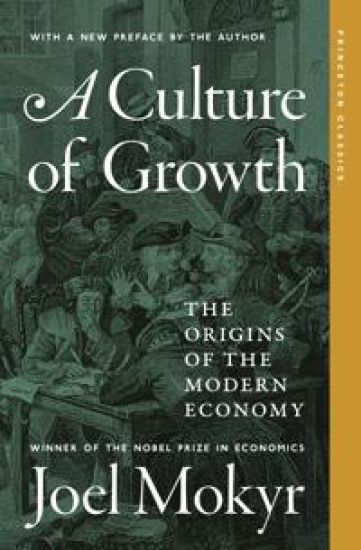
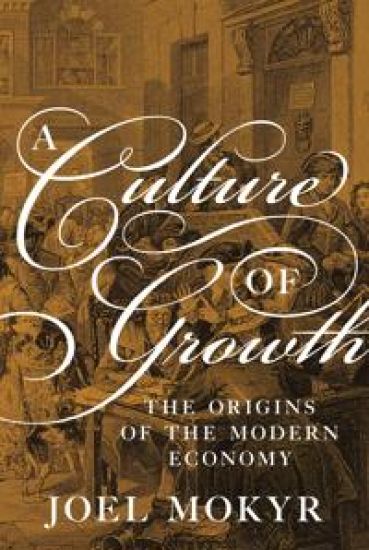
From Nobel Prize–winning economist Joel Mokyr, a revealing look at why Enlightenment culture sparked the Industrial Revolution During the late eighteenth century, innovations in Europe triggered the Industrial Revolution and the sustained economic progress that spread across the globe. While much has been made of the details of the Industrial Revolution, what remains a mystery is why it took place at all. Why did this revolution begin in the West and not elsewhere, and why did it continue, leading to today's unprecedented prosperity? In this groundbreaking book, celebrated economic historian Joel Mokyr argues that a culture of growth specific to early modern Europe and the European Enlightenment laid the foundations for the scientific advances and pioneering inventions that would instigate explosive technological and economic development. Bringing together economics, the history of science and technology, and models of cultural evolution, Mokyr demonstrates that culture—the beliefs, values, and preferences in society that are capable of changing behavior—was a deciding factor in societal transformations. Mokyr looks at the period 1500–1700 to show that a politically fragmented Europe fostered a competitive "market for ideas" and a willingness to investigate the secrets of nature. At the same time, a transnational community of brilliant thinkers known as the “Republic of Letters” freely circulated and distributed ideas and writings. This political fragmentation and the supportive intellectual environment explain how the Industrial Revolution happened in Europe but not China, despite similar levels of technology and intellectual activity. In Europe, heterodox and creative thinkers could find sanctuary in other countries and spread their thinking across borders. In contrast, China’s version of the Enlightenment remained controlled by the ruling elite. Combining ideas from economics and cultural evolution, A Culture of Growth provides startling reasons for why the foundations of our modern economy were laid in the mere two centuries between Columbus and Newton.
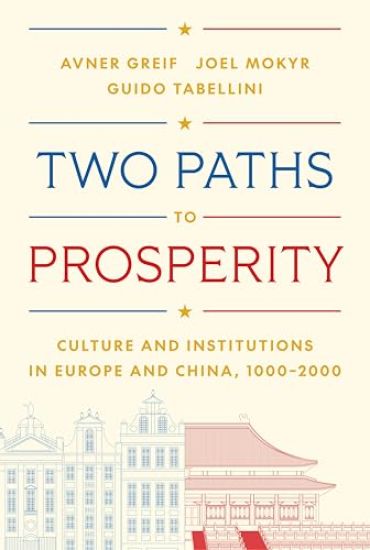
Two Paths to Prosperity
Avner Greif; Joel Mokyr; Guido Tabellini
PRINCETON UNIVERSITY PRESS
2025
sidottu
How the social organization of Europe and China shaped their divergent economic and political trajectories over the past millenniumIn the eleventh century, when Europe was still backward and poor, China was a rich and sophisticated civilization. Yet Europe became the birthplace of democracy and the Industrial Revolution, driving the Great Enrichment, while China stagnated until the end of the twentieth century and was always ruled by autocracies. Two Paths to Prosperity traces the emergence of two very different social organizations in premodern China and Europe—the clan and the corporation—showing how they were key factors in the economic and political divergence of these two great civilizations.In this landmark book, three leading economists offer a bold new account of why Europe and China evolved along such different trajectories. In the early Middle Ages, public goods like risk sharing, religious worship, education, and conflict resolution were provided by nonstate organizations in both societies. China increasingly relied on kin-based cooperation within clans, while weaker kinship ties in Europe gave rise to corporations such as guilds, universities, and self-governing towns. Despite performing similar functions, clans and corporations were built on very different principles—with lasting consequences until today.Providing a novel answer to a fundamental question in economic and political history, Two Paths to Prosperity shows how extended kinship in Chinese society facilitated the consolidation of autocracy and hindered innovation and economic development, and how corporations in Europe influenced emerging state institutions and set the stage for the Industrial Revolution.
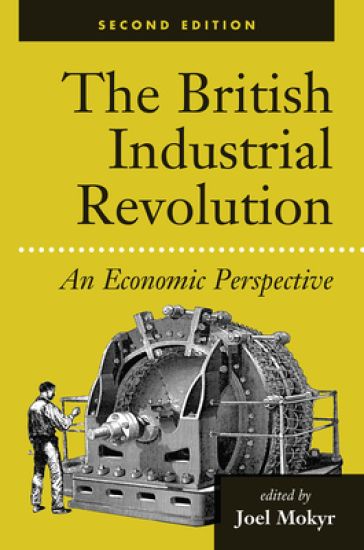
The Industrial Revolution remains a defining moment in the economic history of the modern world. But what kind and how much of a revolution was it? And what kind of ?moment? could it have been? These are just some of the larger questions among the many that economic historians continue to debate. Addressing the various interpretations and assumptions that have been attached to the concept of the Industrial Revolution, Joel Mokyr and his four distinguished contributors present and defend their views on essential aspects of the Industrial Revolution. In this revised edition, all chapters?including Mokyr's extensive introductory survey and evaluation of research in this field?are updated to consider arguments and findings advanced since the volume's initial 1993 publication. Like its predecessor, the revised edition of The British Industrial Revolution is an essential book for economic historians and, indeed, for any historian of Great Britain in the eighteenth and nineteenth centuries.
Why Enlightenment culture sparked the Industrial RevolutionDuring the late eighteenth century, innovations in Europe triggered the Industrial Revolution and the sustained economic progress that spread across the globe. While much has been made of the details of the Industrial Revolution, what remains a mystery is why it took place at all. Why did this revolution begin in the West and not elsewhere, and why did it continue, leading to today's unprecedented prosperity? In this groundbreaking book, celebrated economic historian Joel Mokyr argues that a culture of growth specific to early modern Europe and the European Enlightenment laid the foundations for the scientific advances and pioneering inventions that would instigate explosive technological and economic development. Bringing together economics, the history of science and technology, and models of cultural evolution, Mokyr demonstrates that culture—the beliefs, values, and preferences in society that are capable of changing behavior—was a deciding factor in societal transformations.Mokyr looks at the period 1500–1700 to show that a politically fragmented Europe fostered a competitive "market for ideas" and a willingness to investigate the secrets of nature. At the same time, a transnational community of brilliant thinkers known as the “Republic of Letters” freely circulated and distributed ideas and writings. This political fragmentation and the supportive intellectual environment explain how the Industrial Revolution happened in Europe but not China, despite similar levels of technology and intellectual activity. In Europe, heterodox and creative thinkers could find sanctuary in other countries and spread their thinking across borders. In contrast, China’s version of the Enlightenment remained controlled by the ruling elite.Combining ideas from economics and cultural evolution, A Culture of Growth provides startling reasons for why the foundations of our modern economy were laid in the mere two centuries between Columbus and Newton.
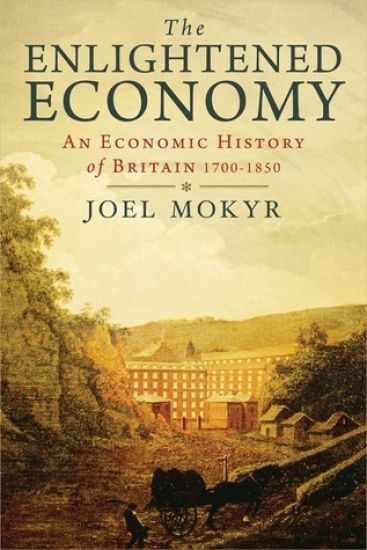
The Enlightened Economy: An Economic History of Britain 1700-1850
Joel Mokyr
YALE UNIVERSITY PRESS
2012
nidottu
An incisive examination of the origins of the modern economy during the Industrial Revolution, from a 2025 Nobel laureate "Spirited and erudite."--Peter Marsh, Financial Times This book focuses on the importance of ideological and institutional factors in the rapid development of the British economy during the years between the Glorious Revolution and the Crystal Palace Exhibition. Joel Mokyr shows that we cannot understand the Industrial Revolution without recognizing the importance of the intellectual sea changes of Britain's Age of Enlightenment. In a vigorous discussion, Mokyr goes beyond the standard explanations that credit geographical factors, the role of markets, politics, and society to show that the beginnings of modern economic growth in Britain depended a great deal on what key players knew and believed, and how those beliefs affected their economic behavior. He argues that Britain led the rest of Europe into the Industrial Revolution because it was there that the optimal intersection of ideas, culture, institutions, and technology existed to make rapid economic growth achievable. His wide-ranging evidence covers sectors of the British economy often neglected, such as the service industries.
Om kapitalismen : perspektiv från Engelsbergsseminariet 2010
Gerard Baker; Erik Berglöf; Edward Chancellor; Rolf Ekéus; Kevin Hassett; Oliver Kamm; John Kay; Deidre McCloskey; Philip Mirowski; Joel Mokyr; Geoff Mulgan; Wolfgang Münchau; Johan Norberg; Avner Offer; Minxin Pei; Carlota Perez; Emma Rotschild; Donald Sassoon; Nathan Shachar; Robert Skidelsky; David Ståhl; Donald Winch
Bokförlaget Atlantis
2011
sidottu
Hur ser kapitalismens framtid ut? Kommer den framgångsrika variant av kapitalism från de senaste decennierna som vi kallar globalisering att fortsätta, eller kommer regionala och kanske till och med starka nationella krafter att vinna mark i ekonomiska frågor? Medverkande: Gerard Baker, Erik Berglöf, Edward Chancellor, Rolf Ekéus, Kevin Hassett, Oliver Kamm, John Kay, Deirdre McCloskey, Philip Mirowski, Joel Mokyr, Geoff Mulgan, Wolfgang Münchau, Johan Norberg, Avner Offer, Minxin Pei, Carlota Perez, Emma Rotschild, Donald Sassoon, Nathan Shachar, Robert Skidelsky, David Ståhl, Donald Winch.
Why did Western countries become so much wealthier than the rest of the world? What explains the huge rise in incomes during the Industrial Revolution - and why did Britain lead the way?In the years between the Glorious Revolution and the Great Exhibition, the British economy was transformed. Joel Mokyr's landmark history offers a wholly new perspective for understanding Britain's extraordinary rise during the Industrial Revolution, showing how intellectual, rather than material, forces were the driving force behind it. While empire, trade, resources and other factors all played a part, above all it was the creative ferment of the Enlightenment - with its belief in progress and scientific advancement - that affected the economic behaviour of thinkers, inventors, entrepreneurs and artisans, taking Britain into the modern era.Linking ideas and beliefs to the heart of modern economic growth, The Enlightened Economy will transform the way we view the Industrial Revolution.
Technical changes in the first half of the nineteenth century led to unprecedented economic growth and capital formation throughout Western Europe; and yet Ireland hardly participated in this process at all. While the Northern Atlantic Economy prospered, the Great Irish Famine of 1845–50 killed a million and a half people and caused hundreds of thousands to flee the country. Why the Irish economy failed to grow, and ‘why Ireland starved’ remains an unresolved riddle of economic history.Professor Mokyr maintains that the ‘Hungry Forties’ were caused by the overall underdevelopment of the economy during the decades which preceded the famine. In Why Ireland Starved he tests various hypotheses that have been put forward to account for this backwardness. He dismisses widespread arguments that Irish poverty can be explained in terms of over-population, an evil land system or malicious exploitation by the British. Instead, he argues that the causes have to be sought in the low productivity of labor and the insufficient formation of physical capital – results of the peculiar political and social structure of Ireland, continuous conflicts between landlords and tenants, and the rigidity of Irish economic institutions.Mokyr’s methodology is rigorous and quantitative, in the tradition of the New Economic History. It sets out to test hypotheses about the causal connections between economic and non-economic phenomena. Irish history is often heavily coloured by political convictions: of Dutch-Jewish origin, trained in Israel and working in the United States. Mokyr brings to this controversial field not only wide research experience but also impartiality and scientific objectivity.The book is primarily aimed at numerate economic historians, historical demographers, economists specializing in agricultural economics and economic development and specialists in Irish and British nineteenth-century history. The text is, nonetheless, free of technical jargon, with the more complex material relegated to appendixes. Mokyr’s line of reasoning is transparent and has been easily accessible and useful to readers without graduate training in economic theory and econometrics since ists first publication in 1983.
The growth of technological and scientific knowledge in the past two centuries has been the overriding dynamic element in the economic and social history of the world. Its result is now often called the knowledge economy. But what are the historical origins of this revolution and what have been its mechanisms? In The Gifts of Athena, Joel Mokyr constructs an original framework to analyze the concept of "useful" knowledge. He argues that the growth explosion in the modern West in the past two centuries was driven not just by the appearance of new technological ideas but also by the improved access to these ideas in society at large--as made possible by social networks comprising universities, publishers, professional sciences, and kindred institutions. Through a wealth of historical evidence set in clear and lively prose, he shows that changes in the intellectual and social environment and the institutional background in which knowledge was generated and disseminated brought about the Industrial Revolution, followed by sustained economic growth and continuing technological change. Mokyr draws a link between intellectual forces such as the European enlightenment and subsequent economic changes of the nineteenth century, and follows their development into the twentieth century. He further explores some of the key implications of the knowledge revolution. Among these is the rise and fall of the "factory system" as an organizing principle of modern economic organization. He analyzes the impact of this revolution on information technology and communications as well as on the public's state of health and the structure of households. By examining the social and political roots of resistance to new knowledge, Mokyr also links growth in knowledge to political economy and connects the economic history of technology to the New Institutional Economics. The Gifts of Athena provides crucial insights into a matter of fundamental concern to a range of disciplines including economics, economic history, political economy, the history of technology, and the history of science.
The Industrial Revolution remains a defining moment in the economic history of the modern world. But what kind and how much of a revolution was it? And what kind of ?moment? could it have been? These are just some of the larger questions among the many that economic historians continue to debate. Addressing the various interpretations and assumptions that have been attached to the concept of the Industrial Revolution, Joel Mokyr and his four distinguished contributors present and defend their views on essential aspects of the Industrial Revolution. In this revised edition, all chapters?including Mokyr's extensive introductory survey and evaluation of research in this field?are updated to consider arguments and findings advanced since the volume's initial 1993 publication. Like its predecessor, the revised edition of The British Industrial Revolution is an essential book for economic historians and, indeed, for any historian of Great Britain in the eighteenth and nineteenth centuries.
Why are some nations more technically creative than others and why do some highly innovative societies eventually stagnate? In this provocative study of the value and meaning of technological advance, Joel Mokyr considers how past physical and social conditions have influenced the development and reception of new ideas, and shows how these trends can guide future industrial strategies at a time when more countries than ever before are competing for the rewards of technical ingenuity.
First Published in 1990. Routledge is an imprint of Taylor & Francis, an informa company.