Kirjojen hintavertailu. Mukana 12 595 353 kirjaa ja 12 kauppaa.

Kirjailija

Joel Stein

Kirjat ja teokset yhdessä paikassa: 5 kirjaa, julkaisuja vuosilta 2006-2021, suosituimpien joukossa In Defense of Elitism: Why I'm Better Than You and You Are Better Than Someone Who Didn't Buy This Book. Vertaile teosten hintoja ja tarkista saatavuus suomalaisista kirjakaupoista.

5 kirjaa

Kirjojen julkaisuhaarukka 2006-2021.

In Defense of Elitism: Why I'm Better Than You and You Are Better Than Someone Who Didn't Buy This Book
Experience a "brilliant exploration" (Walter Isaacson) of America's political culture war and a hilarious call to arms for the elite, with three chapters on foibles of the pandemic era. "I can think of no one more suited to defend elitism than Stein, a funny man with hands as delicate as a baby full of soft-boiled eggs." --Jimmy Kimmel, host of Jimmy Kimmel Live The night Donald Trump won the presidency, our author Joel Stein, Thurber Prize finalist and former staff writer for Time Magazine, instantly knew why. The main reason wasn't economic anxiety or racism. It was that he was anti-elitist. Hillary Clinton represented Wall Street, academics, policy papers, Davos, international treaties and the people who think they're better than you. People like Joel Stein. Trump represented something far more appealing, which was beating up people like Joel Stein. In a full-throated defense of academia, the mainstream press, medium-rare steak, and civility, Joel Stein fights against populism. He fears a new tribal elite is coming to replace him, one that will fend off expertise of all kinds and send the country hurtling backward to a time of wars, economic stagnation and the well-done steaks doused with ketchup that Trump eats. To find out how this shift happened and what can be done, Stein spends a week in Roberts County, Texas, which had the highest percentage of Trump voters in the country. He goes to the home of Trump-loving Dilbert cartoonist Scott Adams; meets people who create fake news; and finds the new elitist organizations merging both right and left to fight the populists. All the while using the biggest words he knows.
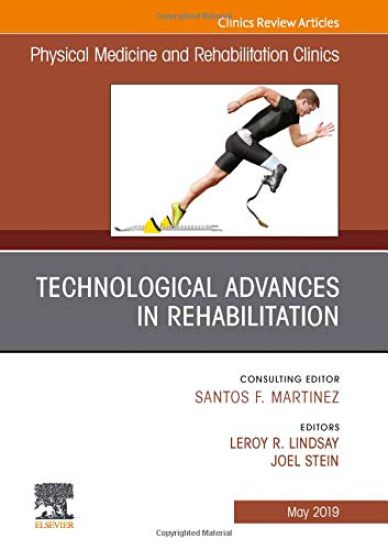
Technological Advances in Rehabilitation, An Issue of Physical Medicine and Rehabilitation Clinics of North America
Guest edited by Drs. Joel Stein and Leroy R. Lindsay, this issue of Physical Medicine and Rehabilitation Clinics will cover several key areas of interest related to Technological Advances in Rehabilitation. This issue is one of four selected each year by our series Consulting Editor, Dr. Santos Martinez of the Campbell Clinic. Articles in this issue include, but are not limited to: Functional Electrical Stimulation; Non-Invasive Brain Stimulation; Spinal Cord Stimulation for Motor Rehabilitation; Robotics for Limb Rehabilitation; Virtual Reality and Gaming; New Technologies in Prosthetics and Amputee Rehabilitation; Regenerative Medicine; Smart Homes and other Technology for Adaptive Living; Big Data and Rehabilitation; and Telemedicine in Rehabilitation.
Man Made: In Which a Dad Learns to Be a Man for His Son
The smudge looked suspiciously penis- like. The doctor confirmed: "That's the baby's penis " which caused not celebration, but panic. Joel pictured having to go camping and fix a car and use a hammer and throw a football and watch professionals throw footballs and figure out whether to be sad or happy about the results of said football throwing. So begins his quest to confront his effete nature whether he likes it or not (he doesn't), by doing a twenty-four-hour shift with L.A. firefighters, going hunting, rebuilding a house, driving a Lamborghini, enduring three days of boot camp with the U.S. Army, day-trading with $100,000, and going into the ring with UFC Hall of Famer Randy Couture. Seeking help from a panel of experts, including his manly father-in-law, Boy Scouts, former NFL star Warren Sapp, former MLB All-Star Shawn Green, Adam Carolla, and a pit bull named Hercules, he expects to learn that masculinity is defined not by the size of his muscles, but by the size of his heart (also, technically, a muscle). This is not at all what he learns.
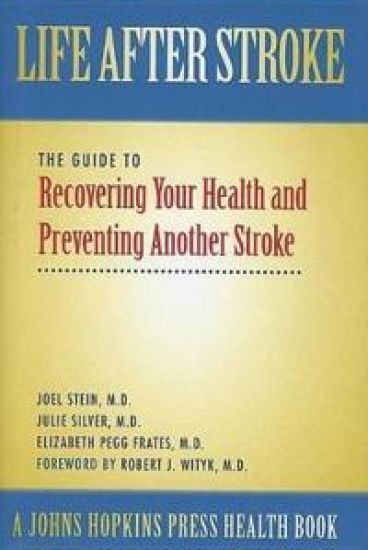
Life After Stroke

Life After Stroke

Joel Stein; Julie K. Silver; Elizabeth Pegg Frates

Johns Hopkins University Press
2006
pokkari
In this compassionate guide, three expert physicians who treat people with stroke describe how to navigate the path to recovery. Their practical advice on treatment, rehabilitation, and lifestyle changes is also designed to help prevent another stroke. Drs. Stein, Silver, and Frates begin by explaining how stroke occurs and what happens when different parts of the brain are injured. They describe diagnostic tools such as CT scans and MRIs as well as medications used to prevent and treat stroke, and they explain in detail how stroke survivors can heal optimally. They also set out plans to help survivors reduce the risk of another stroke, including the Stroke Savvy Exercise Plan and Stroke Savvy Diet Plan. Relating patients' experiences and bringing readers up to date on promising new treatments, Life After Stroke offers hope to stroke survivors and their families.
Life After Stroke

Life After Stroke

Joel Stein; Julie K. Silver; Elizabeth Pegg Frates

Johns Hopkins University Press
2006
sidottu
If you or someone you love has had a stroke, you understand that after a stroke, a person has many questions: "What is a stroke, and why did I have one?" "How can I best recover from my stroke?" "How can I make sure this never happens to me again?" Every 45 seconds someone in this country has a stroke; this means that about five million stroke survivors in the United States are facing these questions and a host of emotional and physical and practical challenges. As medical specialists treating and caring for stroke survivors, Drs. Stein, Silver, and Frates understand these challenges; they wrote this book to help people recover as fully as possible after having a stroke and to explain all of the different things a person can do to prevent a stroke or a recurrent stroke. They explain what a stroke is, how it occurs, and what kinds of injuries it can cause--and they explain all about stroke recovery. They carefully focus on how stroke survivors can work with their doctor to lower their risk of a future stroke, including taking medications and altering their lifestyle. They look at stroke research that will provide better treatment options in the future, and they offer a relatively simple plan for taking control in preventing stroke or recurrent stroke. This book, then, is for anyone whose genetics, physiology, or lifestyle make them susceptible to stroke--in other words, every one of us. It will be especially helpful to people who have already had a stroke and who understand the importance of taking steps to avoid another one. From the Foreword, by Robert J. Wityk MD, Department of Neurology, The Johns Hopkins Hospital: "This book may help you navigate the sometimes confusing corridors of medicine to empower you to take control of your health or that of your loved one. Read it and learn, and then discuss it with your physician. Between your involved interest, what you discover here and your doctor's expertise, your or your loved one's recovery lies in very good hands, indeed."