
Kirjojen hintavertailu. Mukana 12 657 676 kirjaa ja 12 kauppaa.

Kirjailija

Joelle M Abi-Rached

Kirjat ja teokset yhdessä paikassa: 2 kirjaa, julkaisuja vuosilta 2013-2020, suosituimpien joukossa Neuro. Vertaile teosten hintoja ja tarkista saatavuus suomalaisista kirjakaupoista.

Mukana myös kirjoitusasut: Joelle M. Abi-Rached

2 kirjaa

Kirjojen julkaisuhaarukka 2013-2020.

Asfuriyyeh

Asfuriyyeh

Joelle M Abi-Rached

MIT Press
2020
sidottu
?A?furiyyeh (formally, the Lebanon Hospital for the Insane) was founded by a Swiss Quaker missionary in 1896, one of the first modern psychiatric hospitals in the Middle East. It closed its doors in 1982, a victim of Lebanon's brutal fifteen-year civil war. In this book, Joelle Abi-Rached uses the rise and fall of ?A?furiyyeh as a lens through which to examine the development of modern psychiatric theory and practice in the region as well as the sociopolitical history of modern Lebanon.Abi-Rached shows how ?A?furiyyeh's role shifted from a missionary enterprise to a national institution with wide regional influence. She offers a gripping chronicle of patients' and staff members' experiences during the Lebanese Civil War and analyzes the hospital's distinctive nonsectarian philosophy. When ?A?furiyyeh closed down, health in general and mental health in particular became more visibly "sectarianized"-monopolized by various religious and political actors. Once hailed for its progressive approach to mental illness and its cosmopolitanism, ?A?furiyyeh became a stigmatizing term, a byword for madness and deviance, ultimately epitomizing a failed project of modernity. Reflecting on the afterlife of this and other medical institutions, especially those affected by war, Abi-Rached calls for a new "ethics of memory," more attuned to our global yet increasingly fragmented, unstable, and violent present.
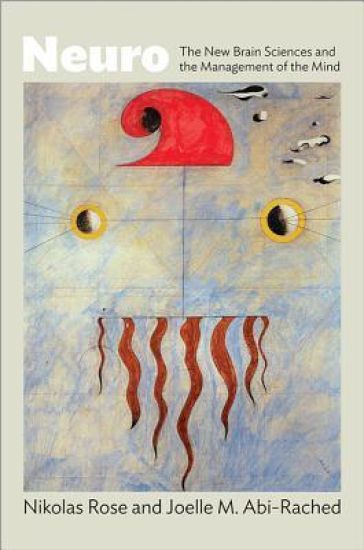
Neuro

Neuro

Nikolas Rose; Joelle M. Abi-Rached

Princeton University Press
2013
pokkari
The brain sciences are influencing our understanding of human behavior as never before, from neuropsychiatry and neuroeconomics to neurotheology and neuroaesthetics. Many now believe that the brain is what makes us human, and it seems that neuroscientists are poised to become the new experts in the management of human conduct. Neuro describes the key developments--theoretical, technological, economic, and biopolitical--that have enabled the neurosciences to gain such traction outside the laboratory. It explores the ways neurobiological conceptions of personhood are influencing everything from child rearing to criminal justice, and are transforming the ways we "know ourselves" as human beings. In this emerging neuro-ontology, we are not "determined" by our neurobiology: on the contrary, it appears that we can and should seek to improve ourselves by understanding and acting on our brains. Neuro examines the implications of this emerging trend, weighing the promises against the perils, and evaluating some widely held concerns about a neurobiological "colonization" of the social and human sciences. Despite identifying many exaggerated claims and premature promises, Neuro argues that the openness provided by the new styles of thought taking shape in neuroscience, with its contemporary conceptions of the neuromolecular, plastic, and social brain, could make possible a new and productive engagement between the social and brain sciences. Copyright note: Reproduction, including downloading of Joan Miro works is prohibited by copyright laws and international conventions without the express written permission of Artists Rights Society (ARS), New York.