Kirjojen hintavertailu. Mukana 12 390 323 kirjaa ja 12 kauppaa.

Kirjailija

Johan Fischer

Kirjat ja teokset yhdessä paikassa: 12 kirjaa, julkaisuja vuosilta 2009-2026, suosituimpien joukossa The Moral Economy of Plant-Based Futures. Vertaile teosten hintoja ja tarkista saatavuus suomalaisista kirjakaupoista.

12 kirjaa

Kirjojen julkaisuhaarukka 2009-2026.

The Moral Economy of Plant-Based Futures

The Moral Economy of Plant-Based Futures

Johan Fischer

TAYLOR FRANCIS LTD
2026
nidottu
The Moral Economy of Plant-Based Futures explores the complex interplay between plant-based social movements and the evolving global economy, offering a timely exploration of how these movements respond to and shape calls for reduced meat and dairy production. While meat and dairy production and consumption are increasingly being held responsible for climate change and general environmental destruction, questions of how social movements respond to and are affected by global calls for a reduction of meat and dairy products remain underexplored in relation to markets. Drawing on extensive fieldwork in Telangana, India, and California, USA, the author adopts a multi-sited, sociomaterial approach to investigate how moral issues intersect with economic arrangements, revealing how movements influence markets and vice versa. It establishes an empirically-based, interdisciplinary research agenda for exploring how the plant-based moral economy is understood, practised and contested at different social levels across both the Global North and South, and advances a broader theorization of the moral economy of plant-based futures. An examination of the interaction of moral issues with economic arrangements, which combines a social movements perspective with a moral economy approach, the book offers a compelling lens for exploring how movements make markets. It will therefore appeal to scholars and students of sociology, anthropology, geography, development, movements and globalization with interests in food, the environment and the moral economy.

The Moral Economy of Plant-Based Futures

The Moral Economy of Plant-Based Futures

Johan Fischer

TAYLOR FRANCIS LTD
2026
sidottu
The Moral Economy of Plant-Based Futures explores the complex interplay between plant-based social movements and the evolving global economy, offering a timely exploration of how these movements respond to and shape calls for reduced meat and dairy production. While meat and dairy production and consumption are increasingly being held responsible for climate change and general environmental destruction, questions of how social movements respond to and are affected by global calls for a reduction of meat and dairy products remain underexplored in relation to markets. Drawing on extensive fieldwork in Telangana, India, and California, USA, the author adopts a multi-sited, sociomaterial approach to investigate how moral issues intersect with economic arrangements, revealing how movements influence markets and vice versa. It establishes an empirically-based, interdisciplinary research agenda for exploring how the plant-based moral economy is understood, practised and contested at different social levels across both the Global North and South, and advances a broader theorization of the moral economy of plant-based futures. An examination of the interaction of moral issues with economic arrangements, which combines a social movements perspective with a moral economy approach, the book offers a compelling lens for exploring how movements make markets. It will therefore appeal to scholars and students of sociology, anthropology, geography, development, movements and globalization with interests in food, the environment and the moral economy.
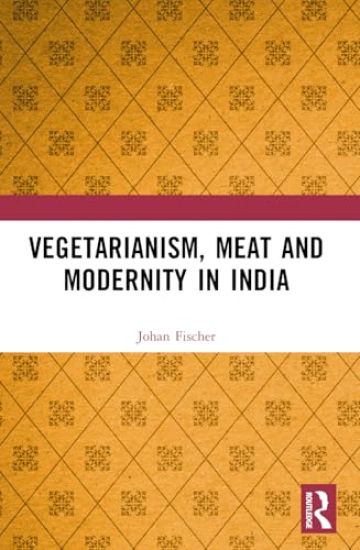
Vegetarianism, Meat and Modernity in India

Vegetarianism, Meat and Modernity in India

Johan Fischer

TAYLOR FRANCIS LTD
2024
nidottu
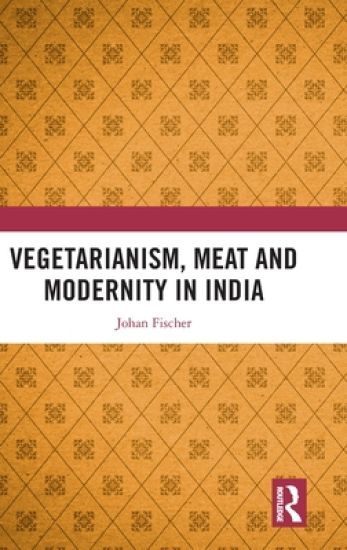
Never before in human history have vegetarianism and a plant-based economy been so closely associated with sustainability and the promise of tackling climate change. Nowhere is this phenomenon more visible than in India, which is home to the largest number of vegetarians globally and where vegetarianism is intrinsic to Hinduism. India is often considered a global model for vegetarianism. However, in this book, which is the outcome of eight months of fieldwork conducted among vegetarian and non-vegetarian producers, traders, regulators and consumers, I show that the reality in India is quite different, with large sections of communities being meat-eaters. In 2011, vegetarian/veg/green and nonvegetarian/ non-veg/brown labels on all packaged foods/drinks were introduced in India. Paradoxically, this grand scheme was implemented at a time when meat and non-vegetarian food production, trade and consumption were booming. The overarching argument of the book is that a systematic study of the complex and changing relationship between vegetarian and non-vegetarian understandings and practices illuminates broader transformations and challenges that relate to markets, the state, religion, politics and identities in India and beyond. The book’s empirical focus is on the changing relationship between vegetarian/ non-vegetarian as understood, practised and contested in middle-class India, while remaining attentive to the vegetarian/non-vegetarian modernities that are at the forefront of global sustainability debates. Through the application of this approach, the book provides a novel theory of human values and markets in a global middle-class perspective.
Vegetarianism, Meat and Modernity in India

Vegetarianism, Meat and Modernity in India

Johan Fischer

TAYLOR FRANCIS LTD
2023
sidottu
Never before in human history have vegetarianism and a plant-based economy been so closely associated with sustainability and the promise of tackling climate change. Nowhere is this phenomenon more visible than in India, which is home to the largest number of vegetarians globally and where vegetarianism is intrinsic to Hinduism. India is often considered a global model for vegetarianism. However, in this book, which is the outcome of eight months of fieldwork conducted among vegetarian and non-vegetarian producers, traders, regulators and consumers, I show that the reality in India is quite different, with large sections of communities being meat-eaters. In 2011, vegetarian/veg/green and nonvegetarian/ non-veg/brown labels on all packaged foods/drinks were introduced in India. Paradoxically, this grand scheme was implemented at a time when meat and non-vegetarian food production, trade and consumption were booming. The overarching argument of the book is that a systematic study of the complex and changing relationship between vegetarian and non-vegetarian understandings and practices illuminates broader transformations and challenges that relate to markets, the state, religion, politics and identities in India and beyond. The book’s empirical focus is on the changing relationship between vegetarian/ non-vegetarian as understood, practised and contested in middle-class India, while remaining attentive to the vegetarian/non-vegetarian modernities that are at the forefront of global sustainability debates. Through the application of this approach, the book provides a novel theory of human values and markets in a global middle-class perspective.
Religion, Regulation, Consumption

Religion, Regulation, Consumption

John Lever; Johan Fischer

Manchester University Press
2021
nidottu
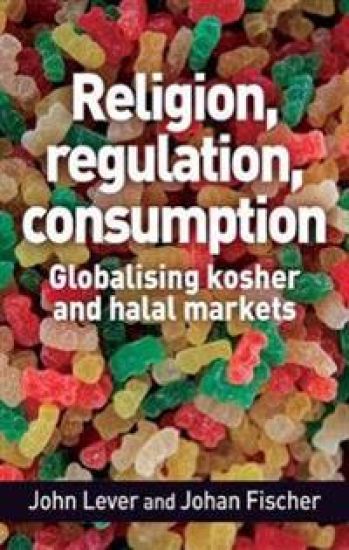
This book explores the emergence and expansion of global kosher and halal markets with a particular focus on the UK and Denmark. Kosher is a Hebrew term meaning 'fit' or 'proper' while halal is an Arabic word that literally means 'permissible' or 'lawful'. This is the first book to explore kosher and halal comparatively at different levels of the social scale such as individual consumption, the marketplace, religious organisations and the state. Kosher and halal markets have become global in scope and states, manufacturers, restaurants, shops, certifiers and consumers around the world are faced with ever stricter and more complex kosher and halal requirements. The research question in this book is: What are the consequences of globalising kosher and halal markets?
Kosher and Halal Business Compliance

Kosher and Halal Business Compliance

John Lever; Johan Fischer

Routledge
2018
sidottu
Kosher is a Hebrew term meaning ‘fit’ or ‘proper’ and halal is an Arabic word that literally means ‘permissible’ or ‘lawful’. Within the last two decades or so, kosher and halal markets have become global in scope and states, manufacturers, restaurants, shops, certifiers and consumers around the world are faced with ever stricter and more complex requirements – most clearly exemplified by Muslim and Jewish groups’ call for kosher and halal certification by third party certification bodies. During this period hundreds of kosher and halal certifiers have emerged around the world, and while thousands of manufacturers, restaurants and shops have been certified, the majority have not. Kosher and halal requirements are comparable, but there are also many differences and the book discusses how these similarities and differences affect production, trade and regulation around the world. The authors research demonstrates that there is a need to address kosher and halal markets simultaneously and answers the question "what characterizes global kosher and halal markets and how can businesses comply with the rising demands and requirements that have emerged?"This is the only book of its kind and it will appeal to manufacturing companies, restaurants and shops that already are or want to be kosher/halal certified. The book can also be assigned in a variety of upper-level undergraduate courses and graduate seminars in business studies, management and marketing. Moreover, the book will be of interest to readers in the natural sciences (for example, food scientists) and outside academia, that is, to state as well as non-state kosher/halal certification bodies, policy makers, interest groups and consultants. Kosher and Halal Business Compliance is accessible in style, global in scope and based on decades of research.
Religion, Regulation, Consumption

Religion, Regulation, Consumption

John Lever; Johan Fischer

Manchester University Press
2018
sidottu
This book explores the emergence and expansion of global kosher and halal markets with a particular focus on the UK and Denmark. Kosher is a Hebrew term meaning 'fit' or 'proper' while halal is an Arabic word that literally means 'permissible' or 'lawful'. This is the first book to explore kosher and halal comparatively at different levels of the social scale such as individual consumption, the marketplace, religious organisations and the state. Kosher and halal markets have become global in scope and states, manufacturers, restaurants, shops, certifiers and consumers around the world are faced with ever stricter and more complex kosher and halal requirements. The research question in this book is: What are the consequences of globalising kosher and halal markets?
Islam, Standards, and Technoscience
This book explores the role of halal production, trade, and standards based on ethnographic material from Malaysia, Singapore, and Europe. It explains how the global markets for halal comprise divergent zones in which Islam, markets, regulatory institutions, and technoscience interact and diverge.
Islam, Standards, and Technoscience
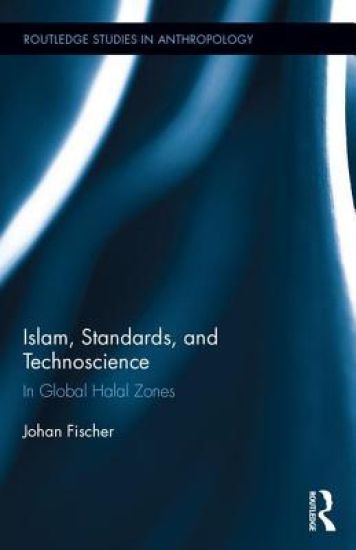
Halal (literally, "permissible" or "lawful") production, trade, and standards have become essential to state-regulated Islam and to companies in contemporary Malaysia and Singapore, giving these two countries a special position in the rapidly expanding global market for halal products: in these nations state bodies certify halal products as well as spaces (shops, factories, and restaurants) and work processes, and so consumers can find state halal-certified products from Malaysia and Singapore in shops around the world. Building on ethnographic material from Malaysia, Singapore, and Europe, this book provides an exploration of the role of halal production, trade, and standards. Fischer explains how the global markets for halal comprise divergent zones in which Islam, markets, regulatory institutions, and technoscience interact and diverge. Focusing on the "bigger institutional picture" that frames everyday halal consumption, Fischer provides a multisited ethnography of the overlapping technologies and techniques of production, trade, and standards that together warrant a product as "halal," and thereby help to format the market. Exploring global halal in networks, training, laboratories, activism, companies, shops and restaurants, this book will be an essential resource to scholars and students of social science interested in the global interface zones between religion, standards, and technoscience.
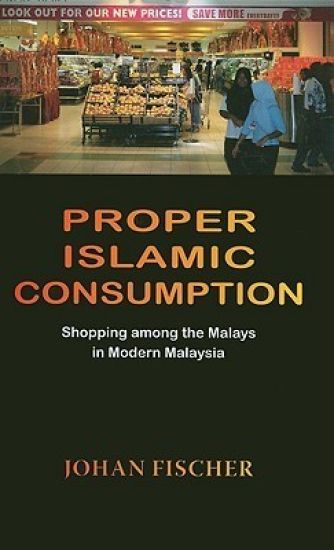
Proper Islamic Consumption

Proper Islamic Consumption

Johan Fischer

NIAS Press
2009
sidottu
Examining the powerful linkages between class, consumption, market relations, Islam and the state in contemporary Malaysia, this is the first book to explore how Malaysia's emerging Malay middle class is constituted through consumer practices and Islamic revivalism. By exploring consumption practices in urban Malaysia, Proper Islamic Consumption shows how diverse forms of Malay middle-class consumption (of food, clothing and cars, for example) are understood, practised and contested as a particular mode of modern Islamic practice. It illustrates ways in which the issue of 'proper Islamic consumption' for consumers, the marketplace and the state in contemporary Malaysia evokes a whole range of contradictory Islamic visions, lifestyles and debates articulating what Islam is or ought to be.
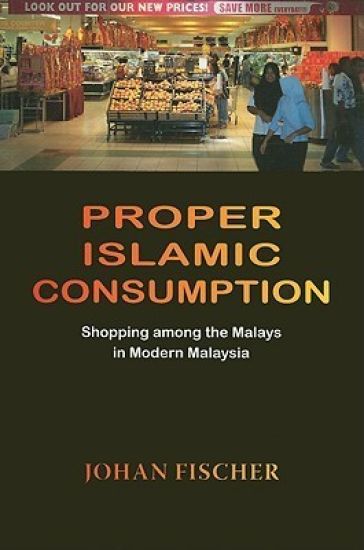
Proper Islamic Consumption

Proper Islamic Consumption

Johan Fischer

NIAS Press
2009
nidottu
Examining the powerful linkages between class, consumption, market relations, Islam and the state in contemporary Malaysia, this is the first book to explore how Malaysia's emerging Malay middle class is constituted through consumer practices and Islamic revivalism. By exploring consumption practices in urban Malaysia, Proper Islamic Consumption shows how diverse forms of Malay middle-class consumption (of food, clothing and cars, for example) are understood, practised and contested as a particular mode of modern Islamic practice. It illustrates ways in which the issue of 'proper Islamic consumption' for consumers, the marketplace and the state in contemporary Malaysia evokes a whole range of contradictory Islamic visions, lifestyles and debates articulating what Islam is or ought to be.