
Kirjailija
Johan Van Benthem
Kirjat ja teokset yhdessä paikassa: 13 kirjaa, julkaisuja vuosilta 1986-2025, suosituimpien joukossa Logic in Games. Vertaile teosten hintoja ja tarkista saatavuus suomalaisista kirjakaupoista.
13 kirjaa
Kirjojen julkaisuhaarukka 1986-2025.
Logic, Information and Agency
Johan van Benthem
CENTRE FOR THE STUDY OF LANGUAGE INFORMATION
2025
nidottu
A systematic study of information dynamics that extends beyond what is found in standard logic textbooks. Everything we do is driven by information, but the dynamic process of acquiring information and adjusting our views based on it has seldom been put at the center place in logic, and there are few textbooks introducing readers to this line of work. The present book introduces the reader to major logical techniques for studying information dynamics and interaction between agents, based on a variety of intuitive scenarios as well as recent research. Readers will learn styles of modeling, as well as the basic features of the new logical systems emanating from this line of work. All the separate strands in the book are brought together in a comprehensive study of information flow and action in games, forming a logic-based complement to standard perspectives in game theory.
Logical Dynamics of Information and Interaction
Johan van Benthem
Cambridge University Press
2014
pokkari
This book develops a view of logic as a theory of information-driven agency and intelligent interaction between many agents - with conversation, argumentation and games as guiding examples. It provides one uniform account of dynamic logics for acts of inference, observation, questions and communication, that can handle both update of knowledge and revision of beliefs. It then extends the dynamic style of analysis to include changing preferences and goals, temporal processes, group action and strategic interaction in games. Throughout, the book develops a mathematical theory unifying all these systems, and positioning them at the interface of logic, philosophy, computer science and game theory. A series of further chapters explores repercussions of the 'dynamic stance' for these areas, as well as cognitive science.
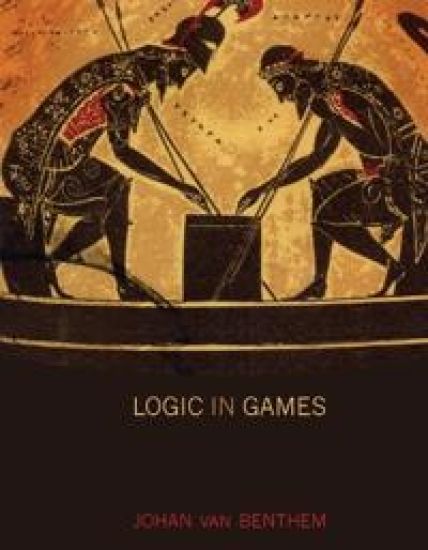
A comprehensive examination of the interfaces of logic, computer science, and game theory, drawing on twenty years of research on logic and games.This book draws on ideas from philosophical logic, computational logic, multi-agent systems, and game theory to offer a comprehensive account of logic and games viewed in two complementary ways. It examines the logic of games: the development of sophisticated modern dynamic logics that model information flow, communication, and interactive structures in games. It also examines logic as games: the idea that logical activities of reasoning and many related tasks can be viewed in the form of games.In doing so, the book takes up the "intelligent interaction" of agents engaging in competitive or cooperative activities and examines the patterns of strategic behavior that arise. It develops modern logical systems that can analyze information-driven changes in players' knowledge and beliefs, and introduces the "Theory of Play" that emerges from the combination of logic and game theory. This results in a new view of logic itself as an interactive rational activity based on reasoning, perception, and communication that has particular relevance for games.Logic in Games, based on a course taught by the author at Stanford University, the University of Amsterdam, and elsewhere, can be used in advanced seminars and as a resource for researchers.

That philosophical themes could be studied in an exact manner by logical meanS was a delightful discovery to make. Until then, the only outlet for a philosophical interest known to me was the production of poetry or essays. These means of expression remain inconclusive, however, with a tendency towards profuseness. The logical discipline provides so me intellectual backbone, without excluding the literary modes. A master's thesis by Erik Krabbe introduced me to the subject of tense logic. The doctoral dissertation of Paul N eedham awaked me (as so many others) from my dogmatic slumbers concerning the latter's mono poly on the logical study of Time. Finally, a set of lecture notes by Frank Veltman showed me how classical model theory is just as relevant to that study as more exotic intensional techniques. Of the authors whose work inspired me most, I would mention Arthur Prior, for his irresistible blend of logic and philosophy, Krister Segerberg, for his technical opening up of a systematic theory, and Hans Kamp, for his mastery of all these things at once. Many colleagues have made helpful comments on the two previous versions of this text. I would like to thank especially my students Ed Brinksma, Jan van Eyck and Wilfried Meyer-Viol for their logical and cultural criticism. The drawings were contributed by the versatile Bauke Mulder. Finally, Professor H intikka's kind appreciation provided the stimulus to write this book.
Logical Dynamics of Information and Interaction
Johan van Benthem
Cambridge University Press
2011
sidottu
This book develops a view of logic as a theory of information-driven agency and intelligent interaction between many agents - with conversation, argumentation and games as guiding examples. It provides one uniform account of dynamic logics for acts of inference, observation, questions and communication, that can handle both update of knowledge and revision of beliefs. It then extends the dynamic style of analysis to include changing preferences and goals, temporal processes, group action and strategic interaction in games. Throughout, the book develops a mathematical theory unifying all these systems, and positioning them at the interface of logic, philosophy, computer science and game theory. A series of further chapters explores repercussions of the 'dynamic stance' for these areas, as well as cognitive science.

The subject of Time has a wide intellectual appeal across different dis ciplines. This has shown in the variety of reactions received from readers of the first edition of the present Book. Many have reacted to issues raised in its philosophical discussions, while some have even solved a number of the open technical questions raised in the logical elaboration of the latter. These results will be recorded below, at a more convenient place. In the seven years after the first publication, there have been some noticeable newer developments in the logical study of Time and temporal expressions. As far as Temporal Logic proper is concerned, it seems fair to say that these amount to an increase in coverage and sophistication, rather than further break-through innovation. In fact, perhaps the most significant sources of new activity have been the applied areas of Linguistics and Computer Science (including Artificial Intelligence), where many intriguing new ideas have appeared presenting further challenges to temporal logic. Now, since this Book has a rather tight composition, it would have been difficult to interpolate this new material without endangering intelligibility.
Modal Logic for Open Minds
Johan van Benthem
Centre for the Study of Language Information
2010
nidottu
In Modal Logic for Open Minds, Johan van Benthem provides an up-to-date introduction to the field of modal logic, outlining its major ideas and exploring the numerous ways in which various academic fields have adopted it. Van Benthem begins with the basic theories of modal logic, semantics, bisimulation, and axiomatics, and also covers more advanced topics, such as expressive power and computational complexity. The book then moves to a wide range of applications, including new developments in information flow, intelligent agency, and games. Taken together, the chapters show modal logic at the crossroads of philosophy, mathematics, linguistics, computer science, and economics. Most of the chapters are followed by exercises, making this volume ideal for undergraduate and graduate students in philosophy, computer science, symbolic systems, cognitive science, and linguistics.

Exploring Logical Dynamics
Johan Van Benthem
Center for the Study of Language and Informat
1996
nidottu
This book is an exploration of current trends in logical theories of information flow across various fields, such as belief revision in computer science or dynamic semantics in linguistics. It provides one mathematical perspective encompassing all of these. This framework generates a new agenda of questions concerning dynamic inference and dynamic operators. The result is a mathematical theory of process models, simulations between these, and modal languages over them, which is developed in quite some detail. New results include theorems on expressive completeness, representation of styles of inference, and new kinds of decidable remodeling for standard logics. This theory is also confronted with practice in computer science, linguistics and philosophy.
The subject of Time has a wide intellectual appeal across different dis ciplines. This has shown in the variety of reactions received from readers of the first edition of the present Book. Many have reacted to issues raised in its philosophical discussions, while some have even solved a number of the open technical questions raised in the logical elaboration of the latter. These results will be recorded below, at a more convenient place. In the seven years after the first publication, there have been some noticeable newer developments in the logical study of Time and temporal expressions. As far as Temporal Logic proper is concerned, it seems fair to say that these amount to an increase in coverage and sophistication, rather than further break-through innovation. In fact, perhaps the most significant sources of new activity have been the applied areas of Linguistics and Computer Science (including Artificial Intelligence), where many intriguing new ideas have appeared presenting further challenges to temporal logic. Now, since this Book has a rather tight composition, it would have been difficult to interpolate this new material without endangering intelligibility.

A Manual of Intentional Logic
Johan Van Benthem
Centre for the Study of Language Information
1988
pokkari
Intensional logic is the technical study of such intensional phenomena in human reasoning as modality, knowledge, or flow of time. These all require a richer semantic picture than standard truth values in one static environment. Such a picture is provided by so-called possible worlds semantics, a paradigm which is surveyed in this book, both as to its external sources of motivation and as to the internal dynamics of the resulting program. In particular, Manual of Intensional Logic presents the major classical topics, including modal logic, tense logic, and conditional logic, all of which illustrate motivations coming from philosophy and linguistics. The Book also discusses recent computational applications in computer science and AI. Finally, Manual of Intensional Logic takes up recent developments in the study of language and information making themselves felt in the area. The Book examines the role of partial information--with illustrations drawn from different branches of Intensional Logic--and various influences stemming from current theories of the semantics of natural language, involving generalized quantifiers and theories of types.

A Manual of Intensional Logic
J. F. A. K. Van Benthem; Johan Van Benthem
Centre for the Study of Language Information
1988
sidottu
Intensional logic is the technical study of such intensional phenomena in human reasoning as modality, knowledge, or flow of time. These all require a richer semantic picture than standard truth values in one static environment. Such a picture is provided by so-called possible worlds semantics, a paradigm which is surveyed in this book, both as to its external sources of motivation and as to the internal dynamics of the resulting program. In particular, Manual of Intensional Logic presents the major classical topics, including modal logic, tense logic, and conditional logic, all of which illustrate motivations coming from philosophy and linguistics. The Book also discusses recent computational applications in computer science and AI. Finally, Manual of Intensional Logic takes up recent developments in the study of language and information making themselves felt in the area. The Book examines the role of partial information--with illustrations drawn from different branches of Intensional Logic--and various influences stemming from current theories of the semantics of natural language, involving generalized quantifiers and theories of types.

Recent developments in the semantics of natural language seem to lead to a genuine synthesis of ideas from linguistics and logic, producing novel concepts and questions of interest to both parent disciplines. This book is a collection of essays on such new topics, which have arisen over the past few years. Taking a broad view, developments in formal semantics over the past decade can be seen as follows. At the beginning stands Montague's pioneering work, showing how a rigorous semantics can be given for complete fragments of natural language by creating a suitable fit between syntactic categories and semantic types. This very enterprise already dispelled entrenched prejudices concerning the separation of linguistics and logic. Having seen the light, however, there is no reason at all to stick to the letter of Montague's proposals, which are often debatable. Subsequently, then, many improvements have been made upon virtually every aspect of the enterprise. More sophisticated grammars have been inserted (lately, lexical-functional grammar and generalized phrase structure grammar), more sensitive model structures have been developed (lately, 'partial' rather than 'total' in their com position), and even the mechanism of interpretation itself may be fine-tuned more delicately, using various forms of 'representations' mediating between linguistic items and semantic reality. In addition to all these refinements of the semantic format, descriptive coverage has extended considerably.