Kirjojen hintavertailu. Mukana 12 595 353 kirjaa ja 12 kauppaa.
Kirjailija
Johanna Drucker
Kirjat ja teokset yhdessä paikassa: 24 kirjaa, julkaisuja vuosilta 1996-2025, suosituimpien joukossa The General Theory of Social Relativity. Vertaile teosten hintoja ja tarkista saatavuus suomalaisista kirjakaupoista.
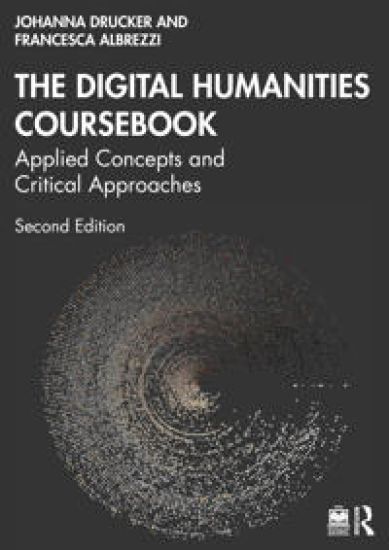
This second edition of The Digital Humanities Coursebook provides critical frameworks for the application of digital humanities tools and platforms, which have become an integral part of work across a wide range of disciplines. This fully updated edition adds several new topics, including XR (extended reality) and AI (artificial intelligence), as well as a companion website developed in parallel with the chapters and providing extended ‘how-to’ examples to enable students and teachers to follow step-by-step demonstrations of tools or platforms.Written in an accessible and engaging manner, the book is focused on the principles and fundamental concepts for application and each chapter contains case study examples of projects, tools and platforms that demonstrate these principles in action. The book clearly details how to integrate the acquisition of expertise in data, metadata, classification, interface, visualization, network analysis, topic modelling, data mining, mapping, and web presentation with issues in intellectual property, sustainability, privacy, and the ethical use of information. By combining practical information and critical issues, the book demonstrates that no application of digital humanities can be separated from ethical and critical concerns.The book is structured to complement courses on digital humanities and provides a series of modules, each of which is organized around a set of concerns and topics, thought experiments and questions, as well as discussions of the ways in which tools and platforms work. Each chapter contains an introduction to the topic, examples of current (and sometimes classic) work being done in the field, a set of exercises to explore the hands-on experience, references, and recommended readings. The Digital Humanities Coursebook will therefore be an indispensable guide for anyone teaching or studying a course in the areas of digital humanities, library and information science, English, or computer science.


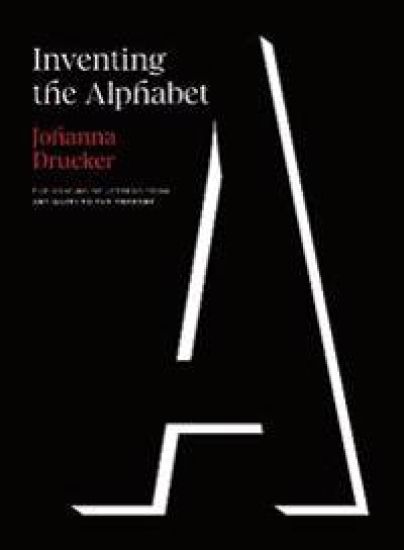
The first comprehensive intellectual history of alphabet studies. Inventing the Alphabet provides the first account of two-and-a-half millennia of scholarship on the alphabet. Drawing on decades of research, Johanna Drucker dives into sometimes obscure and esoteric references, dispelling myths and identifying a pantheon of little-known scholars who contributed to our modern understandings of the alphabet, one of the most important inventions in human history. Beginning with Biblical tales and accounts from antiquity, Drucker traces the transmission of ancient Greek thinking about the alphabet's origin and debates about how Moses learned to read. The book moves through the centuries, finishing with contemporary concepts of the letters in alpha-numeric code used for global communication systems. Along the way, we learn about magical and angelic alphabets, antique inscriptions on coins and artifacts, and the comparative tables of scripts that continue through the development of modern fields of archaeology and paleography. This is the first book to chronicle the story of the intellectual history through which the alphabet has been "invented" as an object of scholarship.
Diagrammatisk skrift er en poetisk demonstration af bogformatets evne til at producere mening. En forunderlig tekst folder sig ud på siderne, der ikke bare læses af en læser, men også af teksten selv, som nysgerrigt holder øje med sine egne semantiske og grafiske udfoldelser på papiret. En tør poetisk dramatik udspiller sig for læserens blik: brødtekster i karambolage med umage marginer, noter i nærkontakt med tekstafsnit på afveje, kolonner som søjler i tilsyneladende tomme rum, enkeltsætninger som monologer om deres egne forsvindingspunkter. En tekstvidenskabelig overflod af viden i litterær form.Den danske udgave er grafisk set 99% (sprog skubber til form) identisk med originaludgaven “Diagrammatic Writing” udgivet i 2014 på forlaget Onomatopee.Johanna Drucker er forfatter og bogkunstner, kendt for sit arbejde inden for eksperimentel typografi. Hun har udgivet andre bøger og holdt foredrag om emner relateret til bogens historie, samtidskunst, grafisk design og digital æstetik. Johanna er Breslauer-professor i bibliografiske studier ved informationsstudiet ved University of California, Los Angeles.Oversat og sat af Kamilla Jørgensen.
The Digital Humanities Coursebook provides critical frameworks for the application of digital humanities tools and platforms, which have become an integral part of work across a wide range of disciplines. Written by an expert with twenty years of experience in this field, the book is focused on the principles and fundamental concepts for application, rather than on specific tools or platforms. Each chapter contains examples of projects, tools, or platforms that demonstrate these principles in action. The book is structured to complement courses on digital humanities and provides a series of modules, each of which is organized around a set of concerns and topics, thought experiments and questions, as well as specific discussions of the ways in which tools and platforms work. The book covers a wide range of topics and clearly details how to integrate the acquisition of expertise in data, metadata, classification, interface, visualization, network analysis, topic modeling, data mining, mapping, and web presentation with issues in intellectual property, sustainability, privacy, and the ethical use of information. Written in an accessible and engaging manner, The Digital Humanities Coursebook will be a useful guide for anyone teaching or studying a course in the areas of digital humanities, library and information science, English, or computer science. The book will provide a framework for direct engagement with digital humanities and, as such, should be of interest to others working across the humanities as well.

A captivating portrait of futurist artist Iliazd infused with the reflections of his accidental biographer on the stickiness of the genre.The poet Ilia Zdanevich, known in his professional life as Iliazd, began his career in the pre-Revolutionary artistic circles of Russian futurism. By the end of his life, he was the publisher of deluxe limited edition books in Paris. The recent subject of major exhibitions in Moscow, his native Tbilisi, New York, and other venues, the work of Iliazd has been prized by bibliophiles and collectors for its exquisite book design and innovative typography. Iliazd collaborated with many major figures of modern art—Pablo Picasso, Sonia Delaunay, Max Ernst, Joán Miro, Natalia Goncharova, and Mikhail Larionov, among others. His 1949 anthology, The Poetry of Unknown Words, was the first international anthology of experimental visual and sound poetry ever published. The list of contributors is a veritable "Who's Who" of avant-garde writing and visual art. And Iliazd's unique hands-on engagement with book production and design makes him the ideal case study for considering the book as a modern art form. Iliazd is the first full-length biography of the poet-publisher, as well as the first comprehensive English-language study of his life and work. Johanna Drucker weaves two stories together: the history of Iliazd's work as a modern artist and poet, and the narrative of the author's encounter with his widow and other figures in the process of researching his biography. Drucker's reflection on what a biographical project entails addresses questions about the relationship between documentary evidence and narrative, between contemporary witnesses and retrospective accounts. Ultimately, Drucker asks how we should understand the connection between the life of an artist and their work. Enriched with photographs from the Iliazd archive and a wealth of primary documents, the book is a vivid account of a unique contributor to modernism—and to the way we continue to reevaluate the history of twentieth-century culture. Accounts of Drucker's research during the mid-1980s in the personal archive of Madame Hélène Zdanevich, the poet's widow, lend the narrative an incredible intimacy. Drucker recounts how, sitting in the studio that Iliazd occupied from the late 1930s until his death in 1975, she was drawn into the circle of scholars who had made him their focus and were doing foundational work on his significance. She also coped with the difference between the widow's view of the artist as a man she loved and Drucker's own perception of Iliazd's significance within a critical approach to history. Iliazd is at once a rich study of a significant figure and a thoughtful reflection on the way a biography creates an encounter with its always absent subject.
In the several decades since humanists have taken up computational tools, they have borrowed many techniques from other fields, including visualization methods to create charts, graphs, diagrams, maps, and other graphic displays of information. But are these visualizations actually adequate for the interpretive approach that distinguishes much of the work in the humanities? Information visualization, as practiced today, lacks the interpretive frameworks required for humanities-oriented methodologies. In this book, Johanna Drucker continues her interrogation of visual epistemology in the digital humanities, reorienting the creation of digital tools within humanities contexts. Drucker examines various theoretical understandings of visual images and their relation to knowledge and how the specifics of the graphical are to be engaged directly as a primary means of knowledge production for digital humanities. She draws on work from aesthetics, critical theory, and formal study of graphical systems, addressing them within the specific framework of computational and digital activity as they apply to digital humanities. Finally, she presents a series of standard problems in visualization for the humanities (including time/temporality, space/spatial relations, and data analysis), posing the investigation in terms of innovative graphical systems informed by probabilistic critical hermeneutics. She concludes with a final brief sketch of discovery tools as an additional interface into which modeling can be worked.
Literary Nonfiction. THE GENERAL THEORY OF SOCIAL RELATIVITY deploys quantum theory, which has been used to describe the physical universe for a century, to the social world, and in so doing presents a radically innovative framework for thinking about social processes. In the early 20th century, theories of quantum physics and general relativity exposed the limits of Newton's classical, mechanical, approach to explaining the forces at work in the physical world. But the social sciences, including critical aesthetics rooted in 19th century political theory, remain caught in a mechanistic paradigm. The formulation of the GTSR offers a non-mechanistic approach to the understanding workings of the social world and the affective forces at work in non-linear politics and aesthetics.
Narrated by an Archaeon, a 3.8 billion year old species, the oldest on earth, Downdrift is a work of speculative eco-fiction that describes the impact of ecological pressures on animals that are adopting human behaviors, with droll and sometimes alarming, results. The book follows a year of changes and the travels of a housecat and a lion who are inexplicably driven towards a rendezvous. At first, a few isolated harbingers of change appear, but they quickly escalate. Squirrels take up manic knitting, wild hares steal earth-moving equipment, rats go in for disco music and form-fitting metallic leisure-ware. Data-sorting abilities appear among urban populations of birds, and frenzied domestic pets seek celebrity careers. Droll, melancholic, and poetic, the tale is crammed with witty vignettes and poignant reflections on the ways the pressures on the once-natural world are accelerating mutations in behaviors among the animals. Genetic material alters. The differences between animals blur. Odd mutant forms appear-goat-chicks and dog-flies, fish-birds and flying lizards-as if some mad rush is propelling genetic code to propagate across every form of flesh and living matter. As large-scale infrastructure projects make their appearance, each of the animals takes the role appropriate to its disposition-or not. Melancholic rather than apocalyptic, the book is a celebration of species as well as a mourning of the damage done in our time. Throughout, the emergent voice and character of the Archaeon extremophile records events as well as a slow coming to consciousness about its own identity as a hyper-organism.
A visionary report on the revitalization of the liberal arts tradition in the electronically inflected, design-driven, multimedia language of the twenty-first century.Digital_Humanities is a compact, game-changing report on the state of contemporary knowledge production. Answering the question "What is digital humanities?," it provides an in-depth examination of an emerging field. This collaboratively authored and visually compelling volume explores methodologies and techniques unfamiliar to traditional modes of humanistic inquiry-including geospatial analysis, data mining, corpus linguistics, visualization, and simulation-to show their relevance for contemporary culture. Written by five leading practitioner-theorists whose varied backgrounds embody the intellectual and creative diversity of the field, Digital_Humanities is a vision statement for the future, an invitation to engage, and a critical tool for understanding the shape of new scholarship.
In our current screen-saturated culture, we take in more information through visual means than at any point in history. The computers and smart phones that constantly flood us with images do more than simply convey information. They structure our relationship to information through graphical formats. Learning to interpret how visual forms not only present but produce knowledge, says Johanna Drucker, has become an essential contemporary skill.Graphesis provides a descriptive critical language for the analysis of graphical knowledge. In an interdisciplinary study fusing digital humanities with media studies and graphic design history, Drucker outlines the principles by which visual formats organize meaningful content. Among the most significant of these formats is the graphical user interface (GUI)—the dominant feature of the screens of nearly all consumer electronic devices. Because so much of our personal and professional lives is mediated through visual interfaces, it is important to start thinking critically about how they shape knowledge, our behavior, and even our identity.Information graphics bear tell-tale signs of the disciplines in which they originated: statistics, business, and the empirical sciences. Drucker makes the case for studying visuality from a humanistic perspective, exploring how graphic languages can serve fields where qualitative judgments take priority over quantitative statements of fact. Graphesis offers a new epistemology of the ways we process information, embracing the full potential of visual forms and formats of knowledge production.
A Fresh Look at the History of Graphic Design Graphic Design History, 2nd edition is a critical approach to the history of graphic design. Organized chronologically, the book demonstrates the connection to the current practices of graphic arts, visual expression, and design with its engaging narrative and special features. With new images, chapter revisions, and features like Tools of the Trade, the authors stay true to connecting what designers do every day to a history of innovative graphic forms and effects. Instructor PowerPoints featuring nearly all of the images from the text make class preparation easier than ever with this new edition. A better teaching and learning experience This program will provide a better teaching and learning experience– for you and your students. Here’s how: Improve Critical Thinking — Chapters are framed by critical issues and historical themes so that students can fully grasp an understanding of the history of graphic design.Engage Students — Timelines and images with detailed captions easily highlight relevant information for students.Support Instructors — high resolution PowerPoint are available for this text.
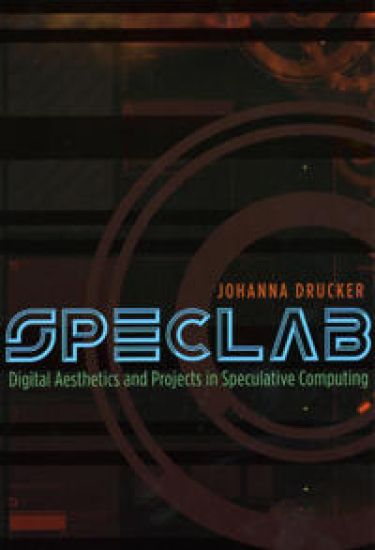
Nearly a decade ago, Johanna Drucker cofounded the University of Virginia's SpecLab, a digital humanities laboratory dedicated to risky projects with serious aims. Here she explores the implications of these radical efforts to use critical practices and aesthetic principles against the authority of technology based on analytic models of knowledge. Inspired by the imaginative frontiers of graphic arts and experimental literature and the technical possibilities of computation and information management, the projects Drucker engages range from Subjective Meteorology to Artists' Books Online to the as yet unrealized 'Patacritical Demon, an interactive tool for exposing the structures that underlie our interpretations of text. Illuminating the kind of future such experiments could enable, "SpecLab" functions as more than a set of case studies at the intersection of computers and humanistic inquiry. It also exemplifies Drucker's contention that humanists must play a role in designing models of knowledge for the digital age - models that will determine how our culture will function in years to come.
Johanna Drucker's "sweet dream" is for a new and more positive approach to contemporary art. Calling for a revamping of the academic critical vocabulary used to discuss art into one more befitting current creative practices, Drucker argues that contemporary art is fully engaged with material culture—yet still struggling to escape the oppositional legacy of the early twentieth-century avant-garde.Drucker shows that artists today are aware of working within the ideologies of mainstream culture and have replaced avant-garde defiance with eager complicity. Finding their materials at flea markets or exploring celebrity culture, contemporary artists have created a vibrantly participatory movement that exudes enthusiasm and affirmation—all while critics continue to cling to an outmoded vocabulary of opposition and radical negativity that defined modernism's avant-garde. At the cutting edge of new media research, Drucker surveys a wide range of exciting contemporary artists, demonstrating their clear departure from the past and petitioning viewers and critics to shift their terms and sensibilities as well. Sweet Dreams is a testament to the creative processes and self-conscious heterogeneity of art today as well as a revolutionary effort to solicit collaboration that will encourage the production of imaginative thought and contribute to contemporary life.
For more than a half-century, Boris Drucker has created a livelihood and a reputation as a cartoonist. His drawing style and humour has graced the pages of such diverse publications as the ""Saturday Evening Post"", ""Playboy"", ""Family Circle"", and ""The New Yorker"". Drucker's work is a record of the changing American culture, and he takes as his themes the dynamics of family life, battle of the sexes, and the generation gap, while supplying commentary on art, architecture, and fashion. This catalogue draws upon the extensive archives that Drucker donated to the Special Collections Research Center at Syracuse University Library. Documenting the full span of Drucker's career, the collection represents his work as a graphic artist, and includes his art school drawings, World War II sketchbooks from India, early advertising assignments, and many published and unpublished cartoons. His daughter, Johanna Drucker, offers an insightful essay by providing context to Drucker's work. She chronicles the scholarly culture that came to recognize the cartoonist's ability to make penetrating observations on politics, morals, manners, and social goals of society. Fans of his work are certain to treasure this collection. Original artwork for proposed cover for the New York, 1999. Ink and paint on paper, 18 X 14 in. Loaned by the artist.