Kirjojen hintavertailu. Mukana 12 595 353 kirjaa ja 12 kauppaa.

Kirjailija

Johannes Urpelainen

Kirjat ja teokset yhdessä paikassa: 11 kirjaa, julkaisuja vuosilta 2015-2023, suosituimpien joukossa Activism and the Fossil Fuel Industry. Vertaile teosten hintoja ja tarkista saatavuus suomalaisista kirjakaupoista.

11 kirjaa

Kirjojen julkaisuhaarukka 2015-2023.

Activism and the Fossil Fuel Industry

Activism and the Fossil Fuel Industry

Andrew Cheon; Johannes Urpelainen

Greenleaf Publishing
2018
sidottu
In less than a decade, activism against the fossil fuel industry has exploded across the globe. While environmentalists used to focus on legislative goals, such as carbon emissions trading or renewable energy policies, today the most prominent activists directly attack the fossil fuel industry. This timely book offers a comprehensive evaluation of different types of activism, the success and impact of campaigns and activities, and suggestions as to ways forward. This book is the first systematic treatment of the anti-fossil fuel movement in the United States. An accessible and readable text, it is an essential reference for scholars, policymakers, activists, and citizens interested in climate change, fossil fuels, and environmental sustainability.The entire book or chapters from it can be used as required or supplementary material in various courses at the undergraduate and graduate level. As the book is not technically challenging but contains a comprehensive review of climate change, fossil fuels, and the literature on environmental activism, it can be used as an accessible introduction to the anti-fossil fuel campaign across disciplines.

Activism and the Fossil Fuel Industry

Activism and the Fossil Fuel Industry

Andrew Cheon; Johannes Urpelainen

Greenleaf Publishing
2018
nidottu
In less than a decade, activism against the fossil fuel industry has exploded across the globe. While environmentalists used to focus on legislative goals, such as carbon emissions trading or renewable energy policies, today the most prominent activists directly attack the fossil fuel industry. This timely book offers a comprehensive evaluation of different types of activism, the success and impact of campaigns and activities, and suggestions as to ways forward. This book is the first systematic treatment of the anti-fossil fuel movement in the United States. An accessible and readable text, it is an essential reference for scholars, policymakers, activists, and citizens interested in climate change, fossil fuels, and environmental sustainability.The entire book or chapters from it can be used as required or supplementary material in various courses at the undergraduate and graduate level. As the book is not technically challenging but contains a comprehensive review of climate change, fossil fuels, and the literature on environmental activism, it can be used as an accessible introduction to the anti-fossil fuel campaign across disciplines.
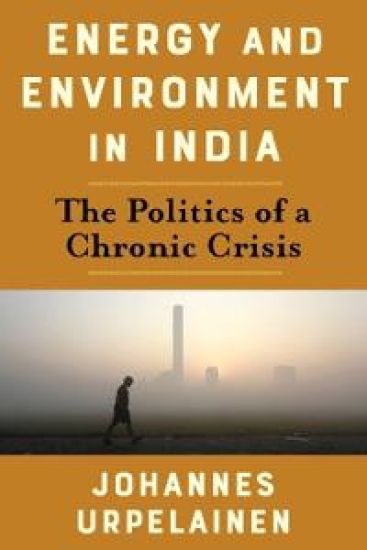
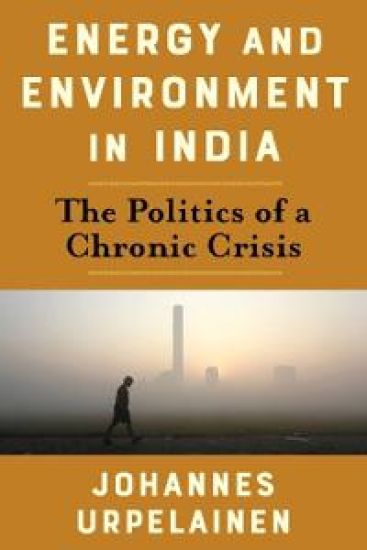
Energy and Environment in India

Energy and Environment in India

Johannes Urpelainen

Columbia University Press
2023
sidottu
India is driving some of the most important trends in global energy markets—with vast environmental implications. As the country grows wealthier, Indians are buying more cars, air conditioners, plane tickets, and other goods that increase demand for fossil fuels. At the same time, the country still faces widespread poverty, and it struggles to address persistent environmental and energy-sector problems, from frequent power outages to a significant number of deaths linked to air pollution.Johannes Urpelainen provides an expert guide to India’s energy and environmental issues that incorporates both domestic and global perspectives. He details how unequal economic development and rapid population growth have brought the country to its current state: a potential engine of the world economy hampered by environmental hazards and energy poverty. Urpelainen argues that institutional shortcomings have led wealthier Indians to find private solutions that protect them from threats such as air pollution and heat waves, but exclude the poor. The retreat of the rich limits the state’s ability to regulate the energy sector or address environmental degradation. Urpelainen examines India’s most severe environmental crises, considering how climate disruptions are affecting the country’s present and future. He analyzes India’s role in global environmental politics and assesses the prospects of achieving a more sustainable society. Useful and accessible, this book also offers pragmatic solutions to help overcome the constraints on effective energy and environmental policy.
Energy and Environment in India

Energy and Environment in India

Johannes Urpelainen

Columbia University Press
2023
pokkari
India is driving some of the most important trends in global energy markets—with vast environmental implications. As the country grows wealthier, Indians are buying more cars, air conditioners, plane tickets, and other goods that increase demand for fossil fuels. At the same time, the country still faces widespread poverty, and it struggles to address persistent environmental and energy-sector problems, from frequent power outages to a significant number of deaths linked to air pollution.Johannes Urpelainen provides an expert guide to India’s energy and environmental issues that incorporates both domestic and global perspectives. He details how unequal economic development and rapid population growth have brought the country to its current state: a potential engine of the world economy hampered by environmental hazards and energy poverty. Urpelainen argues that institutional shortcomings have led wealthier Indians to find private solutions that protect them from threats such as air pollution and heat waves, but exclude the poor. The retreat of the rich limits the state’s ability to regulate the energy sector or address environmental degradation. Urpelainen examines India’s most severe environmental crises, considering how climate disruptions are affecting the country’s present and future. He analyzes India’s role in global environmental politics and assesses the prospects of achieving a more sustainable society. Useful and accessible, this book also offers pragmatic solutions to help overcome the constraints on effective energy and environmental policy.
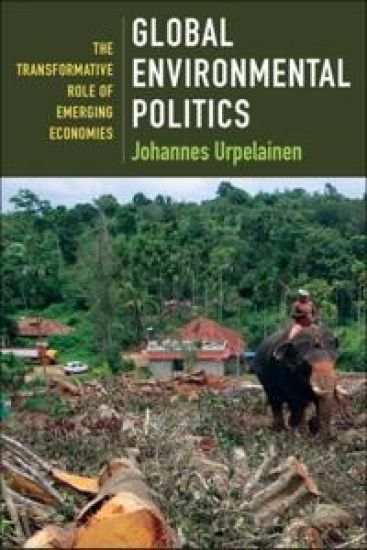
Global Environmental Politics

Global Environmental Politics

Johannes Urpelainen

Columbia University Press
2022
sidottu
Emerging economies have fundamentally transformed global environmental politics. Led by China and India, they increasingly make or break international negotiations, which now require agreement among a large number of governments with widely varied preferences. Emerging economies—which still suffer from widespread poverty and frequently struggle with policy implementation—often feel that Western-led initiatives neglect their needs. What does the global environmental policy landscape look like in the age of a rising Global South?This book explains why emerging economies have come to dominate global environmental politics and examines the implications for future international cooperation. Johannes Urpelainen shows that emerging economies continue to prioritize economic growth and often have limited institutional capacity to contain the environmental destruction that it causes. However, he argues, despite barriers to cooperation, innovative bargaining and institutional design offer a way forward. Bottom-up agreements that respect national sovereignty and invest in capacity building hold more promise than traditional top-down treaties with binding commitments.The book features detailed discussions of attempts to address hazardous chemicals, loss of biodiversity, and climate change; a comparative analysis of China and India; and case studies of nine other emerging economies around the world. Global Environmental Politics is an essential, forward-looking overview of today’s most pressing international issue.
Global Environmental Politics

Global Environmental Politics

Johannes Urpelainen

Columbia University Press
2022
pokkari
Emerging economies have fundamentally transformed global environmental politics. Led by China and India, they increasingly make or break international negotiations, which now require agreement among a large number of governments with widely varied preferences. Emerging economies—which still suffer from widespread poverty and frequently struggle with policy implementation—often feel that Western-led initiatives neglect their needs. What does the global environmental policy landscape look like in the age of a rising Global South?This book explains why emerging economies have come to dominate global environmental politics and examines the implications for future international cooperation. Johannes Urpelainen shows that emerging economies continue to prioritize economic growth and often have limited institutional capacity to contain the environmental destruction that it causes. However, he argues, despite barriers to cooperation, innovative bargaining and institutional design offer a way forward. Bottom-up agreements that respect national sovereignty and invest in capacity building hold more promise than traditional top-down treaties with binding commitments.The book features detailed discussions of attempts to address hazardous chemicals, loss of biodiversity, and climate change; a comparative analysis of China and India; and case studies of nine other emerging economies around the world. Global Environmental Politics is an essential, forward-looking overview of today’s most pressing international issue.
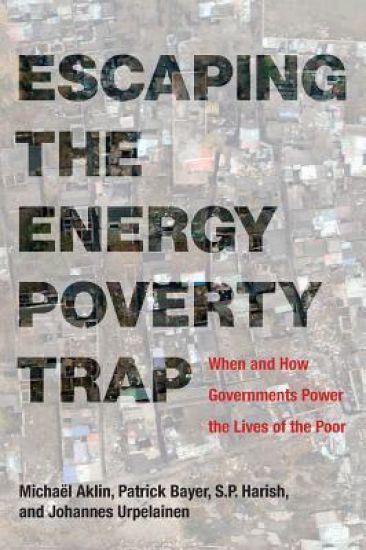
Escaping the Energy Poverty Trap

Escaping the Energy Poverty Trap

Michaël Aklin; Patrick Bayer; S.P. Harish; Johannes Urpelainen

MIT Press
2018
pokkari
The first comprehensive political science account of energy poverty, arguing that governments can improve energy access for their citizens through appropriate policy design.In today's industrialized world, almost everything we do consumes energy. While industrialized countries enjoy all the amenities of modern energy, more than a billion people in the developing world still lack energy access. Why is energy poverty persistent in some countries and not in others? Offering the first comprehensive political science account of energy poverty, Escaping the Energy Poverty Trap explores why governments have or have not been able to lead in providing modern energy to their least advantaged citizens. Focusing on access to modern cooking fuels and household electrification, the authorsdevelop a new political-economic theory that introduces government interest, institutional capacity, and local accountability as key determinants of energy access. They draw on case studies from India, East Asia, Africa, and Latin America to offer the optimistic conclusion that governments can improve institutional capacity and local accountability through appropriate policy design. Energy poverty is a policy problem, the authors assert, and engaging with it as such offers new opportunities not only for ensuring equal energy access, but also for political, economic, and environmental development.
Organizing Democracy

Organizing Democracy

Paul Poast; Johannes Urpelainen

University of Chicago Press
2018
sidottu
In the past twenty-five years, a number of countries have made the transition to democracy. The support of international organizations is essential to success on this difficult path. Yet, despite extensive research into the relationship between democratic transitions and membership in international organizations, the mechanisms underlying the relationship remain unclear. With Organizing Democracy, Paul Poast and Johannes Urpelainen argue that leaders of transitional democracies often have to draw on the support of international organizations to provide the public goods and expertise needed to consolidate democratic rule. Looking at the Baltic states' accession to NATO, Poast and Urpelainen provide a compelling and statistically rigorous account of the sorts of support transitional democracies draw from international institutions. They also show that, in many cases, the leaders of new democracies must actually create new international organizations to better serve their needs, since they may not qualify for help from existing ones.
Organizing Democracy

Organizing Democracy

Paul Poast; Johannes Urpelainen

University of Chicago Press
2018
pokkari
In the past twenty-five years, a number of countries have made the transition to democracy. The support of international organizations is essential to success on this difficult path. Yet, despite extensive research into the relationship between democratic transitions and membership in international organizations, the mechanisms underlying the relationship remain unclear. With Organizing Democracy, Paul Poast and Johannes Urpelainen argue that leaders of transitional democracies often have to draw on the support of international organizations to provide the public goods and expertise needed to consolidate democratic rule. Looking at the Baltic states' accession to NATO, Poast and Urpelainen provide a compelling and statistically rigorous account of the sorts of support transitional democracies draw from international institutions. They also show that, in many cases, the leaders of new democracies must actually create new international organizations to better serve their needs, since they may not qualify for help from existing ones.
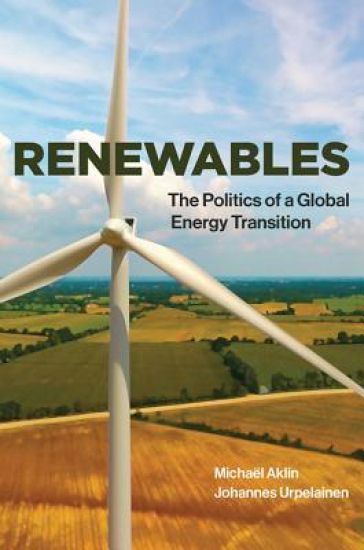
Renewables

Renewables

Michaël Aklin; Johannes Urpelainen

MIT Press
2018
pokkari
A comprehensive political analysis of the rapid growth in renewable wind and solar power, mapping an energy transition through theory, case studies, and policy.Wind and solar are the most dynamic components of the global power sector. How did this happen? After the 1973 oil crisis, the limitations of an energy system based on fossil fuels created an urgent need to experiment with alternatives, and some pioneering governments reaped political gains by investing heavily in alternative energy such as wind or solar power. Public policy enabled growth over time, and economies of scale brought down costs dramatically. In this book, Michael Aklin and Johannes Urpelainen offer a comprehensive political analysis of the rapid growth in renewable wind and solar power, mapping an energy transition through theory, case studies, and policy analysis.Aklin and Urpelainen argue that, because the fossil fuel energy system and political support for it are so entrenched, only an external shock-an abrupt rise in oil prices, or a nuclear power accident, for example-allows renewable energy to grow. They analyze the key factors that enable renewable energy to withstand political backlash, andt they draw on this analyisis to explain and predict the development of renewable energy in different countries over time. They examine the pioneering efforts in the United States, Germany, and Denmark after the 1973 oil crisis and other shocks; explain why the United States surrendered its leadership role in renewable energy; and trace the recent rapid growth of modern renewables in electricity generation, describing, among other things, the return of wind and solar to the United States. Finally, they apply the lessons of their analysis to contemporary energy policy issues.
Cutting the Gordian Knot of Economic Reform

Cutting the Gordian Knot of Economic Reform

Leonardo Baccini; Johannes Urpelainen

Oxford University Press Inc
2015
sidottu
Why do leaders of countries opt to sign on to international institutions that constrain their freedom to enact domestic policy? In this book, Leonardo Baccini and Johannes Urpelainen address this enduring question of international relations by looking at liberal economic reforms. During the past two decades, governments across the developing world have implemented many liberal economic reforms that reduce direct state intervention in different industries, for example with regard to intellectual property rights and privatization. While failure to implement them can have disastrous economic and political consequences, liberal economic reforms have also provoked intense political controversy domestically. Baccini and Urpelainen argue that international institutions help to cut this Gordian knot by allowing leaders to credibly commit to liberal policies while also creating domestic political support for reform. The book takes a comparative look at developing countries that have engaged in treaties with the United States and European Union to develop a full theory of when and how leaders enter into international institutions to effect economic reform. Cutting the Gordian Knot of Economic Reform is the first work to provide a theory on the design of international institutions, the circumstances that cause leaders to form international institutions, and the effects of international institutions on economic reform.