Kirjojen hintavertailu. Mukana 12 152 606 kirjaa ja 12 kauppaa.

Kirjailija

John A. Fliter

Kirjat ja teokset yhdessä paikassa: 7 kirjaa, julkaisuja vuosilta 2000-2025, suosituimpien joukossa Prisoners' Rights. Vertaile teosten hintoja ja tarkista saatavuus suomalaisista kirjakaupoista.

7 kirjaa

Kirjojen julkaisuhaarukka 2000-2025.

U.S. V. Darby Lumber

U.S. V. Darby Lumber

John A. Fliter

UNIVERSITY PRESS OF KANSAS
2025
nidottu
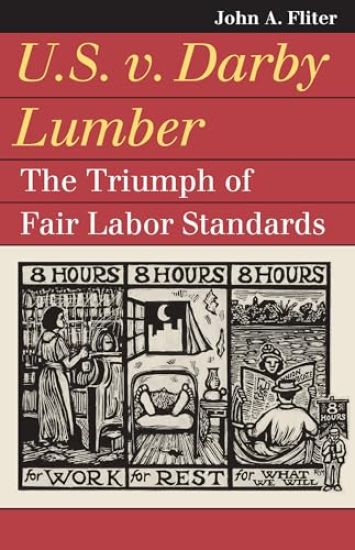
The story of how the advocacy of workers and labor unions and a monumental shift on the Supreme Court paved the way for fair labor standards in the United States. The eight-hour day. The five-day work week. Minimum wage. Time-and-a-half overtime pay. Prohibition of oppressive child labor. Today we take these features of employment for granted, but they are the result of a long, difficult, and often violent struggle for workplace protections that culminated in the Fair Labor Standards Act (FLSA) of 1938. But it was the landmark 1941 Supreme Court decision in U.S. v. Darby Lumber Company that secured those protections. The social movement for fair labor standards in the United States began in the late 1700s when some of the first associations of working men demanded fair wages and maximum work hours. In advocating for national fair labor standards, workers and labor unions had to overcome not only opposition from powerful business groups but also entrenched legal doctrines that challenged the very idea of labor unions. They also had to overcome deeply held beliefs that workplace regulations were local economic issues reserved to the states under the Tenth Amendment of the Constitution. Several groundbreaking decisions by the Supreme Court in the spring of 1937 changed the whole debate over government regulation of the market and opened the door for federal legislation on fair labor standards. In what is widely known as the Constitutional Revolution of 1937, Justice Owen Roberts switched to the liberal bloc, and with the support of Chief Justice Charles Evans Hughes, the Supreme Court in West Coast Hotel v. Parrish and NLRB v. Jones and Laughlin Steel Corp. abruptly shifted its view of economic regulation. Ultimately, this paved the way for the Supreme Court to confirm the constitutionality of the FLSA in 1941. The Darby Lumber decision is a landmark case that affirmed the powers of Congress over labor standards and working conditions. Today the decision is as important as ever, with conservative groups seeking to undo these labor protections facing off against an insurgent labor movement aiming to regain lost ground.
U.S. V. Darby Lumber

U.S. V. Darby Lumber

John A. Fliter

UNIVERSITY PRESS OF KANSAS
2025
sidottu
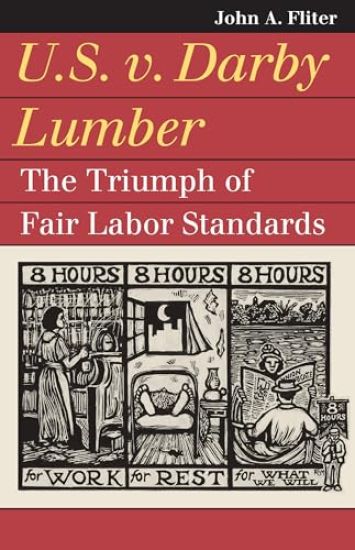
The story of how the advocacy of workers and labor unions and a monumental shift on the Supreme Court paved the way for fair labor standards in the United States. The eight-hour day. The five-day work week. Minimum wage. Time-and-a-half overtime pay. Prohibition of oppressive child labor. Today we take these features of employment for granted, but they are the result of a long, difficult, and often violent struggle for workplace protections that culminated in the Fair Labor Standards Act (FLSA) of 1938. But it was the landmark 94 Supreme Court decision in U.S. v. Darby Lumber Company that secured those protections. The social movement for fair labor standards in the United States began in the late 70s when some of the first associations of working men demanded fair wages and maximum work hours. In advocating for national fair labor standards, workers and labor unions had to overcome not only opposition from powerful business groups but also entrenched legal doctrines that challenged the very idea of labor unions. They also had to overcome deeply held beliefs that workplace regulations were local economic issues reserved to the states under the Tenth Amendment of the Constitution. Several groundbreaking decisions by the Supreme Court in the spring of 1937 changed the whole debate over government regulation of the market and opened the door for federal legislation on fair labor standards. In what is widely known as the Constitutional Revolution of 1937, Justice Owen Roberts switched to the liberal bloc, and with the support of Chief Justice Charles Evans Hughes, the Supreme Court in West Coast Hotel v. Parrish and NLRB v. Jones and Laughlin Steel Corp. abruptly shifted its view of economic regulation. Ultimately, this paved the way for the Supreme Court to confirm the constitutionality of the FLSA in 94 . The Darby Lumber decision is a landmark case that affirmed the powers of Congress over labor standards and working conditions. Today the decision is as important as ever, with conservative groups seeking to undo these labor protections facing off against an insurgent labor movement aiming to regain lost ground.

Child Labor in America

Child Labor in America

John A. Fliter

University Press of Kansas
2018
sidottu
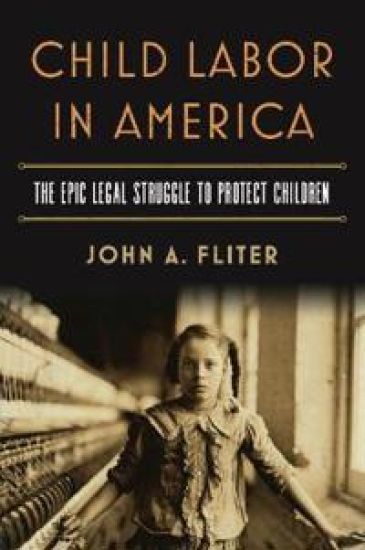
Child labor law strikes most Americans as a fixture of the country’s legal landscape, involving issues settled in the distant past. But these laws, however self-evidently sensible they might seem, were the product of deeply divisive legal debates stretching over the past century—and even now are subject to constitutional challenges. Child Labor in America tells the story of that historic legal struggle. The book offers the first full account of child labor law in America—from the earliest state regulations to the most recent important Supreme Court decisions and the latest contemporary attacks on existing laws.Children had worked in America from the time the first settlers arrived on its shores, but public attitudes about working children underwent dramatic changes along with the nation’s economy and culture. A close look at the origins of oppressive child labor clarifies these changing attitudes, providing context for the hard-won legal reforms that followed. Author John A. Fliter describes early attempts to regulate working children, beginning with haphazard and flawed state-level efforts in the 1840s and continuing in limited and ineffective ways as a consensus about the evils of child labor started to build. In the Progressive Era, the issue finally became a matter of national concern, resulting in several laws, four major Supreme Court decisions, an unsuccessful Child Labor Amendment, and the landmark Fair Labor Standards Act of 1938.Fliter offers a detailed overview of these events, introducing key figures, interest groups, and government officials on both sides of the debates and incorporating the latest legal and political science research on child labor reform. Unprecedented in its scope and depth, his work provides critical insight into the role child labor has played in the nation’'s social, political, and legal development.
Child Labor in America

Child Labor in America

John A. Fliter

University Press of Kansas
2018
nidottu
Child labor law strikes most Americans as a fixture of the country’s legal landscape, involving issues settled in the distant past. But these laws, however self-evidently sensible they might seem, were the product of deeply divisive legal debates stretching over the past century—and even now are subject to constitutional challenges. Child Labor in America tells the story of that historic legal struggle. The book offers the first full account of child labor law in America—from the earliest state regulations to the most recent important Supreme Court decisions and the latest contemporary attacks on existing laws.Children had worked in America from the time the first settlers arrived on its shores, but public attitudes about working children underwent dramatic changes along with the nation’s economy and culture. A close look at the origins of oppressive child labor clarifies these changing attitudes, providing context for the hard-won legal reforms that followed. Author John A. Fliter describes early attempts to regulate working children, beginning with haphazard and flawed state-level efforts in the 1840s and continuing in limited and ineffective ways as a consensus about the evils of child labor started to build. In the Progressive Era, the issue finally became a matter of national concern, resulting in several laws, four major Supreme Court decisions, an unsuccessful Child Labor Amendment, and the landmark Fair Labor Standards Act of 1938.Fliter offers a detailed overview of these events, introducing key figures, interest groups, and government officials on both sides of the debates and incorporating the latest legal and political science research on child labor reform. Unprecedented in its scope and depth, his work provides critical insight into the role child labor has played in the nation’'s social, political, and legal development.
Fighting Foreclosure

Fighting Foreclosure

John A. Fliter; Derek S. Hoff

University Press of Kansas
2012
nidottu
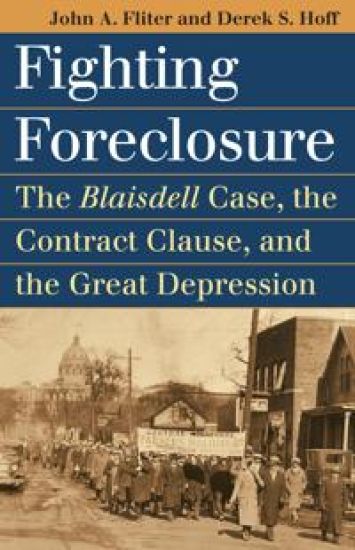
In the depths of the Great Depression, when foreclosure rates skyrocketed across the United States, more than two dozen states passed mortgage-extension or -adjustment laws to help farmers and homeowners keep their properties. One such statute in Minnesota led to the most important property law case of its time and still casts a long shadow upon constitutional debates and our own era’s severe economic downturn. Fighting Foreclosure marks the first book-length study of the landmark 1934 Supreme Court decision in Home Building and Loan Association v. Blaisdell, which, by a 5–4 vote, upheld the Minnesota Mortgage Moratorium Act. Blaisdell validated efforts by states to offer legislative relief to citizens struggling to keep their farms and homes. But it caused an outcry among banking interests and conservative legal theorists, who argued that these laws violated the Contract Clause of the Constitution and interfered with our free market system. In his majority opinion, Chief Justice Charles Evans Hughes argued that the reasonable and limited nature of the law and the unusual severity of the emergency it addressed placed it firmly within the “police powers” of the states to protect the health and safety of the people. In a strongly worded dissent, Justice George Sutherland argued for a consistent and strict interpretation of the Contract Clause regardless of economic exigency. John Fliter and Derek Hoff provide a concise history and analysis of not only this landmark case and the reasoning behind its sharply divided decision but also of the entire history of the Contract Clause. They trace closely the agricultural crisis, political pressures, and farmer-protest movement that produced the Minnesota law. And their study contributes to scholarly debate about the origins of the Constitutional Revolution of 1937, by which the Supreme Court accepted the New Deal, as well as to public debates about constitutional interpretation and the role that government should play in providing relief to distressed citizens. In the midst of our nation’s ongoing suffering from massive foreclosures and bankruptcies, Fighting Foreclosure also offers a potent reminder that the High Court’s decisions often revolve around lives at risk as much as abstract legal debates.
Fighting Foreclosure

Fighting Foreclosure

John A. Fliter; Derek S. Hoff

University Press of Kansas
2012
sidottu
In the depths of the Great Depression, when foreclosure rates skyrocketed across the United States, more than two dozen states passed mortgage-extension or -adjustment laws to help farmers and homeowners keep their properties. One such statute in Minnesota led to the most important property law case of its time and still casts a long shadow upon constitutional debates and our own era’s severe economic downturn. Fighting Foreclosure marks the first book-length study of the landmark 1934 Supreme Court decision in Home Building and Loan Association v. Blaisdell, which, by a 5–4 vote, upheld the Minnesota Mortgage Moratorium Act. Blaisdell validated efforts by states to offer legislative relief to citizens struggling to keep their farms and homes. But it caused an outcry among banking interests and conservative legal theorists, who argued that these laws violated the Contract Clause of the Constitution and interfered with our free market system. In his majority opinion, Chief Justice Charles Evans Hughes argued that the reasonable and limited nature of the law and the unusual severity of the emergency it addressed placed it firmly within the “police powers” of the states to protect the health and safety of the people. In a strongly worded dissent, Justice George Sutherland argued for a consistent and strict interpretation of the Contract Clause regardless of economic exigency. John Fliter and Derek Hoff provide a concise history and analysis of not only this landmark case and the reasoning behind its sharply divided decision but also of the entire history of the Contract Clause. They trace closely the agricultural crisis, political pressures, and farmer-protest movement that produced the Minnesota law. And their study contributes to scholarly debate about the origins of the Constitutional Revolution of 1937, by which the Supreme Court accepted the New Deal, as well as to public debates about constitutional interpretation and the role that government should play in providing relief to distressed citizens. In the midst of our nation’s ongoing suffering from massive foreclosures and bankruptcies, Fighting Foreclosure also offers a potent reminder that the High Court’s decisions often revolve around lives at risk as much as abstract legal debates.
Prisoners' Rights

Prisoners' Rights

John A. Fliter

Praeger Publishers Inc
2000
sidottu
Prisoners' rights is an area of constitutional law that is often overlooked. Combining an historical and strategic analysis, this study describes the doctrinal development of the constitutional rights of prisoners from the pre-Warren Court period through the current Rehnquist Court. Like many provisions in the Bill of Rights, the meaning of the Eighth Amendment's language on cruel and unusual punishment and the scope of prisoners' rights have been influenced by prevailing public opinion, interest group advocacy, and—most importantly—the ideological values of the nine individuals who sit on the Supreme Court. These variables are incorporated in a strategic analysis of judicial decision making in an attempt to understand the constitutional development of rights in this area.Fliter examines dozens of cases spanning 50 years and provides a systematic analysis of strategic interaction on the Supreme Court. His results support the notion that justices do not simply vote their policy preferences; some seek to influence their colleagues and the broader legal community. In many cases there was evidence of strategic interaction in the form of voting fluidity, substantive opinion revisions, dissents from denial of certiorari, and lobbying to form a majority coalition. The analysis reaches beyond death penalty cases and includes noncapital cases arising under the Eighth Amendment, habeas corpus petitions, conditions of confinement cases, and due process claims.