

Kirjailija
John A. Hall
Kirjat ja teokset yhdessä paikassa: 24 kirjaa, julkaisuja vuosilta 1994-2025, suosituimpien joukossa Ernest Gellner. Vertaile teosten hintoja ja tarkista saatavuus suomalaisista kirjakaupoista.
Mukana myös kirjoitusasut: John A Hall
24 kirjaa
Kirjojen julkaisuhaarukka 1994-2025.

In his new book John A. Hall traces the interactions between nations, states and empires in the making of the modern world. It is commonly assumed that nation states succeeded and replaced empires, relegating empires to the past: Hall argues that this is not the case. Empires have continued alongside nation states, shadowing them and overseeing them in the industrial era. The two world wars were imperial wars, rather than wars between nation states. Even after rapid decolonization in the 1950s and 1960s, empires persisted in the USA and the USSR. Furthermore, empires are not finished: the USA retains enormous power, while Russia and China increasingly show imperial dispositions. Empires and nation states do not exist in separate compartments – rather, they often overlap. Consider the USA – both strongly nationalist and the greatest empire in the history of the world. This highly original book will be essential reading for students and scholars in sociology and politics and for anyone interested in the political forces that have shaped, and continue to shape, the modern world.

In his new book John A. Hall traces the interactions between nations, states and empires in the making of the modern world. It is commonly assumed that nation states succeeded and replaced empires, relegating empires to the past: Hall argues that this is not the case. Empires have continued alongside nation states, shadowing them and overseeing them in the industrial era. The two world wars were imperial wars, rather than wars between nation states. Even after rapid decolonization in the 1950s and 1960s, empires persisted in the USA and the USSR. Furthermore, empires are not finished: the USA retains enormous power, while Russia and China increasingly show imperial dispositions. Empires and nation states do not exist in separate compartments – rather, they often overlap. Consider the USA – both strongly nationalist and the greatest empire in the history of the world. This highly original book will be essential reading for students and scholars in sociology and politics and for anyone interested in the political forces that have shaped, and continue to shape, the modern world.

Dieses klassische Buch wurde urspr nglich vor Jahrzehnten ver ffentlicht als " The Great Strike on the "Q" ". Es wurde jetzt von Writat f r seine deutschsprachigen Leser ins Deutsche bersetzt. Bei Writat liegt uns die Bewahrung des literarischen Erbes der Vergangenheit sehr am Herzen. Wir haben dieses Buch ins Deutsche bersetzt, damit es heutige und zuk nftige Generationen lesen und bewahren k nnen.

Ce livre classique a t initialement publi il y a des d cennies sous le titre " The Great Strike on the "Q" ". Il a maintenant t traduit par Writat en langue fran aise pour leurs lecteurs francophones. Chez Writat, nous sommes passionn s par la pr servation du patrimoine litt raire du pass . Nous avons traduit ce livre en fran ais afin que les g n rations pr sentes et futures puissent le lire et le conserver.

This book has been considered important throughout the human history, and so that this work is never forgotten we have made efforts in its preservation by republishing this book in a modern format for present and future generations. This whole book has been reformatted, retyped and designed. These books are not made of scanned copies and hence the text is clear and readable.
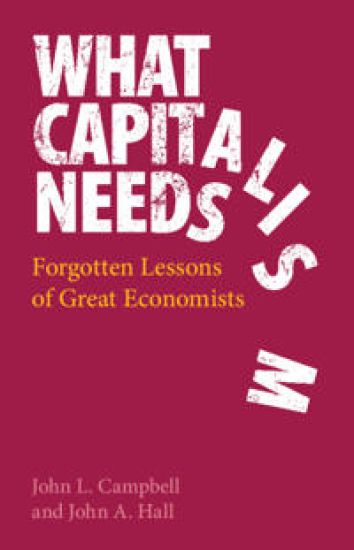
From unemployment to Brexit to climate change, capitalism is in trouble and ill-prepared to cope with the challenges of the coming decades. How did we get here? While contemporary economists and policymakers tend to ignore the political and social dimensions of capitalism, some of the great economists of the past - Adam Smith, Friedrich List, John Maynard Keynes, Joseph Schumpeter, Karl Polanyi and Albert Hirschman - did not make the same mistake. Leveraging their insights, sociologists John L. Campbell and John A. Hall trace the historical development of capitalism as a social, political, and economic system throughout the twentieth and early twenty-first centuries. They draw comparisons across eras and around the globe to show that there is no inevitable logic of capitalism. Rather, capitalism's performance depends on the strength of nation-states, the social cohesion of capitalist societies, and the stability of the international system - three things that are in short supply today.
Without nation-states Covid-19, climate change, international cyberattacks, and other threats would go unchecked. In The World of States, John L. Campbell and John A. Hall challenge the view that nation-states have lost their relevance in the context of globalization and rising nationalism. The book traces how states evolved historically, how contemporary states differ from one another, and the interactions between them. States today confront a host of challenges, but two features make some states more effective than others: institutional arrangement and national identity. The second edition has been updated to discuss why the BRICS countries (with the exception of China) are no longer the rising powers they were once thought to be; the effects of Brexit on the European Union; the legacy of the Trump administration for US politics and hegemony; and how the coronavirus may upset the world of states going forward.
Without nation-states Covid-19, climate change, international cyberattacks, and other threats would go unchecked. In The World of States, John L. Campbell and John A. Hall challenge the view that nation-states have lost their relevance in the context of globalization and rising nationalism. The book traces how states evolved historically, how contemporary states differ from one another, and the interactions between them. States today confront a host of challenges, but two features make some states more effective than others: institutional arrangement and national identity. The second edition has been updated to discuss why the BRICS countries (with the exception of China) are no longer the rising powers they were once thought to be; the effects of Brexit on the European Union; the legacy of the Trump administration for US politics and hegemony; and how the coronavirus may upset the world of states going forward.


The Great Strike on the Q is an unchanged, high-quality reprint of the original edition of 1889. Hansebooks is editor of the literature on different topic areas such as research and science, travel and expeditions, cooking and nutrition, medicine, and other genres. As a publisher we focus on the preservation of historical literature. Many works of historical writers and scientists are available today as antiques only. Hansebooks newly publishes these books and contributes to the preservation of literature which has become rare and historical knowledge for the future.

Why are small and culturally homogeneous nation-states in the advanced capitalist world so prosperous? Examining how Denmark, Ireland, and Switzerland managed the 2008 financial crisis, The Paradox of Vulnerability shows that this is not an accident. John Campbell and John Hall argue that a prolonged sense of vulnerability within both the state and the nation encourages the development of institutions that enable decision makers to act together quickly in order to survive, especially during a crisis. Blending insights from studies of comparative political economy and nationalism and drawing on both extensive interviews and secondary data, Campbell and Hall support their claim by focusing on the three states historically and, more important, in their different responses to the 2008 crisis. The authors also devote attention to the difficulties faced by Greece and Iceland. The implications of their argument are profound. First, they show that there is a positive side to nationalism: social solidarity can enhance national prosperity. Second, because globalization now requires all states to become more adaptable, there are lessons here for other states, large and small. Lastly, the formula for prosperity presented here is under threat: highly homogeneous societies face challenges in dealing with immigration, with some responding in ways that threaten their success. The Paradox of Vulnerability demonstrates how the size and culture of a nation contribute in significant ways to its ability to handle political and economic pressures and challenges.

Why are small and culturally homogeneous nation-states in the advanced capitalist world so prosperous? Examining how Denmark, Ireland, and Switzerland managed the 2008 financial crisis, The Paradox of Vulnerability shows that this is not an accident. John Campbell and John Hall argue that a prolonged sense of vulnerability within both the state and the nation encourages the development of institutions that enable decision makers to act together quickly in order to survive, especially during a crisis. Blending insights from studies of comparative political economy and nationalism and drawing on both extensive interviews and secondary data, Campbell and Hall support their claim by focusing on the three states historically and, more important, in their different responses to the 2008 crisis. The authors also devote attention to the difficulties faced by Greece and Iceland. The implications of their argument are profound. First, they show that there is a positive side to nationalism: social solidarity can enhance national prosperity. Second, because globalization now requires all states to become more adaptable, there are lessons here for other states, large and small. Lastly, the formula for prosperity presented here is under threat: highly homogeneous societies face challenges in dealing with immigration, with some responding in ways that threaten their success. The Paradox of Vulnerability demonstrates how the size and culture of a nation contribute in significant ways to its ability to handle political and economic pressures and challenges.
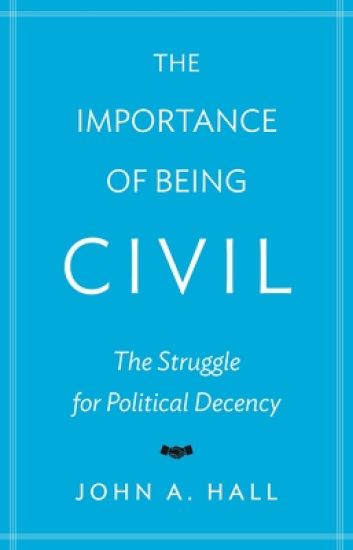
Civility is desirable and possible, but can this fragile ideal be guaranteed? The Importance of Being Civil offers the most comprehensive look at the nature and advantages of civility throughout history and in our world today. Esteemed sociologist John Hall expands our understanding of civility as related to larger social forces--including revolution, imperialism, capitalism, nationalism, and war--and the ways that such elements limit the potential for civility. Combining wide-ranging historical and comparative evidence with social and moral theory, Hall examines how the nature of civility has fluctuated in the last three centuries, how it became lost, and how it was reestablished in the twentieth century following the two world wars. He also considers why civility is currently breaking down and what can be done to mitigate this threat. The Importance of Being Civil is a decisive and sophisticated addition to the discussion of civility in its modern cultural and historical contexts.
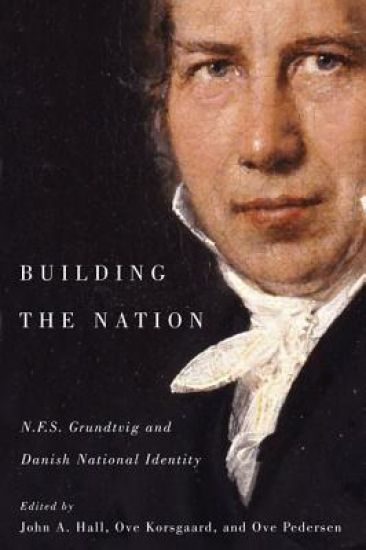
Building the Nation
John A. Hall; Ove Korsgaard; Ove K. Pedersen
McGill-Queen's University Press
2015
nidottu
Denmark became a nation amidst the turbulence of the nineteenth century, an era plagued by war, bankruptcy, and territorial loss. Building the Nation is an insightful study of this formation, emphasizing the crucial role of N.F.S. Grundtvig, the father of modern Denmark. Persevering through years of humiliation, internal conflict, and occupation, Denmark now boasts one of the world's most stable and democratic political systems, as well as one of its richest economies. From disaster to success, Building the Nation emphasizes the role of national icons and social movements in the formation of Denmark. The poet, political philosopher, clergyman, and founding father N.F.S. Grundtvig is compared to Rousseau and Durkheim in France, to Herder and Fichte in Germany, and to other great thinkers in the United States and Ireland. During his lifetime, the kingdom of Denmark transformed from monarchy to democracy and moved from agrarianism to a modern economy - evolutions to which Grundtvig himself contributed. He has become a fundamental and inescapable reference-point for discussions about nation, democracy, freedom, religion, and education in Denmark and abroad. Situating Grundtvig in both the history of Denmark and the intellectual history of nineteenth-century Europe, Building the Nation argues for the centrality of his influence in the making of modern Denmark, as well as the continuing influence of his work.

This companion volume to On Performance Writing, with implicated readings, brings together most of the essays-taking a deliberately broad view of that term so as to include, for example, two single-page visual essays and one sonnet-on the reading and writing of poetry by the poet and teacher, John Hall. The collection is in two parts. The first, starting with the often cited 'Writing and Not Writing', takes on, in the spirit of poetics, current issues for the category of poetry, considered both formally and contextually, and with particular interest in reading as a practice in which poems are actions and events rather than capturable things. The longer second part develops these thoughts through readings of specific, mostly contemporary, poems: the poets whose work is read are not intended to represent a proposed new canon. They have all, though, contributed significantly to a growing body of work in recent decades that brings together the social and bodily pleasures (and displeasures) of poetry with the ethical demands of truthfulness. They include Andrea Brady, Kelvin Corcoran, Allen Fisher, Harry Guest, Lee Harwood, Peter Hughes, John James, Nicholas Johnson, R.F. Langley, Karen Mac Cormack, Peter Middleton, Geraldine Monk, Alice Notley, Douglas Oliver, F.T. Prince, J.H. Prynne, John Riley, Peter Riley and John Wieners.

In 1993, say, the term Performance Writing, if used at all, suggested simply writing for performance. By 2011, when the author of this collection became the first Professor of Performance Writing, it had attained a much wider-indeed international-currency in discussions of contemporary writing, and had entered the curriculum of a range of courses well beyond its intense first conceptual and pedagogic development at the adventurous Dartington College of Arts. The task-and indeed the task of many of these essays-had been to fill out the terms for an approach to writing that looked beyond and beside literature for its sources, references and material practices. These other frames included: the rapid changes taking place within the technologies for producing, circulating and receiving text; a 'turn to writing' within other cultural practices, especially perhaps its integral presence within visual and sonic culture; the increasing textuality of the shared environment (words in public places, for example); and finally, philosophical preoccupations with the idea of performativity and its entailment with language.
Glooskap's Country: And Other Indian Tales
Cyrus MacMillan; John A. Hall
Literary Licensing, LLC
2013
nidottu
Civility is desirable and possible, but can this fragile ideal be guaranteed? The Importance of Being Civil offers the most comprehensive look at the nature and advantages of civility throughout history and in our world today. Esteemed sociologist John Hall expands our understanding of civility as related to larger social forces--including revolution, imperialism, capitalism, nationalism, and war--and the ways that such elements limit the potential for civility. Combining wide-ranging historical and comparative evidence with social and moral theory, Hall examines how the nature of civility has fluctuated in the last three centuries, how it became lost, and how it was reestablished in the twentieth century following the two world wars. He also considers why civility is currently breaking down and what can be done to mitigate this threat. The Importance of Being Civil is a decisive and sophisticated addition to the discussion of civility in its modern cultural and historical contexts.

Ernest Gellner was a multilingual polymath who set the agenda in the study of nationalism and the sociology of Islam for an entire generation of academics and students. This definitive biography follows his trajectory from his early years in Prague, Paris and England to international success as a philosopher and public intellectual. Known both for his highly integrated philosophy of modernity and for combining a respect for nationalism with an appreciation for science, Gellner was passionate in his defence of reason against every for of relativism.