Kirjojen hintavertailu. Mukana 12 595 353 kirjaa ja 12 kauppaa.
Kirjailija
John Abbott
Kirjat ja teokset yhdessä paikassa: 71 kirjaa, julkaisuja vuosilta 1996-2025, suosituimpien joukossa Louis XIV. Vertaile teosten hintoja ja tarkista saatavuus suomalaisista kirjakaupoista.
Originally published in 1992. At its foundation FAO was conceived as an organization that would bring together health and agriculture. It would manage the world’s food output to greater advantage and improve the well-being of its people. Almost a half-century on, FAO faced mounting criticism from its major funding nations, professionals within the field, and developing countries. The efficacy of its constitution, bureaucracy and aid, and even its fidelity to original ideals are questioned. This book presents an informed, if irreverent, insider’s view. The first part of the book sets out the structure and activities of FAO. It gives a human dimension, describing the personalities that have influenced decisions and performance, the motivations of its staff, its location in Rome. The second part appraises FAO’S success in achieving its ultimate objective the alleviation of poverty. Throughout, the concern is both for a more visionary organization to help develop a sustainable income base for the rural poor in the developing world.
Originally published in 1992. At its foundation FAO was conceived as an organization that would bring together health and agriculture. It would manage the world’s food output to greater advantage and improve the well-being of its people. Almost a half-century on, FAO faced mounting criticism from its major funding nations, professionals within the field, and developing countries. The efficacy of its constitution, bureaucracy and aid, and even its fidelity to original ideals are questioned. This book presents an informed, if irreverent, insider’s view. The first part of the book sets out the structure and activities of FAO. It gives a human dimension, describing the personalities that have influenced decisions and performance, the motivations of its staff, its location in Rome. The second part appraises FAO’S success in achieving its ultimate objective the alleviation of poverty. Throughout, the concern is both for a more visionary organization to help develop a sustainable income base for the rural poor in the developing world.
Break out of your inertia, get unstuck and join the ranks of people who live life on their own terms. Many of us insist, often stubbornly, that the obstacle to living a full life of freedom and rich experiences lies in our own seemingly insurmountable circumstances. Maybe you can't just leave your job, or your health is your greatest impediment or a myriad of other reasons. So, what do most people do? They end up doing what most people eventually wind up doing. Nothing. They don't make an effort to change their situation. They figure it's not worth the trouble and they give up. Filled with stories and anecdotes from the lives of successful entrepreneurs, Freedom by Design is a labor of love that will guide you to a life of freedom in three area's; mentally, financially and socially in an ever-changing world. It doesn't just stop there though. Unlike many other self-help books which emphasizes abstract, flower-child ideas that are often not practical, Freedom by Design is chock-full with actionable tips and techniques that have been extensively field-tested by successful entrepreneurs that you can begin using today to get started on the way to self-realization. Here's a snippet of what you're going to discover in this life-changing compendium of entrepreneurial experiences: How to use the freedom method to optimize and improve your lifestyle The 'Giving Model', what it is and how to create your freedom with this powerful tool What makes a business really successful (Hint: it isn't revenue ) Six-day guide to taming your mind Six-minute guide to taming your mind for those who need to rein in their hyperactive brain and can't wait six days to do it In charge of a team? Learn how authenticity and mindfulness can transform teamwork Three cardinal tips on how to make your work fun and open your mind up to the magic of reality Workaholics anonymous: How to recover from being a workaholic Freedom lies in your challenges: How a simple mindset shift will change the way you look at obstacles and many more Profoundly insightful and even life changing, Freedom by Design is the ultimate reference book to designing your lifestyle the way you want it. Scroll up and click the button to get started on your way to a fulfilling life today What Casey Fenton, Founder of CouchSurfing is saying about this revolutionary read; We find ourselves in a very magical place in time. For many of us, our basic human needs are being met, which means we're no longer in survival mode. What this means is that we are shifting into a different frame of be-ing, and we get to experience the vast multi-dimensional world around us. For the first time in history, with our newly developed explorative mindset, we start to think about what else is possible? What kind of life could we lead? What kind of life do we want to have? What kinds of freedom do we have available to explore? Plus bonus tips from Paul Dunn on how 'Living Free' we can elevate people living below the poverty line. What Chris Thompson, former Director of Green School Bali and Hubud says about the importance of claiming your freedom; "The world is changing but there is still too much societal resistance to adhere to outdated models. The movement is working to change the way we live, learn and work. Our children need this more than anything so they don't fall into the traps of their parents." Contributing Authors: Estela Kun, John Abbott, Andrea Featherstone, Skip Archimedes, Brett Jones, Helene Schmit, Orsolya Gyulai, Mark Copeland, Jonas Freeman, Jeremiah Rygh, Brie Moreau and Viola Eva Schenkel, Bascha Meier. Scroll up and click the button to get started today
Louis XIV, by John Abbott, is a classic French history text detaling the life of King Louis XIV. We all live a double life: the external life which the world sees, and the internal life of hopes and fears, joys and griefs, temptations and sins, which the world sees not, and of which it knows but little. None lead this double life more emphatically than those who are seated upon thrones. Louis XIV (5 September 1638 - 1 September 1715), known as Louis the God-Given (Louis Dieudonn ), Louis the Great (Louis le Grand) or the Sun King (Roi Soleil), was a monarch of the House of Bourbon who reigned as King of France from 1643 until his death in 1715. Starting at the age of 4, his reign of 72 years and 110 days is the longest recorded of any monarch of a sovereign country in European history. 1] 2] In the age of absolutism in Europe, Louis XIV's France was a leader in the growing centralization of power. 3] Louis began his personal rule of France in 1661, after the death of his chief minister, the Italian Cardinal Mazarin. 4] An adherent of the concept of the divine right of kings, which advocates the divine origin of monarchical rule, Louis continued his predecessors' work of creating a centralized state governed from the capital. He sought to eliminate the remnants of feudalism persisting in parts of France and, by compelling many members of the nobility to inhabit his lavish Palace of Versailles, succeeded in pacifying the aristocracy, many members of which had participated in the Fronde rebellion during Louis' minority. By these means he became one of the most powerful French monarchs and consolidated a system of absolute monarchical rule in France that endured until the French Revolution. Louis encouraged and benefited from the work of prominent political, military, and cultural figures such as Mazarin, Colbert, Louvois, the Grand Cond , Turenne, and S bastien Le Prestre de Vauban, as well as Andr Charles Boulle, Moli re, Racine, Boileau, La Fontaine, Lully, Marais, Le Brun, Rigaud, Bossuet, Le Vau, Mansart, Charles and Claude Perrault, and Le N tre. Under his rule, the Edict of Nantes, which granted rights to Huguenots, was abolished. The revocation effectively forced Huguenots to emigrate or convert in a wave of dragonnades, which managed to virtually destroy the French Protestant minority. During Louis' reign, France was the leading European power, and it fought three major wars: the Franco-Dutch War, the War of the League of Augsburg, and the War of the Spanish Succession. There were also two lesser conflicts: the War of Devolution and the War of the Reunions. Warfare defined the foreign policy of Louis XIV, and his personality shaped his approach. Impelled "by a mix of commerce, revenge, and pique," Louis sensed that warfare was the ideal way to enhance his glory. In peacetime he concentrated on preparing for the next war. He taught his diplomats that their job was to create tactical and strategic advantages for the French military
The history of the empire of Russia - Containing an account of all the most interesting events in that vast monarchy is an unchanged, high-quality reprint of the original edition of 1872. Hansebooks is editor of the literature on different topic areas such as research and science, travel and expeditions, cooking and nutrition, medicine, and other genres. As a publisher we focus on the preservation of historical literature. Many works of historical writers and scientists are available today as antiques only. Hansebooks newly publishes these books and contributes to the preservation of literature which has become rare and historical knowledge for the future.
This book shows for the first time how green infrastructure can work in an African urban context. On one level it provides a major rethinking of the role of infrastructure in urban society since the creation of networked infrastructure in the early twentieth century. On another, it explores the changing paradigms of urban development through the fundamental question of how decisions are made.With a focus on Africa's fast-growing secondary towns, where 70 per cent of the urban population live, the book explains how urban infrastructure provides the key to the relationship between economic development and social equity, through the mediation of natural resources. Adopting this view enables investment to be channelled more effectively to provide the engine for economic growth, while providing equitable services for all residents. At the same time, the mediation of resource flows integrates the metabolism of the city into the wider ecosystem. This vision leads to a new way of thinking about infrastructure, giving clear definition to the concept of green infrastructure.On the basis of research gathered throughout an extensive career, John Abbott draws in particular from his experience in Ethiopia to demonstrate the ways in which infrastructure needs to respond to the economies, societies and natural environments of twenty-first century urban Africa.
A Journey of the Riches, Making Changes is the 3rd anthology book that will move, encourage and inspire you to make positive changes in your life. Making Changes gives you an insight into the lives of a variety of experts from all walks of life. Every individual has imparted their most profound and difficult changes and how they overcame them to live inspired lives today. A convincing read loaded with wisdom and heartfelt experiences that will leave you in awe. It doesn't make a difference what position you wind up in life, there is continually something positive that you can concentrate on. This book gives 11 distinct records of safeguarding through the test of change and finding the silver lining in the mists of change. It doesn't make a difference what you're experiencing at this moment; you can ensure that another person has experienced a comparable affair as you have. In light of that, lock in for the voyage of a life time. If you are looking for inspiration to get you through bad times, "Making Changes" is the book you should look for. Buy your copy today, and discover your secrets of living a happy life. If you want to be on top of your game? A Journey of Riches is a must read with breakthrough insights that will help you do just that Christopher Chen Entrepreneur In A Journey of Riches, you will find the insight, resources and tools you need for making changes in life. By reading the authors' stories, you too can be inspired to achieve your greatest accomplishments and what is truly possible for you. Reading this book activates your true potential for transforming you're life way beyond what you think is possible. Read it and learn how you too can have a magical life. Elaine Mc Guinness Best selling author of Unleash Your Authentic Self You can empower yourself from the power within this book, that can help awaken the sleeping giant within you. John has a purpose in life to bring inspiring people together to share their wisdom for the benefit of all who venture deep into the book 'Making Changes' If you are looking for inspiration to be someone special this book can be your guide. Bill Bilwani Renown Melbourne Restaurateur In "A Journey Of Riches: Making Changes", the third book in the series, you will again catch the impulse to step up, reconsider and settle for only the very best for yourself and those around you. Penned from the heart and with an unflinching drive to make a difference for the good of all, "A Journey Of Riches" is a must-read. Steve Coleman Author of "Decisions, Decisions How to Make the Right One Every Time". "An amazing collection of true stories from individuals who have overcome great changes and who have transformed their lives and use their experience to uplift, inspire and support others." Carol Williams, Author-Speaker-Coach
In A Short Life of Marie Antoinette historian John Abbott takes the reader from Antoinette's marriage in mere girlhood to the royal stage and her ultimate role as a central figure in European history.
In A Short Life of Marie Antoinette historian John Abbott takes the reader from Marie Antoinette's marriage in mere girlhood to the royal stage and her ultimate role as a central figure in European history.
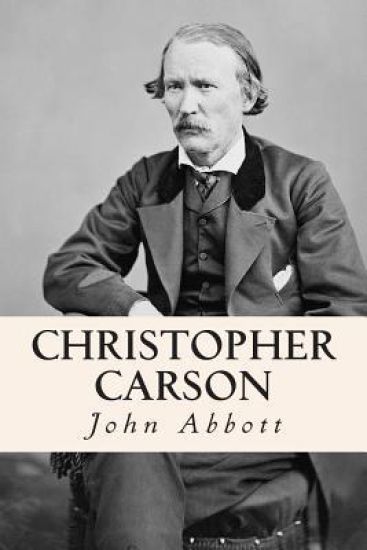
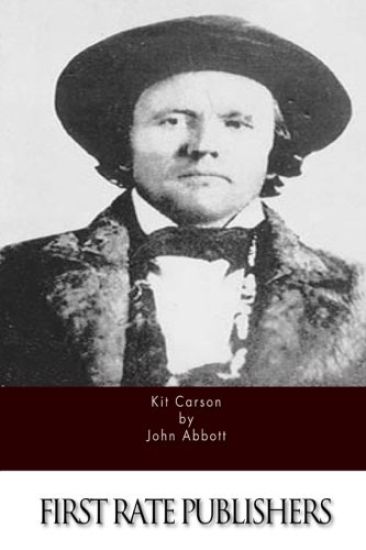
It is a prominent object of this Kit Carson biography, Christopher Carson, to bring to light the wild adventures of the pioneers of this continent, in the solitudes of the mountains, the prairies and the forests; often amidst hostile Indians, and far away from the restraints and protection of civilization. This strange, weird-like life is rapidly passing away, before the progress of population, railroads and steamboats. But it is desirable that the memory of it should not drift into oblivion. Christopher Houston Carson (December 24, 1809 - May 23, 1868), better known as Kit Carson, was an American frontiersman. He was a mountain man (fur trapper), wilderness guide, Indian agent, and U.S. Army officer. Carson became a frontier legend in his own lifetime via biographies and news articles. Exaggerated versions of his exploits were the subject of dime novels. Carson left home in rural present-day Missouri at age 16 to become a mountain man and trapper in the West. In the 1830s, he accompanied Ewing Young on an expedition to Mexican California and joined fur trapping expeditions into the Rocky Mountains. He lived among and married into the Arapaho and Cheyenne tribes. In the 1840s, he was hired as a guide by John C. Fremont. Fremont's expedition covered much of California, Oregon, and the Great Basin area. Fremont mapped and wrote reports and commentaries on the Oregon Trail to assist and encourage westward-bound American pioneers. Carson achieved national fame through Fremont's accounts of his expeditions. Under Fremont's command, Carson participated in the uprising against Mexican rule in California at the beginning of the Mexican-American War. Later in the war, Carson was a scout and courier, celebrated for his rescue mission after the Battle of San Pasqual and for his coast-to-coast journey from California to Washington, DC to deliver news of the conflict in California to the U.S. government. In the 1850s, he was appointed as the Indian agent to the Ute Indians and the Jicarilla Apaches. During the American Civil War, Carson led a regiment of mostly Hispanic volunteers from New Mexico on the side of the Union at the Battle of Valverde in 1862. When the Confederate threat to New Mexico was eliminated, Carson led forces to suppress the Navajo, Mescalero Apache, and the Kiowa and Comanche Indians. Carson was breveted a Brigadier General and took command of Fort Garland, Colorado. He was there only briefly: poor health forced him to retire from military life. Carson was married three times and had ten children. The Carson home was in Taos, New Mexico. Carson died at Fort Lyon, Colorado, of an aortic aneurysm on May 23, 1868. He is buried in Taos, New Mexico, next to his third wife Josefa Jaramillo. In 1847, General William Tecumseh Sherman met Kit Carson in Monterey, California. Sherman wrote: "His fame was then at its height, ... and I was very anxious to see a man who had achieved such feats of daring among the wild animals of the Rocky Mountains, and still wilder Indians of the plains ... I cannot express my surprise at beholding such a small, stoop-shouldered man, with reddish hair, freckled face, soft blue eyes, and nothing to indicate extraordinary courage or daring. He spoke but little and answered questions in monosyllables." Colonel Edward W. Wynkoop wrote: "Kit Carson was five feet five and one half-inches tall, weighed about 140 pounds, of nervy, iron temperament, squarely built, slightly bow-legged, and those members apparently too short for his body. But, his head and face made up for all the imperfections of the rest of his person. His head was large and well-shaped with yellow straight hair, worn long, falling on his shoulders. His face was fair and smooth as a woman's with high cheekbones, straight nose, a mouth with a firm, but somewhat sad expression, a keen, deep-set but beautiful, mild blue eye, which could become terrible under some circumstances, and like the warning of the rattlesnake.
A collection of short stories from author John Abbott. REVIEWS "Easy to forget all around us are worlds in motion with lives larger or smaller than our own involved in most of the similar intricacies it takes to survive, to live, to struggle, to love, suffer, procreate, laugh or just stand still. What's not so easy is the ability to take all these individual identities and have them stand out in their worlds of activity where normally they might not. John Abbott's ability to allow his characters and their situations to stand out on the page is something one gets in the exchange that takes place between he and his reader. Theft: And Other Tales of Loss and the Working Class masterfully accomplishes the deepest part of this relationship and offers the reader something unique, something apart from the expected, and from the commonplace in the name of a reality running parallel to our own and right before our eyes." - Paul B. Roth, editor & publisher The Bitter "John Abbott's stories remind me of those writers like Chekhov and de Maupassant. They have the same control of language, the same wry affection for their characters, the same understanding of, as Faulkner put, "the human heart in conflict with itself." Every moment of emotion in these stories is earned, and the stories' mastery literally jumps off the page when I read them. The work here is serious without being self-serious, funny without being easy, and always engaging." - Steven Carter, author of I Was Howard Hughes and Famous Writers School "This is a dazzling story collection about ordinary people in extraordinary moments, and Abbott give us these moments, beautifully, in lucid prose." - J.D. Dolan, author of Phoenix: A Brother's Life
Madame Roland (17 March 1754 - 8 November 1793), was, together with her husband Jean-Marie Roland de la Plati re, a supporter of the French Revolution and influential member of the Girondist faction. She fell out of favour during the Reign of Terror and died on the guillotine. The history of Madame Roland embraces the most interesting events of the French Revolution, that most instructive tragedy which time has yet enacted. There is, perhaps, contained in the memoirs of no other woman so much to invigorate the mind with the desire for high intellectual culture, and so much to animate the spirit heroically to meet all the ills of this eventful life. Madame Roland, born Marie-Jeanne Phlippon, the sole surviving child of eight pregnancies, was born to Gratien Phlippon and Madame Phlippon in March 1754. From her early years she was a successful, enthusiastic, and talented student. In her youth she studied literature, music and drawing. From the beginning she was strong willed and frequently challenged her father and instructors as she progressed through an advanced, well-rounded education. Enthusiastically supporting her education, Jeanne's parents enrolled her in the convent school of the Sisterhood of the Congregation in Paris - for one year only. She was enthusiastically religious, leading John Abbott to state "God thus became in Jane's mind a vision of poetic beauty".Following her convent school education, she pursued her education independently, Abbott relating that "Heraldry and books of romance, lives of the saints and fairy legends, biography, travels, history, political philosophy, poetry, and treatises upon morals, were all read and meditated upon by this young child". 2] Several literary figures influenced Roland's philosophy, including Voltaire, Montesquieu, Plutarch, and others. Most significantly, Rousseau's literature strongly influenced Roland's understanding of feminine virtue and political philosophy, and she came to understand a woman's genius as residing in Rousseau's definition of feminine virtue as "a pleasurable loss of self-control", which for Roland meant the courage of maternal self-sacrifice and suffering. Manon Phlippon (as her close friends and relatives called her) also, as she traveled, developed an increasing awareness of the outside world. In 1774, on a trip to Versailles, some of her most famous letters were sent to her friend Sophie Cannet, wherein she first begins to display an interest in politics, describing admiringly (if not presciently) the enthronement of Louis XVI and his queen Marie Antoinette fifteen years before the start of the French Revolution: The ministers are enlightened and well disposed, the young prince docile and eager for good, the queen amiable and beneficent, the court kind and respectable, the legislative body honourable, the people obedient, wishing only to love their master, the kingdom full of resources. Ah but we are going to be happy