

Kirjailija
John Anderson
Kirjat ja teokset yhdessä paikassa: 180 kirjaa, julkaisuja vuosilta 1871-2026, suosituimpien joukossa Guide to the Calcutta Zoological Gardens. Vertaile teosten hintoja ja tarkista saatavuus suomalaisista kirjakaupoista.
180 kirjaa
Kirjojen julkaisuhaarukka 1871-2026.

Catalogue of Mammalia in the Indian Museum, Calcutta
John Anderson; William Lutley Sclater
Outlook Verlag
2024
nidottu

Reprint of the original, first published in 1883.

Reprint of the original, first published in 1883.
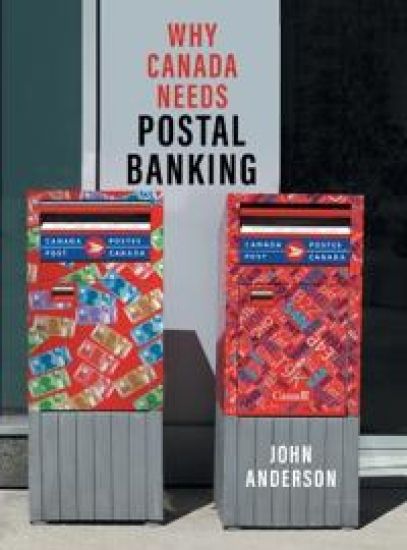
In almost half the communities in small town and rural Canada that have a post office, there are no bank or credit union branches;Only about fifty-four bank and credit union branches exist in the over 615 First Nations communities in Canada;A growing number of urban areas in Canada have no accessible banks or credit unionsWhy Canada Needs Postal Banking offers a plethora of information about the banking industry that will shock ordinary Canadians. In explaining the banking system that many of us take for granted, the author reveals a deep, and largely unrecognized, gap between the services offered in densely populated, urban spaces and those available in small towns, rural and remote regions, and Indigenous communities. As a solution to this dearth in services, John Anderson proposes a logical alternative to big, private-sector banks: the post office. Basing his argument on historical fact, international experience, and the exorbitant cost of traditional banking services, the author builds a logical and compelling case for reestablishing banking services at Canada Post. Composed of a collection of research papers, interviews, and opinion pieces, Why Canada Needs Postal Banking provides convincing and well-organized data to support the reintroduction of postal service banking in Canada. Readers can absorb survey results that document citizen, municipality, and union support for this strategy. Tables and graphics provide easy access for those who want to assess the statistical facts and figures at a glance. Written in clear, succinct, and transparent language, Why Canada Needs Postal Banking engages the reader while delivering surprising information. In a landscape where challenges seem overwhelming much of the time, this book proposes a solution that, while not without its difficulties, is implementable. It delivers answers and alternatives that support business and individuals' needs in different parts of the economy that have been, for too long and too often, overlooked.

In almost half the communities in small town and rural Canada that have a post office, there are no bank or credit union branches;Only about fifty-four bank and credit union branches exist in the over 615 First Nations communities in Canada;A growing number of urban areas in Canada have no accessible banks or credit unionsWhy Canada Needs Postal Banking offers a plethora of information about the banking industry that will shock ordinary Canadians. In explaining the banking system that many of us take for granted, the author reveals a deep, and largely unrecognized, gap between the services offered in densely populated, urban spaces and those available in small towns, rural and remote regions, and Indigenous communities. As a solution to this dearth in services, John Anderson proposes a logical alternative to big, private-sector banks: the post office. Basing his argument on historical fact, international experience, and the exorbitant cost of traditional banking services, the author builds a logical and compelling case for reestablishing banking services at Canada Post. Composed of a collection of research papers, interviews, and opinion pieces, Why Canada Needs Postal Banking provides convincing and well-organized data to support the reintroduction of postal service banking in Canada. Readers can absorb survey results that document citizen, municipality, and union support for this strategy. Tables and graphics provide easy access for those who want to assess the statistical facts and figures at a glance. Written in clear, succinct, and transparent language, Why Canada Needs Postal Banking engages the reader while delivering surprising information. In a landscape where challenges seem overwhelming much of the time, this book proposes a solution that, while not without its difficulties, is implementable. It delivers answers and alternatives that support business and individuals' needs in different parts of the economy that have been, for too long and too often, overlooked.
Conservative Christian Politics in Russia and the United States
John Anderson
Routledge
2020
nidottu
This book explores the politics of conservative Christian churches and social movements in Russia and the United States, focusing on their similar concerns but very different modes of political engagement.Whilst secularisation continues to chip away at religious adherence and practice in Europe, religion is often, quite rightly, seen as an influential force in the politics of the United States, and, more questionably, as a significant influence in contemporary Russia. This book looks at the broad social movement making up the US Christian Right and the profoundly hierarchical leadership of the Russian Orthodox Church as socially conservative actors, and some of the ways they have engaged in contemporary politics. Both are seeking to halt the perceived drift towards a more secular political order; both face significant challenges in handling the consequences of secularism, pluralism and liberal individualism; and both believe that their nations can only be great if they remain true to their religious heritage. In exploring their experience, the book focuses on shared and different elements in their diagnosis of what is wrong with their societies and how this affects their policy intervention over issues such as religious and ethnic belonging, sexual orientation and education. Drawing on political, sociological and religious studies, this work will be a useful reference for students and scholars of religion and politics, Russian politics and American politics.
Catalogue of mammalia in the Indian Museum, Calcutta (Part I) Primates, Prosimiae, Chiroptera, and Insectivora.
John Anderson
Alpha Edition
2019
pokkari
Essays on various subjects relative to the present state of religion
John Anderson
Hansebooks
2019
pokkari

Gurdjieff Work for Inner Unity
John Anderson; Marshall May; Jerry Brewster
Createspace Independent Publishing Platform
2018
nidottu

Sentinels of the Cosmos: The Return
Marshall May; John Anderson
Createspace Independent Publishing Platform
2018
nidottu
Third book in the trilogy Sentinels of the Cosmos

Having largely given up on a career in film, Edward Yang had been working as a computer engineer for several years when he saw Herzog's Aguirre, Wrath of God. Inspired to return to film, Yang, along with a handful of other filmmakers, including the great Hou Hsiao-hsien, went on to found the Taiwanese New Wave of the early 1980s. Film critic John Anderson's Edward Yang offers a comprehensive overview of the work of the writer-director-already considered one of the most important filmmakers of the past twenty years-from his breakthrough feature That Day, on the Beach to the epic Yi-Yi. Rooted in questions about what it means to be Taiwanese, Yang's films reveal the complexity of life within the island's patchwork culture. Anderson identifies the key narrative strategies, formal devices, moral vision, and sociopolitical concerns shot through Yang's films. He explains what makes these films so distinctive by pinpointing the specific qualities of Yang's style and outlook.

Every winter, 8,000 feet above sea level in the Utah snow, the hopes and dreams of young moviemakers are put on display at the Sundance Film Festival--the haven for independent films where you can show up a kid and go home a star. In barely twenty years of existence, the festival--now overseen by Robert Redford's Sundance Institute--has assumed tremendous importance for today's film culture: during the annual ten-day event, tiny Park City is so overrun by agents, publicists, studio executives, and other Hollywood types that in 1988 they blew out the town's cell-phone relay system.

Cómo la Inteligencia Artificial puede transformar los seguros en Túnez
Mehrez Ben Nasr; John Anderson
Ediciones Nuestro Conocimiento
2026
pokkari

Come l'intelligenza artificiale può trasformare le assicurazioni in Tunisia
Mehrez Ben Nasr; John Anderson
Edizioni Sapienza
2026
pokkari

Como é que a Inteligência Artificial pode transformar os Seguros na Tunísia
Mehrez Ben Nasr; John Anderson
Edições Nosso Conhecimento
2026
pokkari

Jak sztuczna inteligencja mo¿e przekszta¿ci¿ ubezpieczenia w Tunezji
Mehrez Ben Nasr; John Anderson
Wydawnictwo Nasza Wiedza
2026
pokkari

Comment l'intelligence artificielle peut transformer l'assurance en Tunisie
Mehrez Ben Nasr; John Anderson
Editions Notre Savoir
2026
pokkari

Wie künstliche Intelligenz das Versicherungswesen in Tunesien verändern kann
Mehrez Ben Nasr; John Anderson
Verlag Unser Wissen
2026
pokkari
Criminal Law Perspectives
John Anderson; Brendon Murphy; Natalia Antolak-Saper; Ben Livings
Cambridge University Press
2026
muu
Criminal Law Perspectives: From Principles to Practice provides a comprehensive and accessible introduction to criminal law for undergraduate and postgraduate students. It takes a comparative approach to the law, focusing on New South Wales, Victoria, the Australian Capital Territory and the Commonwealth Criminal Code, as well as the South Australian jurisdiction. Now in its second edition, Criminal Law Perspectives maintains its logical structure and clear explanations of complex concepts. It has been updated to include major developments in the law, including affirmative consent reforms, the criminalisation of coercive control and industrial manslaughter offences. Comprehensive jurisdictional extracts and relevant case examples are used to illustrate key principles of criminal law explored throughout the book. Students are encouraged to reflect and develop their problem-solving skills by engaging with the various features in each chapter, including review questions, case questions, hints and tips, and long-form end-of-chapter problem questions.