Kirjojen hintavertailu. Mukana 12 390 323 kirjaa ja 12 kauppaa.

Kirjailija

John Ashdown-Hill

Kirjat ja teokset yhdessä paikassa: 21 kirjaa, julkaisuja vuosilta 2009-2025, suosituimpien joukossa The Poetry Of John Ashdown-Hill. Vertaile teosten hintoja ja tarkista saatavuus suomalaisista kirjakaupoista.

21 kirjaa

Kirjojen julkaisuhaarukka 2009-2025.

The Poetry Of John Ashdown-Hill

The Poetry Of John Ashdown-Hill

John Ashdown-Hill

Maximum Felix Media
2019
pokkari
Dr. John Ashdown-Hill is best known as an eminent historian, a Fellow of the Royal Historical Society, the author of twelve history books and numerous historical research articles. His work for the Looking for Richard Project was instrumental in the rediscovery of Richard III's burial place in 2012, for which he was awarded an MBE in the 2015 Queen's Birthday Honours list. He has also throughout his life rendered thought, reflection, experience and emotion, in his careful and classical poetry.
Cecily Neville

Cecily Neville

John Ashdown-Hill

PEN SWORD BOOKS LTD
2025
nidottu
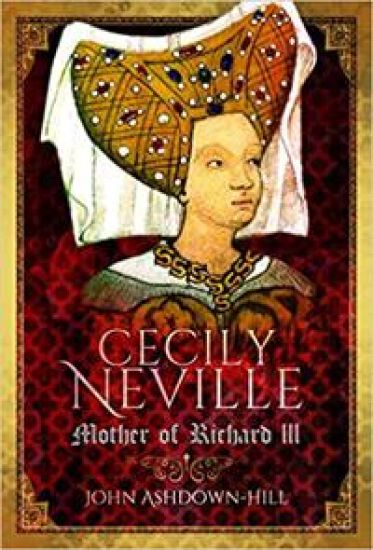
Wife to Richard, Duke of York, mother to Edward IV and Richard III, and aunt to the famous ‘Kingmaker’, Richard, Earl of Warwick, Cecily Neville was a key player on the political stage of fifteenth-century Britain England. Mythologically known as ‘the Rose of Raby’ because of her alleged beauty and birth at Raby Castle, and as ‘Proud Cis’ because of her rumoured vanity and fiery temper, Cecily’s personality and temperament have been highly speculated upon. In fact, much of her life is shrouded in mystery. Putting aside Cecily’s role as mother and wife, who was she really? Matriarch of the York dynasty, she navigated through a tumultuous period and lived to see the birth of the future Henry VIII. Cecily saw the House of York defeat their Lancastrian cousins, the defeat of her own son, Richard III, at the battle of Bosworth, and then saw one of her granddaughters become Henry VII’s queen consort. Her story is full of controversy and the few published books on her life are full of guess-work. In this highly original history, Dr John Ashdown-Hill seeks to dispel the myths surrounding Cecily using previously unexamined contemporary sources.
The Last Days of Richard III and the fate of his DNA

The Last Days of Richard III and the fate of his DNA

John Ashdown-Hill

THE HISTORY PRESS LTD
2024
pokkari
The Last Days of Richard III contains a new and uniquely detailed exploration of Richard’s last 150 days. By deliberately avoiding the hindsight knowledge that he will lose the Battle of Bosworth Field, we discover a new Richard: no passive victim, awaiting defeat and death, but a king actively pursuing his own agenda.It also re-examines the aftermath of Bosworth: the treatment of Richard’s body; his burial; and the construction of his tomb. And there is the fascinating story of why, and how, Richard III’s family tree was traced until a relative was found, alive and well, in Canada.Now, with the discovery of Richard’s skeleton at the Greyfrairs Priory in Leicester, England, John Ashdown-Hill explains how his book inspired the dig and completes Richard III’s fascinating story, giving details of how Richard died, and how the DNA link to a living relative of the king allowed the royal body to be identified.
The Mythology of the 'Princes in the Tower'

The Mythology of the 'Princes in the Tower'

John Ashdown-Hill

Amberley Publishing
2020
pokkari
When did the term ‘Princes in the Tower’ come into usage, who invented it, and to whom did it refer? To the general public the term is synonymous with the supposedly murdered boy King Edward V and his younger brother Richard, Duke of York, sons of Edward IV. But were those boys genuinely held against their will in the Tower? Would their mother, Elizabeth Widville, have released her son Richard from sanctuary with her if she believed she would be putting his life in danger? The children of Edward IV were declared bastards in 1483 and Richard, Duke of Gloucester, was offered the throne. But after Bosworth, in order to marry their sister Elizabeth of York, Henry VII needed to make her legitimate again. If the boys were alive at that time then Edward V would once again have become the rightful king. Following the discovery of some bones in the Tower in 1674 they were interred in a marble urn in Westminster Abbey as the remains of the two sons of Edward IV. What evidence exists, or existed at the time, to prove these indeed were the remains of two fifteenth-century male children? What did the 1933 urn opening reveal? John Ashdown-Hill is uniquely placed to answer these questions. By working with geneticists and scientists, and exploring the mtDNA haplogroup of the living all-female-line collateral descendant of the brothers, he questions the orthodoxy and strips away the myths.
Elizabeth Widville, Lady Grey

Elizabeth Widville, Lady Grey

John Ashdown-Hill

Pen Sword History
2020
nidottu
Wife to Edward IV and mother to the Princes in the Tower and later Queen Elizabeth of York, Elizabeth Widville was a central figure during the War of the Roses. Much of her life is shrouded in speculation and myth - even her name, commonly spelled as Woodville', is a hotly contested issue. Born in the turbulent fifteenth century, she was famed for her beauty and controversial second marriage to Edward IV, who she married just three years after he had displaced the Lancastrian Henry VI and claimed the English throne. As Queen Consort, Elizabeth's rise from commoner to royalty continues to capture modern imagination. Undoubtedly, it enriched the position of her family. Her elevated position and influence invoked hostility from Richard Neville, the Kingmaker', which later led to open discord and rebellion. Throughout her life and even after the death of her husband, Elizabeth remained politically influential: briefly proclaiming her son King Edward V of England before he was diposed by her brother-in-law, the infamous Richard III, she would later play an important role in securing the succession of Henry Tudor in 1485 and his marriage to her daughter Elizabeth of York, thus and ending the War of the Roses. Elizabeth Widville was an endlessly enigmatic historical figure, who has been obscured by dramatizations and misconceptions. In this fascinating and insightful biography, Dr John Ashdown-Hill brings shines a light on the truth of her life.
The Mythology of the 'Princes in the Tower'

The Mythology of the 'Princes in the Tower'

John Ashdown-Hill

Amberley Publishing
2018
sidottu
When did the term ‘Princes in the Tower’ come into usage, who invented it, and to whom did it refer? To the general public the term is synonymous with the supposedly murdered boy King Edward V and his younger brother Richard, Duke of York, sons of Edward IV. But were those boys genuinely held against their will in the Tower? Would their mother, Elizabeth Widville, have released her son Richard from sanctuary with her if she believed she would be putting his life in danger? The children of Edward IV were declared bastards in 1483 and Richard, Duke of Gloucester, was offered the throne. But after Bosworth, in order to marry their sister Elizabeth of York, Henry VII needed to make her legitimate again. If the boys were alive at that time then Edward V would once again have become the rightful king. Following the discovery of some bones in the Tower in 1674 they were interred in a marble urn in Westminster Abbey as the remains of the two sons of Edward IV. What evidence exists, or existed at the time, to prove these indeed were the remains of two 15th-century male children? What did the 1933 urn opening reveal? John Ashdown-Hill is uniquely placed to answer these questions. By working with geneticists and scientists, and exploring the mtDNA haplogroup of the living all-female-line collateral descendant of the brothers, he questions the orthodoxy and strips away the myths.
Cecily Neville

Cecily Neville

John Ashdown-Hill

Pen Sword History
2018
sidottu
Wife to Richard, Duke of York, mother to Edward IV and Richard III, and aunt to the famous 'Kingmaker', Richard, Earl of Warwick, Cecily Neville was a key player on the political stage of fifteenth-century Britain England. Mythologically rumoured to have been known as 'the Rose of Raby' because of her beauty and her birth at Raby Castle, and as 'Proud Cis' because of her vanity and fiery temper, Cecily's personality and temperament have actually been highly speculated upon. In fact, much of her life is shrouded in mystery. Putting aside Cecily's role as mother and wife, who was she really? Matriarch of the York dynasty, she navigated through a tumultuous period and lived to see the birth of the future Henry VIII. From seeing the house of York defeat their Lancastrian cousins; to witnessing the defeat of her own son, Richard III, at the battle of Bosworth, Cecily then saw one of her granddaughters become Henry VII's queen consort. Her story is full of controversy and the few published books on her life are full of guess-work. In this highly original history, Dr John Ashdown-Hill seeks to dispel the myths surrounding Cecily using previously unexamined contemporary sources.
The Private Life of Edward IV

The Private Life of Edward IV

John Ashdown-Hill

Amberley Publishing
2017
pokkari
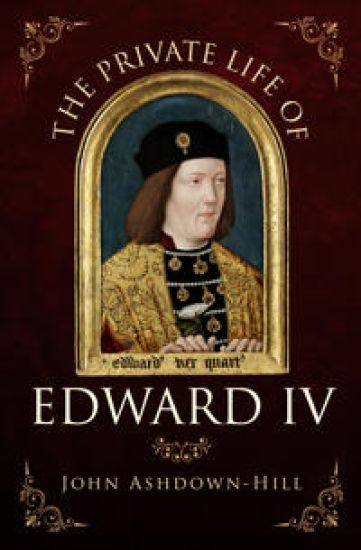
From the moment it became public news, the validity of Edward’s marriage to Elizabeth Widville, the beautiful widow of a Lancastrian knight, was repeatedly called into question. This alarmed Elizabeth Widville and led her into political killings. She was terrified that she would lose her crown and that her children by the king would never succeed to the throne. But after Edward’s death a bishop publicly announced that he had previously married the king to Lady Eleanor Talbot. As a result, Edward’s children by Elizabeth, including his eldest son and heir to the throne, Edward, were then declared illegitimate, making Edward’s brother Richard the legitimate heir to the throne. Later, claims were put forward that Edward had numerous mistresses and left behind many illegitimate children. Dr John Ashdown-Hill, a central figure in the Looking for Richard Project and a renowned Richard III historian with a special talent for getting behind the mythology of history, now turns his attention to Richard’s eldest brother, Edward IV. He unravels the complex web of stories around Edward’s private life, discussing the truth behind Edward’s reputation. Did Edward have numerous mistresses? Did he produce many bastards? Who was his legal wife? And what caused the early death of Eleanor Talbot?
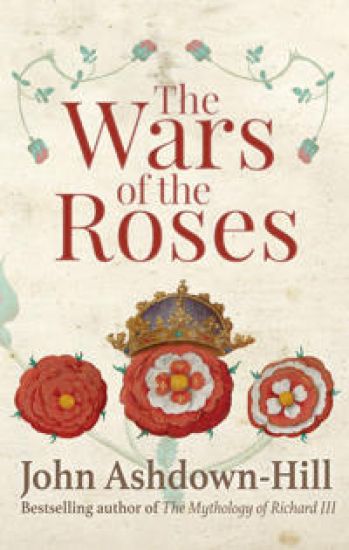
The Wars of the Roses

The Wars of the Roses

John Ashdown-Hill

Amberley Publishing
2017
pokkari
The Wars of the Roses call to mind bloody battles, treachery and deceit, and a cast of characters known to us through fact and fiction: Edward IV, Elizabeth Woodville, Richard III, Warwick the Kingmaker, the Princes in the Tower, Henry Tudor. But the whole era also creates a level of bewilderment among even keen readers. John Ashdown-Hill gets right to the heart of this ‘thorny’ subject, dispelling the myths and bringing clarity to a topic often shrouded in confusion. Between 1455 and 1487, a series of dynastic wars for the throne of England were fought. These have become known as the Wars of the Roses. But there never was a red rose of Lancaster … This book sets the record straight on this and many other points, getting behind the traditional mythology and reaching right back into the origins of the conflict to cut an admirably clear path through the thicket.
The Dublin King

The Dublin King

John Ashdown-Hill

The History Press Ltd
2017
nidottu
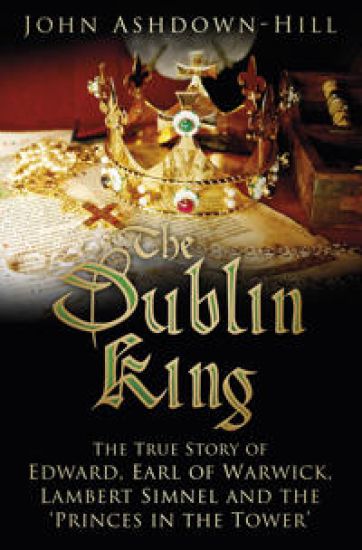
**A year after Richard III’s death, a boy claiming to be a Yorkist prince appeared as if from nowhere, claiming to be Richard III’s heir and the rightful King of England. **In 1487, in a unique ceremony, this boy was crowned in Dublin Cathedral, despite the Tudor government insisting that his real name was Lambert Simnel and that he was a mere pretender to the throne.Now, in The Dublin King, author and historian John Ashdown-Hill questions that official view. Using new discoveries, little-known evidence and insight, he seeks the truth behind the 500-year-old story of the boy-king crowned in Dublin. He also presents a link between Lambert Simnel’s story and that of George, Duke of Clarence, the brother of Richard III. On the way, the book sheds new light on the fate of the ‘Princes in the Tower’, before raising the possibility of using DNA to clarify the identity of key characters in the story and their relationships.
The Private Life of Edward IV

The Private Life of Edward IV

John Ashdown-Hill

Amberley Publishing
2016
sidottu
From the moment it became public news, the validity of Edward’s marriage to Elizabeth Widville, the beautiful widow of a Lancastrian knight, was repeatedly called into question. This alarmed Elizabeth Widville and led her into political killings. She was terrified that she would lose her crown and that her children by the king would never succeed to the throne. But after Edward’s death a bishop publicly announced that he had previously married the king to Lady Eleanor Talbot. As a result, Edward’s children by Elizabeth, including his eldest son and heir to the throne, Edward, were then declared illegitimate, making Edward’s brother Richard the legitimate heir to the throne. Later, claims were put forward that Edward had numerous mistresses and left behind many illegitimate children. Dr John Ashdown-Hill, a central figure in the Looking for Richard Project and a renowned Richard III historian with a special talent for getting behind the mythology of history, now turns his attention to Richard’s eldest brother, Edward IV. He unravels the complex web of stories around Edward’s private life, discussing the truth behind Edward’s reputation. Did Edward have numerous mistresses? Did he produce many bastards? Who was his legal wife? And what caused the early death of Eleanor Talbot?
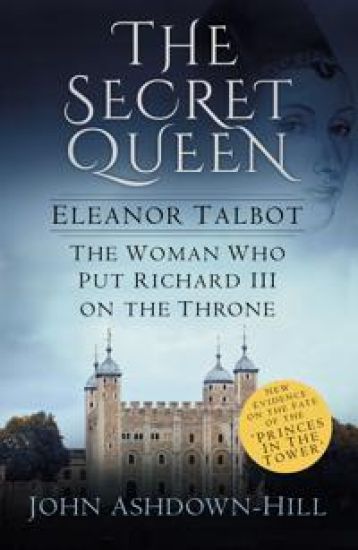
The Secret Queen

The Secret Queen

John Ashdown-Hill

The History Press Ltd
2016
nidottu
When Edward IV died in 1483, the Yorkist succession was called into question by doubts about the legitimacy of his sons (the ‘Princes in the Tower’). The crown therefore passed to Edward IV's undoubtedly legitimate younger brother, Richard, Duke of Gloucester. But Richard, too, found himself entangled in the web of uncertainly, since those who believed in the legitimacy of Edward IV’s children viewed Richard III’s own accession with suspicion.From the day that Edward IV married Eleanor, or pretended to do so, the House of York, previously so secure in its bloodline, confronted a contentious and uncertain future. John Ashdown-Hill argues that Eleanor Talbot was married to Edward IV, and that therefore Edward’s subsequent union with Elizabeth Widville was bigamous, making her children illegitimate.In his quest to reveal the truth about Eleanor, he also uncovers fascinating new evidence that sheds fresh light on one of the greatest historical mysteries of all time – the identity of the ‘bones in the urn’ in Westminster Abbey, believed for centuries to be the remains of the ‘Princes in the Tower’.
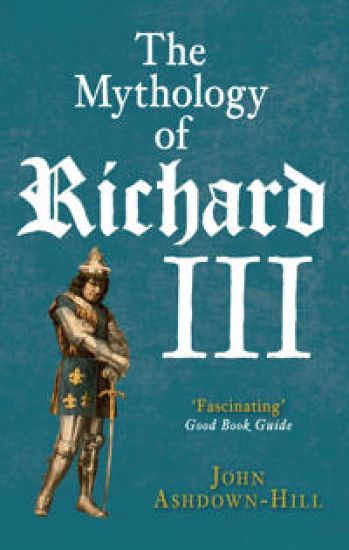
The Mythology of Richard III

The Mythology of Richard III

John Ashdown-Hill

Amberley Publishing
2016
pokkari
Richard III. The name will conjure an image for any reader: Shakespeare’s hunchback tyrant who killed his own nephews or a long-denigrated, misunderstood king. This one man’s character and actions have divided historians and the controversy has always kept interest in Richard alive. However, curiosity surrounding his life and death has reached unprecedented heights in the aftermath of the discovery of his skeleton under a Leicester car park. The myths that have always swirled around Richard III have risen and multiplied and it is time to set the record straight. John Ashdown-Hill, whose research was instrumental in the discovery of Richard III’s remains, explores and unravels the web of myths in this fascinating book.
The Wars of the Roses

The Wars of the Roses

John Ashdown-Hill

Amberley Publishing
2015
sidottu
The Wars of the Roses call to mind bloody battles, treachery and deceit, and a cast of characters known to us through fact and fiction: Edward IV, Elizabeth Woodville, Richard III, Warwick the Kingmaker, the Princes in the Tower, Henry Tudor. But the whole era also creates a level of bewilderment among even keen readers. John Ashdown-Hill gets right to the heart of this ‘thorny’ subject, dispelling the myths and bringing clarity to a topic often shrouded in confusion. Between 1455 and 1487, a series of dynastic wars for the throne of England were fought. These have become known as the Wars of the Roses. But there never was a red rose of Lancaster … This book sets the record straight on this and many other points, getting behind the traditional mythology and reaching right back into the origins of the conflict to cut an admirably clear path through the thicket.
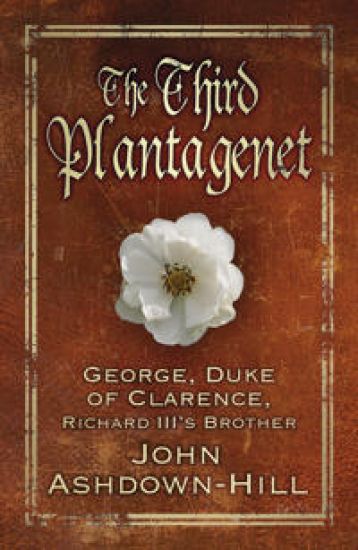
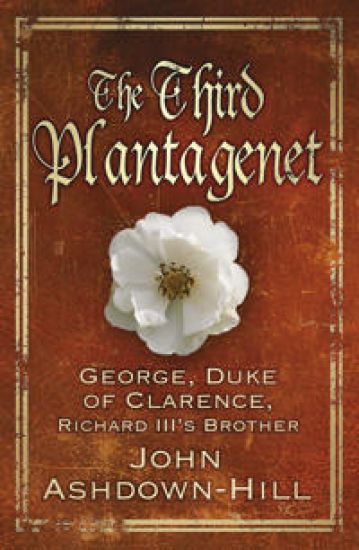
The Third Plantagenet

The Third Plantagenet

John Ashdown-Hill

The History Press Ltd
2015
nidottu
Less well-known than his brothers, Edward IV and Richard III, little has been written about George, Duke of Clarence, leaving us with a series of unanswered questions: What was he really like? What set him and his brother Edward IV against one another? And who was really responsible for his death? George played a central role in the ‘Wars of the Roses’, played out by his family. But was George for York or Lancaster? Is the story of his drowning in a barrel of wine really true? And was ‘false, fleeting, perjur’d Clarence’ in some ways one of the role models behind the sixteenth-century defamation of Richard III? Finally, where was he buried and what became of his body? Could the DNA used recently to test the remains of his younger brother, Richard III, also reveal the truth about the supposed ‘Clarence bones’ in Tewkesbury? Here, John Ashdown-Hill brings us a new full biography of George, Duke of Clarence, which exposes the myths surrounding this important Plantagenet prince, and reveals the fascinating results of John’s recent reexamination of the Clarence vault and its contents.
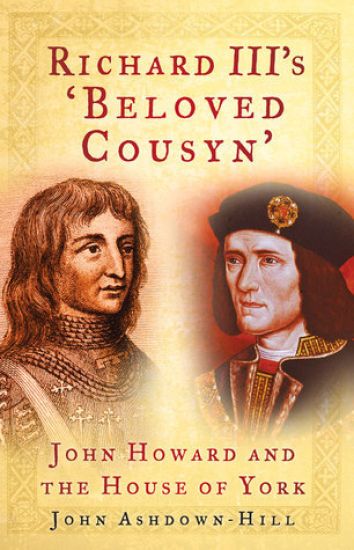
Richard III's 'Beloved Cousyn'

Richard III's 'Beloved Cousyn'

John Ashdown-Hill

The History Press Ltd
2015
nidottu
In 1455 John Howard was an untitled and relatively obscure Suffolk gentleman. Thirty years later, at the time of his death at the Battle of Bosworth Field, he was Earl Marshal, Duke of Norfolk, Lord Admiral and a very rich man (and his direct descendant is Duke of Norfolk today). How had Howard attained these elevations? Through his service to the House of York, and in particular to King Richard III during the setting aside of Edward V.John Ashdown-Hill examines why Howard chose to support Richard, even ultimately at the cost of his life; what secrets he knew about Edward IV; what he had to do with the fate of the 'Princes in the Tower;' and what naval innovations, hitherto ascrided to the Tudors, he promoted. Based on original research and containing previously unpublished material, Richard III's 'Beloved Cousyn' is an important contribution to Ricardian scholarship.
The Third Plantagenet

The Third Plantagenet

John Ashdown-Hill

The History Press Ltd
2014
sidottu
Less well-known than his brothers, Edward IV and Richard III, little has been written about George, Duke of Clarence, leaving us with a series of unanswered questions: What was he really like? What set him and his brother Edward IV against one another? And who was really responsible for his death? George played a central role in the ‘Wars of the Roses’, played out by his family. But was George for York or Lancaster? Is the story of his drowning in a barrel of wine really true? And was ‘false, fleeting, perjur’d Clarence’ in some ways one of the role models behind the sixteenth-century defamation of Richard III? Finally, where was he buried and what became of his body? Could the DNA used recently to test the remains of his younger brother, Richard III, also reveal the truth about the supposed ‘Clarence bones’ in Tewkesbury? Here, John Ashdown-Hill brings us a new full biography of George, Duke of Clarence, which exposes the myths surrounding this important Plantagenet prince, and reveals the fascinating results of John’s recent reexamination of the Clarence vault and its contents.
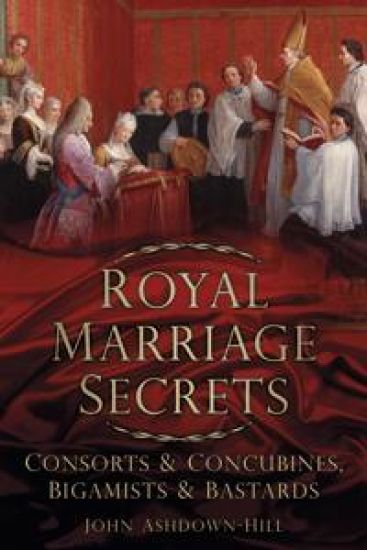
Royal Marriage Secrets

Royal Marriage Secrets

John Ashdown-Hill

The History Press Ltd
2013
nidottu
With a new royal baby we witness fundamental changes in the succession laws, but then rules governing the royal weddings and the succession to the throne have always been shifting. So what is marriage and who decides? What special rules govern royal marriage and when did they come into force? How have royal marriages affected history? Were the ‘Princes in the Tower’ illegitimate? Did Henry VIII really have six wives? Was Queen Victoria ‘Mrs Brown’? how were royal consorts chosen in the past? Did some use witchcraft to win the Crown? History has handled debateable royal marriages in various ways, but had the same rules been applied consistently, the order of succession would have been completely different. Here, all controversial English and British royal marriages are reassessed together for the first time to explore how different cases can shed light on one another. Surveying the whole phenomenon of disputed royal marriage, the author offer some intriguing new evidence, while highlighting common features and points of contrast.