
Kirjailija
John B Lee
Kirjat ja teokset yhdessä paikassa: 15 kirjaa, julkaisuja vuosilta 2002-2025, suosituimpien joukossa In the Terrible Weather of Guns. Vertaile teosten hintoja ja tarkista saatavuus suomalaisista kirjakaupoista.
Mukana myös kirjoitusasut: John B. Lee
15 kirjaa
Kirjojen julkaisuhaarukka 2002-2025.
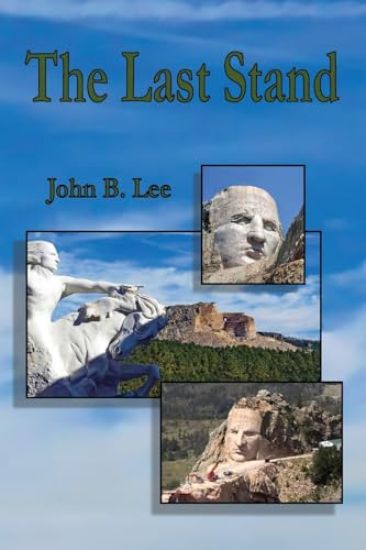
Although the cover and some of the epigraphs would indicate focus on Crazy Horse and the lost Lakota way of life, John B. Lee's latest collection of verse, The Last Stand, touches on matters much more complex. At a first reading, it appears to be a lamentation, an agonized retrospection of a place now lost, ground down not just by time, but by the adversity imposed its own natural processes of existing. It can be perceived as melancholy, weeping for what had been, with a subtle challenge for the reader to evaluate whether what has gone before was worth anything of value, and whether the transience of life, whatever its form, has any meaning whatsoever in the Grand Scheme, It takes at least a second reading, and maybe a third or even more, for the reader to discern and acknowledge its underlying premise that all things, animate and inanimate, must change, including the reader's attitude toward what can be gleaned from what has gone before. The collection highlights that "The Great American West" was grand and sordid at the same time, and it requires the maturity and openness of the reader to appreciate the dichotomy.John expresses in a few lines, emotions beyond the capacity of a novelist or essayist, of anyone but a true poet.F. W. AbelAuthor of theFrom Slave to Soldierseries of novels After reading, pondering and enjoying this little, but not so trivial, contribution to CanLit I decided to propose this afterword to John. We agreed that I should place it here at the end of the book. The first thing that I wanted to comment on was the title. I found it to be a fitting and poignant choice, reflecting the author's introspection on the enduring legacy of history, culture, and memory tied to iconic and sacred sites in America's West. Each poem questions the established narratives of famous historical moments and individuals, asking readers to reconsider the ideas of heroism, conquest, and cultural significance through a deeply reflective lens. The poems explore the legacy of battles, the monumental figures associated with them, and the contrasting cultural values held by Indigenous and European settler societies.
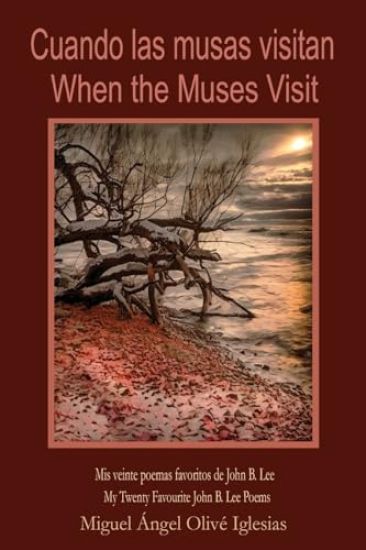
When the Muses Visit / Cuando las musas visitan
John B Lee; Miguel Á O Iglesias
Wet Ink Books
2024
pokkari
Spanish translations and essays about 25 poems by John B. Lee - Canadian Poet by CanLit scholar Miguel ngel Oliv Iglesias, MSc. John is a world-class poet, one of the best in Canada. Miguel ngel Oliv Iglesias, MSc is THE best CanLit scholar in Cuba. This combination makes for a must read CanLit book.

Mosaic Press published John B. Lee’s book Into a Land of Strangers: Documentary Poems in 2019 in which he explores his own ancestry which involves the tumultuous decades of China in the late nineteenth and early twentieth Century. A School Called Normal: Poems & Stories extends the Poet’s personal history of his own youth in small town rural Ontario.
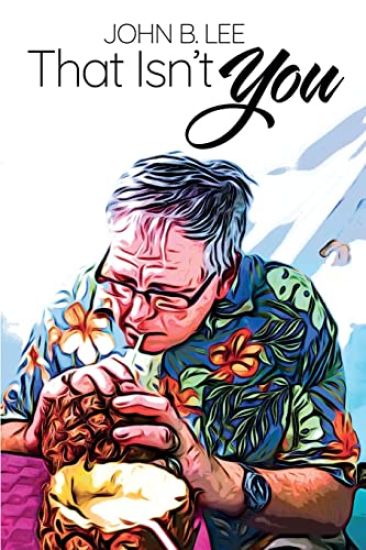
The title for That Isn't You is inspired by a comment made by my mother concerning a video transcribed from an old eight-millimeter film. In a still shot, isolated from a single frame of the moving picture, I am riding high on my uncle John's shoulders. When Mother saw the photograph she said "that isn't you," meaning she could not imagine a day from the past when I would have had that kind of relationship with my father's elder brother, the bachelor farmer who lived in our house.In the photograph I am obviously delighted and thrilled and full with the joy of riding high on my six-foot-two uncle's shoulders. So, her phrase got me to thinking about "identity" and how we see ourselves, how we are seen by others who might claim to know us well, how we are seen by friends and familiars, how we are seen by strangers, both in chance meetings, and in brief encounters, how we are seen after we pass away when the living refuse to acknowledge what I call 'the full grumble of the dear departed." The true self, the persona, the disconnection between the masks we so often wear to show the world what we wish to reveal, and the face behind the mask. As an aging man I sometimes feel I shave a stranger every morning. I catch a glimpse of my own reflection and wonder, "Who are you?" I was once startled beyond words by being greeted at a family picnic by a seldom-seen relative, "So, how is my sexy cousin doing?" Surely, she could not mean yours truly. It was quite embarrassing because I think she thought I saw myself that way, when it could never be further from the truth.

The poems from this fine collection remind us that "nature enables and culture denies". They deal with professions and trades lost to most contemporary humans. The last blacksmith of the village joins the casket maker, the milkman, the traveling salesman, the TV repair man, the elevator operator, the mill worker, the night soil man, and the home guard all of whom teach us to attend to our own times, and to how we are shaped and formed by the experiences we have in childhood and how as those experiences vanish into the mist our past becomes, in the words of the prize winning title poem: ... a voice you can't hearthough it's clear that the voice is your own In the closing words of his introduction Lee writes: ... well as for me, I was born taking my first breath in the eternal and ever-present peril of total annihilation from thermo-nuclear war. According to my mother my first words were "Howdy Doody" and my final words, at least for now, "I don't know what that means ..."------------------ John B. Lee is a master of metaphor and powerful surges of feeling. It's always a pleasure to see a Lee poem I haven't encountered before. He is the premier Canadian poet of his generation.Don Gutteridge, poet and novelistJohn B. Lee is the greatest living poet in English. He sows everyday experiences with a timeless gravity and awe.George WhippleIf you ever doubt the value of daily writing, just read this master craftsman of finding and maintaining his own voice. John B. Lee's lines flow smoothly from one fresh new metaphor to the next.Bernice Lever

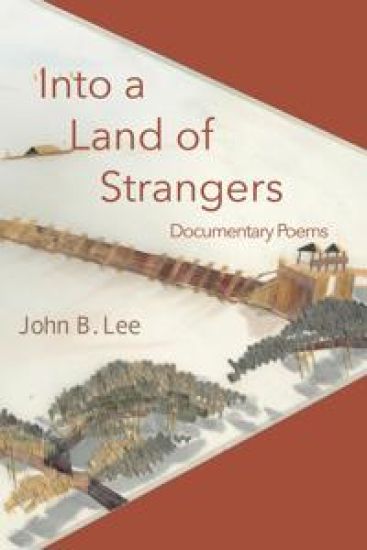
John B. Lee’s voyage of research, interviews, and travels began in his quest to learn more about his great-aunt who has served as a missionary in China. The result is this extraordinary book of discovery which takes readers back into the nineteenth century and through the tumultuous history of China during the early twentieth century. Only a master poet and historically acute person such as John B. Lee could begin this saga and complete it so convincingly.
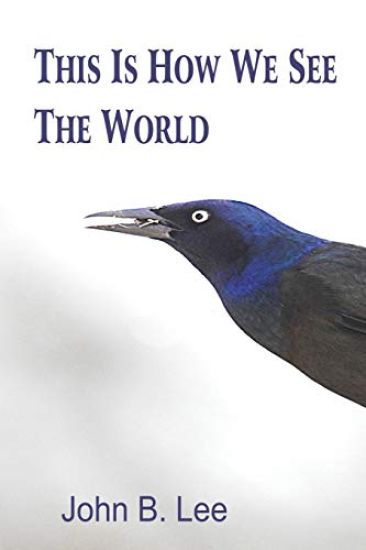
This is How We See the World includes eighteen previously published chapbook written over the course of thirty years by multi-award winning poet John B. Lee. This is How We See the World beginning with work written by John B. Lee when he was a nineteen-year-old undergraduate at University of Western Ontario being championed by Canadian literary luminaries Margaret Avison, Stan Dragland and Don McKay. This noteworthy series of eighteen chapbooks published between the covers of a single volume culminates in recent award-winning work that confirms those early supporters' faith in Lee's promise as a writer to be reckoned with. For his part, poet George Whipple calls Lee the greatest living poet in English. James Deahl refers to Lee as the premier People's Poet of his generation, and Marty Gervais sites Lee as the best poet in Canada. Little wonder then that Nelson Mandela, Alberto Manguel, Desmond Tutu, Australian poet Les Murray, have all seen fit to praise Lee's work. Appointed Poet Laureate of both the city of Brantford and Norfolk County he writes what he sees in a voice for the ages. This is How We See the World takes us shank's mare across the Arctic Circle, on safari in South Africa, under the city into the catacombs of Lima, Peru, climbing along the walls of Machu Picchu, trekking onto the Great Wall of China, wading into the warm waters of the Indian Ocean off Thailand, and the aquamarine Caribbean seas on the coast of Cuba. Lee writes of home with the fresh eyes of a stranger and of far off places with the profound familiarity of home.And what comes between this opening salvo and these closing lines is work that has such range of interest and depth of field to please any lover of great poetry. Lee's poems on South Africa inspired Nobel Laureate, Nelson Mandela, to send Lee a letter of praise. A recipient of the Rubicon Chapbook Award, Leaf Press chapbook Award, the Golden Grassroots Chapbook Award, a three-time nominee for the b.p. Nichol Chapbook Award, with Honourable Mentions from several publishers it is little wonder that more than one reader has seen fit to call John B. Lee Canada's premier poet. For his part George Whipple calls Lee the greatest living poet in English. Little wonder then that both the city of Brantford and Norfolk County have seen fit to appoint John B. Lee Poet Laureate. Lee continues to garner awards for his work. In 2016 he won the thousand dollar inaugural Hourglass Poetry Award naming him Hourglass Laureate publishing his work in Bosnia Herzegovina. In the words of Lee's first published poem written when he was sixteen: I will leave you now ... with nothing to do but to begin at the end.


Suffused with light and air, the poems have the clarity of great photography, the feel of wind in the hair, the hushed compassion for everything and everyone seen and heard. There is a rich exuberance underlying all impressions, but not exploited at the expense of deep feelings. There is a subtle basic bass line supporting the sparkling right hand figures of Lee's style--an unerring ear matched to an intensity of vision, and both in the service of heart, mind and soul. More and more, I'm impressed by Lee's wish to communicate in artistic language without compromise--by his steely discipline as he balances the richest of language with spiritual insight, avoiding the cheap plays of irony, frippery vulgarity that tarnishes so much of "People's Poetry". This is subtly conveyed by his kind shading of metaphor with "like'' since similes are less dazzling and therefore more sympathetic to the nerves of the common reader as he sublimely manipulates emotions with all the artistry of the poet aligned with the gravitas of the image. John B. Lee is "the" People's Poet with the hidden agenda of a spiritual adviser, a magician of language whose poems often conclude with an amazing transcendence of intellect confronted by the inexpressible and surrendering to it in a skyrocket of wild imagery and pure poetry. I admire the unselfconscious pride with which Lee propagates his love of literature--its power and its glory--around his town and around the world--an evangelist of truth and beauty. To read Lee's work is to believe in them for the first time all over again. God bless him. by George Whipple
In the Terrible Weather of Guns is a book of poems and short prose pieces that tell the story of the life and times of Irish immigrant, Joseph Willcocks. Arriving in Upper Canada penniless in 1800, he was by turns a personal secretary, sheriff of the Home District, and publisher of the first political newspaper in Upper Canada. He was an elected representative in the legislature at York and fought valiantly for the British in the bloody war of 1812. In beautifully evocative language, John B. Lee's study of Willcocks highlights the complexities of a talented man who crossed over to the Americans and died in dishonour during one of the most violent episodes in Canadian history.