Kirjojen hintavertailu. Mukana 12 595 353 kirjaa ja 12 kauppaa.

Kirjailija

John Baldacchino

Kirjat ja teokset yhdessä paikassa: 13 kirjaa, julkaisuja vuosilta 2008-2023, suosituimpien joukossa Lessons of Belonging. Vertaile teosten hintoja ja tarkista saatavuus suomalaisista kirjakaupoista.

13 kirjaa

Kirjojen julkaisuhaarukka 2008-2023.

Lessons of Belonging

Lessons of Belonging

John Baldacchino

BRILL
2023
sidottu
Prompting this book is the paradox of belonging. What pushes the author to write are art’s questions. Rather than take the route of writing, artists in academia could opt for the studio, teaching students, and occasionally indulge in conferences and symposia. However, beyond such rituals, writing art’s questions remains akin to art’s acts of belonging. In these lessons of belonging this is done through art’s paradox. Belonging is a matter of art because art belongs to the aporia that writes it.
Lessons of Belonging

Lessons of Belonging

John Baldacchino

BRILL
2023
nidottu
Prompting this book is the paradox of belonging. What pushes the author to write are art’s questions. Rather than take the route of writing, artists in academia could opt for the studio, teaching students, and occasionally indulge in conferences and symposia. However, beyond such rituals, writing art’s questions remains akin to art’s acts of belonging. In these lessons of belonging this is done through art’s paradox. Belonging is a matter of art because art belongs to the aporia that writes it.
Easels of Utopia

Easels of Utopia

John Baldacchino

Routledge
2021
nidottu
Originally published in 1998, Easels of Utopia presents a discussion of art's duration and contingency within the avant garde's aesthetic parameters, which throughout this century have constructed, influenced, and informed our definitions of modernity. In this context the book reads Umberto Boccioni's Futurism as reminiscent of Thomist realism; proposes Caravaggism's historical relevance to the election of individuality in post-war realism; and draws the readers attention to the aesthetic implications in Carlo Carrà's metaphysical art and its reappraisal of the early Renaissance. Following a contextual analysis of the historic avant-garde in Part One, Part Two presents parallel discussions of Italian and British questions, articulated by the works of Marino Marini, Francis Bacon, Renato Guttuso and Stanley Spencer in their return to individuality within art's aesthetic construct. The author argues that this initiates a return to 'lost' beginnings where form seeks knowledge, content regains an ability to anarchize, and art recognizes its contingent condition.
Art as Unlearning

Art as Unlearning

John Baldacchino

Routledge
2020
nidottu
Art as Unlearning makes an argument for art’s unlearning as a manneristpedagogy. Art’s pedagogy facilitates a form of forgetfulness by extending what happens in the practice of the arts in their visual, auditory and performative forms. The concept of learning has become predominantly hijacked by foundational paradigms such as developmental narratives whose positivistic approach has limited the field of education to a narrow practice within the social sciences. This book moves away from these strictures by showing how the arts confirm that unlearning is not contingent on learning, but rather anticipates and avoids it. This book cites the experience and work of artists who, by unlearning the canon, have opened a diversity of possibilities by which we make and live the world. Moving beyond clichés of art’s teachability and what we have to learn through the arts, it advances a scenario where unlearning is uniquely presented to us by the diverse practices that we identify with the arts. The very notion of art as unlearning stems from and represents a fundamental critique of the constructivist pedagogies that have dominated arts education for over half a century. This book will be of great interest to academics, researchers and postgraduate students in the fields of education, philosophy of education, history of education, pedagogy of art and art education. It will also appeal to educators, art educators, and artists interested in the pedagogy of art.
Educing Ivan Illich

Educing Ivan Illich

John Baldacchino

Peter Lang Publishing Inc
2020
nidottu
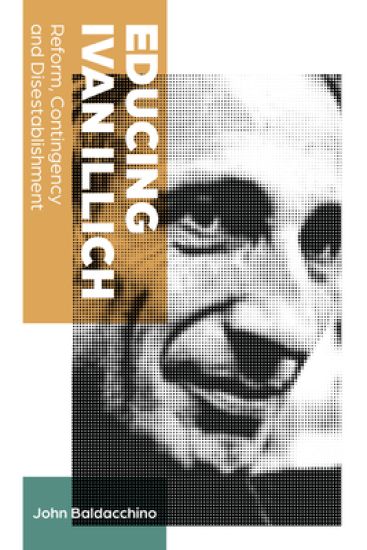
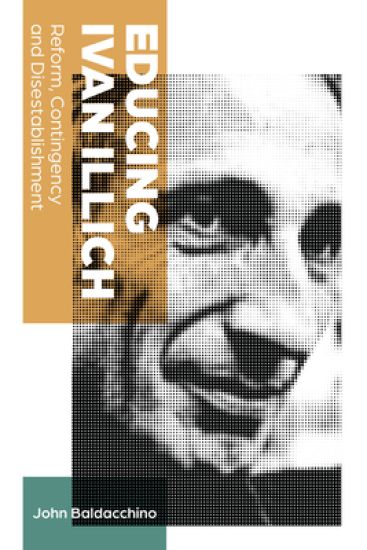
More than a book about Illich, this is a conversation with Illich’s work as we enter the third decade of the 21st century, just under twenty years after his passing, and almost ?fty years since his Deschooling Society was ?rst published. As Illich is beati?ed and demonised in equal measure, Educing Ivan Illich chooses to focus on the relationship between reform, contingency and disestablishment. As reform stands for a plurality of reiterations that seek effective forms of accordance, in our recognition of contingency we freely claim that even as we might recognize the presence of universality in how everything appears on a shared horizon, we are not denied the existence and dynamic reality of plural possibilities in their inherent contradictions. In this bargain of synchronicity, we ?nd that disestablishing the rei?ed universe by which we have, for so long, traded, staked and even lost our freedom and intelligence, is not just a desire but it becomes a must. Unlike other commentators of Illich’s work, Baldacchino argues that what is radical about Illich is not a freestanding concept of deschooling but in how, in disestablishing social life, he exits the walls of the polis by upholding tradition as a disruptive force. In such light Illich’s work is read in what remains overdue. Odd though it may sound, this is an urgent need for anyone interested in Illich’s unique and irreplaceable contribution. To that end, Educing Ivan Illich has far more to offer than is usually expected from a commentary on someone else’s work.
Educing Ivan Illich

Educing Ivan Illich

John Baldacchino

Peter Lang Publishing Inc
2020
sidottu
More than a book about Illich, this is a conversation with Illich’s work as we enter the third decade of the 21st century, just under twenty years after his passing, and almost ?fty years since his Deschooling Society was ?rst published. As Illich is beati?ed and demonised in equal measure, Educing Ivan Illich chooses to focus on the relationship between reform, contingency and disestablishment. As reform stands for a plurality of reiterations that seek effective forms of accordance, in our recognition of contingency we freely claim that even as we might recognize the presence of universality in how everything appears on a shared horizon, we are not denied the existence and dynamic reality of plural possibilities in their inherent contradictions. In this bargain of synchronicity, we ?nd that disestablishing the rei?ed universe by which we have, for so long, traded, staked and even lost our freedom and intelligence, is not just a desire but it becomes a must. Unlike other commentators of Illich’s work, Baldacchino argues that what is radical about Illich is not a freestanding concept of deschooling but in how, in disestablishing social life, he exits the walls of the polis by upholding tradition as a disruptive force. In such light Illich’s work is read in what remains overdue. Odd though it may sound, this is an urgent need for anyone interested in Illich’s unique and irreplaceable contribution. To that end, Educing Ivan Illich has far more to offer than is usually expected from a commentary on someone else’s work.
Art as Unlearning

Art as Unlearning

John Baldacchino

Routledge
2018
sidottu
Art as Unlearning makes an argument for art’s unlearning as a manneristpedagogy. Art’s pedagogy facilitates a form of forgetfulness by extending what happens in the practice of the arts in their visual, auditory and performative forms. The concept of learning has become predominantly hijacked by foundational paradigms such as developmental narratives whose positivistic approach has limited the field of education to a narrow practice within the social sciences. This book moves away from these strictures by showing how the arts confirm that unlearning is not contingent on learning, but rather anticipates and avoids it.This book cites the experience and work of artists who, by unlearning the canon, have opened a diversity of possibilities by which we make and live the world. Moving beyond clichés of art’s teachability and what we have to learn through the arts, it advances a scenario where unlearning is uniquely presented to us by the diverse practices that we identify with the arts. The very notion of art as unlearning stems from and represents a fundamental critique of the constructivist pedagogies that have dominated arts education for over half a century. This book will be of great interest to academics, researchers and postgraduate students in the fields of education, philosophy of education, history of education, pedagogy of art and art education. It will also appeal to educators, art educators, and artists interested in the pedagogy of art.
Easels of Utopia

Easels of Utopia

John Baldacchino

Routledge
2018
sidottu
Originally published in 1998, Easels of Utopia presents a discussion of art's duration and contingency within the avant garde's aesthetic parameters, which throughout this century have constructed, influenced, and informed our definitions of modernity. In this context the book reads Umberto Boccioni's Futurism as reminiscent of Thomist realism; proposes Caravaggism's historical relevance to the election of individuality in post-war realism; and draws the readers attention to the aesthetic implications in Carlo Carrà's metaphysical art and its reappraisal of the early Renaissance. Following a contextual analysis of the historic avant-garde in Part One, Part Two presents parallel discussions of Italian and British questions, articulated by the works of Marino Marini, Francis Bacon, Renato Guttuso and Stanley Spencer in their return to individuality within art's aesthetic construct. The author argues that this initiates a return to 'lost' beginnings where form seeks knowledge, content regains an ability to anarchize, and art recognizes its contingent condition.
Post-Marxist Marxism

Post-Marxist Marxism

John Baldacchino

Routledge
2018
sidottu
Originally published in 1996, Post-Marxist Marxism is a discussion of realism in a Post-Marxist context. The book argues that this discussion must take two simultaneous routes: recognizing deconstruction as the tool of enquiry to disentangle the insufficiency of contemporary answers in political philosophy and aesthetics, and reclaiming realism to move beyond the Post-Modernist tradition. To answer the issues of realism, the book revisits Lucacs' and Adorno's aesthetic questions, which in their different approaches prefigured the questions of the present. Central issues include totality; method; identarian and non-identarian dialects; the Enlightenment; and the end of Modernity.
John Dewey

John Dewey

John Baldacchino

Springer
2014
nidottu
This book presents John Dewey’s work as a claim to the human potentials found in experience, the imagination and the possibilities that emerge from our disposition towards liberty. It details Dewey’s work as a critical junction marked by the quandary of schooling and culture, and where learning is also positioned beyond the boundaries of educational institutions. The book first examines Dewey in his various contexts, influences and life experiences, including his relationship with Hegelian philosophy, Emersonian transcendentalism, Darwin’s method of scientific experimentation, and his deep bond with his first wife Alice Chipman and their work in the Laboratory School. It then revisits Dewey’s approach to politics and education within contemporary debates on education, learning and the School. This discussion takes stock of what does a diverse and plural society mean to us today, at a time that remains challenged by the politics of class, race, gender and sexuality. Dewey’s work has a profound bearing on our understanding of these challenges. Thus to read and talk Dewey is to engage with a conversation with Dewey the philosopher who poses an array of questions, ranging from the way we feel (aesthetics), behave (ethics), think (logic), live as a community (politics) and how we learn (education). In addition, the book also takes Dewey’s concept of experimentation into a discussion of unlearning and deschooling through the arts and aesthetics education. Offering a thought-provoking dialogue with Dewey’s philosophy, this book recognizes the contradictory nature of learning and extends it to the open horizons of experience. By way of discussing the various aspects of Dewey’s approach to organization, policy making and the relationship between education and business, it repositions Dewey in contemporary political and educational contexts, exploring the possibility for education to be free and yet rigorous enough to help us engage with forms ofknowledge by which we negotiate and understand the world.
Education Beyond Education

Education Beyond Education

John Baldacchino

Peter Lang Publishing Inc
2008
sidottu
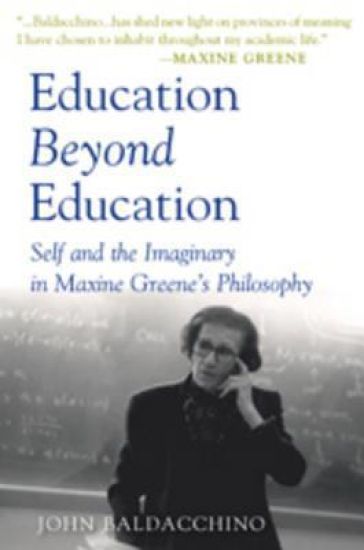
Developing a theme in dialogue with Maxine Greene’s philosophy, this book introduces the reader to what animates Greene’s passionate work: the self and the imaginary. It illuminates how Greene empowers us all as learners of the possible, by identifying learning with the power of the imagination. Greene’s work promises hope beyond the impasse that often occurs when learning is reified by educational systems. Education Beyond Education illustrates how Greene redefines the notion of the imaginary – and with it, that of the imagination – as that which expands the possibilities of learning beyond the boundaries by which education is often narrowly defined and practiced. Tracing Greene’s key arguments, Education Beyond Education offers a strikingly original and empowering way to see and re-position education beyond its customary limits.
Education Beyond Education

Education Beyond Education

John Baldacchino

Peter Lang Publishing Inc
2008
nidottu
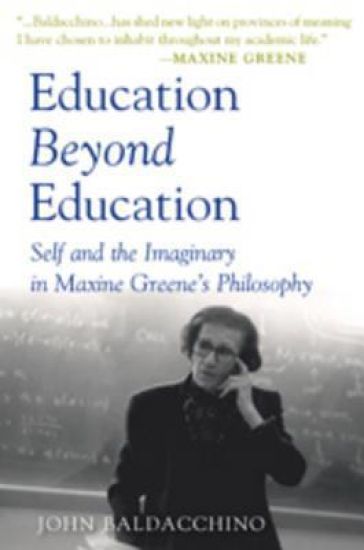
Developing a theme in dialogue with Maxine Greene’s philosophy, this book introduces the reader to what animates Greene’s passionate work: the self and the imaginary. It illuminates how Greene empowers us all as learners of the possible, by identifying learning with the power of the imagination. Greene’s work promises hope beyond the impasse that often occurs when learning is reified by educational systems. Education Beyond Education illustrates how Greene redefines the notion of the imaginary – and with it, that of the imagination – as that which expands the possibilities of learning beyond the boundaries by which education is often narrowly defined and practiced. Tracing Greene’s key arguments, Education Beyond Education offers a strikingly original and empowering way to see and re-position education beyond its customary limits.