
Kirjailija
John Beer
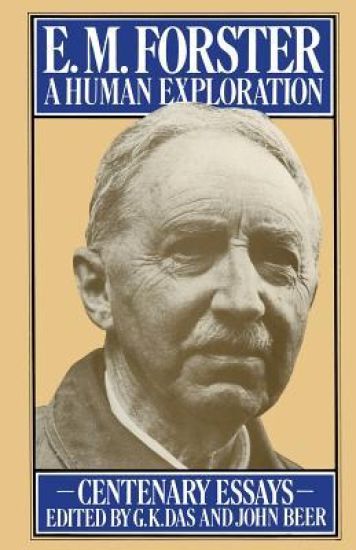
Kirjat ja teokset yhdessä paikassa: 10 kirjaa, julkaisuja vuosilta 1979-2013, suosituimpien joukossa E. M. Forster: A Human Exploration. Vertaile teosten hintoja ja tarkista saatavuus suomalaisista kirjakaupoista.
10 kirjaa
Kirjojen julkaisuhaarukka 1979-2013.
The repercussions of the French Revolution included erosion of many previously held certainties in Britain, as in the rest of Europe. Even the authority of language as a cornerstone of knowledge was called into question and the founding principles of intellectual disciplines challenged, as Romantic writers developed new ways of expressing their philosophy of the imagination and the human heart. This book traces the impact of revolution on language, from William Blake, Samuel Taylor Coleridge and William Wordsworth, to William Hazlitt, Jane Austen, Elizabeth Gaskell and George Eliot. A leading scholar in Romantic literature and theology, John Beer offers a persuasive new account of post-revolutionary continuities between the major Romantic writers and their Victorian successors.
Eminent Coleridgean scholar John Beer presents a series of biographical investigations exploring Coleridge's life, stage by stage, and reconsidering the intellectual quality of his thinking and poetry through an emphasis on the notion of 'play'. Beginning and ending with brief accounts of the poet's childhood and last years, the book's seventeen chapters each take a passage of Coleridge's life and characterise the nature and function of an abiding playful element in his consciousness. In combination they form a detailed, full, and humane treatment of Coleridge's life, focusing on topics such as his interest in psychology, his poetry, his literary collaboration with William and Dorothy Wordsworth, his hopeless love for William's sister-in-law, his literary criticism, including a new approach to Shakespeare, and his work towards a refreshing of contemporary religious beliefs and practices.
The repercussions of the French Revolution included erosion of many previously held certainties in Britain, as in the rest of Europe. Even the authority of language as a cornerstone of knowledge was called into question and the founding principles of intellectual disciplines challenged, as Romantic writers developed new ways of expressing their philosophy of the imagination and the human heart. This book traces the impact of revolution on language, from William Blake, Samuel Taylor Coleridge and William Wordsworth, to William Hazlitt, Jane Austen, Elizabeth Gaskell and George Eliot. A leading scholar in Romantic literature and theology, John Beer offers a persuasive new account of post-revolutionary continuities between the major Romantic writers and their Victorian successors.
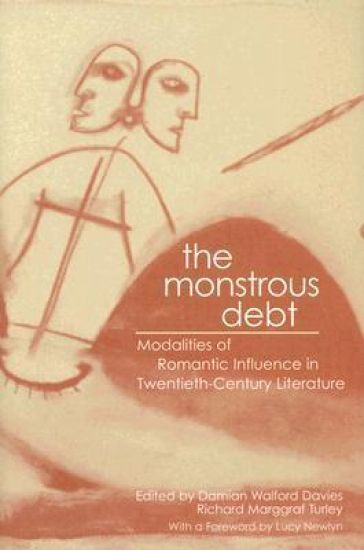
The Monstrous Debt
John Bayley; John Beer; Hugh Haughton; Harriet Devine Jump; Richard Marggraf-Turley; Emma Mason; Lucy Newlyn; Michael O'Neill
Wayne State University Press
2006
sidottu
The authors in this collection join an animated debate on the persistence of Romanticism. Even as dominant twentieth-century cultural movements have contested Romantic ""myths"" of redemptive Nature, individualism, perfectibility, the transcendence of art, and the heart's affections, the Romantic legacy survives as a point of tension and of inspiration for modern writers. Rejecting the Bloomian notion of anxious revisionism, ""The Monstrous Debt"" argues that various kinds of influences, inheritances, and indebtedness exist between well-known twentieth-century authors and canonical Romantic writers. Among the questions asked by this volume are: How does Blake's graphic mythology submit to ""redemptive translations"" in the work of Dylan Thomas? How might Ted Hughes' strong readings of a ""snaky"" Coleridge illuminate the ""mercurial"" poetic identity of Sylvia Plath? How does Shelley ""sustain"" the work of W. B. Yeats and Elizabeth Bishop with supplies of ""imaginative oxygen""? In what ways does Keats enable Bob Dylan to embrace influence? How does Keats prove inadequate for Tony Harrison as he confronts contemporary violence? How does ""cockney"" Romanticism succeed in shocking John Betjeman's poetry out of kitsch into something new and strange? ""The Monstrous Debt"" seeks to broaden our sense of what ""influence"" is by defining the complex of relations that contribute to the making of the modern literary text. Scholars and students of the Romantic era will enjoy this informative volume.
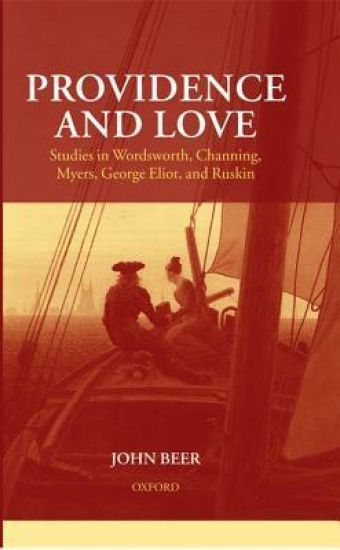
These studies are connected by common underlying themes: the sense of Providence, the growing awareness of its loss in the nineteenth century and the pressure on the ideal of Romantic love as that came increasingly to be treated as a substitute. Other questions are raised. Were Wordsworth's `Lucy' poems simply Romantic fictions, or did they mask the memory of an actual youthful attachment? What was the story behind the secret message which F. W. H. Myers left with the Society for Psychical Research, hoping to transmit it after his death? And what was it about the young Cambridge men George Eliot met in 1872 that made them particularly attractive to her? Investigation of these and other matters has led to close scrutiny of various manuscripts in British and American libraries, certain of which, including some letters of George Eliot recently discovered in Cambridge, are reproduced here for the first time.
Since the rise of scientific thinking in the seventeenth century the role of the imagination in literature has been a matter for debate. Is it an essential resource, as maintained by some Romantic writers, or a treacherous purveyor of illusions? In this lecture Professor Beer suggests that one result of this uncertainty has been to set up a division (which continues to pervade literary enterprises) between imaginative flights on the one hand and the 'weighing of words' on the other. His examples are drawn from a wide range of writers, including Johnson and Dickens, Hopkins and Woolf. The lecture concludes with an examination of two poems by Wordsworth, who is seen as having faced these problems in an unusually intricate and subtle manner.
A Passage to India
John Beer
Barnes Noble Books-Imports, Div of Rowman Littlefield Pubs., Inc
1985
sidottu
The contributors to this book interpret, from different points of view, what is believed by most to be Forster's finest work, resulting in a remarkably clear discussion of a complex book. Different aspects of the workóthe social and political elements, the work as symbolic statement, intricacies of the languageóare covered.
William Blake was a revolutionary poet and artist: "I know myself both Poet & Painter", he wrote. In his paintings he created visionary images that challenge conventional perceptions; in his poetry he joined words and images in the stunning form of the 'illuminated book', where verbal and visual depictions interact. As a Romantic poet and religious visionary, he questioned Romantic assumptions and rewrote Biblical tradition in a radical mythology for his own historical moment. He welcomed the eruption of the French Revolution and attacked Britain's wars against Revolutionary France, assaulting the social injustices of his day and critiquing the politics and psychology of power. Steve Vine's study introduces the full range of Blake's poetry and illuminated books from the early Songs to the late epics, and focuses on the socially radical and challenging nature of his art: on Blake's attempts to open the 'doors of perception' beyond limiting visions and ideologies--to what he called 'the infinite'.