

Kirjailija
John Bellamy Foster
Kirjat ja teokset yhdessä paikassa: 35 kirjaa, julkaisuja vuosilta 1984-2026, suosituimpien joukossa Grand Theft Capital. Vertaile teosten hintoja ja tarkista saatavuus suomalaisista kirjakaupoista.
35 kirjaa
Kirjojen julkaisuhaarukka 1984-2026.

As a case study in what awaits the United States and other countries, Digitalization in India is a warning and wake up call for democracies everywhere.

The immanent dialectic of the ancient Greek materialist philosopher, Epicurus (341-270 BCE), helped inspire Karl Marx, and formed the subject of his doctoral dissertation. Marx’s detailed study of Epicurus led him to develop his own materialist dialectic in distinction to the idealist philosophy of G.W.F. Hegel. Until now, however, there has been no full scholarly treatment of the relation of Epicurus to Marx, paying equal attention to both thinkers and examining the long-term impact of Epicureanism on Marxist thought. Breaking the Bonds of Fate: Epicurus and Marx fills this gap. Taking into consideration today’s revolution in the understanding of Epicurus—resulting from the recovery of fragments of his major work On Nature in the carbonized papyri that survived the burying in volcanic ash of the Roman town Herculaneum when Mt. Vesuvius erupted in 79 CE—it demonstrates that this new interpretation corresponds closely to Marx’s nineteenth-century treatment of Epicurus. The result is to fundamentally transform our contemporary understanding of both Epicurus and Marx. The last (though logically the first) book to be written in a trilogy that also includes John Bellamy Foster’s Marx’s Ecology: Materialism and Nature (2000) and his The Return of Nature: Socialism and Ecology (2020), Breaking the Bonds of Fate: Epicurus and Marx provides a detailed historical and textual analysis grounding the argument of all three works. Not only does this clarify Marx’s relation to materialism and ecology, but also his analysis of the of freedom and necessity. Both Epicurus’ philosophy and that of Marx are given new meaning in our time, highlighting questions of substantive equality, dialectical naturalism, and sustainable community.
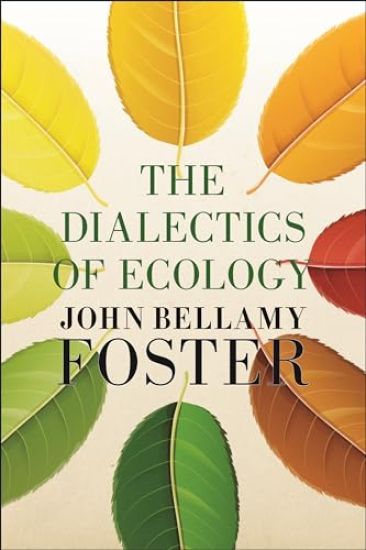
Explores ecological socialism's potential against capitalist environmental degradation Today the fate of the earth as a home for humanity is in question--and yet, contends John Bellamy Foster, the reunification of humanity and the earth remains possible if we are prepared to make revolutionary changes. As with his prior books, The Dialectics of Ecology is grounded in the contention that we are now faced with a concrete choice between ecological socialism and capitalist exterminism, and rooted in insights drawn from the classical historical materialist tradition. In this latest work, Foster explores the complex theoretical debates that have arisen historically with respect to the dialectics of nature and society. He then goes on to examine the current contradictions associated with the confrontation between capitalist extractivism and the financialization of nature, on the one hand, and the radical challenges to these represented by emergent visions of ecological civilization and planned degrowth, on the other. The product of contemporary ecosocialist debates, The Dialectics of Ecology builds on earlier works by Foster, including Marx's Ecology and The Return of Nature, aimed at the development of a dialectical naturalism and the formation of a path to sustainable human development.
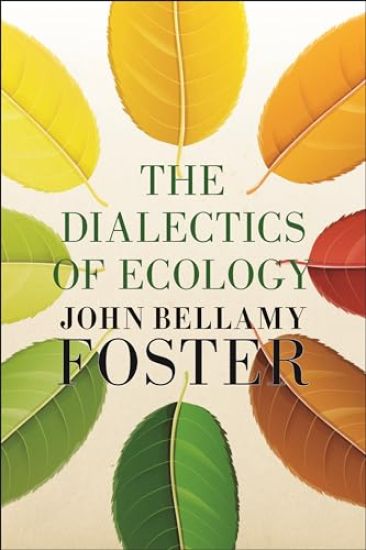
Explores ecological socialism's potential against capitalist environmental degradation Today the fate of the earth as a home for humanity is in question--and yet, contends John Bellamy Foster, the reunification of humanity and the earth remains possible if we are prepared to make revolutionary changes. As with his prior books, The Dialectics of Ecology is grounded in the contention that we are now faced with a concrete choice between ecological socialism and capitalist exterminism, and rooted in insights drawn from the classical historical materialist tradition. In this latest work, Foster explores the complex theoretical debates that have arisen historically with respect to the dialectics of nature and society. He then goes on to examine the current contradictions associated with the confrontation between capitalist extractivism and the financialization of nature, on the one hand, and the radical challenges to these represented by emergent visions of ecological civilization and planned degrowth, on the other. The product of contemporary ecosocialist debates, The Dialectics of Ecology builds on earlier works by Foster, including Marx's Ecology and The Return of Nature, aimed at the development of a dialectical naturalism and the formation of a path to sustainable human development.

Washington's New Cold War
Vijay Prashad; John Bellamy Foster; John Ross; Deborah Veneziale
MONTHLY REVIEW PRESS,U.S.
2022
pokkari
Argues the forces which originally drove us into the Cold War never went anywhere, and the stakes are higher than ever As the American people delude themselves once more into thinking of the United States as a liberating force for peace in the world, Waging a New Cold War invites us, instead, to think for ourselves. Behind the scenes the plans to wage war have been laid--either by proxy, as in Ukraine, or directly, against the U.S.'s old twentieth-century foes. Waging a New Cold War: A Socialist Perspective makes a strong case that, as the official story is laid out by government propagandists, and as the mainstream media provides cover, the aim of this latest set of American military escapades remains the same as ever: Maintenance of U.S hegemony in the global financial system. Foregrounded with an introduction by Vijay Prashad, this cogent collaboration puts forth three essays that illustrate clearly that, while the Cold War against the Soviet Union ended, the "cold war" against the "enemies" of the United States did not. Furthermore, its authors lay out evidence that the U.S. establishment has been willing to risk nuclear winter--in other words, mutual annihilation--to hold onto economic primacy. And they show that, while Russia and China can each be criticized, justifiably, for their violations of human life and dignity, neither, on its own, threatens the eruption of a Third World War and the end of the human race as we know it. Just in time, we have in our hands an intelligent text that strengthens our struggle against the cynical machinations of the American military behemoth and its propaganda machine.
Washington's New Cold War
Vijay Prashad; John Bellamy Foster; John Ross; Deborah Veneziale
MONTHLY REVIEW PRESS,U.S.
2022
sidottu
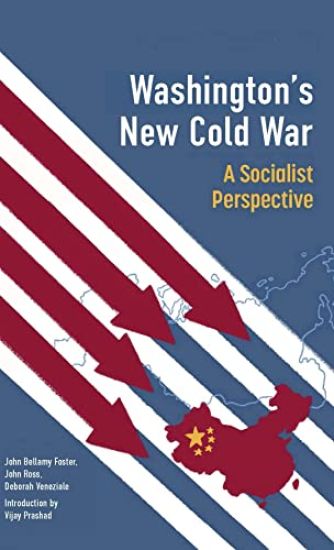
As the American people delude themselves once more into thinking of the United States as a liberating force for peace in the world, Waging a New Cold War invites us, instead, to think for ourselves. Behind the scenes the plans to wage war have been laid--either by proxy, as in Ukraine, or directly, against the U.S.'s old twentieth-century foes. Waging a New Cold War: A Socialist Perspective makes a strong case that, as the official story is laid out by government propagandists, and as the mainstream media provides cover, the aim of this latest set of American military escapades remains the same as ever: Maintenance of U.S hegemony in the global financial system. Foregrounded with an introduction by Vijay Prashad, this cogent collaboration puts forth three essays that illustrate clearly that, while the Cold War against the Soviet Union ended, the "cold war" against the "enemies" of the United States did not. Furthermore, its authors lay out evidence that the U.S. establishment has been willing to risk nuclear winter--in other words, mutual annihilation--to hold onto economic primacy. And they show that, while Russia and China can each be criticized, justifiably, for their violations of human life and dignity, neither, on its own, threatens the eruption of a Third World War and the end of the human race as we know it. Just in time, we have in our hands an intelligent text that strengthens our struggle against the cynical machinations of the American military behemoth and its propaganda machine.
Explores capitalism’s role in creating the current state of climate emergency Over the last 11,700 years, during which human civilization developed, the earth has existed within what geologists refer to as the Holocene Epoch. Now science is telling us that the Holocene Epoch in the geological time scale ended, replaced by a new more dangerous Anthropocene Epoch, which began around 1950. The Anthropocene Epoch is characterized by an “anthropogenic rift” in the biological cycles of the Earth System, marking a changed reality in which human activities are now the main geological force impacting the earth as a whole, generating at the same time an existential crisis for the world’s population. What caused this massive shift in the history of the earth? In this comprehensive study, John Bellamy Foster tells us that a globalized system of capital accumulation has induced humanity to foul its own nest. The result is a planetary emergency that threatens all present and future generations, throwing into question the continuation of civilization and ultimately the very survival of humanity itself. Only by addressing the social aspects of the current planetary emergency, exploring the theoretical, historical, and practical dimensions of the capitalism’s alteration of the planetary environment, is it possible to develop the ecological and social resources for a new journey of hope.
Explores capitalism’s role in creating the current state of climate emergency Over the last 11,700 years, during which human civilization developed, the earth has existed within what geologists refer to as the Holocene Epoch. Now science is telling us that the Holocene Epoch in the geological time scale ended, replaced by a new more dangerous Anthropocene Epoch, which began around 1950. The Anthropocene Epoch is characterized by an “anthropogenic rift” in the biological cycles of the Earth System, marking a changed reality in which human activities are now the main geological force impacting the earth as a whole, generating at the same time an existential crisis for the world’s population. What caused this massive shift in the history of the earth? In this comprehensive study, John Bellamy Foster tells us that a globalized system of capital accumulation has induced humanity to foul its own nest. The result is a planetary emergency that threatens all present and future generations, throwing into question the continuation of civilization and ultimately the very survival of humanity itself. Only by addressing the social aspects of the current planetary emergency, exploring the theoretical, historical, and practical dimensions of the capitalism’s alteration of the planetary environment, is it possible to develop the ecological and social resources for a new journey of hope.
Winner, 2020 Isaac and Tamara Deutscher Memorial Prize A fascinating reinterpretation of the radical and socialist origins of ecology Twenty years ago, John Bellamy Foster's Marx's Ecology: Materialism and Nature introduced a new understanding of Karl Marx's revolutionary ecological materialism. More than simply a study of Marx, it commenced an intellectual and social history, encompassing thinkers from Epicurus to Darwin, who developed materialist and ecological ideas. Now, with The Return of Nature: Socialism and Ecology, Foster continues this narrative. In so doing, he uncovers a long history of efforts to unite issues of social justice and environmental sustainability that will help us comprehend and counter today's unprecedented planetary emergencies. The Return of Nature begins with the deaths of Darwin (1882) and Marx (1883) and moves on until the rise of the ecological age in the 1960s and 1970s. Foster explores how socialist analysts and materialist scientists of various stamps, first in Britain, then the United States, from William Morris and Frederick Engels to Joseph Needham, Rachel Carson, and Stephen J. Gould, sought to develop a dialectical naturalism, rooted in a critique of capitalism. In the process, he delivers a far-reaching and fascinating reinterpretation of the radical and socialist origins of ecology. Ultimately, what this book asks for is nothing short of revolution: a long, ecological revolution, aimed at making peace with the planet while meeting collective human needs.
Bridges the gap between social and environmental critiques of capitalism In the nineteenth century, Karl Marx, inspired by the German chemist Justus von Liebig, argued that capitalism's relation to its natural environment was that of a robbery system, leading to an irreparable rift in the metabolism between humanity and nature. In the twenty-first century, these classical insights into capitalism's degradation of the earth have become the basis of extraordinary advances in critical theory and practice associated with contemporary ecosocialism. In The Robbery of Nature, John Bellamy Foster and Brett Clark, working within this historical tradition, examine capitalism's plundering of nature via commodity production, and how it has led to the current anthropogenic rift in the Earth System.
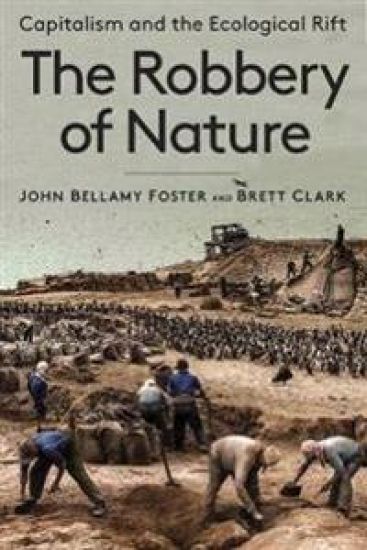
Bridges the gap between social and environmental critiques of capitalism In the nineteenth century, Karl Marx, inspired by the German chemist Justus von Liebig, argued that capitalism's relation to its natural environment was that of a robbery system, leading to an irreparable rift in the metabolism between humanity and nature. In the twenty-first century, these classical insights into capitalism's degradation of the earth have become the basis of extraordinary advances in critical theory and practice associated with contemporary ecosocialism. In The Robbery of Nature, John Bellamy Foster and Brett Clark, working within this historical tradition, examine capitalism's plundering of nature via commodity production, and how it has led to the current anthropogenic rift in the Earth System.
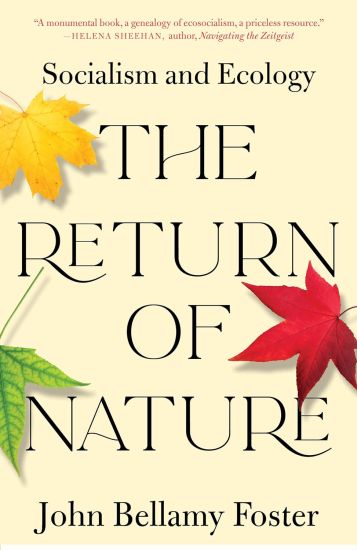
A fascinating reinterpretation of the radical and socialist origins of ecology Twenty years ago, John Bellamy Foster's Marx's Ecology: Materialism and Nature introduced a new understanding of Karl Marx's revolutionary ecological materialism. More than simply a study of Marx, it commenced an intellectual and social history, encompassing thinkers from Epicurus to Darwin, who developed materialist and ecological ideas. Now, with The Return of Nature: Socialism and Ecology, Foster continues this narrative. In so doing, he uncovers a long history of efforts to unite issues of social justice and environmental sustainability that will help us comprehend and counter today's unprecedented planetary emergencies. The Return of Nature begins with the deaths of Darwin (1882) and Marx (1883) and moves on until the rise of the ecological age in the 1960s and 1970s. Foster explores how socialist analysts and materialist scientists of various stamps, first in Britain, then the United States, from William Morris and Frederick Engels to Joseph Needham, Rachel Carson, and Stephen J. Gould, sought to develop a dialectical naturalism, rooted in a critique of capitalism. In the process, he delivers a far-reaching and fascinating reinterpretation of the radical and socialist origins of ecology. Ultimately, what this book asks for is nothing short of revolution: a long, ecological revolution, aimed at making peace with the planet while meeting collective human needs.

Trump in the White House
Robert W McChesney; John Bellamy Foster
Monthly Review Press,U.S.
2017
sidottu
Remember that metaphor about the frog that slowly cooks to death in the pot of increasingly warm water? Leftists have used it for years to describe how people can accept dwindling health care, fading job opportunities, eroding racial and gender equality--as long as the loss occurs gradually. Now, with Donald Trump having slouched off to Washington, most of the mainstream media are working overtime to convince us that we can still stand the heat. Leave it to John Bellamy Foster, one of the world's outstanding radical scholars, to expose Trump for who and what he is: a neo-fascist. Just at the boiling point, Foster offers us cool logic to comprehend the system that created Trump's moral and political emergency--and to resist it.In Trump in the White House, John Bellamy Foster does what no other Trump analyst has done before: he places the president and his administration in full historical context. Foster reveals that Trump is merely the endpoint of a stagnating economic system whose liberal democratic sheen has begun to wear thin. Beneath a veneer of democracy, we see the authoritarian rule that oversees decreasing wages, anti-science and climate-change denialism, a dying public education system, and expanding prisons and military--all powered by a phony populism seething with centuries of racism that never went away.But Foster refuses to end his book in despair. Inside his analysis is a clarion call to fight back. Protests, popular demands, coalitions: everyone is needed. Change can't happen without radical, anti-capitalist politics, and Foster demonstrates that--even now, with the waters ever warming--it may yet be possible to stop the desecration of the Earth; to end endless war; to create global solidarity with all oppressed people. Could a frog do that?

Trump in the White House
Robert W McChesney; John Bellamy Foster
Monthly Review Press,U.S.
2017
pokkari
Remember that metaphor about the frog that slowly cooks to death in the pot of increasingly warm water? Leftists have used it for years to describe how people can accept dwindling health care, fading job opportunities, eroding racial and gender equality--as long as the loss occurs gradually. Now, with Donald Trump having slouched off to Washington, most of the mainstream media are working overtime to convince us that we can still stand the heat. Leave it to John Bellamy Foster, one of the world's outstanding radical scholars, to expose Trump for who and what he is: a neo-fascist. Just at the boiling point, Foster offers us cool logic to comprehend the system that created Trump's moral and political emergency--and to resist it.In Trump in the White House, John Bellamy Foster does what no other Trump analyst has done before: he places the president and his administration in full historical context. Foster reveals that Trump is merely the endpoint of a stagnating economic system whose liberal democratic sheen has begun to wear thin. Beneath a veneer of democracy, we see the authoritarian rule that oversees decreasing wages, anti-science and climate-change denialism, a dying public education system, and expanding prisons and military--all powered by a phony populism seething with centuries of racism that never went away.But Foster refuses to end his book in despair. Inside his analysis is a clarion call to fight back. Protests, popular demands, coalitions: everyone is needed. Change can't happen without radical, anti-capitalist politics, and Foster demonstrates that--even now, with the waters ever warming--it may yet be possible to stop the desecration of the Earth; to end endless war; to create global solidarity with all oppressed people. Could a frog do that?
Over a decade ago Foster and Burkett introduced a revolutionary understanding of the ecological foundations of Marx's thought, demonstrating that Marx's concepts of the universal metabolism of nature, social metabolism, and metabolic rift prefigured much of modern systems ecology. In this volume, Foster and Burkett expand on this analysis in the process of responding to recent eco-socialist criticisms of Marx.

Ekomarxism: Grundtexter
Kate Soper; James O'Connor; Ted Benton; Paul Burkett; John Bellamy Foster; Brett Clark; Richard York
Tankekraft Förlag
2014
nidottu
Under senare år har marxismen berikats med ekologiska tankegods, samtidigt som en bortglömd ekologisk sida hos Marx, Engels och den första generationens marxister har avtäckts. I denna volym publiceras sex av den ekologiska marxismens grundtexter[, skrivna av James O'Connor, Ted Benton, Kate Soper, Paul Burkett, John Bellamy Foster, Brett Clark och Richard York]. De sätts även i ett vidare ideologiskt och politiskt sammanhang i en utförlig introduktion. ”Samtidigt som den ekologiska marxismen delar den radikala miljörörelsens analys av ekonomisk tillväxt som i grunden ohållbar, anser den, till skillnad från exempelvis ekologiska ekonomer, inte att en stillastående eller rent av krympande kapitalistiskt ekonomi är möjlig. Strikt logiskt utmynnar därmed en ekomarxistisk analys i att en hållbar kapitalism är en självmotsägelse.” Ur Rikard Warlenius inledning

In 1966, Paul Baran and Paul Sweezy published Monopoly Capital, a monumental work of economic theory and social criticismthat sought to reveal the basic nature of the capitalism of theirtime. Their theory, and its continuing elaboration by Sweezy, HarryMagdoff, and others in Monthly Review magazine, infl uenced generationsof radical and heterodox economists. They recognizedthat Marx's work was unfi nished and itself historically conditioned, and that any attempt to understand capitalism as an evolvingphenomenon needed to take changing conditions into account.Having observed the rise of giant monopolistic (or oligopolistic)fi rms in the twentieth century, they put monopoly capital at thecenter of their analysis, arguing that the rising surplus such fi rmsaccumulated--as a result of their pricing power, massive salesefforts, and other factors--could not be profi tably invested backinto the economy. Absent any "epoch making innovations" like theautomobile or vast new increases in military spending, the resultwas a general trend toward economic stagnation--a condition thatpersists, and is increasingly apparent, to this day. Their analysiswas also extended to issues of imperialism, or "accumulation ona world scale," overlapping with the path-breaking work of SamirAmin in particular. John Bellamy Foster is a leading exponent of this theoretical perspectivetoday, continuing in the tradition of Baran and Sweezy'sMonopoly Capital. This new edition of his essential work, TheTheory of Monopoly Capitalism, is a clear and accessible explicationof this outlook, brought up to the present, and incorporatingan analysis of recently discovered "lost" chapters from MonopolyCapital and correspondence between Baran and Sweezy. It alsodiscusses Magdoff and Sweezy's analysis of the fi nancializationof the economy in the 1970s, '80s, and '90s, leading up to theGreat Financial Crisis of the opening decade of this century. Fosterpresents and develops the main arguments of monopoly capitaltheory, examining its key exponents, and addressing its critics in away that is thoughtful but rigorous, suspicious of dogma but adamantthat the deep-seated problems of today's monopoly-fi nancecapitalism can only truly be solved in the process of overcomingthe system itself.
The days of boom and bubble are over, and the time has come to understand the long-term economic reality. Although the Great Recession officially ended in June 2009, hopes for a new phase of rapid economic expansion were quickly dashed. Instead, growth has been slow, unemployment has remained high, wages and benefits have seen little improvement, poverty has increased, and the trend toward more inequality of incomes and wealth has continued. It appears that the Great Recession has given way to a period of long-term anemic growth, which Foster and McChesney aptly term the Great Stagnation. This incisive and timely book traces the origins of economic stagnation and explains what it means for a clear understanding of our current situation. The authors point out that increasing monopolization of the economy--when a handful of large firms dominate one or several industries--leads to an over-abundance of capital and too few profitable investment opportunities, with economic stagnation as the result. Absent powerful stimuli to investment, such as historic innovations like the automobile or major government spending, modern capitalist economies have become increasingly dependent on the financial sector to realize profits. And while financialization may have provided a temporary respite from stagnation, it is a solution that cannot last indefinitely, as instability in financial markets over the last half-decade has made clear.