Kirjojen hintavertailu. Mukana 12 152 606 kirjaa ja 12 kauppaa.

Kirjailija

John Berger

Kirjat ja teokset yhdessä paikassa: 87 kirjaa, julkaisuja vuosilta 1990-2027, suosituimpien joukossa Miksi katsoa eläimiä?. Vertaile teosten hintoja ja tarkista saatavuus suomalaisista kirjakaupoista.

87 kirjaa

Kirjojen julkaisuhaarukka 1990-2027.

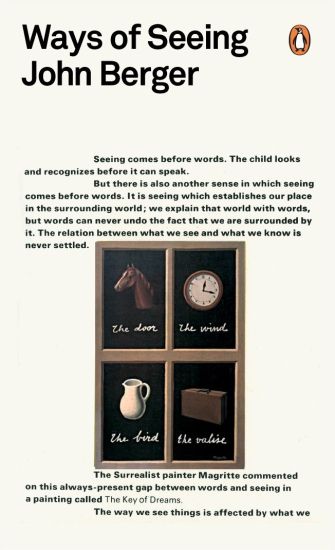
Ways of Seeing

Ways of Seeing

John Berger

Penguin Classics
2008
nidottu
Based on the BBC television series, John Berger's Ways of Seeing is a unique look at the way we view art, published as part of the Penguin on Design series in Penguin Modern Classics.'Seeing comes before words. The child looks and recognizes before it can speak.''But there is also another sense in which seeing comes before words. It is seeing which establishes our place in the surrounding world; we explain that world with words, but word can never undo the fact that we are surrounded by it. The relation between what we see and what we know is never settled.' John Berger's Ways of Seeing is one of the most stimulating and influential books on art in any language. First published in 1972, it was based on the BBC television series about which the Sunday Times critic commented: 'This is an eye-opener in more ways than one: by concentrating on how we look at paintings . . . he will almost certainly change the way you look at pictures.' By now he has.John Berger (b. 1926) is an art critic, painter and novelist.born in Hackney, London. His novel G. (1972) won both the James Tait Black Memorial Prize and the Booker Prize. If you enjoyed Ways of Seeing, you might like Susan Sontag's On Photography, also available in Penguin Modern Classics.'Berger has the ability to cut right through the mystification of professional art critics ... he is a liberator of images: and once we have allowed the paintings to work on us directly, we are in a much better position to make a meaningful evaluation'Peter Fuller, Arts Review'The influence of the series and the book ... was enormous ... It opened up for general attention areas of cultural study that are now commonplace'Geoff Dyer in Ways of Telling'One of the most influential intellectuals of our time'Observer
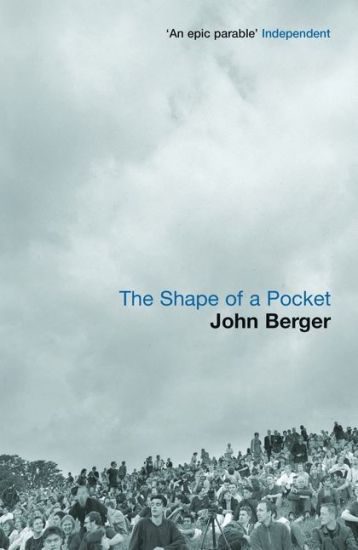
The Shape of a Pocket

The Shape of a Pocket

John Berger

Bloomsbury Publishing PLC
2002
pokkari
The pocket in question is a small pocket of resistance. A pocket is formed when two or more people come together in agreement. The resistance is against the inhumanity of the new world economic order.
King

King

John Berger

Bloomsbury Publishing PLC
2000
pokkari
A furious homage to the homeless and a lyrical meditation on language and experience. You will be led to a place you haven't been, from where few stories come. You will be led by King, a dog (or is he?) to a wasteland beside the motorway called Saint Valery.
The Look of Things

The Look of Things

John Berger

Verso Books
2027
nidottu
This anthology of some of John Berger's most incisive and brilliant essays and articles, written throughout the 1960s, is one of his most celebrated books. The pieces span from the life of artists like Camille Corot and Fernand Léger; character sketches of the likes of Le Corbusier, Walter Benjamin, Jack Yeats, and Che Guevara; and reflections about the Czechoslovakian Revolution of 1969. In particular, in his seminal essay 'the Look of Things' Berger explores the power of drawing as a profound act of discovery: a private, autobiographical journey that transforms both artist and observer. Berger challenges us to see drawing not merely as a technical skill, but as a dialectical process: a slow, meticulous dissection of reality that reveals the essence of humanity itself.
G.

G.

John Berger

BLOOMSBURY PUBLISHING PLC
2027
nidottu
The centenary edition, with a newly commissioned introduction by Jo Hamya. 'Fascinating . . . an extraordinary mixture of historical detail and sexual meditation . . . G. belongs in the tradition of George Eliot, Tolstoy, D. H. Lawrence and Norman Mailer.' New York Times In this luminous novel about a modern Don Juan, Berger relates the story of G., a young man forging an energetic sexual career in Europe during the early years of the last century as Europe teeters on the brink of war. With profound compassion, Berger explores the hearts and minds of men and women, and what happens during sex, to reveal the conditions of the libertine's success: his essential loneliness, the quiet cumulation in each of his sexual experiences of all of those that precede it, the tenderness that infuses even the briefest of his encounters, and the way women experience their own extraordinariness through their liaisons with him. Set against the turbulent backdrop of Garibaldi's attempt to unite Italy, the failed revolution of Milanese workers in 1898, the Boer War and the dramatic first flight across the Alps, G. is a brilliant novel about the search for intimacy in the turmoil of history.
About Looking

About Looking

John Berger

BLOOMSBURY PUBLISHING PLC
2027
nidottu
The centenary edition, with a newly commissioned introduction by Berger’s biographer, Tom Overton. 'Instant readability . . . [Berger] makes one see [paintings] as statements or questions in a living language.' New Statesman 'One of the most influential intellectuals of our time' Observer 'Berger is a writer one demands to know more about . . . an intriguing and powerful mind and talent' New York Times As a novelist, essayist, and cultural historian, John Berger is a writer of dazzling eloquence and arresting insight whose work amounts to a subtle, powerful critique of the canons of our civilization. In About Looking he explores our role as observers to reveal new layers of meaning in what we see. How do the animals we look at in zoos remind us of a relationship between man and beast all but lost in the twentieth century? What is it about looking at war photographs that doubles their already potent violence? How do the nudes of Rodin betray the threats to his authority and potency posed by clay and flesh? And how does solitude inform the art of Giacometti? In asking these and other questions, Berger alters the vision of anyone who reads his work.
The Sense of Sight

The Sense of Sight

John Berger

Verso Books
2026
nidottu
The Sense of Sight is about our deeply political and human engagement with the visual world. Berger encourages us to question the way we see things, perceive them and ultimately judge what we see. He traces what vision means to us and its importance to see things differently. Ranging from the Renaissance to the conflagration of Hiroshima; from the Bosphorus to Manhattan; from the woodcarvers of a French village to Goya, Dürer, and Van Gogh; and from private experiences of love and of loss, to the major political upheavals of our time, John Berger encourages us to see with the same breadth, courage, and moral engagement.
Landscapes

Landscapes

John Berger

Verso Books
2026
nidottu
Paying homage to the writers and thinkers who influenced him, John Berger pushes at the limits of art writing, demonstrating beautifully how his artist's eye makes him a storyteller, rather than a critic. His expansive perspective takes in artistic movements and individual artists-from the Renaissance to the present that completes a tour through the history of art that will be an intellectual benchmark for many years to come.
Corker's Freedom

Corker's Freedom

John Berger

Verso Books
2026
nidottu
John Berger brings us this tender and bittersweet novel is a book of dreams of freedom and romance, dreams that intoxicate and redeem, dreams that have the power to exalt their dreamers or dash them against hard truth.It is the unforgettable, often comical portrait of a dreamer, one William Corker, the genteel proprietor of a London employment agency, who, in his sixty-third year, has just moved out of the house he shared with his overbearing sister. As Corker takes his first steps into a life of passions, Berger creates a character of astonishing depth and liveliness-a man whose fantasies and ambitions are at once splendid and tragic.
The Moment of Cubism

The Moment of Cubism

John Berger

Verso Books
2026
nidottu
John Berger is one of the most passionate and incisive writers on the relationship between art and politics. Whether looking at Vermeer in his studio, or Poussin's poignant meditation death, the contradictions of Rodin's sculpture, Berger was always able to see the threads that bound the individual life, their passion for creativity and the social and political contexts they were working within. The Moment of Cubism, originally published in 1969, is considered to be one of his important collections of art criticism.Also provocative, In the title essay, Berger shows that Cubism was a moment rather than a movement, that came and went without the consent of its key artists - Picasso, Braque. He also makes a case for its revolutionary influence. Alongside portaits and investigations of more classical artists, in advance of his later works such as Ways of Seeing and Understanding a Photograph, Berger is still able to find the political within the image and to help us look at the world in new ways.
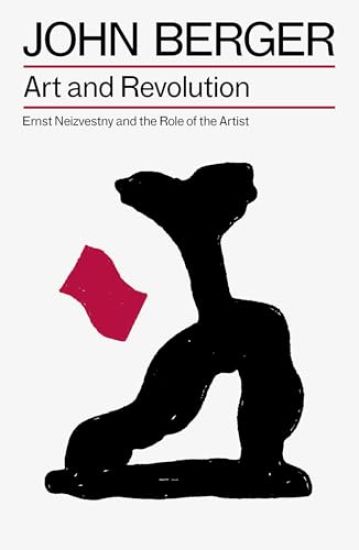
Art and Revolution

Art and Revolution

John Berger

Verso Books
2025
nidottu
John Berger explores the life and work of Ernst Neizvestny, who, after clashing with Khrushchev, was excluded from the ranks of officially approved Soviet artists. Abandoned to obscurity, Neizvestny laboured to realize a monumental and very public vision of art. Exiled to the United States, he finally found recognition, returning to his homeland with the fall of the Berlin Wall.Berger's account illuminates the very meaning of revolutionary art. In his struggle against official orthodoxy - which brought him into face-to-face conflict with Khrushchev himself - Neizvestny was fight-ing not for a merely personal or aesthetic vision, but for recognition of the social role of art. His sculptures earn a place in the world by reflecting the courage of a whole people, commemorating, in an age of mass suffering, the resistance and endurance of millions.
Permanent Red

Permanent Red

John Berger

Verso Books
2025
nidottu
In Permanent Red, John Berger argues that the contemporary artist should strive for a realism that aims for hope, to transform the world. Surveying the work of historical artists as well as that of near contemporaries such as Picasso, Léger and Matisse, he explores the role of the artist, dividing these figures into those that struggle, those that fail, and the true masters. He explains why we should study the work of the past: in order to understand the present and to rethink the future.First published in 1960, Permanent Red established John Berger as a firebrand critic willing to broadcast controversial opinions on some of the most important British artists of the day, including Henry Moore and Barbara Hepworth.
Bento's Sketchbook

Bento's Sketchbook

John Berger

Verso Books
2025
nidottu
The seventeenth-century philosopher Baruch Spinoza (a.k.a. Bento) spent the most intense years of his short life writing. He also carried with him a sketchbook. After his sudden death, his friends rescued letters, manuscripts, notes-but no drawings.For years, without knowing what its pages might hold, John Berger has imagined finding Bento's sketchbook, wanting to see the drawings alongside his surviving words. When one day a friend gave him a beautiful virgin sketchbook, Berger said, 'This is Bento's!' and he began to draw, taking inspiration from the philosopher's vision.In this beautifully illustrated book, Berger uses the imaginative space opened up in this experiment to explore politics, storytelling, Spinoza's life and times, and the process of drawing itself.
Hold Everything Dear

Hold Everything Dear

John Berger

Verso Books
2025
nidottu
From the ' War on Terror' to resistance in Ramallah and traumatic dislocation in the Middle East, Berger explores the uses of art as an instrument of political resistance. Visceral and passionate, Hold Everything Dear is a profound meditation on the far extremes of human behaviour, and the underlying despair. Looking at Afghanistan, Palestine and Iraq, he makes an impassioned attack on the poverty and loss of freedom at the heart of such unnecessary suffering.These essays offer reflections on the political at the core of artistic expression and at the center of human existence itself.