Kirjojen hintavertailu. Mukana 12 390 323 kirjaa ja 12 kauppaa.

Kirjailija

John Bird

Kirjat ja teokset yhdessä paikassa: 41 kirjaa, julkaisuja vuosilta 1994-2026, suosituimpien joukossa Mechanical Engineering Principles. Vertaile teosten hintoja ja tarkista saatavuus suomalaisista kirjakaupoista.

41 kirjaa

Kirjojen julkaisuhaarukka 1994-2026.

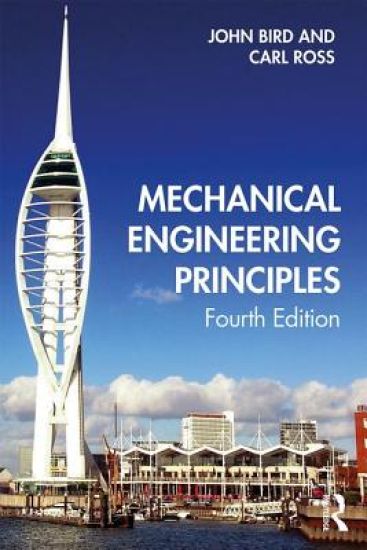
Mechanical Engineering Principles

Mechanical Engineering Principles

John Bird; Carl Ross

Routledge
2019
nidottu
A student-friendly introduction to core mechanical engineering topics.This book introduces mechanical principles and technology through examples and applications, enabling students to develop a sound understanding of both engineering principles and their use in practice. These theoretical concepts are supported by 400 fully worked problems, 700 further problems with answers, and 300 multiple-choice questions, all of which add up to give the reader a firm grounding on each topic.Two new chapters are included, covering the basic principles of matrix algebra and the matrix displacement method. The latter will also include guidance on software that can be used via SmartPhones, tablets or laptops. The new edition is up to date with the latest BTEC National specifications and can also be used on undergraduate courses in mechanical, civil, structural, aeronautical and marine engineering, and naval architecture.A companion website contains the fully worked solutions to the problems and revision tests, practical demonstration videos, as well as a glossary and information on the famous engineers mentioned in the text.
Mechanical Engineering Principles

Mechanical Engineering Principles

John Bird; Carl Ross

Routledge
2019
sidottu
A student-friendly introduction to core mechanical engineering topics.This book introduces mechanical principles and technology through examples and applications, enabling students to develop a sound understanding of both engineering principles and their use in practice. These theoretical concepts are supported by 400 fully worked problems, 700 further problems with answers, and 300 multiple-choice questions, all of which add up to give the reader a firm grounding on each topic.Two new chapters are included, covering the basic principles of matrix algebra and the matrix displacement method. The latter will also include guidance on software that can be used via SmartPhones, tablets or laptops. The new edition is up to date with the latest BTEC National specifications and can also be used on undergraduate courses in mechanical, civil, structural, aeronautical and marine engineering, and naval architecture.A companion website contains the fully worked solutions to the problems and revision tests, practical demonstration videos, as well as a glossary and information on the famous engineers mentioned in the text.
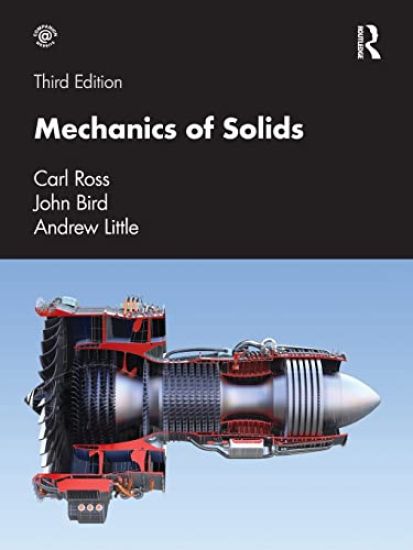
Mechanics of Solids

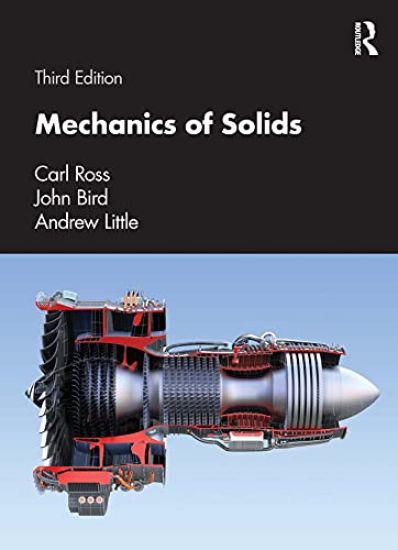
Mechanics of Solids

Carl Ross; John Bird; Andrew Little

Routledge
2021
sidottu
Mechanics of Solids provides an introduction to the behaviour of solid materials under various loading conditions, focusing upon the fundamental concepts and principles of statics and stress analysis. As the primary recommended text of the Council of Engineering Institutions for university undergraduates studying mechanics of solids it is essential reading for mechanical engineering undergraduates and also students on many civil, structural, aeronautical and other engineering courses. The mathematics in this book has been kept as straightforward as possible and worked examples are used to reinforce key concepts. Practical stress and strain scenarios are covered, including simple stress and strain, torsion, bending, elastic failure and buckling. Many examples are given of thin-walled structures, beams, struts and composite structures. This third edition includes new chapters on matrix algebra, linear elastic fracture mechanics, material property considerations and more on strain energy methods. The companion website www.routledge.com/cw/bird provides full solutions to all 575 further problems in the text, multiple-choice tests, a list of essential formulae, resources for adopting course instructors, together with several practical demonstrations by Professor Ross.
Mechanics of Solids

Mechanics of Solids

Carl Ross; John Bird; Andrew Little

Routledge
2021
nidottu
Mechanics of Solids provides an introduction to the behaviour of solid materials under various loading conditions, focusing upon the fundamental concepts and principles of statics and stress analysis. As the primary recommended text of the Council of Engineering Institutions for university undergraduates studying mechanics of solids it is essential reading for mechanical engineering undergraduates and also students on many civil, structural, aeronautical and other engineering courses. The mathematics in this book has been kept as straightforward as possible and worked examples are used to reinforce key concepts. Practical stress and strain scenarios are covered, including simple stress and strain, torsion, bending, elastic failure and buckling. Many examples are given of thin-walled structures, beams, struts and composite structures. This third edition includes new chapters on matrix algebra, linear elastic fracture mechanics, material property considerations and more on strain energy methods. The companion website www.routledge.com/cw/bird provides full solutions to all 575 further problems in the text, multiple-choice tests, a list of essential formulae, resources for adopting course instructors, together with several practical demonstrations by Professor Ross.
Mark Twain's 1884

Mark Twain's 1884

John Bird

UNIVERSITY OF MISSOURI PRESS
2026
sidottu
Many biographies of Mark Twain cover his entire life, while others focus on specific periods, especially his later years. In this innovative new work, John Bird takes an entirely different approach. Mark Twain’s 1884: A Pivotal Year in the Life is a “micro-biography” that homes in on a single—and pivotal—year. In 1884, Twain stood at the height of his powers as a writer and enjoyed one of the happiest years in his domestic family life. During the course of the year he was readying his greatest work, Adventures of Huckleberry Finn, for publication, which occurred in England near the end of the year; he was launching his own publishing house, Charles L. Webster and Company, after becoming disillusioned with his previous publishers; and he publicly embroiled himself in presidential politics in a way that presaged his later involvement with American and international politics. Finally, Twain’s 1884 ended with a great deal more public exposure thanks to an extensive multi-city lecture tour he undertook with Geroge Washington Cable, as well as the beginnings of his ultimately successful attempt to secure publishing rights for Ulysses S. Grant’s memoirs. The level of detail provided by a day-to-day narrative gives the reader a chance to imaginatively live that year in Twain’s life: his work, his family life, his correspondence, his business dealings, his travels, his recreational pursuits, and his political involvement. Bird enlarges upon a great many moments in and aspects of Twain’s life that other biographies barely touch on or ignore completely. In this new approach to biography, Bird gives readers a broader appreciation not only of Mark Twain the author but of Mark Twain the husband, father, uncle, and friend, and national celebrity and persona.
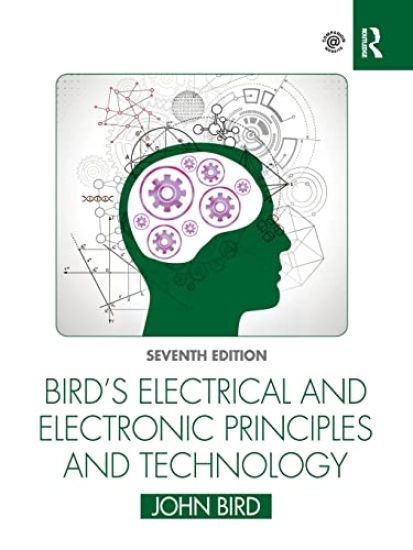
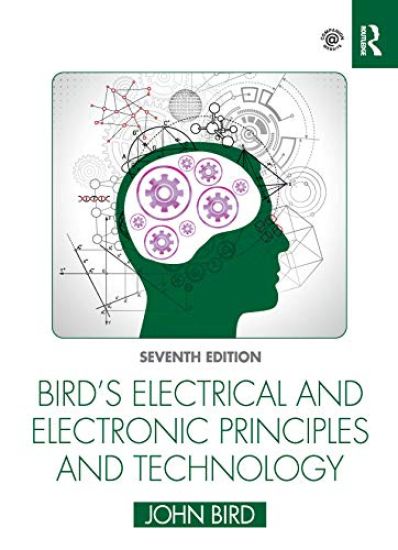
Bird's Electrical and Electronic Principles and Technology
Now in its seventh edition, Bird’s Electrical and Electronic Principles and Technology introduces and covers theory through detailed examples and laboratory experiments, enabling students to gain knowledge required by technicians in fields such as engineering, electronics, and telecommunications. This edition includes several new sections, including glass batteries, climate change, the future of electricity production, and discussions concerning everyday aspects of electricity, such as watts and lumens, electrical safety, AC vs DC, and trending technologies.The extensive and thorough topic coverage makes this a great text for a range of level 2 and 3 engineering courses, which has helped thousands of students succeed in their exams. It is also suitable for BTEC First, National and Diploma syllabuses, City & Guilds Technician Certificate and Diploma syllabuses, and Foundation Degrees in engineering. Its companion website at www.routledge.com/cw/bird provides resources for both students and lecturers, including full solutions for all 900 further questions, lists of essential formulae, multiple-choice tests and illustrations, as well as full solutions to revision tests and lab experiments for course instructors.
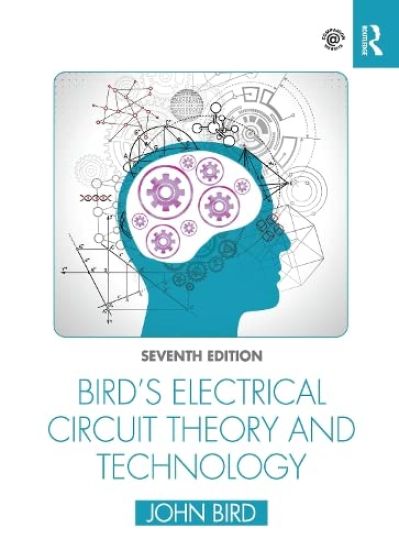
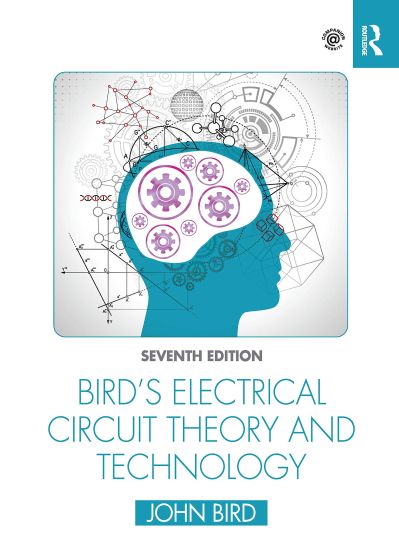
Bird's Electrical Circuit Theory and Technology
Now in its seventh edition, Bird’s Electrical Circuit Theory and Technology explains electrical circuit theory and associated technology topics in a straightforward manner, supported by practical engineering examples and applications to ensure that readers can relate theory to practice. The extensive and thorough coverage, containing over 800 worked examples, makes this an excellent text for a range of courses, in particular for Degree and Foundation Degree in electrical principles, circuit theory, telecommunications, and electrical technology. The text includes some essential mathematics revision, together with all the essential electrical and electronic principles for BTEC National and Diploma syllabuses and City & Guilds Technician Certificate and Diploma syllabuses in engineering. This material will be a great revision for those on higher courses.This edition includes several new sections, including glass batteries, climate change, the future of electricity production, and discussions concerning everyday aspects of electricity, such as watts and lumens, electrical safety, AC vs DC, and trending technologies.Its companion website at www.routledge.com/cw/bird provides resources for both students and lecturers, including full solutions for all 1400 further questions, multiple choice questions, lists of essential formulae and bios of famous engineers; as well as full solutions to revision tests, lab experiments, and illustrations for adopting course instructors.
Bird's Electrical Circuit Theory and Technology
Now in its seventh edition, Bird’s Electrical Circuit Theory and Technology explains electrical circuit theory and associated technology topics in a straightforward manner, supported by practical engineering examples and applications to ensure that readers can relate theory to practice. The extensive and thorough coverage, containing over 800 worked examples, makes this an excellent text for a range of courses, in particular for Degree and Foundation Degree in electrical principles, circuit theory, telecommunications, and electrical technology. The text includes some essential mathematics revision, together with all the essential electrical and electronic principles for BTEC National and Diploma syllabuses and City & Guilds Technician Certificate and Diploma syllabuses in engineering. This material will be a great revision for those on higher courses.This edition includes several new sections, including glass batteries, climate change, the future of electricity production, and discussions concerning everyday aspects of electricity, such as watts and lumens, electrical safety, AC vs DC, and trending technologies.Its companion website at www.routledge.com/cw/bird provides resources for both students and lecturers, including full solutions for all 1400 further questions, multiple choice questions, lists of essential formulae and bios of famous engineers; as well as full solutions to revision tests, lab experiments, and illustrations for adopting course instructors.
Bird's Electrical and Electronic Principles and Technology
Now in its seventh edition, Bird’s Electrical and Electronic Principles and Technology introduces and covers theory through detailed examples and laboratory experiments, enabling students to gain knowledge required by technicians in fields such as engineering, electronics, and telecommunications. This edition includes several new sections, including glass batteries, climate change, the future of electricity production, and discussions concerning everyday aspects of electricity, such as watts and lumens, electrical safety, AC vs DC, and trending technologies.The extensive and thorough topic coverage makes this a great text for a range of level 2 and 3 engineering courses, which has helped thousands of students succeed in their exams. It is also suitable for BTEC First, National and Diploma syllabuses, City & Guilds Technician Certificate and Diploma syllabuses, and Foundation Degrees in engineering. Its companion website at www.routledge.com/cw/bird provides resources for both students and lecturers, including full solutions for all 900 further questions, lists of essential formulae, multiple-choice tests and illustrations, as well as full solutions to revision tests and lab experiments for course instructors.
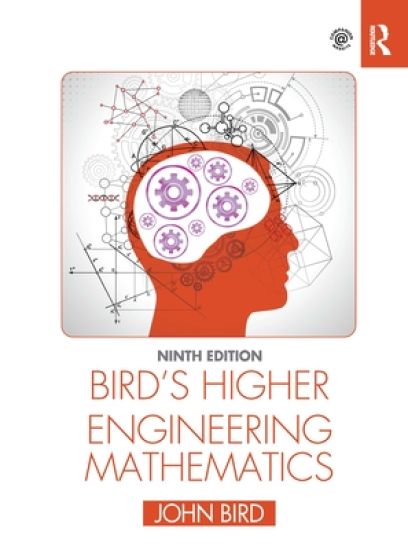
Bird's Higher Engineering Mathematics
Higher Engineering Mathematics has helped thousands of students to succeed in their exams by developing problem-solving skills, It is supported by over 600 practical engineering examples and applications which relate theory to practice. The extensive and thorough topic coverage makes this a solid text for undergraduate and upper-level vocational courses. Its companion website provides resources for both students and lecturers, including lists of essential formulae, ands full solutions to all 2,000 further questions contained in the 277 practice exercises; and illustrations and answers to revision tests for adopting course instructors.
Bird's Higher Engineering Mathematics
Higher Engineering Mathematics has helped thousands of students to succeed in their exams by developing problem-solving skills, It is supported by over 600 practical engineering examples and applications which relate theory to practice. The extensive and thorough topic coverage makes this a solid text for undergraduate and upper-level vocational courses. Its companion website provides resources for both students and lecturers, including lists of essential formulae, ands full solutions to all 2,000 further questions contained in the 277 practice exercises; and illustrations and answers to revision tests for adopting course instructors.
Bird's Engineering Mathematics
Now in its ninth edition, Bird’s Engineering Mathematics has helped thousands of students to succeed in their exams. Mathematical theories are explained in a straightforward manner, supported by practical engineering examples and applications to ensure that readers can relate theory to practice. Some 1,300 engineering situations/problems have been ‘flagged-up’ to help demonstrate that engineering cannot be fully understood without a good knowledge of mathematics.The extensive and thorough topic coverage makes this a great text for a range of level 2 and 3 engineering courses – such as for aeronautical, construction, electrical, electronic, mechanical, manufacturing engineering and vehicle technology – including for BTEC First, National and Diploma syllabuses, City & Guilds Technician Certificate and Diploma syllabuses, and even for GCSE and A-level revision.Its companion website at www.routledge.com/cw/bird provides resources for both students and lecturers, including full solutions for all 2,000 further questions, lists of essential formulae, multiple-choice tests, and illustrations, as well as full solutions to revision tests for course instructors.
Bird's Engineering Mathematics
Now in its ninth edition, Bird’s Engineering Mathematics has helped thousands of students to succeed in their exams. Mathematical theories are explained in a straightforward manner, supported by practical engineering examples and applications to ensure that readers can relate theory to practice. Some 1,300 engineering situations/problems have been ‘flagged-up’ to help demonstrate that engineering cannot be fully understood without a good knowledge of mathematics.The extensive and thorough topic coverage makes this a great text for a range of level 2 and 3 engineering courses – such as for aeronautical, construction, electrical, electronic, mechanical, manufacturing engineering and vehicle technology – including for BTEC First, National and Diploma syllabuses, City & Guilds Technician Certificate and Diploma syllabuses, and even for GCSE and A-level revision.Its companion website at www.routledge.com/cw/bird provides resources for both students and lecturers, including full solutions for all 2,000 further questions, lists of essential formulae, multiple-choice tests, and illustrations, as well as full solutions to revision tests for course instructors.
Bird's Basic Engineering Mathematics
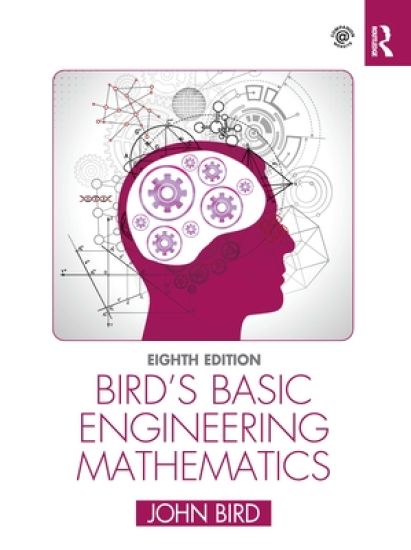
Now in its eighth edition, Bird’s Basic Engineering Mathematics has helped thousands of students to succeed in their exams. Mathematical theories are explained in a straightforward manner, supported by practical engineering examples and applications to ensure that readers can relate theory to practice. Some 1,000 engineering situations/problems have been ‘flagged-up’ to help demonstrate that engineering cannot be fully understood without a good knowledge of mathematics.The extensive and thorough coverage makes this a great text for introductory level engineering courses – such as for aeronautical, construction, electrical, electronic, mechanical, manufacturing engineering and vehicle technology – including for BTEC First, National and Diploma syllabuses, City & Guilds Technician Certificate and Diploma syllabuses, and even for GCSE revision.Its companion website provides extra materials for students and lecturers, including full solutions for all 1,700 further questions, lists of essential formulae, multiple choice tests, and illustrations, as well as full solutions to revision tests for course instructors.
Bird's Basic Engineering Mathematics
Now in its eighth edition, Bird’s Basic Engineering Mathematics has helped thousands of students to succeed in their exams. Mathematical theories are explained in a straightforward manner, supported by practical engineering examples and applications to ensure that readers can relate theory to practice. Some 1,000 engineering situations/problems have been ‘flagged-up’ to help demonstrate that engineering cannot be fully understood without a good knowledge of mathematics.The extensive and thorough coverage makes this a great text for introductory level engineering courses – such as for aeronautical, construction, electrical, electronic, mechanical, manufacturing engineering and vehicle technology – including for BTEC First, National and Diploma syllabuses, City & Guilds Technician Certificate and Diploma syllabuses, and even for GCSE revision.Its companion website provides extra materials for students and lecturers, including full solutions for all 1,700 further questions, lists of essential formulae, multiple choice tests, and illustrations, as well as full solutions to revision tests for course instructors.
Newnes Engineering Science Pocket Book
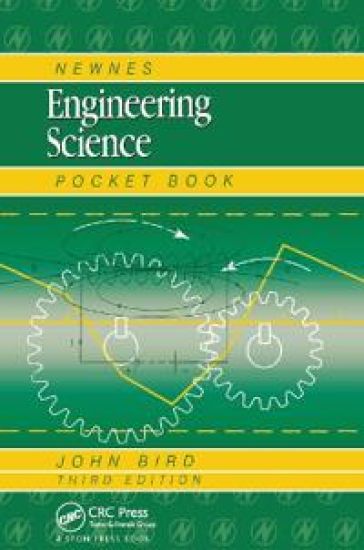
Newnes Engineering Science Pocket Book is a uniquely versatile and practical tool for a wide range of engineers and students. All the fundamentals of electrical and mechanical engineering science and physics are covered, with an emphasis on concise descriptions, key methods, clear diagrams, formulae and how to use them. John Bird's presentations of this core material puts all the answers at your fingertips. The contents of this book have been carefully matched to the latest Further and Higher Education syllabuses so that it can also be used as a revision guide or a quick-access source of underpinning knowledge. Students on competence-based courses such as NVQs will find this approach particularly refreshing and practical. This book and its companion title, Newnes Engineering Mathematics Pocket Book, provide the underpinning knowledge for the whole range of engineering communities catered for by the Newnes Pocket Book series. These related titles include: Newnes Mechanical Engineer's Pocket Book (Timings) Newnes Electrical Pocket Book (Reeves) Newnes Electronic Engineer's Pocket Book (Carr & Brindley) Newnes Radio and RF Engineer's Pocket Book (Carr & Davies) Newnes Telecommunications Engineer's Pocket Book (Winder) Previous editions of Newnes Engineering Science Pocket Book were published under the title Newnes Engineering and Physical Science Pocket Book.
Mathematics Pocket Book for Engineers and Scientists
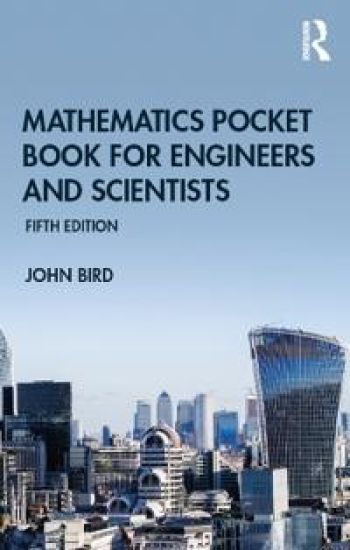
This compendium of essential formulae, definitions, tables and general information provides the mathematical information required by engineering students, technicians, scientists and professionals in day-to-day engineering practice. A practical and versatile reference source, now in its fifth edition, the layout has been changed and streamlined to ensure the information is even more quickly and readily available – making it a handy companion on-site, in the office as well as for academic study. It also acts as a practical revision guide for those undertaking degree courses in engineering and science, and for BTEC Nationals, Higher Nationals and NVQs, where mathematics is an underpinning requirement of the course. All the essentials of engineering mathematics – from algebra, geometry and trigonometry to logic circuits, differential equations and probability – are covered, with clear and succinct explanations and illustrated with over 300 line drawings and 500 worked examples based in real-world application. The emphasis throughout the book is on providing the practical tools needed to solve mathematical problems quickly and efficiently in engineering contexts. John Bird’s presentation of this core material puts all the answers at your fingertips.
Mathematics Pocket Book for Engineers and Scientists
This compendium of essential formulae, definitions, tables and general information provides the mathematical information required by engineering students, technicians, scientists and professionals in day-to-day engineering practice. A practical and versatile reference source, now in its fifth edition, the layout has been changed and streamlined to ensure the information is even more quickly and readily available – making it a handy companion on-site, in the office as well as for academic study. It also acts as a practical revision guide for those undertaking degree courses in engineering and science, and for BTEC Nationals, Higher Nationals and NVQs, where mathematics is an underpinning requirement of the course. All the essentials of engineering mathematics – from algebra, geometry and trigonometry to logic circuits, differential equations and probability – are covered, with clear and succinct explanations and illustrated with over 300 line drawings and 500 worked examples based in real-world application. The emphasis throughout the book is on providing the practical tools needed to solve mathematical problems quickly and efficiently in engineering contexts. John Bird’s presentation of this core material puts all the answers at your fingertips.