Kirjojen hintavertailu. Mukana 12 595 353 kirjaa ja 12 kauppaa.

Kirjailija

John Brannigan

Kirjat ja teokset yhdessä paikassa: 11 kirjaa, julkaisuja vuosilta 1998-2021, suosituimpien joukossa Archipelago. Vertaile teosten hintoja ja tarkista saatavuus suomalaisista kirjakaupoista.

11 kirjaa

Kirjojen julkaisuhaarukka 1998-2021.

Archipelago

Archipelago

Andrew McNellie; Norman Ackroyd; John Brannigan; Moya Cannon; Mark Cocker; Peter Davidson; Roger Deakin; Tim Dee; David Douglas; Douglas Dunn; Terry Eagleton; John Eifion Jones; John Elder; Rose Ferraby; Barbara Greg; Ivor Gurney; Alexandra Harris; Seamus Heaney; Geoffrey Hill; Sally Huband; Roger Hutchinson; Mick Imlah; Kathleen Jamie; John Kerrigan; Philip Lancaster; David Lea; Angela Leighton; Gwyneth Lewis; Michael Longley; James Macdonald Lockhart; Robert Macfarlane; Angus Macmillan; Derek Mahon; Gail McNeillie

The Lilliput Press Ltd
2021
nidottu
Archipelago is one of the most important and influential literary magazines of the last twenty years. Running to twelve editions, it was edited by Andrew McNeillie, with the assistance later of James McDonald Lockhart, and began as an attempt to reimagine the relationships between the islands of Ireland and Britain. Archipelago has brought together established and emerging artists in creative conversations that have transformed the study of islands, coasts and waterways. It journeys from the Shetlands to Cornwall, from the Aran Islands to the coast of Yorkshire, tracing the cultures of diverse zones through some of the best in contemporary writing about place and people. This collection gathers poetry, prose and visual art in clusters grouped around the Irish and British archipelago, with contributions from an array of significant artists. It includes newly commissioned work as well as an interview between Andrew McNeillie and Robert Macfarlane on the development of Archipelago across the years.
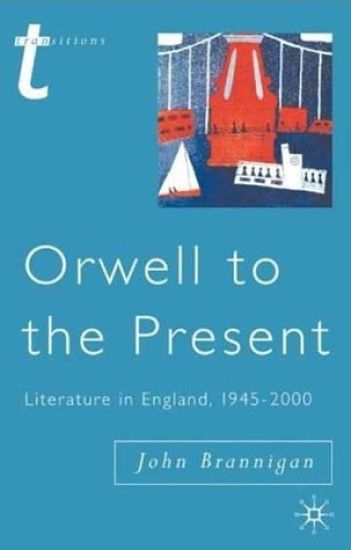
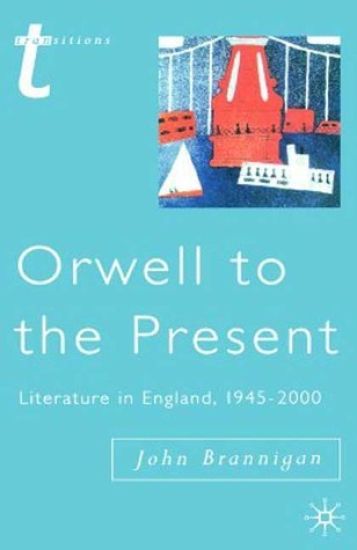
Orwell to the Present

Orwell to the Present

John Brannigan

Red Globe Press
2002
nidottu
This essential introductory guide provides a comprehensive critical survey of the diverse and rich body of literary writing produced in England in the postwar period. John Brannigan explores the relationship between literature and history, and analyses how poets, playwrights and novelists have revisited notions of Englishness, represented Englands of the past, and sought to make new 'maps' of English culture and society.Orwell to the Present: Literature in England, 1945-2000 combines original readings of familiar texts with wide-ranging explorations of the principal themes and historical and cultural contexts of literature since the end of the Second World War. Writers considered in detail include: Martin Amis, Simon Armitage, Pat Barker, John Betjeman, Edward Bond, Angela Carter, Margaret Drabble, Sarah Kane, Mark Ravenhill, Jean Rhys, Salman Rushdie, Sam Selvon, Graham Swift and Evelyn Waugh.
Orwell to the Present

Orwell to the Present

John Brannigan

Red Globe Press
2002
sidottu
This essential introductory guide provides a comprehensive critical survey of the diverse and rich body of literary writing produced in England in the postwar period. John Brannigan explores the relationship between literature and history, and analyses how poets, playwrights and novelists have revisited notions of Englishness, represented Englands of the past, and sought to make new 'maps' of English culture and society.Orwell to the Present: Literature in England, 1945-2000 combines original readings of familiar texts with wide-ranging explorations of the principal themes and historical and cultural contexts of literature since the end of the Second World War. Writers considered in detail include: Martin Amis, Simon Armitage, Pat Barker, John Betjeman, Edward Bond, Angela Carter, Margaret Drabble, Sarah Kane, Mark Ravenhill, Jean Rhys, Salman Rushdie, Sam Selvon, Graham Swift and Evelyn Waugh.
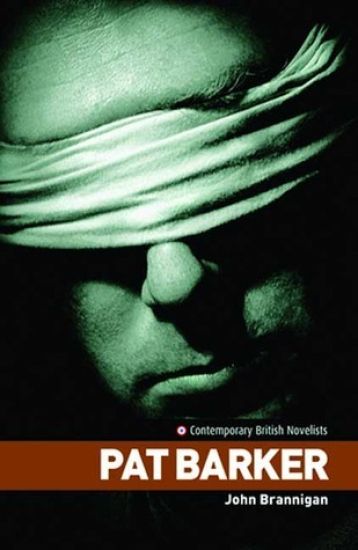
Pat Barker

Pat Barker

John Brannigan

Manchester University Press
2005
nidottu
This book provides a comprehensive account and critical analysis of the literary career of Pat Barker. It offers readings of Barker's innovations in narrative form, her revisionist perspectives on history, class and gender, and her preoccupation with themes of trauma, haunting and terror. It also analyses the reasons for her success and significance as a novelist. The chapters draw on contemporary theories of critical realism, gender and social identities, memory and narrative, in order to outline the debates with which Barker's work has consistently engaged.Brannigan argues that Barker is one of the most important writers in modern English literary history. She is principally renowned and widely acclaimed for her 'Regeneration' trilogy, the last volume of which, 'The Ghost Road', won the Booker Prize in 1995. In recent novels, Barker has continued to deal with controversial and shocking themes, including child murderers and the meanings of 'terror' in the contemporary world.
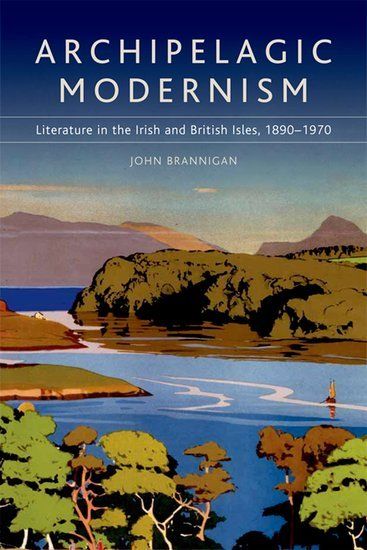
Archipelagic Modernism

Archipelagic Modernism

John Brannigan

Edinburgh University Press
2014
nidottu
This book offers a new archipelagic history of 20th-century literature in Britain and Ireland. Archipelagic Modernism examines the anglophone literatures of the archipelago from 1890 to 1970 for what they tell us about changing identities, geographies, and ecologies. The book argues that these literatures constitute an important resource for how we might begin to think about alternative political geographies, and alternative practices of belonging to place and environment. From the height of the British Empire in 1890, to the increasing sense by 1970 of the imminent 'break-up' of Britain, 'archipelagic modernism' turned to the 'peripheral' spaces of islands, coastlines, and the sea to re-invent the Irish and British archipelago as a plural and connective space. It questions established terms such as 'Modernism' or 'the Angry Young Men' and explores new terms such as 'critical realism' and literary developments such as 'the Scottish New Wave'. Divided into 2 historical parts, 12 chapters take readers progressively from 'Edwardian Idylls' to 'Contemporary Women's Writing'. It takes the study of 20th-century literature into the 21st century providing a single volume treatment of the distinct national literary traditions of the British Isles. It provides students with a provocative revisionist approach and in-depth coverage.
Archipelagic Modernism

Archipelagic Modernism

John Brannigan

Edinburgh University Press
2014
sidottu
Offers a new archipelagic history of twentieth-century literature in Britain and IrelandArchipelagic Modernism examines the anglophone literatures of the archipelago from 1890 to 1970 for what they tell us about changing identities, geographies, and ecologies. The book argues that these literatures constitute an important resource for how we might begin to think about alternative political geographies, and alternative practices of belonging to place and environment. From the height of the British Empire in 1890, to the increasing sense by 1970 of the imminent 'break-up' of Britain, 'archipelagic modernism' turned to the 'peripheral' spaces of islands, coastlines, and the sea to re-invent the Irish and British archipelago as a plural and connective space.Key Features:Interdisciplinary particularly the relationships between literature, ecology, and geography Offers a new interpretation of how literature engages with place and environment in the 20thCIncludes major new interpretations of key modernist writers such as Yeats, Synge, Joyce, and Woolf, and gives canonical examples of archipelagic modernism accessible to the classroom Exploratory the book explores archipelagic narratives of literary history as a new model for understanding 20thC British and Irish literatures, and opens up ways of critically evaluating conventional literary histories of 'EngLit' and national literatures
Race in Modern Irish Literature and Culture

Race in Modern Irish Literature and Culture

John Brannigan

Edinburgh University Press
2009
sidottu
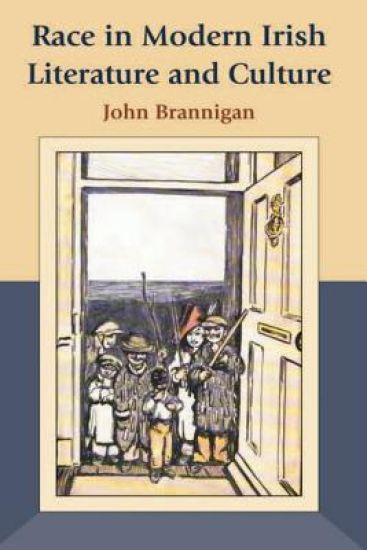
Race in Modern Irish Literature and Culture presents a radical re-reading of the cultural history of the Irish state, by demonstrating through original historical research and insightful new readings of key literary and artistic works that race has been central to the ways in which modern Ireland has defined itself. John Brannigan examines the tropes of racial identity and racist distinction that underpin modern expressions of Irishness, and shows how a persistent concern with racial ideologies can be traced through twentieth-century Irish culture. In this study, Ulysses is read anew in the context of the gathering of the Irish Race Congress in Paris, and the formation of the Irish Free State in 1922. The works of Liam O'Flaherty, Samuel Beckett, W.B. Yeats and Jack Yeats are shown to engage critically with anthropological representations of 'the Irish face'. Brannigan reads a wide range of mid-century fiction as part of a public discourse about 'foreign bodies', and goes on to examine the critical conversations taking place in the sixties and seventies about figurations of blackness in Irish culture. A provocative revision of modern Irish cultural history, this book makes challenging interventions in Irish studies, literary and cultural studies, and critical race studies. . Key Features: *Provides new research on the social history of racial ideologies and racist expressions in the Irish state since 1922 *Offers new readings of Irish cultural productions and literary texts (by James Joyce, W.B. Yeats, Samuel Beckett, Liam O'Flaherty, Kate O'Brien, Edna O'Brien, Brendan Behan, James Plunkett, Paul Durcan, Austin Clarke, Aidan Higgins, Denis Johnston, and others) emphasising how they engage with the histories of Irish racism and raciology *Demonstrates how a new understanding of the constitutive role of race and racism in modern Irish culture might necessitate a revision of the dominant precepts and trends in contemporary Irish studies *Addresses the significance of the social and cultural history of race and racism in twentieth-century Ireland for the post-'Celtic Tiger' era
New Historicism and Cultural Materialism

New Historicism and Cultural Materialism

John Brannigan

Red Globe Press
1998
nidottu
New historicism and cultural materialism emerged in the early 1980s as prominent literary theories and came to represent a revival of interest in history and in historicising literature. Their proponents rejected both formalist criticism and earlier attempts to read literature in its historical context and defined new ways of thinking about literature in relation to history. This study explains the development of these theories and demonstrates both their uses and weaknesses as critical practices. The potential future direction for the theories is explored and the controversial debates about their validity in literary studies are discussed.
New Historicism and Cultural Materialism

New Historicism and Cultural Materialism

John Brannigan

Red Globe Press
1998
sidottu
New historicism and cultural materialism emerged in the early 1980s as prominent literary theories and came to represent a revival of interest in history and in historicising literature. Their proponents rejected both formalist criticism and earlier attempts to read literature in its historical context and defined new ways of thinking about literature in relation to history. This study explains the development of these theories and demonstrates both their uses and weaknesses as critical practices. The potential future direction for the theories is explored and the controversial debates about their validity in literary studies are discussed.
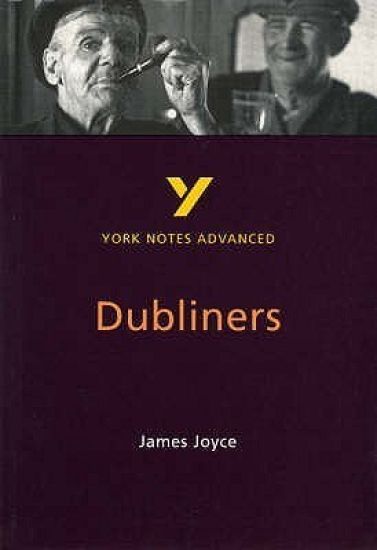
Dubliners: York Notes Advanced - everything you need to study and prepare for the 2025 and 2026 exams
York Notes Advanced offer a fresh and accessible approach to English Literature. This market-leading series has been completely updated to meet the needs of today's A-level and undergraduate students. Written by established literature experts, York Notes Advanced intorduce students to more sophisticated analysis, a range of critical perspectives and wider contexts.