

Kirjailija
John Bryan
Kirjat ja teokset yhdessä paikassa: 11 kirjaa, julkaisuja vuosilta 1994-2019, suosituimpien joukossa Dark Brother. Vertaile teosten hintoja ja tarkista saatavuus suomalaisista kirjakaupoista.
11 kirjaa
Kirjojen julkaisuhaarukka 1994-2019.

SCAV-ENG-E-OL-O-GY: The study of history through the excavation ofdiscarded items, exploring people's attics, flying drones, and stuff.This is Volume 1 of the ongoing SCAVENGEOLOGY JOURNAL, chronicling the discovery of an 18th century log fort from the Revolutionary War era, located in modern day West Virginia - but in what was then the isolated Virginia frontier."Willowbrook Plantation," one mile outside of the beautiful small town of Union, West Virginia, was an antebellum plantation home, lived-in by three prominent families, spanning the 18th century through the 20th century.Join in the fun as we explore the items left inside the house, the items found underneath the ground in the yard, and of course, uncover the original 18th century log fort, covered in plaster installed in 1858. It's all about the history.


Early English Viols: Instruments, Makers and Music
Michael Fleming; John Bryan
Routledge
2019
nidottu
Winner of the Nicholas Bessaraboff PrizeMusical repertory of great importance and quality was performed on viols in sixteenth- and early seventeenth-century England. This is reported by Thomas Mace (1676) who says that ’Your Best Provision’ for playing such music is a chest of old English viols, and he names five early English viol makers than which ’there are no Better in the World’. Enlightened scholars and performers (both professional and amateur) who aim to understand and play this music require reliable historical information and need suitable viols, but so little is known about the instruments and their makers that we cannot specify appropriate instruments with much precision. Our ignorance cannot be remedied exclusively by the scrutiny or use of surviving antique viols because they are extremely rare, they are not accessible to performers and the information they embody is crucially compromised by degradation and alteration. Drawing on a wide variety of evidence including the surviving instruments, music composed for those instruments, and the documentary evidence surrounding the trade of instrument making, Fleming and Bryan draw significant conclusions about the changing nature and varieties of viol in early modern England.


Side Streets and Dark Alleys: A Collection of Short Stories
John Bryan
Createspace Independent Publishing Platform
2016
nidottu
Early English Viols: Instruments, Makers and Music
Michael Fleming; John Bryan
Routledge
2016
sidottu
Winner of the Nicholas Bessaraboff PrizeMusical repertory of great importance and quality was performed on viols in sixteenth- and early seventeenth-century England. This is reported by Thomas Mace (1676) who says that ’Your Best Provision’ for playing such music is a chest of old English viols, and he names five early English viol makers than which ’there are no Better in the World’. Enlightened scholars and performers (both professional and amateur) who aim to understand and play this music require reliable historical information and need suitable viols, but so little is known about the instruments and their makers that we cannot specify appropriate instruments with much precision. Our ignorance cannot be remedied exclusively by the scrutiny or use of surviving antique viols because they are extremely rare, they are not accessible to performers and the information they embody is crucially compromised by degradation and alteration. Drawing on a wide variety of evidence including the surviving instruments, music composed for those instruments, and the documentary evidence surrounding the trade of instrument making, Fleming and Bryan draw significant conclusions about the changing nature and varieties of viol in early modern England.

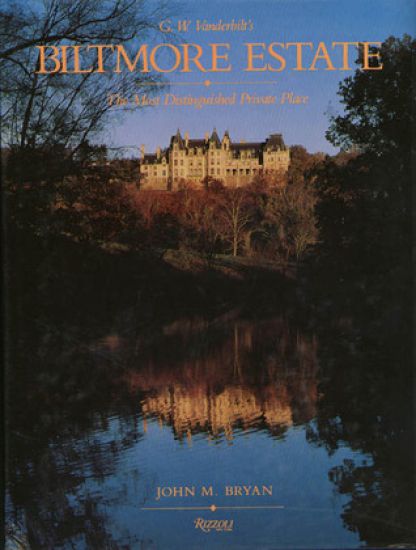
"The most distinguished private place" - that is how, in 1893, the great landscape architect Frederick Law Olmsted described Biltmore Estate, perhaps the most ambitious private building project of America's Gilded Age. It was only five years earlier that George Washington Vanderbilt purchased the first parcel of what would become his 125,000-acre estate in Asheville, North Carolina. Along with Olmsted, he commissioned the preeminent architect of the day, Richard Morris Hunt, to design the estate. The house, modeled in part on the chateaux of the Loire Valley, has become one of the greatest and most important in American architectural history. Its 255 rooms, with spectacular and finely crafted interiors, opulent furnishings (some designed by Hunt), and furniture and decorative arts objects collected by Vanderbilt from all corners of the world, have made it a rich national treasure. The estate served as the cradle of the profession of forestry in America. With Olmsted's advice and expertise, it became the first working model of a scientifically managed forest and played a critical role in the creation of our national parks. This meticulously researched book accompanies an exhibition organized by The Octagon, the Museum of the American Architectural Foundation; it chronicles Biltmore from inception, development, and construction through its Christmas 1895 opening celebrations, and into the present. Original architectural drawings, sketches, plans, presentation drawings, nineteenth-century photographs, and vibrant new color photography complete this portrait of a great landmark. Today Biltmore Estate belongs to George Washington Vanderbilt's descendants, who have opened the house to the public and have made it one of the most visited in America.