Kirjojen hintavertailu. Mukana 12 390 323 kirjaa ja 12 kauppaa.

Kirjailija

John C. Courtney

Kirjat ja teokset yhdessä paikassa: 6 kirjaa, julkaisuja vuosilta 1995-2022, suosituimpien joukossa Elections. Vertaile teosten hintoja ja tarkista saatavuus suomalaisista kirjakaupoista.

6 kirjaa

Kirjojen julkaisuhaarukka 1995-2022.

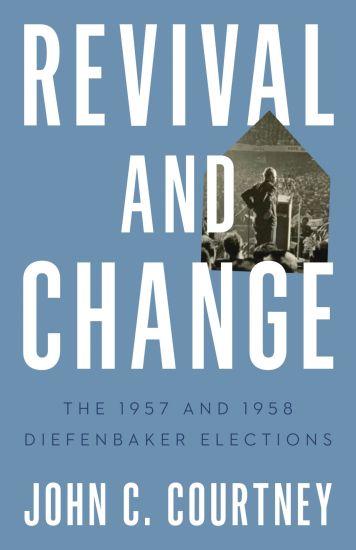
Revival and Change

Revival and Change

John C. Courtney

University of British Columbia Press
2022
pokkari
Revival and Change is a compelling account of the elections, accomplishments, challenges, failures, and ultimate end of the Diefenbaker era.The Liberals had been in office for two decades when the 1957 election was called and were widely expected to win another majority government. But new Conservative leader John Diefenbaker completely overshadowed his opponents. Highlighting Liberal arrogance, Diefenbaker seized the opportunity that television and boisterous, supportive rallies offered to present his vision of a new Canada. He was ultimately victorious. A second election in 1958 resulted in a landslide victory, with the Liberals reduced to their smallest number of seats since Confederation, the CCF reduced to eight seats and losing its leader, and Social Credit wiped out completely. It was a rout never before seen in Canadian history.Revival and Change is the story of those elections, the government and opposition they produced, the issues that defined the government, and the era's legacy in Canadian politics and society.
Elections

Elections

John C. Courtney

University of British Columbia Press
2005
pokkari
Open and competitive elections governed by widely accepted rules and procedures are essential to the legitimacy of any political system. Elections assesses the history and development of five building blocks of the Canadian electoral regime: the franchise, electoral districts, voter registration, election machinery, and plurality voting.Arguing that on balance the Canadian electoral system is truly democratic, John Courtney demonstrates its vast improvements over the years. The right to vote is now generously interpreted. The process of redrawing electoral districts is no longer in the hands of elected officials. Voter registration lists include all but a small share of eligible voters. And those who manage and supervise elections on behalf of all citizens are honest and trustworthy officials. Using the recent push for reform of the plurality vote system as one example, Courtney also examines why certain electoral institutions have been amenable to change and others have not.In a democracy it is important for citizens to understand the most essential parts of their own electoral system. Elections is an ideal primer for undergraduate students, journalists, politicians, and citizens interested in the current state of Canadian democracy.
Elections

Elections

John C. Courtney

University of British Columbia Press
2004
sidottu
Open and competitive elections governed by widely accepted rules and procedures are essential to the legitimacy of any political system. Elections assesses the history and development of five building blocks of the Canadian electoral regime: the franchise, electoral districts, voter registration, election machinery, and plurality voting.Arguing that on balance the Canadian electoral system is truly democratic, John Courtney demonstrates its vast improvements over the years. The right to vote is now generously interpreted. The process of redrawing electoral districts is no longer in the hands of elected officials. Voter registration lists include all but a small share of eligible voters. And those who manage and supervise elections on behalf of all citizens are honest and trustworthy officials. Using the recent push for reform of the plurality vote system as one example, Courtney also examines why certain electoral institutions have been amenable to change and others have not.In a democracy it is important for citizens to understand the most essential parts of their own electoral system. Elections is an ideal primer for undergraduate students, journalists, politicians, and citizens interested in the current state of Canadian democracy.
Commissioned Ridings

Commissioned Ridings

John C. Courtney

McGill-Queen's University Press
2001
nidottu
Where did the idea for nonpartisan constituency redistributions come from? What were the principal reasons that Canada turned to arm's-length commissions to design its electoral districts? In Commissioned Ridings John Courtney addresses these questions by examining and assessing the readjustment process in Canada's electoral boundaries. Defining electoral districts as "representational building blocks," Courtney compares federal and provincial electoral readjustments in the last half of the twentieth century, showing how parliamentarians and legislators, boundary commissions, courts, and interested members of the general public debated representational principles to define the purposes of electoral redistricting in an increasingly urban, ethnically mixed federal state such as Canada.
Citizenship, Diversity, and Pluralism

Citizenship, Diversity, and Pluralism

Alan C. Cairns; John C. Courtney; Peter MacKinnon

McGill-Queen's University Press
2000
nidottu
In Citizenship, Diversity, and Pluralism leading scholars assess the transformation of these two dimensions of citizenship in increasingly diverse and plural modern societies, both in Canada and internationally. Subjects addressed include the changing ethnic demography of states, social citizenship, multiculturalism, feminist perspectives on citizenship, aboriginal nationalism, identity politics, and the internationalization of human rights. Contributors include Heribert Adam (Simon Fraser), Keith Banting (Queen's), Anthony Birch (emeritus, Victoria), John Borrows (UBC), Alan Cairns, Walker Connor (Trinity College), John Erik Fossum (LOS?Senteret, Norway), Virginia Leary (emeritus, SUNY), Denise Reaume (Toronto), Lynn Smith (justice, BC Supreme Court), Charles Taylor (emeritus, McGill), and Jeremy Webber (Sydney, Australia).
Do Conventions Matter?

Do Conventions Matter?

John C. Courtney

McGill-Queen's University Press
1995
nidottu
Do Conventions Matter? provides a complete overview of national party conventions in Canada, from 1919, when the first convention was held, to 1993, including the selection of Stanfield, Trudeau, Broadbent, Clark, Mulroney, Turner, McLaughlin, Chretien, Campbell, and Manning. Courtney compares leadership selection practices in Canada with those in the United States, Britain, and Australia, and shows that Canadian conventions remain a distinctive means of choosing party leaders. Focusing on modern developments in the convention process, Courtney highlights changes in representation over the last thirty years, addresses criticisms about costs and delegate selection practices, and examines the role of the media. He concludes with an examination of the future of conventions in the context of Canadian democracy, given sky-rocketing costs, the movement to reform political parties, and the push towards a universal membership vote. He argues convincingly that the objectives of greater representation and greater democracy explain both the emergence of conventions to choose the leaders of federal parties and their possible demise in the near future.