

Kirjailija
John C. Green
Kirjat ja teokset yhdessä paikassa: 15 kirjaa, julkaisuja vuosilta 2000-2026, suosituimpien joukossa Latin. Vertaile teosten hintoja ja tarkista saatavuus suomalaisista kirjakaupoista.
Mukana myös kirjoitusasut: John C Green
15 kirjaa
Kirjojen julkaisuhaarukka 2000-2026.



The 1988 elections abruptly brought the importance of religion in American politics into sharp focus. Two ministers, Pat Robertson and Jesse Jackson, sought their party's presidential nominations by mobilizing key religious constituencies. In addition, a host of other religious groups, from the Catholic bishops to the Jewish community, sought to influence the election outcome. More than ever, religion was a critical factor in the ballots cast by millions of Americans. As the twentieth century draws to a close, it is clear that religion will continue to be a powerful factor in electoral politics. This volume investigates the many ways religion influenced electoral politics in 1988, tracing the links between elites, activists, and voters in the major religious traditions. Special attention is paid to the leaders of Protestant, Catholic, and Jewish organizations; to important sets of activists, such as ministers, party leaders, and campaign contributors; and to the behavior of key voting blocs, including white evangelical and mainline Protestants, black Protestants, Catholics, and Jews.
Secular Surge
David E. Campbell; Geoffrey C. Layman; John C. Green
Cambridge University Press
2020
pokkari
American society is rapidly secularizing–a radical departure from its historically high level of religiosity–and politics is a big part of the reason. Just as, forty years ago, the Religious Right arose as a new political movement, today secularism is gaining traction as a distinct and politically energized identity. This book examines the political causes and political consequences of this secular surge, drawing on a wealth of original data. The authors show that secular identity is in part a reaction to the Religious Right. However, while the political impact of secularism is profound, there may not yet be a Secular Left to counterbalance the Religious Right. Secularism has introduced new tensions within the Democratic Party while adding oxygen to political polarization between Democrats and Republicans. Still there may be opportunities to reach common ground if politicians seek to forge coalitions that encompass both secular and religious Americans.
Secular Surge
David E. Campbell; Geoffrey C. Layman; John C. Green
Cambridge University Press
2020
sidottu
American society is rapidly secularizing–a radical departure from its historically high level of religiosity–and politics is a big part of the reason. Just as, forty years ago, the Religious Right arose as a new political movement, today secularism is gaining traction as a distinct and politically energized identity. This book examines the political causes and political consequences of this secular surge, drawing on a wealth of original data. The authors show that secular identity is in part a reaction to the Religious Right. However, while the political impact of secularism is profound, there may not yet be a Secular Left to counterbalance the Religious Right. Secularism has introduced new tensions within the Democratic Party while adding oxygen to political polarization between Democrats and Republicans. Still there may be opportunities to reach common ground if politicians seek to forge coalitions that encompass both secular and religious Americans.
The 1988 elections abruptly brought the importance of religion in American politics into sharp focus. Two ministers, Pat Robertson and Jesse Jackson, sought their party's presidential nominations by mobilizing key religious constituencies. In addition, a host of other religious groups, from the Catholic bishops to the Jewish community, sought to influence the election outcome. More than ever, religion was a critical factor in the ballots cast by millions of Americans. As the twentieth century draws to a close, it is clear that religion will continue to be a powerful factor in electoral politics. This volume investigates the many ways religion influenced electoral politics in 1988, tracing the links between elites, activists, and voters in the major religious traditions. Special attention is paid to the leaders of Protestant, Catholic, and Jewish organizations; to important sets of activists, such as ministers, party leaders, and campaign contributors; and to the behavior of key voting blocs, including white evangelical and mainline Protestants, black Protestants, Catholics, and Jews.
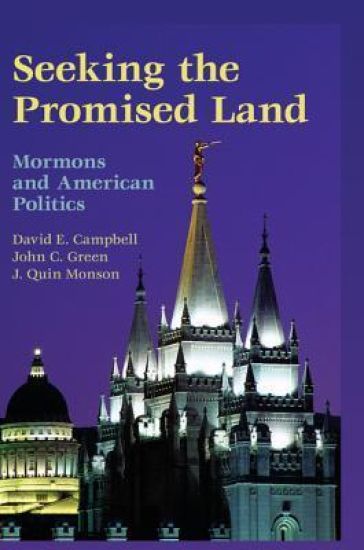
Seeking the Promised Land
David E. Campbell; John C. Green; J. Quin Monson
Cambridge University Press
2014
sidottu
Mormons have long had an outsized presence in American culture and politics, but they remain largely unknown to most Americans. Recent years have seen the political prominence of Mormons taken to a new level - including the presidential candidacy of Republican Mitt Romney, the prominent involvement of Mormons in the campaign for California's Proposition 8 (anti-gay marriage), and the ascendancy of Democrat Harry Reid to the position of Senate Majority Leader. This book provides the most thorough examination ever written of Mormons' place in the American political landscape - what Mormons are like politically and how non-Mormons respond to Mormon candidates. However, this is a book about more than Mormons. As a religious subculture in a pluralistic society, Mormons are a case study of how a religious group balances distinctiveness and assimilation - a question faced by all faiths.
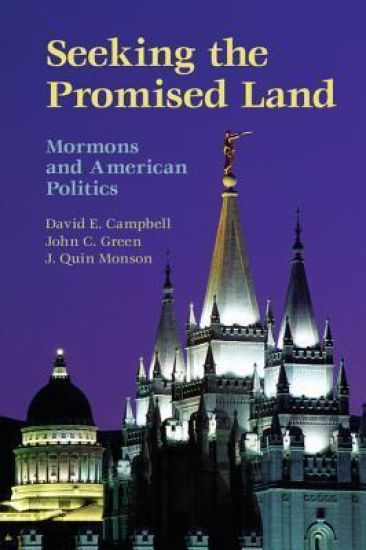
Seeking the Promised Land
David E. Campbell; John C. Green; Monson J. Quin
Cambridge University Press
2014
pokkari
Mormons have long had an outsized presence in American culture and politics, but they remain largely unknown to most Americans. Recent years have seen the political prominence of Mormons taken to a new level - including the presidential candidacy of Republican Mitt Romney, the prominent involvement of Mormons in the campaign for California's Proposition 8 (anti-gay marriage), and the ascendancy of Democrat Harry Reid to the position of Senate Majority Leader. This book provides the most thorough examination ever written of Mormons' place in the American political landscape - what Mormons are like politically and how non-Mormons respond to Mormon candidates. However, this is a book about more than Mormons. As a religious subculture in a pluralistic society, Mormons are a case study of how a religious group balances distinctiveness and assimilation - a question faced by all faiths.
The Assemblies of God (AG) is the ninth largest American and the world's largest Pentecostal denomination, with over 50 million followers worldwide. The AG embraces a worldview of miracles and mystery that makes"supernatural" experiences, such as speaking in tongues, healing, and prophecy, normal for Christian believers. Ever since it first organized in 1916, however, the "charismata" or "gifts of the Holy Spirit" have felt tension from institutional forces. Over the decades, vital charismatic experiences have been increasingly tamed by rituals, doctrine, and denominational structure. Yet the path towards institutionalization has not been clear-cut. New revivals and direct personal experience of God—the hallmarks of Pentecostalism—continue as an important part of the AG tradition, particularly in the growing number of ethnic congregations in the United States. The Assemblies of God draws on fresh, up-to-date research including quantitative surveys and interviews from twenty-two diverse Assemblies of God congregations to offer a new sociological portrait of the AG for the new millennium. The authors suggest that there is indeed a potential revitalization of the movement in the works within the context of the larger global Pentecostal upswing, and that this revitalization may be spurred by what the authors call "godly love:" the dynamic interaction between divine and human love that enlivens and expands benevolence. The volume provides a wealth of data about how the second-largest American Pentecostal denomination sees itself today, and suggests trends to illuminate where it is headed in the future.
The impact of religion on the 2004 presidential election results provoked widespread consternation and surprise. Given the results' intensity and closeness, however, the role of religion should not have come as a shock. In fact, religion and faith have long played a vital role in American elections, and here, John C. Green explores the link and how it has gradually changed. He concludes that an "old religion gap"— that is, the long-standing political differences among religious communities—has been supplanted by a "new religion gap" of political divisions based on religious behavior and belief. Green puts the differences into context and documents the changing role of religion in politics over the last sixty years.Covering three areas of religion that tend to influence election outcomes, Green illuminates the meaning of religious belonging, behaving, and believing in current political context. Each of these aspects of religion affects the way people vote and their views of issues, ideology, and partisanship. He reviews the importance of "moral values" in the major parties' coalitions and discusses the role religious appeals have in presidential campaigns. Given the emphasis on religion's influence on American politics and elections in recent years, this book serves as a cogent reminder that the situation is not new and offers a careful analysis of the role faith plays in electing government officials.
The impact of religion on the 2004 presidential election results provoked widespread consternation and surprise. In fact, religion and faith have played a vital role in American elections for some time, and here, Green explores the links and how they have changed over time.Green posits that an old religion gap describing longstanding political differences among religious communities has been supplanted by a new religion gap revealing political divisions based on religious behavior and belief. He puts the differences into context and documents the changing role of religion in politics over the last 60 years.The impact of religion on the 2004 presidential election results provoked widespread consternation and surprise. Given the intensity and closeness of the results, however, the role of religion should not have come as a shock. In fact, religion and faith have played a vital role in American elections for some time, and here, Green explores the links and how they have changed over time. Specifically, he concludes that there was an old religion gap that described longstanding political differences among religious communities, which has been supplanted by a new religion gap that shows political divisions based on religious behavior and belief. Green puts the differences into context and documents the changing role of religion in politics over the last sixty years.Covering three areas of religion that tend to influence election outcomes, Green illuminates the meaning of religious belonging, behaving, and believing in current political context. Each of these aspects of religion affects the way people vote and their views of issues, ideology, and partisanship. He reviews the importance of moral values in the major party coalitions and discusses the role religious appeals have in presidential campaigns. In addition, he compares the influence of religion to other factors such as gender, age, and income. Given the emphasis on the influence of religion on American politics and elections in recent years, this book serves as a cogent reminder that the situation is not new, and offers a careful analysis of the real role faith plays in the electing of government officials.
"The First Amendment of the U.S. Constitution forbids the creation of an official state church, and we hear the phrase ""separation of church and state"" so frequently that it may surprise us to note that no such barrier exists between religion and politics. Religion is, and always has been, woven into the fabric of American political life. In the last two decades, however, the role of religion in politics has become more direct—almost a blunt, self-conscious force in the political process. The national consequences of this ""diminishing divide"" between religion and politics have brought new groups into politics, altered party coalitions, and influenced campaigns and election results. Churches and other religious institutions have become more actively engaged in the political process, and religious people have increased the level and broadened the range of their political participation. While the public is more accepting of the role of religion in shaping today's political landscape, the issue of how much political power certain religious groups enjoy continues to provoke concern.Drawing on extensive survey data from the Pew Research Center, the National Election Studies, and other sources, The Diminishing Divide illuminates the historical relationship between religion and politics in the United States and explores the ways in which religion will continue to alter the political landscape in the century before us. A historical overview of religion in U.S. politics sets the tone as the book examines the patchwork quilt of American religion and the changing role of religious institutions in American political life since the 1960s. The book explores the complex relations between religion and political attitudes, as well as that of religion and political behavior—particularly with respect to party affiliation and voting habits. Finally, The Diminishing Divide offers a look at the future. As candidates and elected officials increasingly air their personal faith in public places with apparent political intent, and as parishioners are marshaled into political action by clergy and political groups, the authors lay out the background against which religion's power in American political life will be played in the new century."