Kirjojen hintavertailu. Mukana 12 390 323 kirjaa ja 12 kauppaa.

Kirjailija

John C. Hampsey

Kirjat ja teokset yhdessä paikassa: 4 kirjaa, julkaisuja vuosilta 2005-2025, suosituimpien joukossa Kaufman's Hill. Vertaile teosten hintoja ja tarkista saatavuus suomalaisista kirjakaupoista.

Mukana myös kirjoitusasut: John C Hampsey

4 kirjaa

Kirjojen julkaisuhaarukka 2005-2025.

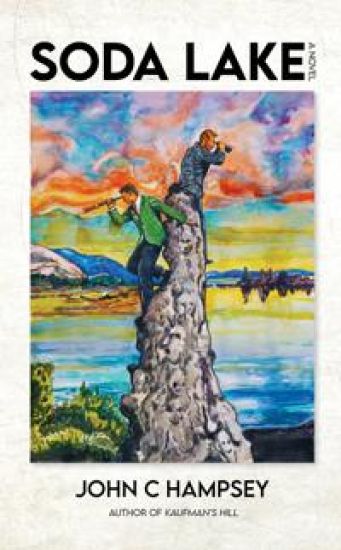
Soda Lake

Soda Lake

John C. Hampsey

Rare Bird Books
2025
sidottu
Soda Lake opens with an unnamed narrator seeing a man disappear into a lake of white salt. This sets the narrator on a quest of discovery, shaped by a series of stories with interconnected characters who all grapple with threats to their identity. The narrator's suspenseful journey mixes personal and collective human history, and his definition of self mysteriously fades as he gets closer to the elusive and timeless “McCuade,” who may or may not be real.Shifting from the coastal valley of central California to Chicago, Ireland, Greece, and France, each chapter in the novel presents a protagonist in the midst of a psychological struggle wherein the idea of McCuade becomes stronger than the reality of the characters themselves. With a twenty-first-century nod to works as diverse as Sherwood Anderson's Winesburg, Ohio and Renata Adler’s Speedboat, Soda Lake blends elements of the archetypal detective quest with stories of the uncanny in order to freshly render the individual human psyche in its struggle to stand up to a progressively transmogrifying world.
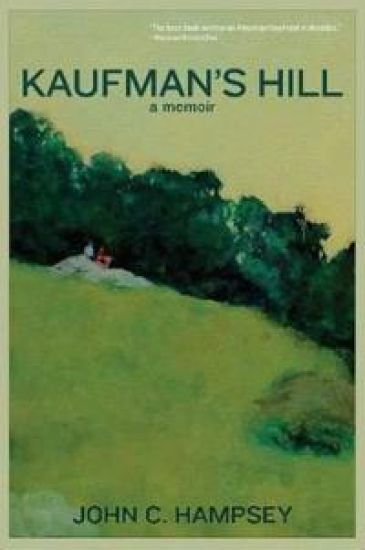
Kaufman's Hill

Kaufman's Hill

John C Hampsey

Bancroft Press
2015
sidottu
Kaufman's Hill opens with a prosaic neighbourhood scene: The author and some other young boys are playing by the creek, one of their usual stomping grounds. But it soon becomes clear that much more is going on; the boy-narrator is struggling to find his way in a middle-class Catholic neighbourhood dominated by the Creely bullies, who often terrify him. It's the Pittsburgh of the early and mid-1960s, a threshold time just before the counter-culture arrives, and a time when suburban society begins to encroach on Kaufman's Hill, the boy's sanctuary and the setting of many of his adventures. As the hill and the 1950s vanish into the twilight, so does the world of the narrator's boyhood. "My pappy says if you're going to be afraid of everything, you may as well live in the sewer" are the words that first open the narrator's eyes. And once he befriends the enigmatic, erratic, but charismatic Taddy Keegan, he becomes bolder and no longer lives in abject fear of the Creelys. The narrator's relationship with Taddy proves to be unconventional, though. Taddy, caught in his own imaginary universe, is often unaware of companions around him.The narrator focuses on uncovering the mystery of Taddy: Why does he live his life like he's a performer? Who is he really? The narrator's world is a mix of exhilarating freedom -- because of absent parents, teachers, and priests -- and imminent dangers. And his home life is problematic. The narrator observes his taciturn father as he copes with manic behaviours and cyclically repeating problems, while his mother struggles to better the life not just of her young son, but that of her African American cleaning woman in a time of racial animosity and racially-related urban violence. The boy watches his parents with eyes too young to truly understand, and is increasingly disappointed by an increasingly remote father who rarely speaks to him. As the narrator matures, his self-concept shifts within a widening world that includes disconcerting sexual experiences with public school girls, and his struggle to frame himself within the realm of the Catholic Church. He finds flaws with all but one religious figure, an aunt, who is a sublime and mystical presence in his life.The narrator joins sports teams that bring him back to the same kind of childhood "friends" he wanted to escape, and he questions whether he himself could act like a bully. When he begins high school, the narrator, at a dramatic moment, leaves boyhood behind, which might just include leaving Taddy Keegan behind as well. John C Hampsey's "Kaufman Hill" is lyrical and profound. It captures the dynamics of the lost world of boyhood in a way no one has before. No wonder the late, great historian Howard Zinn called it "the best book written on American boyhood in decades".
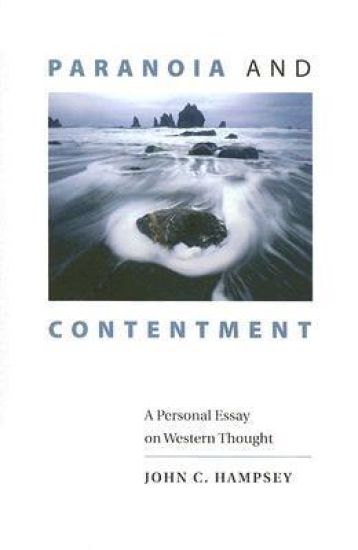
Paranoia and Contentment

Paranoia and Contentment

John C. Hampsey

University of Virginia Press
2005
nidottu
A hybrid in both content and style, ""Paranoia and Contentment"" is a bold and original investigation into Western intellectual history. John Hampsey approaches paranoia not as a clinical term for an irrational sense of persecution but from a uniquely positive perspective, as a cultural truth - a way of understanding the history of human thought and perhaps the best way to describe being itself.
Paranoia and Contentment

Paranoia and Contentment

John C. Hampsey

University of Virginia Press
2005
sidottu
A hybrid in both content and style, Paranoia and Contentment is a bold and original inestigation into Western intellectual history. John Hampsey approaches paranoia not as a clinical term for an irrational sense of persecution but from a uniquely positive perspective, as a cultural truth-a way of understanding the history of human thought and perhaps the best way to describe Being itself. Hampsey turns first to the ancient Greeks to explore the origin of the concept of paranoia. ""Paranoia""-literally ""beside the mind""-was the Greeks' primarily negative term for thinking outside the usual thought processes, or beyond reason. Working from this classical definition, Hampsey sees paranoia operating in two distinctly different ways. First there is the paranoic, his name for off-track thinking that is expansive, creative, even visionary. This is opposed to the paranoidic, which is motivated by fear, delusion, and a pursuit of contentment so obsessive that it has crippled human imagination and diminished tolerance of those who are perceived to threaten that contentment. The distinction is especially significant because the paranoidic so dominates Western thought and culture that paranoic thinking has become nearly lost to us. Hampsey seeks to recover this expansive mode of thought by tracing an arc of paranole moments in Western culture. Abraham, Jesus, Socrates, Hypatia, Joan of Arc, Goethe, Blake, Kierkegaard, Schreber-these are only a few among the many figures whom the author examines in order to isolate moments in Western intellectual history when paranoic vision temporarily breaks through the barriers of paranoidic fear. The book's analyses and inquiries are joined by anecdotal interludes in which Hampsey applies the conflicting concepts of paranoic and paranoidic to revealing moments in his own life. As humanly engaging as it is erudite, Paranoia and Contentment seeks to reclaim paranoic thinking as a crucial part of our consciousness and an indispensable component to understanding our cultural history.