Kirjojen hintavertailu. Mukana 12 595 353 kirjaa ja 12 kauppaa.

Kirjailija

John C. Norcross

Kirjat ja teokset yhdessä paikassa: 14 kirjaa, julkaisuja vuosilta 2003-2024, suosituimpien joukossa Integrative Therapy. Vertaile teosten hintoja ja tarkista saatavuus suomalaisista kirjakaupoista.

14 kirjaa

Kirjojen julkaisuhaarukka 2003-2024.

Systems of Psychotherapy

Systems of Psychotherapy

James O. Prochaska; John C. Norcross; Judith J. Prochaska

OXFORD UNIVERSITY PRESS INC
2024
sidottu
Comprehensive, systematic, and balanced, Systems of Psychotherapy uses a wealth of clinical cases to help readers understand the major psychotherapies, including psychodynamic, existential, experiential, interpersonal, exposure, behavioral, cognitive, third wave, systemic, multicultural, and integrative. The tenth edition of this landmark text thoroughly analyzes 15 leading systems of psychotherapy and briefly surveys another 32, providing students and practitioners with a broad overview of the discipline. The book explores each system's theory of personality, theory of psychopathology, and resulting therapeutic process and relationship. Through these explorations, the authors clearly demonstrate how psychotherapy systems agree on the processes producing change while diverging on the elements in need of change. Additionally, the authors present the central limitations, outcome research, and future directions of each system of psychotherapy. This tenth edition features a reconfigured chapter on positive psychological treatments, expanded coverage of the Unified Protocol and transdiagnostic personalizing, new self-reflection exercises, additional examples of child and adolescent therapy, and more than 500 new references, recommended readings, and web resources.
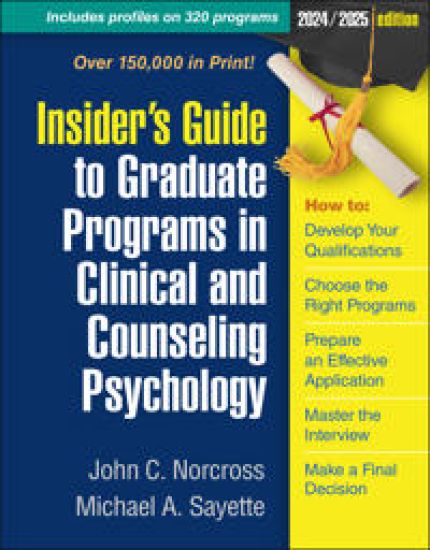
Insider's Guide to Graduate Programs in Clinical and Counseling Psychology

Insider's Guide to Graduate Programs in Clinical and Counseling Psychology

John C. Norcross; Michael A. Sayette

Guilford Publications
2024
sidottu
The definitive guide for prospective graduate students in clinical and counseling psychology has now been updated for 2024/2025, with expert advice and profiles on 320 doctoral programs in the United States. This is the book you can rely on to find the programs that meet your needs and maximize your chances of getting in. Profiles cover each program's specializations or tracks, admission requirements, acceptance rates, financial aid, research areas, and clinical opportunities. The 2024/2025 edition discusses current developments in admissions, including the increase in GRE-optional programs and how to navigate choices around testing.
Insider's Guide to Graduate Programs in Clinical and Counseling Psychology

Insider's Guide to Graduate Programs in Clinical and Counseling Psychology

John C. Norcross; Michael A. Sayette

Guilford Publications
2023
nidottu
The definitive guide for prospective graduate students in clinical and counseling psychology has now been updated for 2024/2025, with expert advice and profiles on 320 doctoral programs in the United States. This is the book you can rely on to find the programs that meet your needs and maximize your chances of getting in. Profiles cover each program's specializations or tracks, admission requirements, acceptance rates, financial aid, research areas, and clinical opportunities. The 2024/2025 edition discusses current developments in admissions, including the increase in GRE-optional programs and how to navigate choices around testing.
Personalizing Psychotherapy

Personalizing Psychotherapy

John C. Norcross; Mick Cooper

American Psychological Association
2021
pokkari
This book provides detailed guidance on assessing and accommodating patient preferences for the psychotherapist, the therapeutic approach, and treatment activities. Blending empirical research and clinical expertise into easy-to-read advice, Drs. John Norcross and Mick Cooper offer multiple strategies for routinely assessing preferences as they evolve over the course of therapy, focusing primarily on strong likes and dislikes. They describe multiple tools for rapidly and reliably measuring preferences in session, including their Cooper-Norcross Inventory of Preferences (C-NIP). Four key strategies for accommodating a client's preferences are explored in depth: adopting them into treatment, adapting the therapist's approach, exploring alternative preferences, and referring the patient to another practitioner if necessary. The authors describe the limitations of personalization and how to avoid common errors, such as therapists assuming they know what clients want. Training and supervision strategies are also featured. Clinical cases and patient amp ndash therapist dialogues demonstrate how to evaluate and integrate client preferences in a respectful, ethical, and professional manner that leads to enhanced alliances and improved outcomes.
Leaving It at the Office, Second Edition

Leaving It at the Office, Second Edition

John C. Norcross; Guy Jr.; Gary R. VandenBos

Guilford Press
2018
nidottu
Mental health professionals provide better care to their clients when they care for themselves. This acclaimed highly practical guide--now revised and expanded with even more self-care strategies--helps busy psychotherapists balance their personal and professional lives. The book presents 13 research-informed self-care strategies and offers concrete methods for integrating them into daily life. Featuring examples and insights from master therapists, every chapter concludes with a self-care checklist. Infused with a positive message of self-renewal and growth, the book shows clinicians how to leave distress at the office and tend actively to their physical, emotional, and spiritual needs. New to This Edition *Chapter on mindfulness and self-compassion. *Increased emphasis on simple, real-time self-care activities. *New examples from additional master therapists and hundreds of workshop participants. *Up-to-date research findings on therapist stress and resilience. *Discussions of competence constellations, building on self-care strengths, moral stress, deliberate practice, presession preparation, journaling, and multiculturalism.
Leaving It at the Office, Second Edition

Leaving It at the Office, Second Edition

John C. Norcross; Guy Jr.; Gary R. VandenBos

Guilford Press
2018
sidottu
Mental health professionals provide better care to their clients when they care for themselves. This acclaimed highly practical guide--now revised and expanded with even more self-care strategies--helps busy psychotherapists balance their personal and professional lives. The book presents 13 research-informed self-care strategies and offers concrete methods for integrating them into daily life. Featuring examples and insights from master therapists, every chapter concludes with a self-care checklist. Infused with a positive message of self-renewal and growth, the book shows clinicians how to leave distress at the office and tend actively to their physical, emotional, and spiritual needs. New to This Edition *Chapter on mindfulness and self-compassion. *Increased emphasis on simple, real-time self-care activities. *New examples from additional master therapists and hundreds of workshop participants. *Up-to-date research findings on therapist stress and resilience. *Discussions of competence constellations, building on self-care strengths, moral stress, deliberate practice, presession preparation, journaling, and multiculturalism.
Systems of Psychotherapy

Systems of Psychotherapy

James O. Prochaska; John C. Norcross

Oxford University Press Inc
2018
sidottu
Comprehensive, systematic, and balanced, Systems of Psychotherapy uses a wealth of clinical cases to help readers understand a wide variety of psychotherapies - including psychodynamic, existential, experiential, interpersonal, exposure, behavioral, cognitive, third wave, systemic, multicultural, and integrative. The ninth edition of this landmark text thoroughly analyzes 15 leading systems of psychotherapy and briefly surveys another 32, providing students and practitioners with a broad overview of the discipline. The book explores each system's theory of personality, theory of psychopathology, and resulting therapeutic process and therapy relationship. Through these explorations the authors clearly demonstrate how psychotherapy systems agree on the processes producing change while diverging on the elements in need of change. Additionally, the authors present cogent criticisms of each approach from cognitive-behavioral, psychoanalytic, humanistic, cultural, and integrative perspectives. This ninth edition features updated meta-analytic reviews of the effectiveness of each system, new sections on Lacanian analysis, mentalization therapy, and psychotherapy with gender nonconforming people, as well as new sections and updates throughout the text.
Clinician's Guide to Evidence-Based Practices

Clinician's Guide to Evidence-Based Practices

John C. Norcross; Thomas P. Hogan; Gerald P. Koocher; Lauren A. Maggio

Oxford University Press Inc
2017
nidottu
Everyone, it seems, is talking and arguing about Evidence-Based Practice (EBP). Those therapies and assessments designated as EBP increasingly determine what is taught, researched, and reimbursed in health care. But exactly what is it, and how do you do it? The second edition of Clinician's Guide to Evidence-Based Practices is the concise, practitioner-friendly guide to applying EBPs in mental health. Step-by-step it explains how to conduct the entire EBP process-asking the right questions, accessing the best available research, appraising the research, translating that research into practice, integrating that research with clinician expertise and patient characteristics, evaluating the entire enterprise, attending to the ethical considerations, and when done, moving the EBP process forward by teaching and disseminating it. This book will help you: · Formulate useful questions that research can address · Search the research literature efficiently for best practices · Make sense out of the research morass, sifting wheat from chaff · Incorporate patient values and diversity into the selection of EBP · Blend clinician expertise with the research evidence · Translate empirical research into practice · Ensure that your clients receive effective, research-supported services · Infuse the EBP process into your organizational setting and training methods · Identify and integrate ethics in the context of EBP Coauthored by a distinguished quartet of clinicians, researchers, and a health care librarian, the Clinician's Guide has become the classic for graduate students and busy professionals mastering EBP.
Supervision Essentials for Integrative Psychotherapy

Supervision Essentials for Integrative Psychotherapy

John C. Norcross; Leah M Popple

American Psychological Association
2016
pokkari
This book presents integrative supervision applicable to integrative and single-system psychotherapy alike. Distinctive features include its synthesis of supervisory methods aligned with multiple theoretical traditions, a research-informed fit of supervision to the individuality of the supervisee, its insistence on frequent feedback from both clients and trainees, and a modeling of the philosophical pluralism and pragmatic flexibility of integration itself. In reviewing videotaped therapy sessions, integrative supervisors offer key insights into common problems, demonstrate how to adjust treatment to clients amp rsquo transdiagnostic needs, and guide trainees to clinical competence. Includes transcripts from actual supervision sessions and commentaries from the authors amp rsquo companion DVD, Integrative Psychotherapy Supervision.
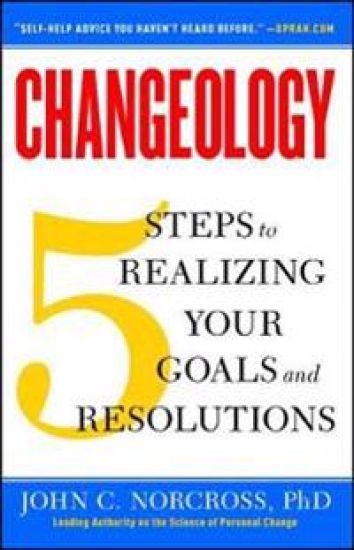
Changeology

Changeology

John C. Norcross

Simon Schuster
2014
pokkari
Change is hard. But not if you know the five-step formula that works whether you're trying to stop smoking or start recycling. Dr. John C. Norcross, an internationally recognized expert, has studied how people make transformative, permanent changes in their lives. Over the past thirty years, he and his research team have helped thousands of people overcome dozens of behavioural ailments, and now his revolutionary scientific approach to personal improvement is available in this indispensable guide. Unlike the overwhelming majority of self-help books, the Changeology plan has a documented track record of success. Whether you want to quit overeating or drinking, or end depression, debt, and relationship distress, Dr. Norcross gives you the tools you need to change within 90 days. Changeology shows you how to define your goals, pump up your motivation, prevent relapses, and master the skills that will help you sustain change. In addition, you can personalize your journey with Check Yourself assessments and helpful tools on the author's interactive website, ChangeologyBook.com. Whatever your goal or resolution, Changeology will help you achieve a life filled with greater health and happiness.
Self-Help That Works

Self-Help That Works

John C. Norcross; Linda F. Campbell; John M. Grohol; John W. Santrock; Florin Selagea; Robert Sommer

Oxford University Press Inc
2013
nidottu
Self-help is big business, but alas, not always a scientific one. Self-help books, websites, and movies abound and are important sources of psychological advice for millions of Americans. But how can you sift through them to find the ones that work? Self-Help That Works is an indispensable guide that enables readers to identify effective self-help materials and distinguish them from those that are potentially misleading or even harmful. Six scientist-practitioners bring careful research, expertise, and a dozen national studies to the task of choosing and recommending self-help resources. Designed for both laypersons and mental-health professionals, this book critically reviews multiple types of self-help resources, from books and autobiographies to films, online programs, support groups, and websites, for 41 different behavioral disorders and life challenges. The revised edition of this award-winning book now features online self-help resources, expanded content, and new chapters focusing on autism, bullying, chronic pain, GLB issues, happiness, and nonchemical addictions. Each chapter updates the self-help resources launched since the previous edition and expands the material. The final chapters provide key strategies for consumers evaluating self-help as well as for professionals integrating self-help into treatment. All told, this updated edition of Self-Help that Works evaluates more than 2,000 self-help resources and brings together the collective wisdom of nearly 5,000 mental health professionals. Whether seeking self-help for yourself, loved ones, or patients, this is the go-to, research-based guide with the best advice on what works.
Integrative Therapy

Integrative Therapy

John C. Norcross

American Psychological Association
2012
dvd
Integrative Therapy involves selecting models and methods from across orientations to best suit a particular client and context. Meta-analyses demonstrate that tailoring therapy to the individual client enhances treatment effectiveness. John C. Norcross's approach to integrative psychotherapy systematically matches evidence-based treatment methods and healing relationships to the client on the basis of multiple transdiagnostic features, including stage of change, reactance level, culture, and preferences. In this video, Dr. Norcross works with a young man named Jason who seeks to improve both his self-care regimen and interpersonal relationships. Dr. Norcross assesses Jason's stages of change and preferences in these areas, addresses his multiple treatment goals, and applies different relationship stances to help move him forward.
Changing for Good

Changing for Good

James O. Prochaska; John C. Norcross; Carlo C. DiClemente

William Morrow Company
2007
nidottu
This groundbreaking book offers simple self-assessments, informative case histories, and concrete examples to help clarify each stage and process. Whether your goal is to start saving money, to stop drinking, or to end other self-defeating or addictive behaviors, this revolutionary program will help you implement positive personal change . . . for life.How many times have you thought about starting a diet or quitting smoking without doing anything about it? Or lapsed back into bad habits after hitting a rough spot on the road to recovery?To uncover the secret to successful personal change, three acclaimed psychologists studied more than 1,000 people who were able to positively and permanently alter their lives without psychotherapy. They discovered that change does not depend on luck or willpower. It is a process that can be successfully managed by anyone who understands how it works. Once you determine which stage of change you're in, you can: create a climate where positive change can occurmaintain motivationturn setbacks into progressmake your new benefifificial habits a permanent part of your lifeThe National Cancer Institute Found this program more than twice as effective as standard programs in helping smokers quit for 18 months.
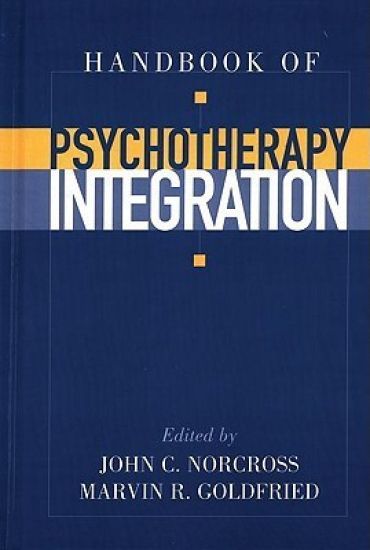
Handbook of Psychotherapy Integration

Handbook of Psychotherapy Integration

John C. Norcross; Marvin R. Goldfried

Oxford University Press Inc
2003
sidottu
Contemporary psychotherapists have come to realize that, given the complexity of human behaviour, no one theory can ever suffice to explain all situations, disorders, and clients. Over the past three decades, the ideological cold war and "dogma eat dogma" ambience have abated as clinicians look across and beyond single-school approaches to see what can be learned - and how patients can benefit - from alternative orientations. This volume provides a comprehensive state-of-the-art description of therapeutic integration and its clincial practices by the leading proponents of the movement. After presenting the concepts, history, research, and belief structures of psychotherapy integration, the book considers two exemplars of theoretical integration, technical eclectism, and common factors. The authors review integrative therapies for specific disorders, including anxiety, depression, and borderline personality disorder, along with integrative treatment modalities, such as combining individual and family therapy and integrating pharmacotherapy and psychotherapy. The book concludes with a section on training and a look at future directions. Replete with clinical vignettes, this unique handbook is invaluable to practitioners and researchers alike.