Kirjojen hintavertailu. Mukana 12 337 993 kirjaa ja 12 kauppaa.
Kirjailija
John Calvin
Kirjat ja teokset yhdessä paikassa: 230 kirjaa, julkaisuja vuosilta 1845-2026, suosituimpien joukossa John. Vertaile teosten hintoja ja tarkista saatavuus suomalaisista kirjakaupoista.
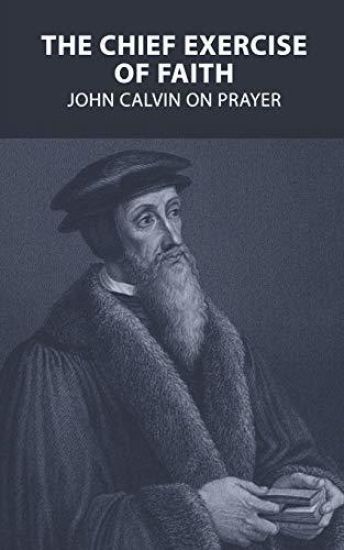
"There's nothing else like Calvin's treatment of prayer... Calvin is both theological and practical, and as usual, he is very comprehensive. This is a rarity-deep theology with a spiritually elevated tone and savor that makes the reader want to pray."-Timothy Keller in Prayer: Experiencing Awe and Intimacy with GodJ.I. Packer calls this: "A classic minitreatise on the proper mindset for praying and the Lord's Prayer as a pattern for doing so."John Calvin's work on prayer from The Institutes of Christian Religion has nourished souls and sparked a desire to pray for almost 500 years. His hallmark chapter on prayer is now available as a stand-alone book, making rich theology more accessible and affordable for those who might not otherwise stumble across it. Readers of The Chief Exercise of Faith: John Calvin on Prayer will cover a wide scope of what prayer is and how to pray: - Why prayer is the chief exercise of faith- What it means to pray in Jesus' name- Calvin's Four Rules for Prayer- Calvin's exposition of each of the six petitions of the Lord's Prayer- And more."So true is it that we dig up by prayer the treasures that were pointed out by the Lord's gospel, and which our faith has gazed upon." (John Calvin)May this book encourage you to pick up your shovel and dig up gospel treasures by prayer.
A treatment on the use of relics and icons in both Roman Catholic and Eastern Orthodox theology, this book uses the Bible as a basis to renounce such uses of tradition to make theological truth and uses solely scripture to make any truth claims as far as saints and relics in the church.
A highly involved and intriguing look at the book of John, John Calvin interacts with the text in a way that most other commentators of his time have never done. He takes the book of John and reveals its nuances with such ease and intrigue that you cannot help be drawn into the text. He takes comments and notes from other theologians and commentators of his day to give you a clearer picture of the agreements and disputed areas of the John account. Calvin has always been a point of interest to modern theologians and his interpretation of John is a book that should not in any way be ignored.
A highly involved and intriguing look at the book of Genesis, John Calvin interacts with the text in a way that most other commentators of his time have never done. He takes the book of Genesis and reveals its nuances with such ease and intrigue that you cannot help be drawn into the text. He takes comments and notes from other theologians and commentators of his day to give you a clearer picture of the agreements and disputed areas of the Genesis account. Calvin has always been a point of interest to modern theologians and his interpretation of Genesis is a book that should not in any way be ignored.
Institutes of the Christian Religion is John Calvin's seminal work of Protestant systematic theology. It is highly influential in the Western world and is still widely read by theological students today. TABLE OF CONTENTSAdvertisement.The Translator's Preface.The Author's Preface to An Edition Published In The Year 1559, With His Last Corrections And Additions.Dedication.General Syllabus.Book I. On The Knowledge Of God The Creator. Argument. Chapter I. The Connection Between The Knowledge Of God And The Knowledge Of Ourselves. Chapter II. The Nature And Tendency Of The Knowledge Of God. Chapter III. The Human Mind Naturally Endued With The Knowledge Of God. Chapter IV. This Knowledge Extinguished Or Corrupted, Partly By Ignorance, Partly By Wickedness. Chapter V. The Knowledge Of God Conspicuous In The Formation And Continual Government Of The World. Chapter VI. The Guidance And Teaching Of The Scripture Necessary To Lead To The Knowledge Of God The Creator. Chapter VII. The Testimony Of The Spirit Necessary To Confirm The Scripture, In Order To The Complete Establishment Of Its Authority. The Suspension Of Its Authority On The Judgment Of The Church, An Impious Fiction. Chapter VIII. Rational Proofs To Establish The Belief Of The Scripture. Chapter IX. The Fanaticism Which Discards The Scripture, Under The Pretence Of Resorting To Immediate Revelations, Subversive Of Every Principle Of Piety. Chapter X. All Idolatrous Worship Discountenanced In The Scripture, By Its Exclusive Opposition Of The True God To All The Fictitious Deities Of The Heathen. Chapter XI. Unlawfulness Of Ascribing To God A Visible Form. All Idolatry A Defection From The True God. Chapter XII. God Contradistinguished From Idols, That He May Be Solely And Supremely Worshipped. Chapter XIII. One Divine Essence, Containing Three Persons; Taught In The Scriptures From The Beginning. Chapter XIV. The True God Clearly Distinguished In The Scripture From All Fictitious Ones By The Creation Of The World. Chapter XV. The State Of Man At His Creation, The Faculties Of The Soul, The Divine Image, Free Will, And The Original Purity Of His Nature. Chapter XVI. God's Preservation And Support Of The World By His Power, And His Government Of Every Part Of It By His Providence. Chapter XVII. The Proper Application Of This Doctrine To Render It Useful To Us. Chapter XVIII. God Uses The Agency Of The Impious, And Inclines Their Minds To Execute His Judgments, Yet Without The Least Stain Of His Perfect Purity.Book II. On The Knowledge Of God The Redeemer In Christ, Which Was Revealed First To The Fathers Under The Law, And Since To Us In The Gospel.Argument. Chapter I. The Fall And Defection Of Adam The Cause Of The Curse Inflicted On All Mankind, And Of Their Degeneracy From Their Primitive Condition. The Doctrine Of Original Sin. Chapter II. Man, In His Present State, Despoiled Of Freedom Of Will, And Subjected To A Miserable Slavery. Chapter III. Every Thing That Proceeds From The Corrupt Nature Of Man Worthy Of Condemnation. Chapter IV. The Operation Of God In The Hearts Of Men. Chapter V. A Refutation Of The Objections Commonly Urged In Support Of Free Will. Chapter VI. Redemption For Lost Man To Be Sought In Christ. Chapter VII. The Law Given, Not To Confine The Ancient People To Itself, But To Encourage Their Hope Of Salvation In Christ, Till The Time Of His Coming.............
John Calvin, the French Protestant who broke from the Roman Catholic Church was one of the greatest and most influential of Christian thinkers. He had to leave his native France to escape religious persecution, and spent the rest of his life living and working in Switzerland and Germany. The Protestants, of course, needed a clear statement for the reasons behind their break from the Pope, and Calvin became their leading and clearest spokesman. A true heir of Augustine and Paul, he successfully systematized the Protestant faith in his Institutes -- a marvel of theological completeness and clarity that served as a model for almost all succeeding theologies in the Protestant movement. Though greatly despised throughout history, Calvin's clear understanding of the message of the Bible shows his grasp of the truth of God's Word that has stood the test of time. As is true with most of God's despised saints, only the few with genuine faith will know the truth when they see it. "My sheep know my voice." BOOK ONE: Of the Knowledge of God Beveridge Translation
Institutes of the Christian Religion V1 is a seminal work of the Protestant Reformation written by John Calvin, a French theologian and pastor. The book is divided into four parts, covering the knowledge of God, the knowledge of man, the way of salvation, and the Christian life. Calvin argues that the Bible is the only authoritative source of Christian doctrine and that salvation is achieved through faith in Jesus Christ. He also discusses the nature of God, the Trinity, predestination, and the sacraments. The book was originally written in Latin and has been translated into many languages. It is considered a classic of Christian theology and has had a profound influence on Protestant theology and thought.This is a new release of the original 1845 edition.This scarce antiquarian book is a facsimile reprint of the old original and may contain some imperfections such as library marks and notations. Because we believe this work is culturally important, we have made it available as part of our commitment for protecting, preserving, and promoting the world's literature in affordable, high quality, modern editions, that are true to their original work.




![Institutes of the Christian Religion [Volume 1 of 2]](/covers/9781546734772.jpg)
![Institutes of the Christian Religion [Volume 1 of 2]](/covers/9781546345244.jpg)