Kirjojen hintavertailu. Mukana 12 595 353 kirjaa ja 12 kauppaa.

Kirjailija

John Case

Kirjat ja teokset yhdessä paikassa: 19 kirjaa, julkaisuja vuosilta 1994-2022, suosituimpien joukossa Strength of Materials and Structures. Vertaile teosten hintoja ja tarkista saatavuus suomalaisista kirjakaupoista.

19 kirjaa

Kirjojen julkaisuhaarukka 1994-2022.

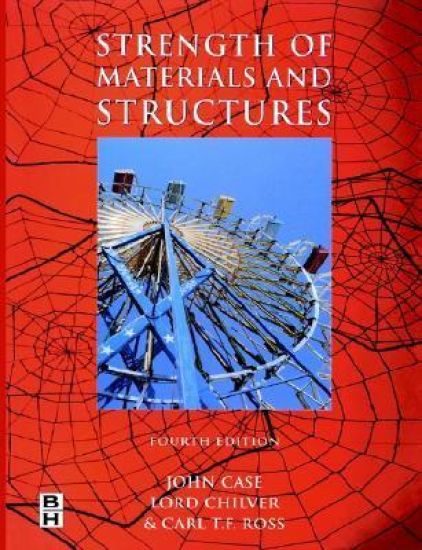
Strength of Materials and Structures

Strength of Materials and Structures

Carl T. F. Ross; John Case; A. H. Chilver

Butterworth-Heinemann Ltd
1999
nidottu
Engineers need to be familiar with the fundamental principles and concepts in materials and structures in order to be able to design structurers to resist failures. For 4 decades, this book has provided engineers with these fundamentals. Thoroughly updated, the book has been expanded to cover everything on materials and structures that engineering students are likely to need. Starting with basic mechanics, the book goes on to cover modern numerical techniques such as matrix and finite element methods. There is also additional material on composite materials, thick shells, flat plates and the vibrations of complex structures. Illustrated throughout with worked examples, the book also provides numerous problems for students to attempt.
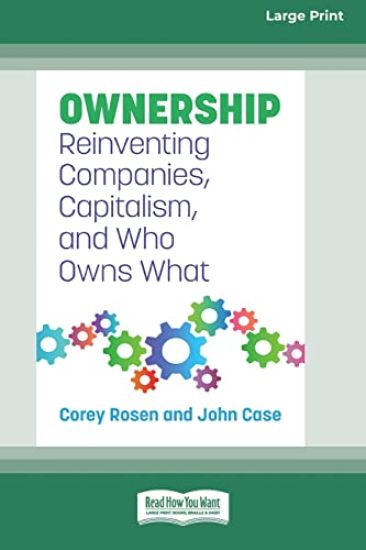
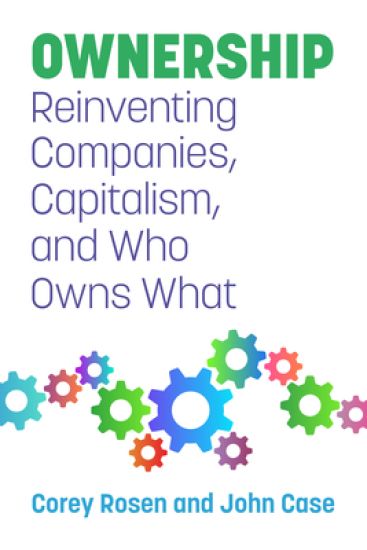
Ownership

Ownership

Corey Rosen; John Case

Berrett-Koehler Publishers
2022
nidottu
Employee ownership creates stronger companies, helps workers build wealth, and fosters a fairer, more stable society. In this book, two leading experts show how it works--and how it can be greatly expanded. Wages don't cover the bills. Wealth inequality is growing. Social trust is eroding. There are endless debates about what to do, but one key factor is inexplicably left out: who owns the companies that drive the economy? Ownership matters. Ownership by a few means benefits for a few. But if you spread ownership around, you spread the benefits of capitalism around. Employee ownership lets workers build real wealth, not just pick up a paycheck. And it's a piece of the puzzle that's in plain sight. As Corey Rosen and John Case point out, there are already thousands of prosperous employee-owned companies. Rosen and Case explain why so many companies end up being owned by Wall Street shareholders or private equity firms--and why that kind of ownership encourages a focus on short-term profits rather than the long-term sustainability needed by employees, communities, and the environment. They show the limits of reform efforts that don't address the essential issue of who owns what. But the heart of the book is a deep dive into how employee ownership originated, how it works now, and what needs to be done to expand it. The book looks at how the idea is growing, both in the United States and around the world--and why all sides of the political spectrum support it. Rosen and Case offer a vivid portrait of a form of ownership that results in more prosperous workers, more responsible companies, and a fairer, more stable society.
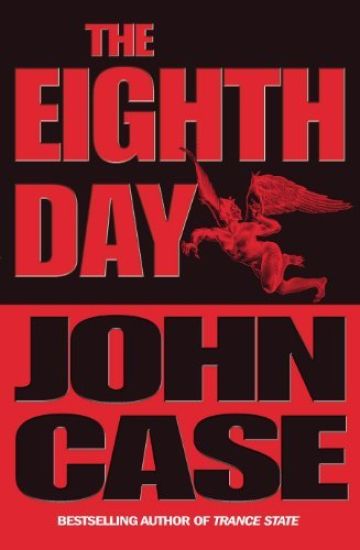
The Eighth Day

The Eighth Day

John Case

Arrow Books Ltd
2016
pokkari
"And on the Seventh Day, He rested." --Genesis, 2:2-3 The EighthDay is an explosive, compulsively readable novel of suspense that plunges a clever young man into a web of mystery and international deceit, bringing him face to face with the ultimate evil. Danny Cray is a struggling 28 year-old sculptor and video artist who lives in Washington DC. To make ends meet, he does occasional freelance work as a researcher for a large firm of private detectives. When one of their most powerful clients approaches him with a job, the money is too good to resist. All he has to do is learn what a recently deceased university professor was working on when he died. But Danny stumbles on far more than he expected when he discovers that the professor was in touch with the Vatican about a remote tribe of Kurds who worship the Peacock Angel; Satan. After others connected to the professor start to disappear, Danny finds himself in great peril and must travel into the ancient land where this tribe still lives in order to discover what is truly at stake in his investigation. A mesmerising blend of science, religion, history and suspense, The Eighth Day confirms John Case's position as a master of intelligent commercial fiction.
Dance Of Death

Dance Of Death

John Case

Arrow Books Ltd
2016
pokkari
From The Genesis Code to The Murder Artist, John Case has established himself as the master of unrelenting suspense. Now Case choreographs his most diabolically chilling novel to date, as the very fabric of civilisation threatens to come apart in the hands of a brilliantly vengeful madman... Photojournalist Mike Burke has carried his camera into every war zone and hellhole on earth - and come back with the pictures (and battle scars) to prove it. He is flying high until, quite suddenly, he isn't. When Burke's helicopter crashes and burns in Africa, he comes away with his life but loses his heart to the woman who saves him. That's when he decides it is time to stop dancing with the devil. But the devil isn't done with him yet...
Subrecursive Programming Systems

Subrecursive Programming Systems

James S. Royer; John Case

Springer-Verlag New York Inc.
2012
nidottu
1.1. What This Book is About This book is a study of * subrecursive programming systems, * efficiency/program-size trade-offs between such systems, and * how these systems can serve as tools in complexity theory. Section 1.1 states our basic themes, and Sections 1.2 and 1.3 give a general outline of the book. Our first task is to explain what subrecursive programming systems are and why they are of interest. 1.1.1. Subrecursive Programming Systems A subrecursive programming system is, roughly, a programming language for which the result of running any given program on any given input can be completely determined algorithmically. Typical examples are: 1. the Meyer-Ritchie LOOP language [MR67,DW83], a restricted assem- bly language with bounded loops as the only allowed deviation from straight-line programming; 2. multi-tape 'lUring Machines each explicitly clocked to halt within a time bound given by some polynomial in the length ofthe input (see [BH79,HB79]); 3. the set of seemingly unrestricted programs for which one can prove 1 termination on all inputs (see [Kre51,Kre58,Ros84]); and 4. finite state and pushdown automata from formal language theory (see [HU79]). lOr, more precisely, the collection of programs, p, ofsome particular general-purpose programming language (e. g., Lisp or Modula-2) for which there is a proof in some par- ticular formal system (e.g., Peano Arithmetic) that p halts on all inputs.
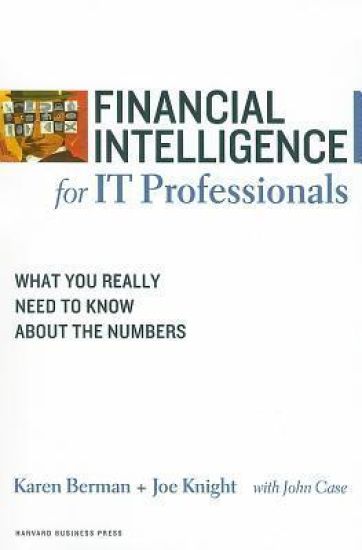
Financial Intelligence for IT Professionals

Financial Intelligence for IT Professionals

Karen Berman; Joe Knight; John Case

Harvard Business Review Press
2008
pokkari
As an IT manager, you're expected to make key decisions and recommend major investments. And that means understanding your decisions' financial impact on your company. But if you're like many information technology practitioners, you may feel uncomfortable incorporating the financials into your day-to-day work. Using the groundbreaking formula they introduced in their book Financial Intelligence: A Manager's Guide to Knowing What the Numbers Really Mean, Karen Berman and Joe Knight present the essentials of finance specifically for IT experts. Drawing on their work training tens of thousands of managers and employees at leading organizations worldwide, the authors illuminate the basics of financial management and measurement and provide hands-on activities for practicing what you are reading. You'll discover: * Why the assumptions behind financial data matter * What your company's income statement, balance sheet, and cash flow statement reveal * How to use ratios to assess your company's financial health * How to calculate return on IT investments * Ways to use financial information to support your company's business units and do your own job better * How to instill financial intelligence throughout your team Authoritative and accessible, Financial Intelligence for IT Professionals empowers you to "talk numbers" confidently with your boss, colleagues, and direct reports -- and understand how the financials affect your part of the business.
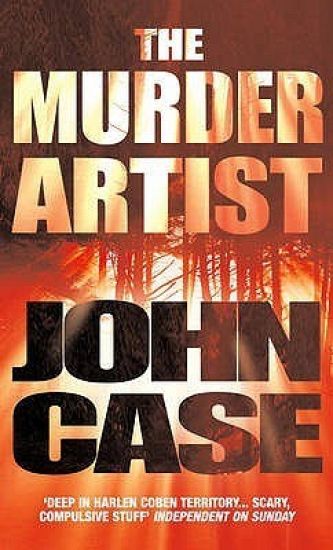
Murder Artist

Murder Artist

John Case

Penguin books ltd
2005
pokkari
Alex takes a break to watch, while keeping half an eye on the twins, but when he turns to see how they are enjoying themselves, they're nowhere to be seen. The perfect day has turned into every parent's nightmare.
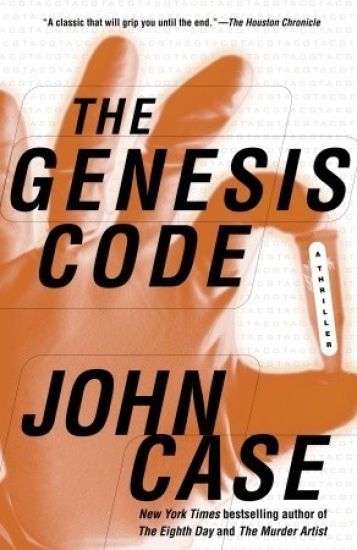
The Genesis Code: A Novel of Suspense

The Genesis Code: A Novel of Suspense

John Case

Ballantine Books
2005
nidottu
NEW YORK TIMES BESTSELLER - "Terrifying . . . a spellbinding biomedical thriller."--San Francisco Examiner "A classic that will grip you until the end."--Houston Chronicle A phone call in the dead of night brings Joe Lassiter shattering news: His sister and young nephew have died in a fire in their home near Washington, D.C. Yet Lassiter soon learns a chilling fact: His loved ones were brutally murdered before the blaze was set. The mysterious suspect's identity only raises more questions. Then Lassiter uncovers another crime--another innocent mother and child murdered. The more he investigates, the larger the web of conspiracy grows, as Lassiter's search for answers leads him on a dangerous international chase toward a truth that will shock him-- and the world--to the very core. . . .
Trance State

Trance State

John Case

Cornerstone
2002
pokkari
A promising young research fellow for a venerable think tank in Zurich has just filed his last report, as he is forced into a ghastly experiment. When unknown assassins burst into the psychologist's office, who is their target - him or the young woman's sister?
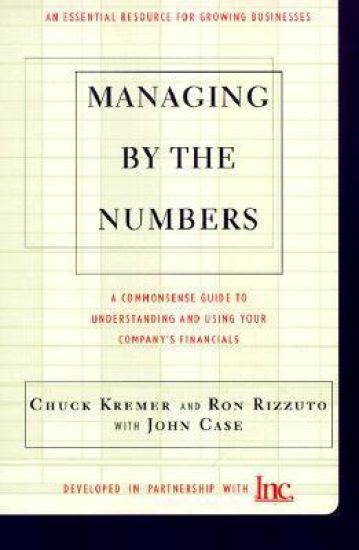
Managing By The Numbers

Managing By The Numbers

Chuck Kremer; John Case; Ron Rizzuto

Perseus Books
2000
pokkari
Everyone interested in building a stronger business needs to understand and use the information captured in financial statements. In Managing by the Numbers , business education and accounting experts Chuck Kremer and Ron Rizzuto team up with open-book management authority John Case to demystify the numbers. They present a practical, common-sense approach to reading financial statements and to managing the three bottom lines of business financial performance: net profit, operating cash flow, and return on assets. The book features numerous exercises and examples (with associated templates available on the Web), a powerful new management tool known as The Financial Scoreboard," and an extensive glossary. Managing by the Numbers is an essential resource for entrepreneurs, business owners, managers, and anyone eager to improve their mastery of the financial side of running a business.
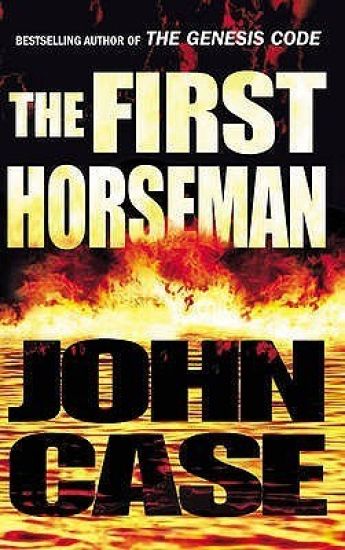
First Horseman

First Horseman

John Case

Arrow Books Ltd
1999
pokkari
In the Book of Revelations, the Four Horsemen herald the arrival of the Apocalypse. Now, with history threatening to repeat itself, a scientific expedition speeds toward a remote island in the Arctic Sea to recover strains of the lethal virus preserved under layers of ice. For Washington Post reporter Frank Daly, it is the story of a lifetime.
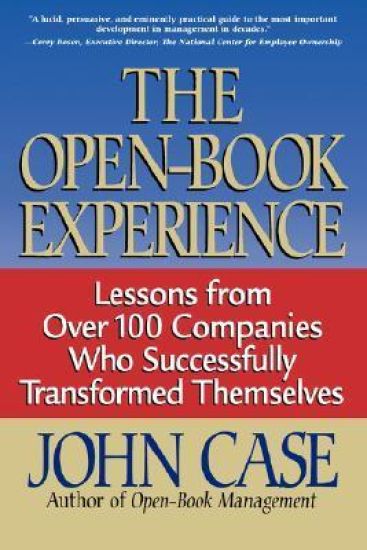
The Open-Book Experience

The Open-Book Experience

John Case

Basic Books
1998
pokkari
Over the last decade companies have struggled to balance the human dimension of business with the need to be aggressive, competitive, and profitable. Of all the management solutions considered, one philosophy, open-book management, has proven its power to transform organizations and enhance morale and productivity again and again.But what was it about a seemingly risky philosophy, in which all of a company's financial numbers are revealed to every employee, that compelled companies as dissimilar as multibillion-dollar RR Donnelley and modest-sized Crisp publications, to undertake such a drastic rethinking of company management? Was it the increased profits other companies, such as Amoco Canada, were experiencing due to their employees' new financial involvement in the company? Or was it he improved production that Bagel Works, Inc., and Dixie Ironworks, Inc., realized through employee joint accountability? Perhaps it was the enhanced employee morale that still other companies were achieving now that their employees were partners who designed their own bonus packages.Likely, it was all these reasons and dozens more that convinced hundreds of companies to adopt open-book management to help reduce costs, improve quality, and boost sales, all while creating an environment that reinvented and revitalized the role of the employee.In this practical and highly accessible book, John Case, the leading authority and foremost chronicler of open-book management, shows how to put the open-book philosophy to work. The Open-Book Experience explains how to identify critical numbers, how to bring the corporate financials down to earth, and how to set up a system that gets everyone in the business working to improve performance. It describes how companies both large and small have actually implemented open-book management--how they got started, how they overcame obstacles, and how they taught employees to understand the business.Using a step-by-step methodology gleaned from the experiences of more than 100 successful companies, and revealing tools and techniques such as electronic scoreboards and collaborative "games," Case shows how open-book management can work for any company wanting to bridge the age-old gap between concern for people and the need for rigorous performance measurement and improvement.
Genesis Code

Genesis Code

John Case

Arrow Books Ltd
1998
pokkari
Joe Lassiter is an ex-FBI investigator bent on revenge . The confession belongs to the late Dr Franco Baresi, and concerns the work at his fertility clinic - a fertility clinic that Lassiter's sister attended and, as he horrifyingly discovers, all the other victims in a recent series of murders that have swept the world.
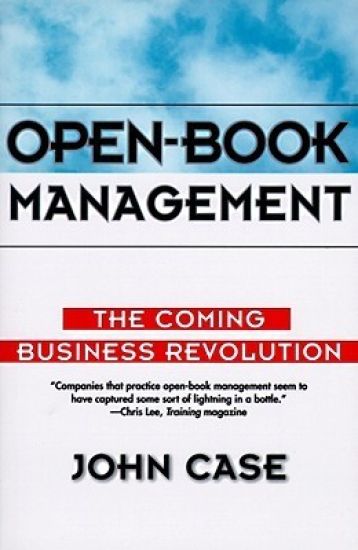
Open-Book Management: Coming Business Revolution, the
"Read even the first chapter of this extraordinary book and you'll find yourself cheering, screaming, jumping up and down with excitement. The companies described in this book are decades ahead of the reengineers -- and you don't need to be a Bill Gates or a Jack Welch to put their ideas into practice today." -- George Gendron, editor in chief, Inc. "Companies that practice open-book management seem to have captured some sort of lightning in a bottle." -- Chris Lee, Training "This book should be required reading in corporate America." -- Chicago Tribune "If you want to give your preconceived notions a good kick in the you-know-where, give Case the opportunity to articulate the merits of open-book management." -- Entrepreneur Open-book management is not so much a technique as a way of thinking, a process that actively involves employees in the financial life of the company. Numerous companies have already found that employees who are informed and aware of the company's financial situation are motivated to seek solutions to problems and assume a greater degree of responsibility for its performance. John Case begins by examining the current competitive climate and the history of established management techniques. He shows how the traditional treatment of workers as "hired hands" with little involvement or responsibility beyond their own area is no longer effective in today's ever more competitive global environment. Case clearly and carefully explains the principles of open-book management: timely sharing of crucial financial information with employees; educating the employees to understand and apply the information; empowering employees to apply the information to their own work; and offering employees a stake in the successful implementation of their ideas. Open-book management will take different forms at every company, Case notes, but he offers a wide range of suggestions and guidelines for implementing these principles. He concludes with a series of in-depth case studies, featuring companies of various sizes and financial situations that have successfully implemented open-book management. Open-Book Management is the indispensable guide to teaching employees how to think and act like owners.
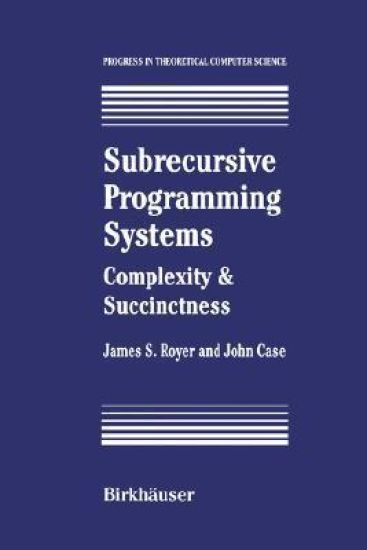
Subrecursive Programming Systems

Subrecursive Programming Systems

James S. Royer; John Case

Birkhauser Boston Inc
1994
sidottu
1.1. What This Book is About This book is a study of * subrecursive programming systems, * efficiency/program-size trade-offs between such systems, and * how these systems can serve as tools in complexity theory. Section 1.1 states our basic themes, and Sections 1.2 and 1.3 give a general outline of the book. Our first task is to explain what subrecursive programming systems are and why they are of interest. 1.1.1. Subrecursive Programming Systems A subrecursive programming system is, roughly, a programming language for which the result of running any given program on any given input can be completely determined algorithmically. Typical examples are: 1. the Meyer-Ritchie LOOP language [MR67,DW83], a restricted assem- bly language with bounded loops as the only allowed deviation from straight-line programming; 2. multi-tape 'lUring Machines each explicitly clocked to halt within a time bound given by some polynomial in the length ofthe input (see [BH79,HB79]); 3. the set of seemingly unrestricted programs for which one can prove 1 termination on all inputs (see [Kre51,Kre58,Ros84]); and 4. finite state and pushdown automata from formal language theory (see [HU79]). lOr, more precisely, the collection of programs, p, ofsome particular general-purpose programming language (e. g., Lisp or Modula-2) for which there is a proof in some par- ticular formal system (e.g., Peano Arithmetic) that p halts on all inputs.