Kirjojen hintavertailu. Mukana 12 390 323 kirjaa ja 12 kauppaa.

Kirjailija

John Chapman

Kirjat ja teokset yhdessä paikassa: 77 kirjaa, julkaisuja vuosilta 1971-2026, suosituimpien joukossa The Upper Tisza Project. Studies in Hungarian Landscape Archaeology. Book 3: Settlement Patterns in the Zemplén Block. Vertaile teosten hintoja ja tarkista saatavuus suomalaisista kirjakaupoista.

77 kirjaa

Kirjojen julkaisuhaarukka 1971-2026.

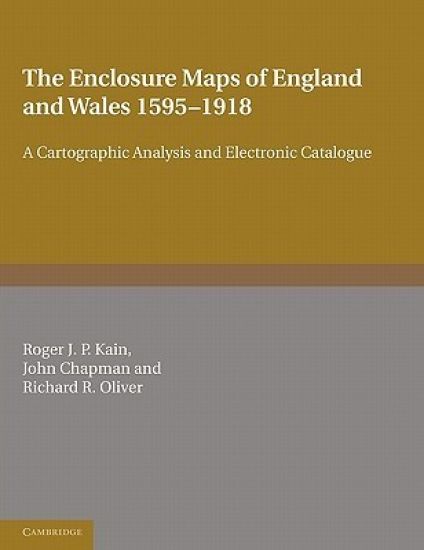
The Enclosure Maps of England and Wales 1595–1918

The Enclosure Maps of England and Wales 1595–1918

Roger J. P. Kain; John Chapman; Richard R. Oliver

Cambridge University Press
2011
pokkari
This book offered the first comprehensive study of the enclosure mapping of England and Wales. Enclosure maps are fundamental sources of evidence in many types of historical inquiries. Although modern historians tend to view these large-scale maps essentially as sources of data on past economies and societies, this book argues that enclosure maps had a much more active role at the time they were compiled. Seen from this perspective of their contemporary society, enclosure maps are not simply antiquarian curiosities, cultural artefacts, or useful sources for historians but instruments of land reorganisation and control which both reflected and consolidated the power of those who commissioned them. The book is accompanied by a fully searchable, descriptive and analytical web catalogue of all parliamentary and non-parliamentary enclosure maps extant in public archives and libraries and offers an essential research tool for economic, social and local historians and for geographers, lawyers and planners.
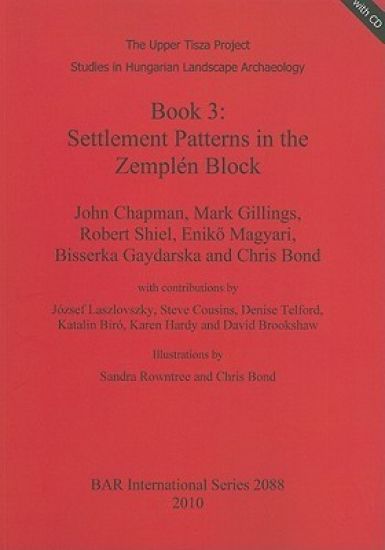
The Upper Tisza Project. Studies in Hungarian Landscape Archaeology. Book 3: Settlement Patterns in the Zemplén Block

The Upper Tisza Project. Studies in Hungarian Landscape Archaeology. Book 3: Settlement Patterns in the Zemplén Block

John Chapman; Steve Cousins; Bisserka Gaydarska; Mark Gillings; Karen Hardy; Eniko Magyari; Robert Shiel; Denise Telford; Katalin Biró; Chris Bond; David Brookshaw

BAR Publishing
2010
muu
This volume, part of the Upper Tisza Project, investigates settlement patterns in the upland Zemplen region of northeast Hungary and interactions between the region and adjacent lowland areas. In analysing the results the authors conclude that prehistoric settlement in the region was seasonal, and based on the need to gather lithic raw materials. Permanent settlement came in the medieval period, with a monastic and castle dominated landscape of nucleated villages emerging.
The Upper Tisza Project. Studies in Hungarian Landscape Archaeology. Book 2: Settlement Patterns in the Bodrogköz Block

The Upper Tisza Project. Studies in Hungarian Landscape Archaeology. Book 2: Settlement Patterns in the Bodrogköz Block

Chris Bond; David Brookshaw; John Chapman; Bisserka Gaydarska; Mark Gillings; Steve Leyland; Enik Magyari; Robert Shiel

BAR Publishing
2010
muu
This report, the second in the series from the Upper Tisza Project, examines the lowland zone of the Bodrogkoz Block in northeastern Hungary. After outlining the theoretical and methodological frmaework for the project, the book seeks to "define some of the principle changes in the landscape in Block 2 over the last 12,000 years, and to characterise the main trends in settlement in the Bodrogkoz area".
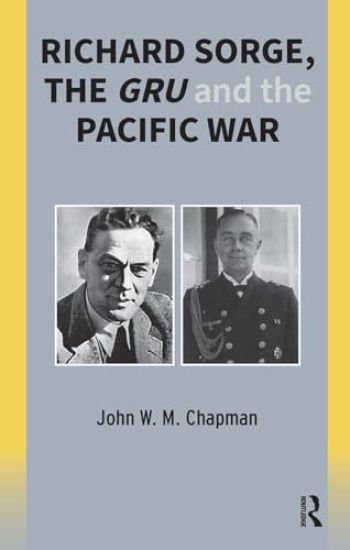
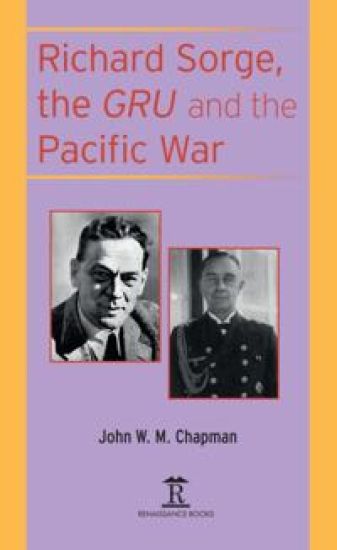
Richard Sorge, the GRU and the Pacific War

Richard Sorge, the GRU and the Pacific War

John Chapman

TAYLOR FRANCIS LTD
2025
nidottu
Sorge’s activities between 1930 and 1942 have tended to be lauded as those of a superlative human intelligence operator and the Soviet Union’s GRU (Soviet military intelligence unit) as the optimum of spy-masters. Although it was unusual for a great deal of inside knowledge to be obtained from the Japanese side, most attention has always been paid on the German side to the roles played by representatives of the German Army in Japan. This book, supported by extensive notes and a bibliography, by contrast, highlights the friendly relations between Sorge and Paul Wenneker, German naval attaché in Japan from 1932 to 1937 and 1940–45. Wenneker, from extensive and expanding contacts inside the Japanese Navy (and also concealed contacts with the Japanese Army) supplied Sorge with key information on the depth of rivalry between the Japanese armed services.
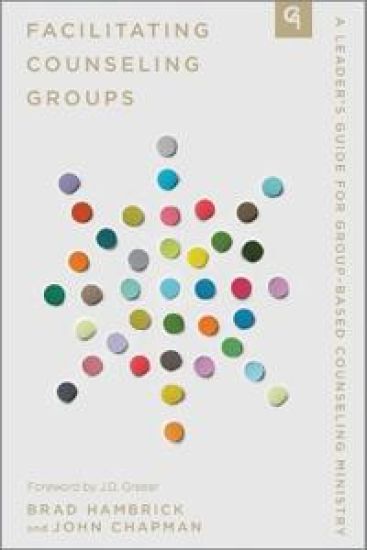
Facilitating Counseling Groups: A Leader's Guide for Group-Based Counseling Ministry
Leading a counseling group is different from leading a general discipleship group, even if both exist at the same church. A counseling group focuses on a specific need, garners heightened levels of vulnerability about matters of greater sensitivity, and requires more skill and intentionality from its leader. When a layperson is well-equipped, this kind of ministry is tremendously rewarding, as they see God multiply the work he did in their life with people walking a similar journey.Brad Hambrick and John Chapman equip lay leaders to be effective in a group-based counseling ministry within the church. By learning how to use their life experiences and a group curriculum to help others overcome a life-dominating struggle of sin or suffering, leaders will learn to share the comfort and hope for change that can only come from God.Part of the Church-Based Counseling series designed to help churches mobilize and utilize levels of care from friendship to mentoring to counseling groups.Introduces readers to the G4 model of group-based counseling.Outlines the dynamics of leading a topic-specific peer counseling group and underscores the importance of ongoing support and training for group facilitators.Includes foreword by J. D. Greear
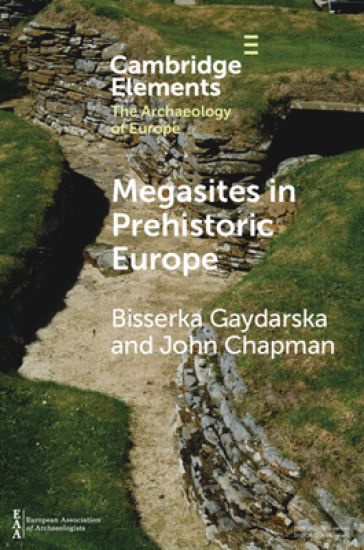
Megasites in Prehistoric Europe

Megasites in Prehistoric Europe

Bisserka Gaydarska; John Chapman

Cambridge University Press
2022
pokkari
This is an Element about some of the largest sites known in prehistoric Europe – sites so vast that they often remain undiscussed for lack of the theoretical or methodological tools required for their understanding. Here, the authors use a relational, comparative approach to identify not only what made megasites but also what made megasites so special and so large. They have selected a sample of megasites in each major period of prehistory – Neolithic, Copper, Bronze and Iron Ages – with a detailed examination of a single representative megasite for each period. The relational approach makes explicit comparisons between smaller, more 'normal' sites and the megasites using six criteria – scale, temporality, deposition / monumentality, formal open spaces, performance and congregational catchment. The authors argue that many of the largest European prehistoric megasites were congregational places.
A Life in Balkan Archaeology

A Life in Balkan Archaeology

John Chapman

Oxbow Books
2021
nidottu
This memoir is not really about research questions or main conclusions. It tells the story of a boy growing up in Plymouth, Devon, getting excited about archaeology after visits to mainland Greece and Crete, trying to get into Greek archaeology and re-locating northwards into the Balkans, where he spent a career in prehistoric research. The chapters alternate between museum/university experiences and my major research projects. The experiences of working in that part of the world as the Third Balkan War was starting were dramatic and a history-style chapter is devoted to these beginnings.The Balkan prehistoric club in the west is a very small and select group so there is an intrinsic interest about how westerners did their archaeology there and how they interacted with local colleagues. There is also a sense of a ‘colonial relationship’ between westerners knowledgeable about theory and method, with well-stocked libraries and large research grants and easterners with little of the above. On a basic level, the memoir presents stories with implications for east - west relationships that will soon disappear from living memory. The ways that research projects originated and developed are strongly featured and there is a fund of anecdotes about prehistorians living and dead. The publication of this memoir records those fragments of the discipline’s history that are in danger of being lost forever. But my life story is not erased from this account, which is not an anthropological work but, rather, a participant account with a modicum of relevant personal details. The book providing the archaeological results is the publication Forging identities in the prehistory of Old Europe. Dividuals, individuals and communities 7000-3000 BC - a synthesis of academic research in Balkan prehistory. This memoir provides the insider story to the research results.
Boops' Character Missions

Boops' Character Missions

Leslie Chapman; Bron Chapman; John Chapman

Xlibris Us
2021
pokkari
Growing up can be fun and challenging at the same time. Thankfully, Boops has his Mama, Papa and the village to help him along the way. With guidance from the village elders, Boops is sent on his very first mission to explore Roatan, Honduras. What will he find? What does he learn?
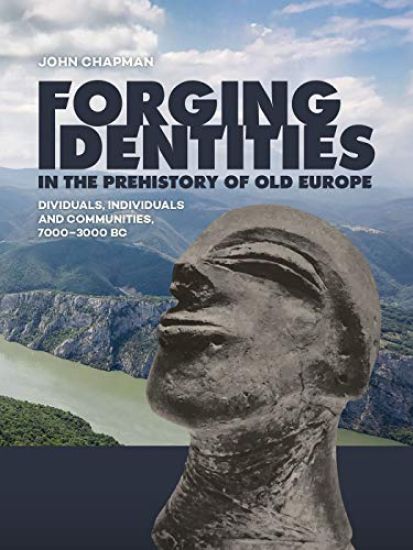
Forging Identities in the prehistory of Old Europe
Balkan prehistory conjures up images of the Exotic and the Other in comparison with the better-known prehistory of Western Europe - often written in unfamiliar languages about lesser known places. Combined with the information revolution in archaeology, these factors have meant that no new synthesis of Old Europe has been written in the last 20 years. This has left a backlog of rich settlement data and object-rich landscapes which have rarely been presented in theoretically challenging ways. This material is an important, and greatly neglected, part of European prehistory.This research monograph is a synthesis of the archaeology of South East, Central and Eastern Europe over four millennia (7000 – 3000 BC). The varied cultural development of the region is treated as a mosaic of local prehistories, in which people responded to major change and, in at least two cases – the development of farming and metallurgy - profound structural change through modifications of all the dimensions of their identities. Informed by a gendered perspective, this book seeks to structure the Mesolithic, Neolithic and the Chalcolithic periods in terms of a nested set of identities - the person, the household, the settlement and the regional network.This book is intended for all those prehistorians who seek to expand their general knowledge of Old Europe, as well as undergraduates, postgraduates and specialists in Balkan prehistory. The book will also attract social anthropologists and sociologists with an interest in the creation and maintenance of nested social identities in the past.
Forging Identities in the prehistory of Old Europe
Balkan prehistory conjures up images of the Exotic and the Other in comparison with the better-known prehistory of Western Europe - often written in unfamiliar languages about lesser known places. Combined with the information revolution in archaeology, these factors have meant that no new synthesis of Old Europe has been written in the last 20 years. This has left a backlog of rich settlement data and object-rich landscapes which have rarely been presented in theoretically challenging ways. This material is an important, and greatly neglected, part of European prehistory.This research monograph is a synthesis of the archaeology of South East, Central and Eastern Europe over four millennia (7000 – 3000 BC). The varied cultural development of the region is treated as a mosaic of local prehistories, in which people responded to major change and, in at least two cases – the development of farming and metallurgy - profound structural change through modifications of all the dimensions of their identities. Informed by a gendered perspective, this book seeks to structure the Mesolithic, Neolithic and the Chalcolithic periods in terms of a nested set of identities - the person, the household, the settlement and the regional network.This book is intended for all those prehistorians who seek to expand their general knowledge of Old Europe, as well as undergraduates, postgraduates and specialists in Balkan prehistory. The book will also attract social anthropologists and sociologists with an interest in the creation and maintenance of nested social identities in the past.
Richard Sorge, the GRU and the Pacific War
Sorge’s activities between 1930 and 1942 have tended to be lauded as those of a superlative human intelligence operator and the Soviet Union’s GRU (Soviet military intelligence unit) as the optimum of spy-masters. Although it was unusual for a great deal of inside knowledge to be obtained from the Japanese side, most attention has always been paid on the German side to the roles played by representatives of the German Army in Japan. This book, supported by extensive notes and a bibliography, by contrast, highlights the friendly relations between Sorge and Paul Wenneker, German naval attaché in Japan from 1932 to 1937 and 1940–45. Wenneker, from extensive and expanding contacts inside the Japanese Navy (and also concealed contacts with the Japanese Army) supplied Sorge with key information on the depth of rivalry between the Japanese armed services.
Miscellaneous Tracts Relating to Antiquity. By John Chapman, D.D. ... Now Carefully Revised, and Corrected With Additions, and Collected Into one Volume
The 18th century was a wealth of knowledge, exploration and rapidly growing technology and expanding record-keeping made possible by advances in the printing press. In its determination to preserve the century of revolution, Gale initiated a revolution of its own: digitization of epic proportions to preserve these invaluable works in the largest archive of its kind. Now for the first time these high-quality digital copies of original 18th century manuscripts are available in print, making them highly accessible to libraries, undergraduate students, and independent scholars.The eighteenth-century fascination with Greek and Roman antiquity followed the systematic excavation of the ruins at Pompeii and Herculaneum in southern Italy; and after 1750 a neoclassical style dominated all artistic fields. The titles here trace developments in mostly English-language works on painting, sculpture, architecture, music, theater, and other disciplines. Instructional works on musical instruments, catalogs of art objects, comic operas, and more are also included. ++++The below data was compiled from various identification fields in the bibliographic record of this title. This data is provided as an additional tool in helping to insure edition identification: ++++British LibraryT065444Containing: 'Primitive antiquity explained and indicated'; 'Remarks on a letter to Dr. Waterland'; 'Phlegon examined'; and 'Phlegon re-examined'. Each tract has a separate titlepage and register.London: printed for S. Birt, 1742. 6],104; 4],104, 2]; 4], ii,87, 1]; 2],96p.; 8