Kirjojen hintavertailu. Mukana 12 595 353 kirjaa ja 12 kauppaa.

Kirjailija

John Christopher Thomas

Kirjat ja teokset yhdessä paikassa: 10 kirjaa, julkaisuja vuosilta 2005-2021, suosituimpien joukossa The Spirit of the New Testament. Vertaile teosten hintoja ja tarkista saatavuus suomalaisista kirjakaupoista.

10 kirjaa

Kirjojen julkaisuhaarukka 2005-2021.

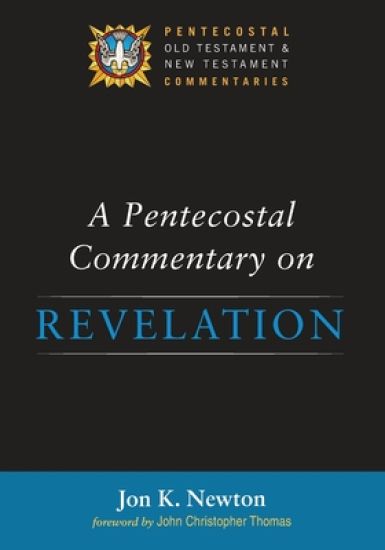
A Pentecostal Commentary on Revelation

A Pentecostal Commentary on Revelation

Jon K Newton; John Christopher Thomas

Wipf Stock Publishers
2021
sidottu
This new commentary approaches Revelation from a Pentecostal perspective, but you may be surprised at what this does and doesn't mean in this case. This is a serious commentary based on the Greek text and includes discussion of all the standard topics (authorship, date, audience, etc.). It gives interpretive priority to the original context and audience while also discussing application today. Newton eschews all populist interpretations of Revelation and questions many assumptions built on futurist or historicist readings, but includes a survey of recent scholarly Pentecostal work on Revelation and an extended discussion of what an authentic Pentecostal reading of Revelation might look like. The commentary highlights features of Revelation that Pentecostals often look for, such as its pneumatology, but also draws attention to features that Pentecostal readers should take more seriously than they often do, such as its missional focus, the narrative flow, intertextual references, and the focus on atonement. This makes it a more optimistic commentary than many available. The commentary interacts in depth with five leading commentaries over the past twenty-five years as well as over two hundred other books and articles, including the oldest existing commentary on Revelation.
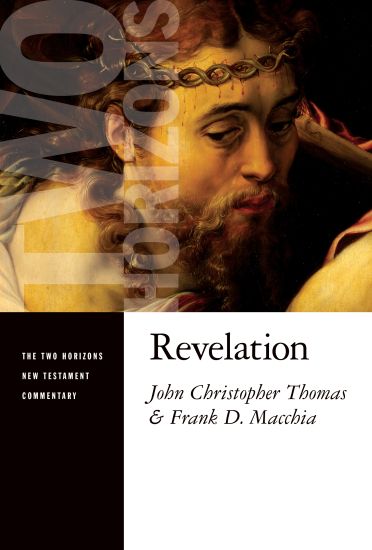
Revelation

Revelation

John Christopher Thomas; Frank D. Macchia

William B Eerdmans Publishing Co
2016
nidottu
The book of Revelation is perhaps the most theologically complex and literarily sophisticated text in the New Testament. In this commentary John Christopher Thomas and Frank Macchia make the brilliant but challenging text of Revelation more accessible and easier to understand on its own terms, rather than as a futuristic prophecy.In addition to their literary, exegetical, and theological analysis of the text, Thomas and Macchia offer sustained theological essays on the book's most significant themes and issues, accenting especially the underappreciated place of the Holy Spirit in the theology of the book. Uniquely, Thomas and Macchia work to locate and help readers better understand the original audiences to whom Revelation was written by examining Revelation's storyline and its connection to the broader Johannine community.
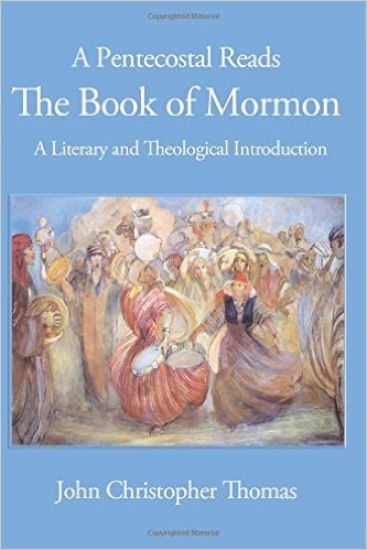
A Pentecostal Reads the Book of Mormon: A Literary and Theological Introduction
In this monograph, Pentecostal New Testament scholar John Christopher Thomas offers a constructive, critical reading of the Book of Mormon that focuses on a variety of issues often under-represented in the literature currently available. Utilizing narrative analysis Thomas begins with an investigation of the book's overall structure detected by means of literary markers in the text. He next presents an extended reading of the narrative contents of the book focusing on its literary and theological dimensions. This close reading enables the construction of a 'Theology of the Book of Mormon' that explores the major theological emphases that emerge from a narrative analysis of the book. The study next traces the book's reception amongst followers and opponents alike, as well as its impact in the areas of music, art, and disastrous interpretations of the book. The Book of Mormon and Pentecostalism are then placed into dialogue through historical analyses of early Pentecostal thought on the book and the movements it spawned, before a comparison of the theological heart of Pentecostalism and the book is given. Finally, issues of origins are discussed by an examination of the earliest story of the book's origins, the major complications of this story, and the proposal of a taxonomy of various reading strategies offered in the light of these complications. Seeking to maintain an irenic and constructive tone throughout, this work should serve both to acquaint interested readers with the Book of Mormon and to encourage candid, thoughtful, and respectful conversations about the book between those who hold it to be Scripture and those who do not.
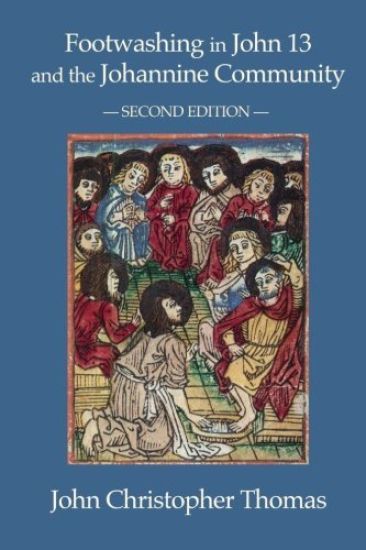
Footwashing in John 13 and the Johannine Community
Written over two decades ago, Footwashing in John 13 and the Johannine Community by John Christopher Thomas quickly became known as the most comprehensive study of the practice of footwashing in the ancient world, the most detailed literary analysis of the account found in John 13.1-20, and 'an excellent example of how to engage in a study of the possible practices of the Johannine community' (David Mark Ball). In this second edition, Thomas has removed typographical errors, has brought the various discussions up to date by incorporating the more significant relevant studies into the notes and text of the volume, specifically the results of scholarship devoted to the Fourth Gospel and John 13 - particularly those who have responded to the first edition, has made clearer the rationale for his use of early Christian writings in the sections devoted to the reconstruction of the practice in the Johannine community, and has given some indication of the ways in which his suggestions for future research have generated responses. When the first edition of this work appeared, very few scholars were giving any attention to the possible practice of footwashing in the Johannine community. One of the goals in the monograph's initial publication was to place the role and function of footwashing on the scholarly agenda for discussion. Owing, in part, to the impact of the study, over the last couple of decades the possible practice of footwashing and its meaning have begun to receive more attention as a practice within the Johannine community as well as in the practice of the church.
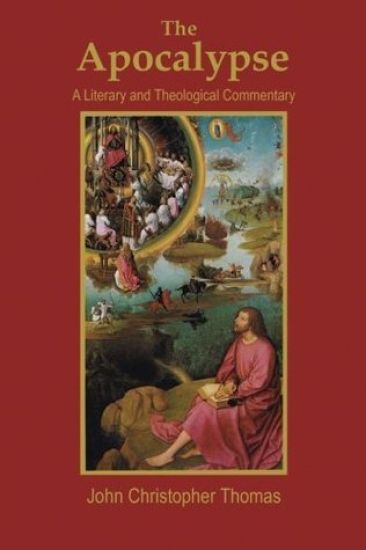
The Apocalypse: A Literary and Theological Commentary
In this commentary, Pentecostal biblical scholar John Christopher Thomas offers a fresh reading of the Apocalypse informed by three decades of research and writing devoted to the Johannine literature. While engaging the best of critical scholarship he avoids simply recounting the views of other scholars on a variety of interpretive issues. Rather, he gives priority to the world of the text by means of literary, intertextual, and theological analyses, as he seeks to discern the effect of this visionary experience upon the hearers (both implied and actual) of this text.The most extensive reading of the Apocalypse offered by a Pentecostal scholar to date, this commentary is shaped by the Pentecostal and wider communities via times of engagement with local worshipping communities, scholarly audiences at academic conferences, and academic settings at a variety institutions around the globe.Thomas' distinctive literary and theological hearing of the Apocalypse, which adheres closely to the final form of the text and reflects the heart of Pentecostal theology and spirituality, marks a major transition in Pentecostal approaches to the Apocalypse and may well assist, along with others, in the reclamation of this canonical book for the Pentecostal community and beyond.
Toward a Pentecostal Ecclesiology: The Church and the Fivefold Gospel
This monograph is based upon presentations given at a conference on Pentecostal Ecclesiology that convened on 28-29 June 2010 at Bangor University in North Wales, UK. After a short introduction (John Christopher Thomas) and an extended treatment of the role of the Fivefold Gospel in the doing of Pentecostal Theology (Kenneth J. Archer), two chapters each are devoted to the Pentecostal Church as Redeemed Community (Wynand de Kock, Dar o Andres L pez Rodr guez), Sanctified Community (Daniel Castelo, Matthias Wenk), Empowered Community (Simon Chan, Daniela Augustine), Healing Community (Kimberly E. Alexander, Opoku Onyinah), and Eschatological Community (Peter Althouse, Frank D. Macchia), with three formal responses following (Veli-Matti K rkk inen, Robert Pope, William K. Kay). Global in composition, the contributors to this volume represent six continents and diversity of gender, race, nationality, denominational affiliation, and academic discipline. Their creative theological presentations and the constructive engagements that they elicit not only make a significant contribution to this topic, but also provide a model for future global Pentecostal theological construction. This ground-breaking monograph is destined to shape future discussions of Pentecostal Ecclesiology as well as the broader field of Pentecostal Theology.