Kirjailija
John Connelly
Kirjat ja teokset yhdessä paikassa: 14 kirjaa, julkaisuja vuosilta 2008-2025, suosituimpien joukossa Juden - Vom Feind Zum Bruder: Wie Die Katholische Kirche Zu Einer Neuen Einstellung Zu Den Juden Gelangte. Vertaile teosten hintoja ja tarkista saatavuus suomalaisista kirjakaupoista.
14 kirjaa
Kirjojen julkaisuhaarukka 2008-2025.
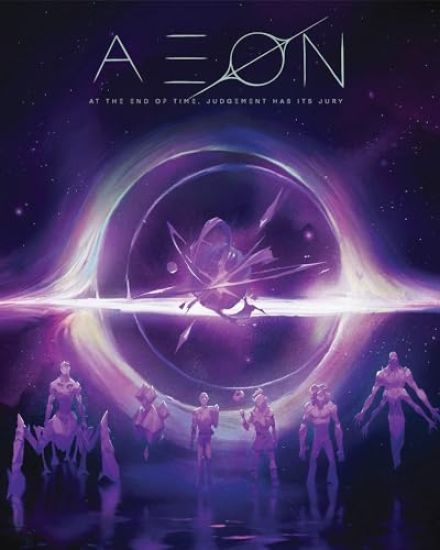
Aeon: At The End Of Time, Judgement Has Its Jury
Matthew Medney; Joe Harris; John Connelly
Gungnir Entertainment
2025
sidottu
Time. Space. Existence. The end of all things. The beginning of something new. The reconciliation of decisions. This is what awaits our fatal remains of civilization at the last black hole at the end of time. The Neo-human, Harmony, Multitude, Remnant, Echo, and the Time Traveler all are summoned by chance, fate, or technology to discuss the trials and tribulations of the stardust ancestors they arose from. But what is there to do, when all of time is ending, when the last particles of the universe are dissipating and moving on from the realm? That is a question for our unlikely conclave to decide. What type of legacy will they, can they, leave a dying universe?
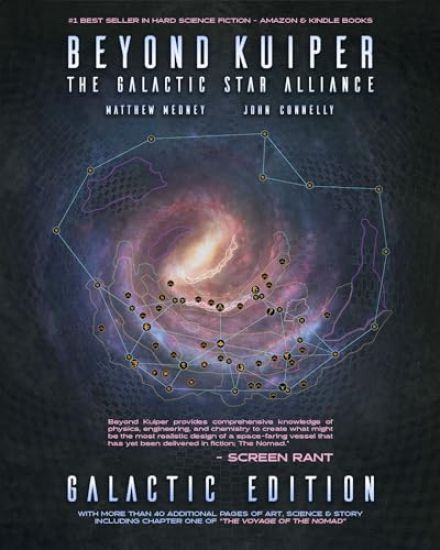
Beyond Kuiper: The Galactic Star Alliance.
Matthew Medney; John Connelly
Gungnir Entertainment
2025
sidottu
There is no Drake Equation. There is no question on sentience. The galaxy is alive and filled with life. The only issue: we humans aren't invited. The Galactic Star Alliance awaits your exploration. In this illustrated novel co- created & written by Matthew Medney (Heavy Metal Magazine CEO & NYU adjunct professor) and John Connelly (Lockheed Martin Aerospace Engineer), humankind acknowledges the vastness of time, the cyclical nature of civilization, and the obscurity of our own history. If our galaxy is so full of sentient life, why has no one said hello? We thought of a simple, logical reason: no one wants too. Stepping back and casting an objective eye on ourselves, it seems painfully obvious that humans lack a fundamental respect for our planet and for each other. We possess extremely short memories and long grudges, and the likelihood of receiving alien tools to hasten our expansion seems downright foolhardy. The Galactic Star Alliance has been alive and well for millions of earth years. Hundreds of thousands of sentient worlds and trillions of beings walk, run, and crawl across the many home worlds of the Alliance. This revelation led to many questions: How is faster-than-light speed travel possible, and could cohesive, interstellar civilizations exist without it? Is it conceivable to govern a coalition not of different countries, but of different species? Each question led to another and each answer built our world, piece by piece until it spanned thousands of answers and millions of light-years. As for the title, from where would our judges watch us? But our galaxy has spoken to us humans. There are some who believe it is out there. Not as science-fantasy but as science. Introduce Bernard William Hubert. World renowned astrophysicist, and Lead Scientist of the seminal company of exploration, Outer Limits. While on loan to CERN, a catastrophe of unimaginable proportions leaves Bernard as the sole survivor. While the scientific community & world looks to him for answers, he simply states the unthinkable "it has to be aliens." Inconceivable to the world, the Hubert family is investigated and his family's name tarnished. Disgraced and shunned. Bernard claws his way back into the equation with his new company C.O.R.E as they work tirelessly to design an engine capable of interstellar travel. Follow Bernard on his road to redemption and discovery in this ensemble cast of futurism, space travel and the fate of our species. This illustrated novel includes 35 pieces of beautiful, full-color, painted artwork by Utku Ozden.

The galaxy is alive and filled with life. The only issue: we humans aren't invited. The Galactic Star Alliance awaits your exploration. The Amazon #1 Best Selling Hard Science Fiction Novel is back with the Galactic Edition with More Planets & More Science There is no Drake Equation. There is no question on sentience. The galaxy is alive and filled with life. The only issue: we humans aren't invited. The Galactic Star Alliance awaits your exploration. In this illustrated novel co- created & written by Matthew Medney (Heavy Metal Magazine CEO & NYU adjunct professor) and John Connelly (Lockheed Martin Aerospace Engineer), humankind acknowledges the vastness of time, the cyclical nature of civilization, and the obscurity of our own history. If our galaxy is so full of sentient life, why has no one said hello? We thought of a simple, logical reason: no one wants too. Stepping back and casting an objective eye on ourselves, it seems painfully obvious that humans lack a fundamental respect for our planet and for each other. We possess extremely short memories and long grudges, and the likelihood of receiving alien tools to hasten our expansion seems downright foolhardy. The Galactic Star Alliance has been alive and well for millions of earth years. Hundreds of thousands of sentient worlds and trillions of beings walk, run, and crawl across the many home worlds of the Alliance. This revelation led to many questions: How is faster-than-light speed travel possible, and could cohesive, interstellar civilizations exist without it? Is it conceivable to govern a coalition not of different countries, but of different species? Each question led to another and each answer built our world, piece by piece until it spanned thousands of answers and millions of light-years. As for the title, from where would our judges watch us? But our galaxy has spoken to us humans. There are some who believe it is out there. Not as science-fantasy but as science. Introduce Bernard William Hubert. World renowned astrophysicist, and Lead Scientist of the seminal company of exploration, Outer Limits. While on loan to CERN, a catastrophe of unimaginable proportions leaves Bernard as the sole survivor. While the scientific community & world looks to him for answers, he simply states the unthinkable "it has to be aliens." Inconceivable to the world, the Hubert family is investigated and his family's name tarnished. Disgraced and shunned. Bernard claws his way back into the equation with his new company C.O.R.E as they work tirelessly to design an engine capable of interstellar travel. Follow Bernard on his road to redemption and discovery in this ensemble cast of futurism, space travel and the fate of our species. This expanded "Galactic Edition" includes the original illustrated 35 pieces of beautiful, full-color, painted artwork by Utku Ozden along with a sneak peek at Chapter 1 of the second installment of Beyond Kuiper, The Voyage Of The Nomad. 12 exclusive pieces of art from the second book & 15 planets, designations, and information about the Karandu galaxy illustrated by Luigi Aime

A sweeping narrative history of Eastern Europe from the late eighteenth century to todayIn the 1780s, the Habsburg monarch Joseph II decreed that henceforth German would be the language of his realm. His intention was to forge a unified state from his vast and disparate possessions, but his action had the opposite effect, catalyzing the emergence of competing nationalisms among his Hungarian, Czech, and other subjects, who feared that their languages and cultures would be lost. In this sweeping narrative history of Eastern Europe since the late eighteenth century, John Connelly connects the stories of the region's diverse peoples, telling how, at a profound level, they have a shared understanding of the past.An ancient history of invasion and migration made the region into a cultural landscape of extraordinary variety, a patchwork in which Slovaks, Bosnians, and countless others live shoulder to shoulder and where calls for national autonomy often have had bloody effects among the interwoven ethnicities. Connelly traces the rise of nationalism in Polish, Austro-Hungarian, and Ottoman lands; the creation of new states after the First World War and their later absorption by the Nazi Reich and the Soviet Bloc; the reemergence of democracy and separatist movements after the collapse of communism; and the recent surge of populist politics throughout the region.Because of this common experience of upheaval, East Europeans are people with an acute feeling for the precariousness of history: they know that nations are not eternal, but come and go; sometimes they disappear. From Peoples into Nations tells their story.

Let's Learn Taekwondo with Tanisha Tanisha is at school and the bell has rung her friends are ready to learn TaekwondoWould you like to learn Taekwondo?Come on - let's go

It's lunch time Charlie would like to play a game.Would you like to play a gamewith Charlie and our friends?Come on - let's play Let's meet Charlie and meet our friends and the games they play at lunch time in the school yard.An early children's book focusing on sight and sound words for early learning.
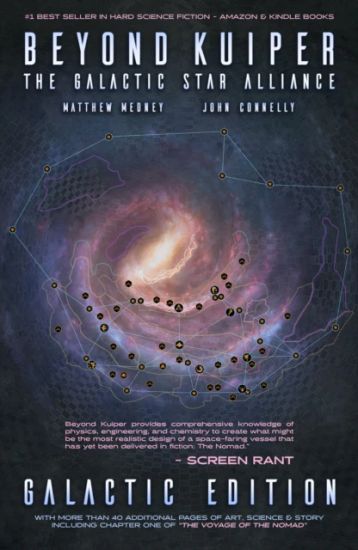
There is no Drake Equation. There is no question onsentience. The galaxy is alive and filled with life. The only issue: we humansaren't invited.The Galactic Star Alliance awaits yourexploration.Inthis illustrated novel co- created & written by Matthew Medney (Heavy MetalMagazine CEO & NYU adjunct professor) and John Connelly (Lockheed MartinAerospace Engineer), humankind acknowledges the vastness of time, the cyclicalnature of civilization, and the obscurity of our own history.If our galaxy isso full of sentient life, why has no one said hello? We thought of a simple,logical reason: no one wants to. Stepping back and casting an objectiveeye on ourselves, it seems painfully obvious that humans lack a fundamentalrespect for our planet and for each other. We possess extremely short memoriesand long grudges, and the likelihood of receiving alien tools to hasten ourexpansion seems downright foolhardy. The Galactic Star Alliance has been alive and wellfor millions of earth years. Hundreds of thousands of sentient worlds andtrillions of beings walk, run, and crawl across the many home worlds of theAlliance. This revelation led to many questions: How is faster-than-light speedtravel possible, and could cohesive, interstellar civilizations exist withoutit? Is it conceivable to govern a coalition not of different countries, but ofdifferent species? Each question led to another and each answer built our world,piece by piece until it spanned thousands of answers and millions oflight-years. As for the title, from where would our judges watchus?But our galaxyhas spoken to us humans. There are some who believe it is out there. Not asscience-fantasy but as science.Introduce Bernard William Hubert. World renownedastrophysicist, and Lead Scientist of the seminal company of exploration, OuterLimits. While on loan to CERN, a catastrophe of unimaginable proportions leavesBernard as the sole survivor. While the scientific community & world looksto him for answers, he simply states the unthinkable "it has to bealiens." Inconceivable to the world, the Hubert family is investigated andhis family's name tarnished.Disgraced and shunned. Bernard claws his way backinto the equation with his new company C.O.R.E as they work tirelessly to designan engine capable of interstellar travel. Follow Bernard on his road to redemption anddiscovery in this ensemble cast of futurism, space travel and the fate of ourspecies. Thisillustrated novel includes 35 pieces of beautiful, full-color, painted artworkby Utku Ozden. - Matthew is the CEO of Heavy MetalEntertainment that encompasses Heavy Metal Magazine & all other mediaventures. As well, Matthew has been an Adjunct Professor at NYU, teachingclasses on IP Creation and Digital marketing strategy and John is an aerospaceengineer for Lockheed Martin who performs mechanical design for NASA deep spacemissions. with 3 satellites using his designs currently orbiting our planet.Allscience in the book is accurate and the theoretical science is backed up byscience theory. No assertions in these works is fanatical.


A sweeping narrative history of Eastern Europe from the late eighteenth century to todayIn the 1780s, the Habsburg monarch Joseph II decreed that henceforth German would be the language of his realm. His intention was to forge a unified state from his vast and disparate possessions, but his action had the opposite effect, catalyzing the emergence of competing nationalisms among his Hungarian, Czech, and other subjects, who feared that their languages and cultures would be lost. In this sweeping narrative history of Eastern Europe since the late eighteenth century, John Connelly connects the stories of the region's diverse peoples, telling how, at a profound level, they have a shared understanding of the past.An ancient history of invasion and migration made the region into a cultural landscape of extraordinary variety, a patchwork in which Slovaks, Bosnians, and countless others live shoulder to shoulder and where calls for national autonomy often have had bloody effects among the interwoven ethnicities. Connelly traces the rise of nationalism in Polish, Austro-Hungarian, and Ottoman lands; the creation of new states after the First World War and their later absorption by the Nazi Reich and the Soviet Bloc; the reemergence of democracy and separatist movements after the collapse of communism; and the recent surge of populist politics throughout the region.Because of this common experience of upheaval, East Europeans are people with an acute feeling for the precariousness of history: they know that nations are not eternal, but come and go; sometimes they disappear. From Peoples into Nations tells their story.

Dying Out Here Is Not an Option: Paddlequest 1500: A 1500 Mile, 75 Day, Solo Canoe and Kayak Odyssey
John Connelly
John Connelly
2018
nidottu

Juden - Vom Feind Zum Bruder: Wie Die Katholische Kirche Zu Einer Neuen Einstellung Zu Den Juden Gelangte
John Connelly
Brill Schoningh
2015
sidottu
Gott liebt die Juden . Erst w hrend des Zweiten Vatikanischen Konzils brachte die Kirche es ber sich, diese Erkl rung in ihre Verlautbarungen aufzunehmen. Zuvor hatte sie jahrtausendelang gelehrt, dass das Volk, dem die Kreuzigung Jesu zur Last gelegt wird, von Gott verflucht sei und bleibe. In den 1940er Jahren schwieg die Katholische Kirche berwiegend, als Juden von den Nationalsozialisten zu Millionen ermordet wurden. Wie kam es dazu, dass eine Institution mit der Aura der Unfehlbarkeit einen der revolution rsten ideologischen Paradigmenwechsel der Neuzeit unternahm? Die Gr nde f r diesen radikalen Schnitt entspringen den Jahren kurz vor dem Holocaust, aus einem verzweifelten theologischen Kampf, den eine kleine Gruppe katholischer Konvertiten bestritt, um ihre neuentdeckte Glaubensgemeinschaft vor dem Einfluss der nationalsozialistischen Ideologien zu sch tzen. Insbesondere der ehemalige Jude Johannes Oesterreicher sowie der einstige Protestant Karl Thieme berwanden diesen besonders fraglichen Aspekt der katholischen Kirchengeschichte, indem sie in jahrelangem Engagement Debatten in akademischen Schriften anstie en, sich f r die Volksbildung einsetzten und ihre Interessen auch im Vatikan selbst durchzusetzen versuchten. Doch ihr letztendlicher Erfolg war nicht die Folge immer neuer Aufrufe zu mehr Menschlichkeit, sondern der Neuentdeckung bis dahin vernachl ssigter Teile der Heiligen Schrift. Der Band beleuchtet das erstaunliche Stillschweigen, welches die Kirche w hrend des Holocausts bewahrte, und zeigt die uralten Lehren auf - laut derer die Juden erst vom Fluch Gottes erl st w rden, wenn sie sich Christus zuwendeten -, die zu der problematischen Haltung der Christen dem Judentum gegen ber f hrte.
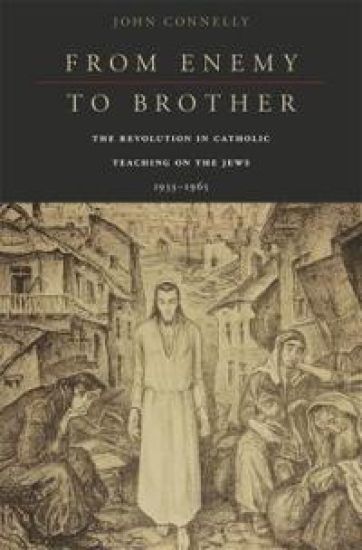
In 1965 the Second Vatican Council declared that God loves the Jews. Before that, the Church had taught for centuries that Jews were cursed by God and, in the 1940s, mostly kept silent as Jews were slaughtered by the Nazis. How did an institution whose wisdom is said to be unchanging undertake one of the most enormous, yet undiscussed, ideological swings in modern history?The radical shift of Vatican II grew out of a buried history, a theological struggle in Central Europe in the years just before the Holocaust, when a small group of Catholic converts (especially former Jew Johannes Oesterreicher and former Protestant Karl Thieme) fought to keep Nazi racism from entering their newfound church. Through decades of engagement, extending from debates in academic journals, to popular education, to lobbying in the corridors of the Vatican, this unlikely duo overcame the most problematic aspect of Catholic history. Their success came not through appeals to morality but rather from a rediscovery of neglected portions of scripture.From Enemy to Brother illuminates the baffling silence of the Catholic Church during the Holocaust, showing how the ancient teaching of deicide—according to which the Jews were condemned to suffer until they turned to Christ—constituted the Church’s only language to talk about the Jews. As he explores the process of theological change, John Connelly moves from the speechless Vatican to those Catholics who endeavored to find a new language to speak to the Jews on the eve of, and in the shadow of, the Holocaust.