

Kirjailija
John Cooper
Kirjat ja teokset yhdessä paikassa: 69 kirjaa, julkaisuja vuosilta 1987-2025, suosituimpien joukossa Kielhofners Model of Human Occupation : teori och tillämpning. Vertaile teosten hintoja ja tarkista saatavuus suomalaisista kirjakaupoista.
69 kirjaa
Kirjojen julkaisuhaarukka 1987-2025.
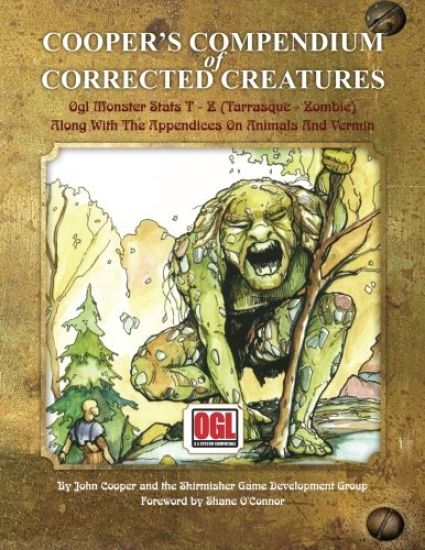
Cooper's Compendium of Corrected Creatures: OGL Monster Stats T - Z (Tarrasque - Zombie), Along with the Appendices on Animals and Vermin
John Cooper
Skirmisher Publishing
2015
nidottu
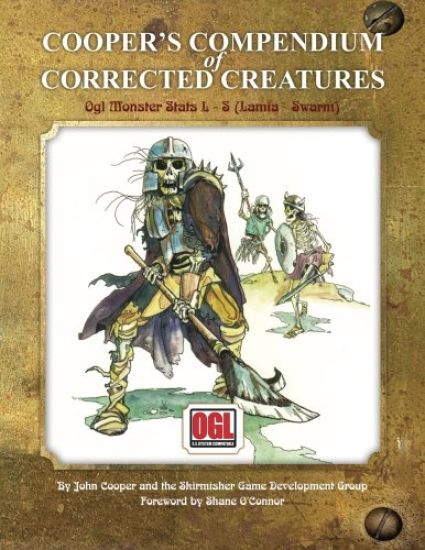
Cooper's Compendium of Corrected Creatures: OGL Monster Stats L - S (Lamia - Swarm)
John Cooper
Skirmisher Publishing
2015
nidottu
Are your game's Weretigers a bit on the unhealthy side? Are your Mephits not quite as intimidating as they should be? Are your Dark Nagas markedly unskilled? These are just a few of the monsters in the SRD that have significant errors in their stat blocks, bringing their mistakes into your game. But now Cooper's Compendium of Corrected Creatures fixes the problems you didn't even know your monsters had. This critical new series of books by ENWorld staff reviewer and 3.5 rules guru John Cooper presents thoroughly revised and corrected stats for the myriad creatures in the v.3.5 SRD. Features of Cooper's Compendium of Corrected Creatures: OGL Monster Stats L - S (: st="on"> st="on"> Lamia - Swarm) include: * Stat blocks for OGL creatures described or referred to in the SRD but not given statistics there, including the Merrow, Half-Orc 1st-Level Warrior, Sahuagin Mutant, and Sahuagin Malenti. * "Cooper's Comments" sidebars throughout explaining particular changes and giving guidance on how to effectively reflect them in the game. This book and the series of which it is part are designed to be an invaluable resource for OGL game masters, players, and publishers alike. It is fully bookmarked and designed to be printer-friendly and easy-to-use. Incorporating all official errata as well as corrections for errors that went unnoticed until now, this book presents the monsters from the SRD as they should be. Fix up your foes and run a better game with Cooper's Compendium of Corrected Creatures * Corrected stats for all the monsters in the L - S sections of the v.3.5 SRD that address often-overlooked elements like skill synergy bonuses, size modifiers, and shapechanging abilities. Entries that have received especially painstaking attention in this volume include the various forms of Lycanthrope, skill points for which are almost universally incorrect in the SRD. * Improved organization of material, especially items not listed in the proper order.
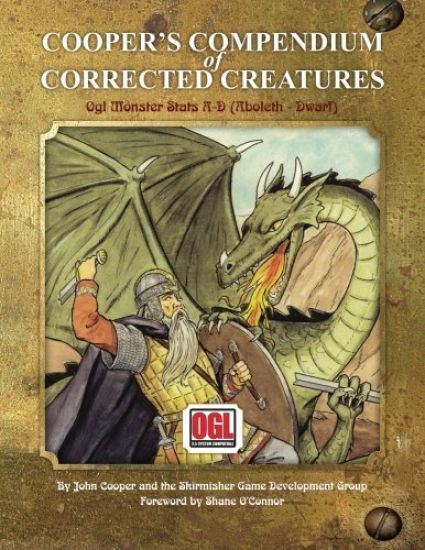
Cooper's Compendium of Corrected Creatures: OGL Monster Stats A - D (Aboleth - Dwarf)
John Cooper
Skirmisher Publishing
2015
nidottu

The Advanced Smart Grid: Edge Power Driving Sustainability, Second Edition
Andres Carvallo; John Cooper
Artech House Publishers
2015
sidottu
Placing emphasis on practical "how-to" guidance, this cutting-edge resource provides a first-hand, insider's perspective on the advent and evolution of smart grids in the 21st century. This book presents engineers, researchers, and students with the building blocks that comprise basic smart grids, including power plant, transmission substation, distribution, and meter automation. Moreover, this forward-looking volume explores the next step of this technology's evolution. It provides a detailed explanation of how an advanced smart grid incorporates demand response with smart appliances and management mechanisms for distributed generation, energy storage, and electric vehicles. This updated second edition focuses on the disruptive impact of DER. This new edition also includes a glossary with well over 100 acronyms and terms, acknowledging the tremendous challenge for a student of smart energy and smart grid to grasp this complex industry. Market Practicing power engineers, academics, researchers, industry analysts, and power regulators

This fascinating selection of photographs traces some of the many ways in which Rickmansworth, Croxley GreenChorleywood have changed and developed over the last century.
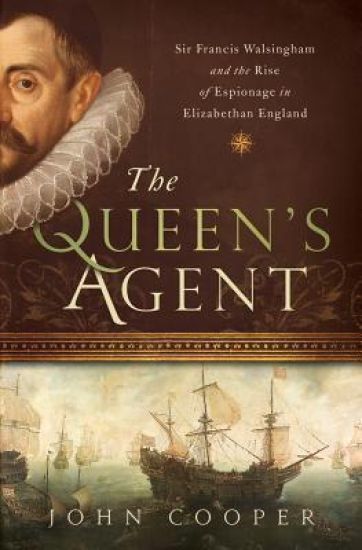
The Queen's Agent: Sir Francis Walsingham and the Rise of Espionage in Elizabethan England
John Cooper
Pegasus Books
2013
nidottu
Elizabeth I came to the throne at a time of insecurity and unrest. Rivals threatened her reign; England was a Protestant island, isolated in a sea of Catholic countries. Spain plotted an invasion, but Elizabeth's Secretary, Francis Walsingham, was prepared to do whatever it took to protect her. He ran a network of agents in England and Europe who provided him with information about invasions or assassination plots. He recruited likely young men and 'turned' others. He encouraged Elizabeth to make war against the Catholic Irish rebels, with extreme brutality and oversaw the execution of Mary Queen of Scots. The Queen's Agent is a story of secret agents, cryptic codes and ingenious plots, set in a turbulent period of England's history. It is also the story of a man devoted to his queen, sacrificing his every waking hour to save the threatened English state.
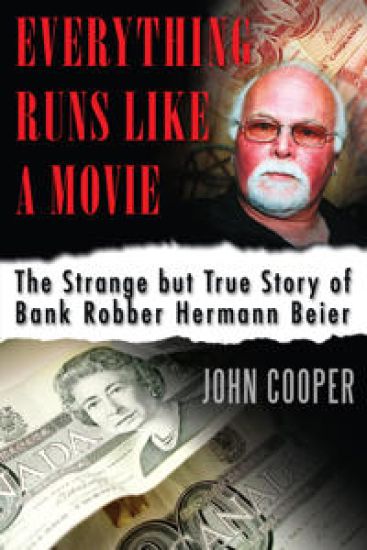
A true story of a bank robber and a chilling car chase worthy of an Elmore Leonard novel or a Brian De Palma movie. Like many new arrivals to Canada, Hermann Beier came to this country with big dreams – visions of a wide-open country where hard work and entrepreneurial flair would make him rich. A charismatic handyman, martial arts teacher, and small business owner, he charmed women and earned the respect of men. He was loved in his community of Alliston, Ontario, and had a plan to make a million bucks. But when those dreams soured, Beier turned to crime to pay the bills. Faced with bankruptcy in 1991, Beier hatched a plan to rob a string of banks in a single day. But it was all too much, too fast. After leading authorities from Guelph to Caledon on what was then the longest police chase in Canadian history, Beier was gunned down alongside a farmer’s fence, his body pierced by a hail of police bullets. But he survived, and the end of his crime spree marked a new beginning. After spending almost a decade in various Ontario prisons, searching for a way to get his life back on track, Beier was finally paroled. He now lives a quiet life, dividing his time between Canada and Austria.
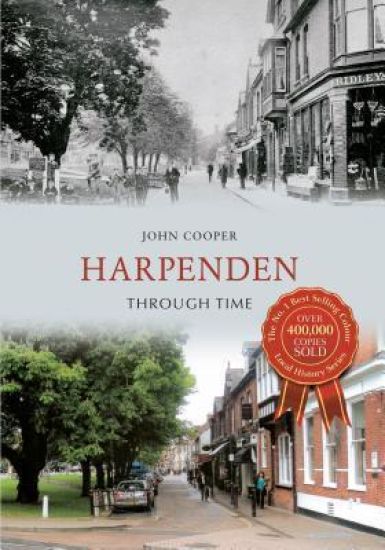
This fascinating selection of photographs traces some of the many ways in which Harpenden has changed and developed over the last century.
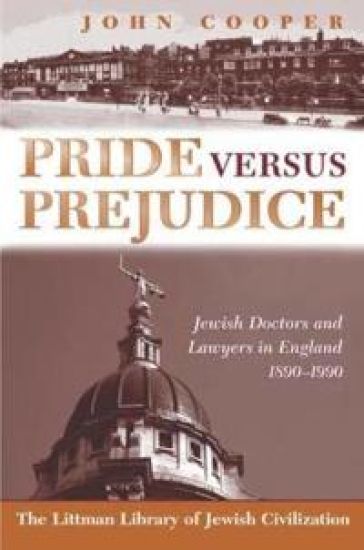
This pioneering study is a treasure trove of new information, illustrating the lives and professional experiences of the people involved in such a way as to demonstrate clearly both the obstacles they faced and the status they achieved. Its wealth of detail, in many cases fleshing out the careers of leading Jewish professional figures for the first time, makes engaging reading. The narrative proceeds chronologically with careful attention to social context, starting with the Victorian and Edwardian eras. For the medical profession, the account of subsequent changes begins with the influx of Jews into medical schools after 1914. John Cooper goes on to describe the problems these Jewish medical students, most of them from immigrant families, encountered. Finding employment even as general practitioners was problematic, and almost insurmountable barriers confronted aspirants to consultant status. Afraid of antisemitic claims that Jews were flooding the market, the leaders of Anglo-Jewry even tried in the 1930s to dissuade young Jews from becoming doctors and lawyers. In this context, Cooper also considers the position of refugee doctors before and during the Second World War. The establishment of the National Health Service in 1948 resulted in fundamental changes, particularly in the way in which consultants were selected, and Cooper shows how this permitted Jewish doctors to enter specialties from which they had previously been excluded and to climb to the highest rungs within the medical hierarchy. He summarizes the careers of many prominent Jewish doctors. The experience of Jews in the legal profession, both as solicitors and barristers, is examined in similar detail. Cooper sets the context with a discussion of the treatment of Jewish litigants in the early years of the twentieth century in the Whitechapel County Court and the criminal courts. He shows how the persistence of an anti-Jewish bias in the inter-war period limited opportunities for Jews and dissuaded them from entering the law; he also considers the position of Jewish refugee lawyers who came to England during the 1930s and 1940s. After the war, major changes in the economy and legal system allowed Jewish law firms to expand rapidly, challenging the dominance of the City law firms in the commercial world. Many of these firms consequently began to admit Jewish partners for the first time, and Jewish barristers, hitherto confined to the less remunerative areas of civil and criminal law, were likewise able to enter the more lucrative pastures of company and tax law. From the late 1960s, Jews were also promoted in increasing numbers to position on the High Court Bench. As well as giving a detailed picture of these mainstream developments the book also looks at the careers of Jewish communist, socialist, and maverick lawyers. The story John Cooper tells will appeal not only to readers with a general interest in the subject but also to social historians. It is based on a wide range of sources, including newspapers and professional journals, archival material, law reports, and interviews conducted by the author, and there are detailed indexes of names and subjects. As well as providing an illuminating account of recent Jewish social history, the book makes a valuable contribution to the history of the medical and legal professions and to the scholarly debate as to whether or not antisemitism was of peripheral or central importance in Anglo-Jewish history.
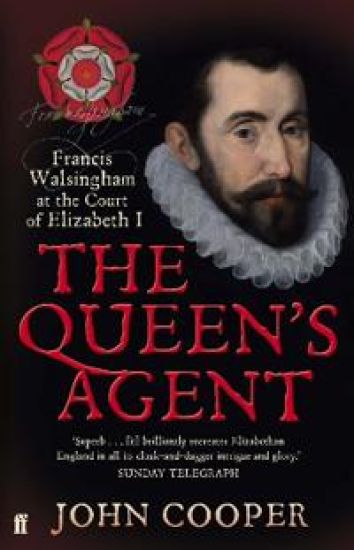
Elizabeth I came to the throne at a time of insecurity and unrest. Rivals threatened her reign; England was a Protestant island, isolated in a sea of Catholic countries. Spain plotted an invasion, but Elizabeth's Secretary, Francis Walsingham, was prepared to do whatever it took to protect her.He ran a network of agents in England and Europe who provided him with information about invasions or assassination plots. He recruited likely young men and 'turned' others. He encourage Elizabeth to make war against the Catholic Irish rebels, with extreme brutality and oversaw the execution of Mary Queen of Scots.The Queen's Agent is a story of secret agents, cryptic codes and ingenious plots, set in a turbulent period of England's history. It is also the story of a man devoted to his queen, sacrificing his every waking hour to save the threatened English state.

Watford is situated between the Rivers Gade and Colne, fifteen miles north-west of London in what Charles Lamb, the eighteenth-century English essayist, once called 'hearty, homely, loving Hertfordshire'. A Saxon chief named Wata is believed to have settled where the existing Lower High Street crosses the Colne, and this came to be known as Wata's Ford, later shortened to Watford. Watford Through Time takes the reader on a nostalgic journey through the old market town and the beautiful Cassiobury Park at a time when the pace of life was much slower and more tranquil than it is today. The images in this book, including those taken by the author as a modernday comparison, provide a fascinating insight into the tremendous changes that have taken place in the town over the last hundred years.

Placing emphasis on practical 'how-to' guidance, this cutting-edge resource provides a first-hand, insider's perspective on the advent and evolution of smart grids in the 21st century. Professionals gain a thorough understanding of the building blocks that comprise basic smart grids, including power plant, transmission substation, distribution, and meter automation. Moreover, this forward-looking volume explores the next step of this technology's evolution. It provides a detailed explanation of how an advanced smart grid incorporates demand response with smart appliances and management mechanisms for distributed generation, energy storage, and electric vehicles.

Fifteen-year-old Danny is a troubled kid, and trouble always seems to follow him. Things are changing just too fast his family has moved to a new town, his father is battling alcoholism, and Danny has a hair-trigger temper that causes him problems with the teachers and the other kids at his new school. But as they say, everybody can do at least one thing well, and for Danny its judo. The dojo is the one place where Dannys aggression can find an outlet, even as he tries to make sense of a life that seems way out of control. As he gets ready for an upcoming competition, things just might be on the upswing in Dannys life. Its all thanks to the arrival of a four-legged wonder, a remarkable greyhound named Long Shot that may hold the key to Danny finding both balance in his life and, especially, a greater understanding of his father.

The last year has seen the largest and most comprehensive reform of Coronial Law since the early nineteenth century. The new Coroners and Justice Act 2009 impacts upon every aspect of the Inquest and this comprehensive new work lays out both the substantive law and new procedure following the recent legislation and authorities.The whole coronial process is laid out in distinct chapters which consider the present and developing law.The book provides practical guidance from the beginning to the end of the process and includes a special chapter on Military inquests, creating an invaluable reference for both the practitioner and student of this fast developing area of law.


Christian Evolution Or The Divine Process In Human Redemption
John Cooper
KESSINGER PUBLISHING, LLC
2010
sidottu