Kirjojen hintavertailu. Mukana 12 519 553 kirjaa ja 12 kauppaa.

Kirjailija

John Corrigan

Kirjat ja teokset yhdessä paikassa: 18 kirjaa, julkaisuja vuosilta 1987-2026, suosituimpien joukossa Jews, Christians, Muslims. Vertaile teosten hintoja ja tarkista saatavuus suomalaisista kirjakaupoista.

18 kirjaa

Kirjojen julkaisuhaarukka 1987-2026.

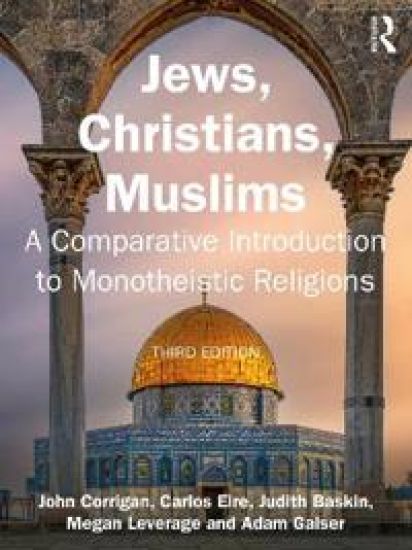
Jews, Christians, Muslims

Jews, Christians, Muslims

John Corrigan; Carlos M. N. Eire; Judith R. Baskin; Adam Gaiser; Megan Leverage

TAYLOR FRANCIS LTD
2026
sidottu
Jews, Christians, Muslims: A Comparative Introduction to Monotheistic Religions compares Judaism, Christianity, and Islam using seven common themes which are equally relevant to each tradition. Designed to provoke critical thinking, this text addresses the cultural frameworks of religious meanings and explores the similarities and differences among Judaism, Christianity, and Islam as it explains the ongoing process of interpretation in each religion. The following themes are covered in each religion: Scripture and Tradition Monotheism Authority Worship and Ritual Ethics Material Culture The Political Order Gender, Sex and Family This third edition is fully updated throughout with a new introduction exploring religious diversity, new discussions of gender, sex, and family integrated into previous sections, detailed analysis of religious ethics covering topics such as war, the environment, and capital punishment, discussion of global aspects of monotheism such as missionizing, imperialism, and postcolonialism, and new images and inset text boxes to help guide students and instructors. The book is an ideal resource for anyone wanting an accessible and comprehensive introduction to Western and World Religions.
Jews, Christians, Muslims

Jews, Christians, Muslims

John Corrigan; Carlos M. N. Eire; Judith R. Baskin; Adam Gaiser; Megan Leverage

TAYLOR FRANCIS LTD
2026
nidottu
Jews, Christians, Muslims: A Comparative Introduction to Monotheistic Religions compares Judaism, Christianity, and Islam using seven common themes which are equally relevant to each tradition. Designed to provoke critical thinking, this text addresses the cultural frameworks of religious meanings and explores the similarities and differences among Judaism, Christianity, and Islam as it explains the ongoing process of interpretation in each religion. The following themes are covered in each religion: Scripture and Tradition Monotheism Authority Worship and Ritual Ethics Material Culture The Political Order Gender, Sex and Family This third edition is fully updated throughout with a new introduction exploring religious diversity, new discussions of gender, sex, and family integrated into previous sections, detailed analysis of religious ethics covering topics such as war, the environment, and capital punishment, discussion of global aspects of monotheism such as missionizing, imperialism, and postcolonialism, and new images and inset text boxes to help guide students and instructors. The book is an ideal resource for anyone wanting an accessible and comprehensive introduction to Western and World Religions.
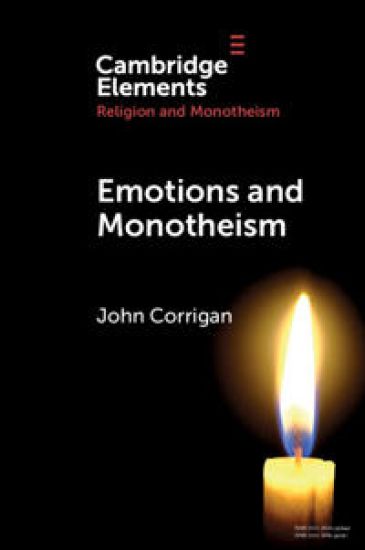
Emotions and Monotheism

Emotions and Monotheism

John Corrigan

Cambridge University Press
2024
pokkari
The emotional turn in scholarship has changed the way in which historians of religion think about monotheistic traditions. New histories of religion have adapted and incorporated the totalizing sensibilities of twentieth century annalistes, the granular view of social historians, groundbreaking philosophical investigations, and the spirit of interdisciplinary collaboration between historical analysis, anthropology, and psychology. Religion as a principal bearer of culture has shaped emotional life profoundly, just as human emotion has constituted religious life. Taking a qualified constructivist approach to emotion enables understanding of the dynamism, fluidity, and ambiguity in emotional experience, alongside continuities, and facilitates analysis of how that feeling has animated religious life in monotheistic traditions. It equally sharpens insight into how monotheistic religion itself has made emotion. Affect, emotion, and mixed emotions are three categories of feelings evidenced in monotheistic religions. Each is illustrated with respect to the similarities and differences among Judaism, Christianity, and Islam.
Emotions and Monotheism

Emotions and Monotheism

John Corrigan

Cambridge University Press
2024
sidottu
The emotional turn in scholarship has changed the way in which historians of religion think about monotheistic traditions. New histories of religion have adapted and incorporated the totalizing sensibilities of twentieth century annalistes, the granular view of social historians, groundbreaking philosophical investigations, and the spirit of interdisciplinary collaboration between historical analysis, anthropology, and psychology. Religion as a principal bearer of culture has shaped emotional life profoundly, just as human emotion has constituted religious life. Taking a qualified constructivist approach to emotion enables understanding of the dynamism, fluidity, and ambiguity in emotional experience, alongside continuities, and facilitates analysis of how that feeling has animated religious life in monotheistic traditions. It equally sharpens insight into how monotheistic religion itself has made emotion. Affect, emotion, and mixed emotions are three categories of feelings evidenced in monotheistic religions. Each is illustrated with respect to the similarities and differences among Judaism, Christianity, and Islam.
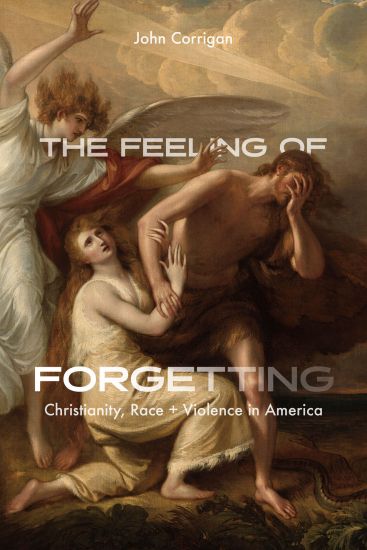
The Feeling of Forgetting

The Feeling of Forgetting

John Corrigan

THE UNIVERSITY OF CHICAGO PRESS
2023
nidottu
A provocative examination of how religious practices of forgetting drive white Christian nationalism. The dual traumas of colonialism and slavery are still felt by Native Americans and African Americans as victims of ongoing violence toward people of color today. In The Feeling of Forgetting, John Corrigan calls attention to the trauma experienced by white Americans as perpetrators of this violence. By tracing memory’s role in American Christianity, Corrigan shows how contemporary white Christian nationalism is motivated by a widespread effort to forget the role race plays in American society. White trauma, Corrigan argues, courses through American culture like an underground river that sometimes bursts forth into brutality, terrorism, and insurrection. Tracing the river to its source is a necessary first step toward healing.
The Feeling of Forgetting

The Feeling of Forgetting

John Corrigan

THE UNIVERSITY OF CHICAGO PRESS
2023
sidottu
A provocative examination of how religious practices of forgetting drive white Christian nationalism. The dual traumas of colonialism and slavery are still felt by Native Americans and African Americans as victims of ongoing violence toward people of color today. In The Feeling of Forgetting, John Corrigan calls attention to the trauma experienced by white Americans as perpetrators of this violence. By tracing memory’s role in American Christianity, Corrigan shows how contemporary white Christian nationalism is motivated by a widespread effort to forget the role race plays in American society. White trauma, Corrigan argues, courses through American culture like an underground river that sometimes bursts forth into brutality, terrorism, and insurrection. Tracing the river to its source is a necessary first step toward healing.
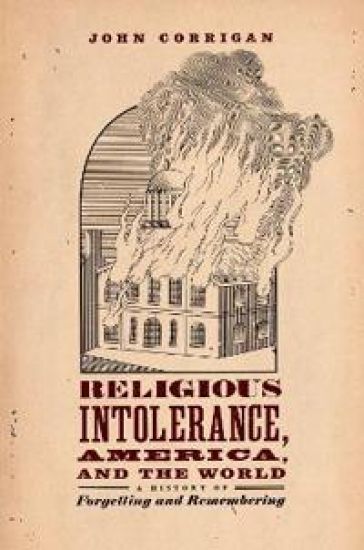
Religious Intolerance, America, and the World

Religious Intolerance, America, and the World

John Corrigan

University of Chicago Press
2020
sidottu
As the news shows us every day, contemporary American culture and politics are rife with people who demonize their enemies by projecting their own failings and flaws onto them. But this is no recent development. Rather, as John Corrigan argues here, it’s an expression of a trauma endemic to America’s history, particularly involving our long domestic record of religious conflict and violence.Religious Intolerance, America, and the World spans from Christian colonists’ intolerance of Native Americans and the role of religion in the new republic’s foreign-policy crises to Cold War witch hunts and the persecution complexes that entangle Christians and Muslims today. Corrigan reveals how US churches and institutions have continuously campaigned against intolerance overseas even as they’ve abetted or performed it at home. This selective condemnation of intolerance, he shows, created a legacy of foreign policy interventions promoting religious freedom and human rights that was not reflected within America’s own borders. This timely, captivating book forces America to confront its claims of exceptionalism based on religious liberty—and perhaps begin to break the grotesque cycle of projection and oppression.
The Problem of the Idea of Culture in John Paul II

The Problem of the Idea of Culture in John Paul II

John Corrigan; Robert Orlando

Lexington Books
2019
sidottu
The Problem of the Idea of Culture in John Paul II: Exposing the Disruptive Agency of the Philosophy of Karol Wojtyla exposes Wojtyla as a disruptive agency in contemporary philosophical debates, reformulating the problem of experience in light of the questions surrounding our idea of culture. Reconsidering the anthropological foundations of this idea, John Corrigan argues that the problem of experience manifests in the apparently divergent accounts of the meaning of human experience as presented by the philosophies of being and of consciousness. Wojtyla’s contemplation of the meaning of human existence led him to the problems of the structure of the person, human action, and the constitutive aspects of human culture. Analyzing the first two problems leads to an idea of the person capable of explaining human experience in relation to human culture; a proper understanding unfolds the experiences of self-knowledge, conscience, and the ontic-causal relationship of the person to human culture. The first part of the book concerns formal considerations regarding the constitutive aspects of Wojtyla’s approach, while the second part deals with pragmatic considerations drawn from his comments on culture. Corrigan provides a new lens with which to view and understand the philosophy of Karol Wojtyla/John Paul II.
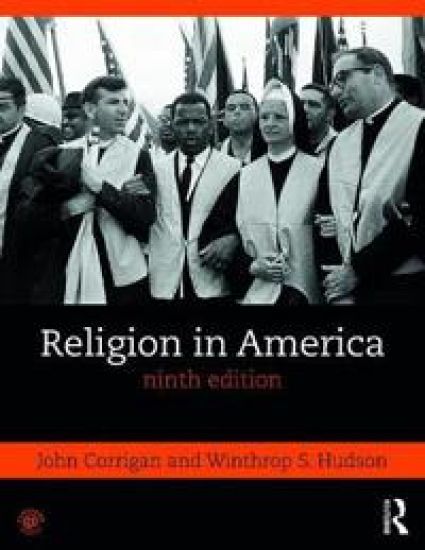
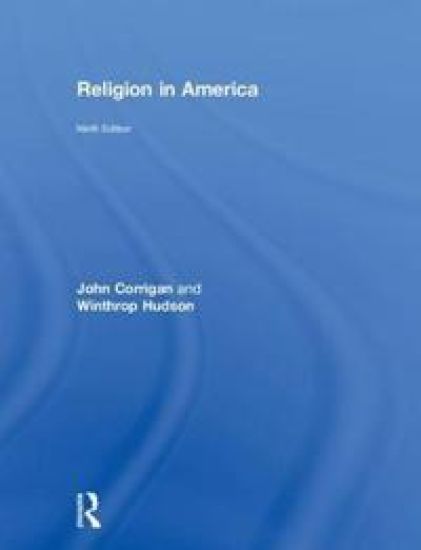
Religion in America

Religion in America

John Corrigan; Winthrop Hudson

Routledge Member of the Taylor and Francis Group
2018
nidottu
This comprehensive narrative account of religion in America from the sixteenth century through the present depicts the religious life of the American people within the context of American society. It addresses topics ranging from the European origins of American religious thought and the diversity of religion in America, to the relation of nationhood with religious practice and the importance of race, ethnicity, and gender in American religious history. Split into four parts this textbook covers: Religion in a Colonial Context, 1492-1789 The New Nation, 1789-1865 Years of Midpassage, 1865-1918 Modern America, 1918- PresentThis new edition has been thoroughly updated to include further discussion of colonialism, religious minorities, space and empire, religious freedom, emotion, popular religion, sexuality, the ascent of the "nones," Islamophobia, and the development of an American mission to the world. With a detailed timeline, illustrations and maps throughout, and an accompanying companion website Religion in America is the perfect introduction for students new to the study of this topic who wish to understand the key themes, places, and people who shaped the world as we know it today.
Religion in America

Religion in America

John Corrigan; Winthrop Hudson

Routledge Member of the Taylor and Francis Group
2018
sidottu
This comprehensive narrative account of religion in America from the sixteenth century through the present depicts the religious life of the American people within the context of American society. It addresses topics ranging from the European origins of American religious thought and the diversity of religion in America, to the relation of nationhood with religious practice and the importance of race, ethnicity, and gender in American religious history. Split into four parts this textbook covers: Religion in a Colonial Context, 1492-1789 The New Nation, 1789-1865 Years of Midpassage, 1865-1918 Modern America, 1918- PresentThis new edition has been thoroughly updated to include further discussion of colonialism, religious minorities, space and empire, religious freedom, emotion, popular religion, sexuality, the ascent of the "nones," Islamophobia, and the development of an American mission to the world. With a detailed timeline, illustrations and maps throughout, and an accompanying companion website Religion in America is the perfect introduction for students new to the study of this topic who wish to understand the key themes, places, and people who shaped the world as we know it today.
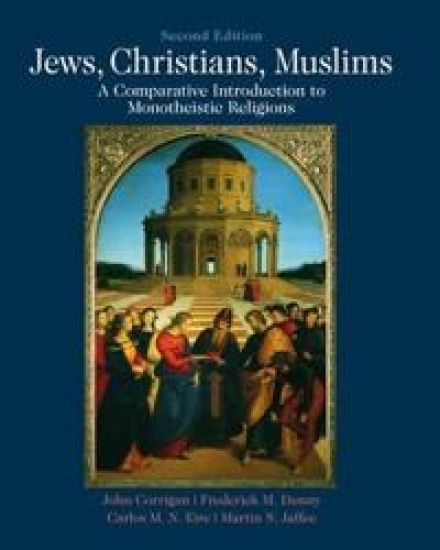
Jews, Christians, Muslims

Jews, Christians, Muslims

John Corrigan; Frederick Denny; Carlos Eire; Martin S Jaffee

Routledge
2017
sidottu
The second edition of Jews, Christians, Muslims: A Comparative Introduction to Monotheistic Religions, compares Judaism, Christianity, and Islam using seven common themes which are equally relevant to each tradition. Provoking critical thinking, this text addresses the cultural framework of religious meanings and explores the similarities and differences among Judaism, Christianity, and Islam as it explains the ongoing process of interpretation in each religion. The book is designed for courses in Western and World Religions.
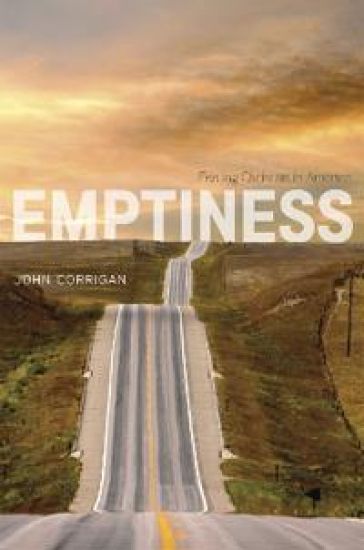
Emptiness

Emptiness

John Corrigan

University of Chicago Press
2015
sidottu
For many Christians in America, becoming filled with Christ first requires being empty of themselves-a quality often overlooked in religious histories. In Emptiness, John Corrigan highlights for the first time the various ways that American Christianity has systematically promoted the cultivation of this feeling. Corrigan examines different kinds of emptiness essential to American Christianity, such as the emptiness of deep longing, the emptying of the body through fasting or weeping, the emptiness of the wilderness, and the emptiness of historical time itself. He argues, furthermore, that emptiness is closely connected to the ways Christian groups differentiate themselves: many groups foster a sense of belonging not through affirmation, but rather avowal of what they and their doctrines are not. Through emptiness, American Christians are able to assert their identities as members of a religious community. Drawing much-needed attention to a crucial aspect of American Christianity, Emptiness expands our understanding of historical and contemporary Christian practices.
Jews, Christians, Muslims

Jews, Christians, Muslims

John Corrigan; Frederick Denny; Martin S Jaffee; Eire Carlos

Routledge Member of the Taylor and Francis Group
2011
nidottu
The second edition of Jews, Christians, Muslims: A Comparative Introduction to Monotheistic Religions, compares Judaism, Christianity, and Islam using seven common themes which are equally relevant to each tradition. Provoking critical thinking, this text addresses the cultural framework of religious meanings and explores the similarities and differences among Judaism, Christianity, and Islam as it explains the ongoing process of interpretation in each religion. The book is designed for courses in Western and World Religions.
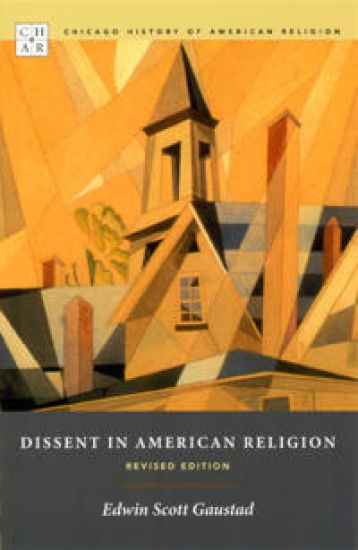
Dissent in American Religion

Dissent in American Religion

Edwin Scott Gaustad; John Corrigan

University of Chicago Press
2006
nidottu
"Dissent in American Religion", originally published in 1973, was the first book to present religious dissent in the United States as a pervasive but hidden and often-ignored stream in American life. The first volume in the "Chicago History of American Religion" series, it reviewed the history of our nation's longest dissenting tradition - a tradition older and richer in the realm of religion than in any other facet of national life. Indeed, Edwin Scott Gaustad argued that religious dissent was essential to the character of the American religious experience and stood in profound disagreement with society's orthodox values and beliefs. This new edition, which reinaugurates the "Chicago History of American Religion" series under the new editorship of John Corrigan, features new commentary by Gaustad and Corrigan on the past thirty years of American religious history and the importance of understanding dissent in American religion today.
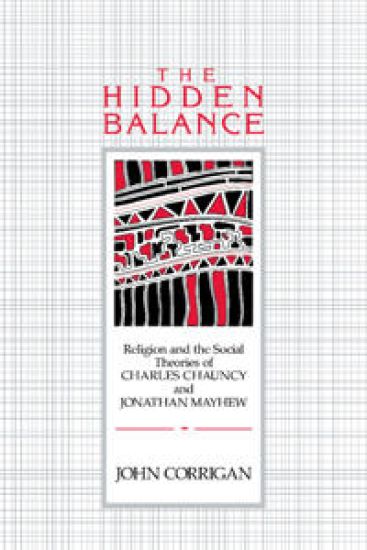
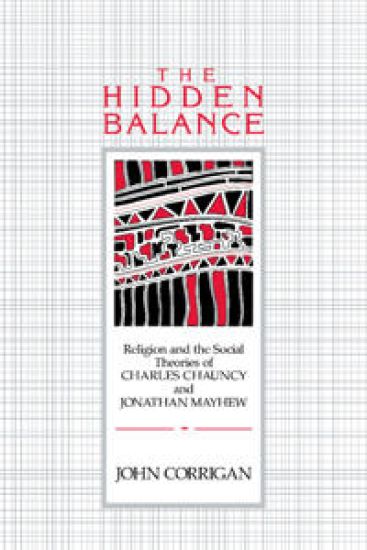
The Hidden Balance

The Hidden Balance

John Corrigan

Cambridge University Press
2006
pokkari
Congregationalist ministers Charles Chauncy and Jonathan Mayhew were among the most influential social and religious thinkers in Boston in the mid-eighteenth century. This 1987 study argues that Chauncy and Mayhew produced a complex but coherent body of ideas and that these ideas were organized closely and self-consciously around the principle of 'balance'. Writings on society and government are treated alongside theological works, rather than separate from them, and each man's corpus is placed against the background of English ideas as well as within the context of intellectual and social life in Boston. Investigation of the ideas of Chauncy and Mayhew in this way leads to the conclusion that although the two men believed that a cosmic principle of 'balance' organized social and religious life, they believed as well that full philosophical comprehension of this principle was beyond human capability. In order to express their understanding of cosmic order, Chauncy and Mayhew appropriated the metaphor of the 'great chain of being'.
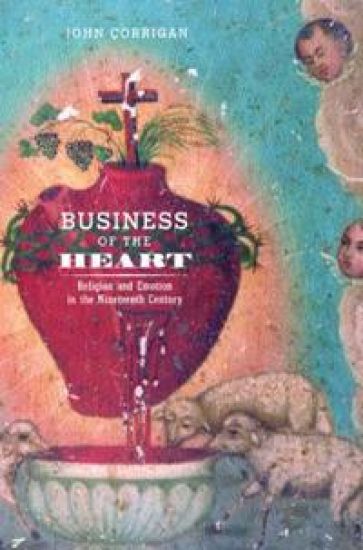
Business of the Heart

Business of the Heart

John Corrigan

University of California Press
2001
sidottu
The "Businessmen's Revival" was a religious revival that unfolded in the wake of the 1857 market crash among white, middle-class Protestants. Delving into the religious history of Boston in the 1850s, John Corrigan gives an imaginative and wide-ranging interpretive study of the revival's significance. He uses it as a focal point for addressing a spectacular range of phenomena in American culture: the ecclesiastical and business history of Boston; gender roles and family life; the history of the theater and public spectacle; education; boyculture; and, especially, ideas about emotion during this period. This vividly written narrative recovers the emotional experiences of individuals from a wide array of little-used sources including diaries, correspondence, public records, and other materials. From these sources, Corrigan discovers that for these Protestants, the expression of emotion was a matter of transactions. They saw emotion as a commodity, and conceptualized relations between people, and between individuals and God, as transactions of emotion governed by contract. Religion became a business relation with God, with prayer as its legal tender. Entering this relationship, they were conducting the "business of the heart." This innovative study shows that the revival--with its commodification of emotional experience--became an occasion for white Protestants to underscore differences between themselves and others. The display of emotion was a primary indicator of membership in the Protestant majority, as much as language, skin color, or dress style. As Corrigan unravels the significance of these culturally constructed standards for emotional life, his book makes an important contribution to recent efforts to explore the links between religion and emotion, and is an important new chapter in the history of religion.
Emotion and Religion

Emotion and Religion

John Corrigan; Eric Crump; John Kloos

Greenwood Press
2000
sidottu
The study of religion and emotion has emerged as an important aspect of the current renaissance in the study of emotion taking place across the arts and sciences. Emotion and Religion: A Critical Assessment and Annotated Bibliography gathers over 1,200 entries from scholarly literature in the fields of history, psychology, sociology, anthropology, theology, and philosophy. This unique bibliography demonstrates the coherence of religion and emotion studies as an area of research while noting the breadth of that area and the ways in which researchers have employed various methods and disciplinary approaches. An extensive introductory essay identifies the leading themes in the scholarship and demonstrates both the complexity of the field and the ways in which work from several disciplinary perspectives has overlapped. Featuring outstanding annotations and a detailed overview of the field, this book demonstrates the breadth and vitality of scholarly research in this area. The bibliography is organized into three distinct parts. Part I focuses on Historical Studies and includes the scholarship on various time periods, beginning with ancient times. Part II, on Social and Behavioral Sciences, includes sections on psychological studies, anthropological studies, and sociological studies. Theological and Philosophical Studies are examined in Part III. This major new reference concludes with two detailed indices on authors and topics. Emotion and Religion charts an important area of scholarship for the first time, making it a vital contribution to the scholarship in itself.
The Hidden Balance

The Hidden Balance

John Corrigan

Cambridge University Press
1987
sidottu
Congregationalist ministers Charles Chauncy and Jonathan Mayhew were among the most influential social and religious thinkers in Boston in the mid-eighteenth century. This 1987 study argues that Chauncy and Mayhew produced a complex but coherent body of ideas and that these ideas were organized closely and self-consciously around the principle of 'balance'. Writings on society and government are treated alongside theological works, rather than separate from them, and each man's corpus is placed against the background of English ideas as well as within the context of intellectual and social life in Boston. Investigation of the ideas of Chauncy and Mayhew in this way leads to the conclusion that although the two men believed that a cosmic principle of 'balance' organized social and religious life, they believed as well that full philosophical comprehension of this principle was beyond human capability. In order to express their understanding of cosmic order, Chauncy and Mayhew appropriated the metaphor of the 'great chain of being'.