Kirjojen hintavertailu. Mukana 12 595 353 kirjaa ja 12 kauppaa.

Kirjailija

John Craig

Kirjat ja teokset yhdessä paikassa: 41 kirjaa, julkaisuja vuosilta 1998-2025, suosituimpien joukossa A New Universal Etymological, Technological, and Pronouncing Dictionary of the English Language. Vertaile teosten hintoja ja tarkista saatavuus suomalaisista kirjakaupoista.

41 kirjaa

Kirjojen julkaisuhaarukka 1998-2025.

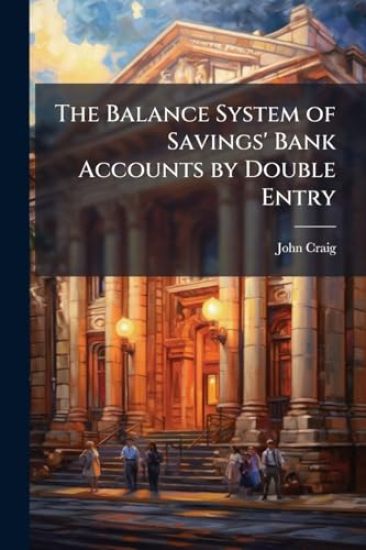
The Balance System of Savings' Bank Accounts by Double Entry
"The Balance System of Savings' Bank Accounts by Double Entry" offers a detailed exploration of accounting practices tailored for savings banks. Written by John Craig, this book provides a comprehensive guide to managing savings bank accounts using the double-entry bookkeeping method. It presents a structured approach to maintaining financial records, ensuring accuracy and transparency in banking operations. This book is an invaluable resource for accounting professionals, bank managers, and anyone involved in the financial administration of savings institutions. It provides clear instructions and practical insights into the balance system, enhancing the reader's understanding of financial management within the banking sector. With its focus on double-entry bookkeeping, this text remains relevant for those seeking to improve their accounting skills and maintain efficient bank operations. This work has been selected by scholars as being culturally important, and is part of the knowledge base of civilization as we know it. This work was reproduced from the original artifact, and remains as true to the original work as possible. Therefore, you will see the original copyright references, library stamps (as most of these works have been housed in our most important libraries around the world), and other notations in the work. This work is in the public domain in the United States of America, and possibly other nations. Within the United States, you may freely copy and distribute this work, as no entity (individual or corporate) has a copyright on the body of the work. As a reproduction of a historical artifact, this work may contain missing or blurred pages, poor pictures, errant marks, etc. Scholars believe, and we concur, that this work is important enough to be preserved, reproduced, and made generally available to the public. We appreciate your support of the preservation process, and thank you for being an important part of keeping this knowledge alive and relevant.
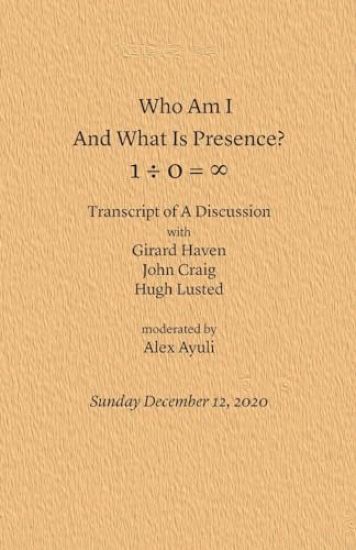
Who Am I and What Is Presence

Who Am I and What Is Presence

Alex Ayuli; John Craig; Girard Haven

IngramSpark
2023
pokkari
Years ago I remember reading Rodney Collin say in Theory of Celestial Influence that the first time you hear about self-remembering, or the first time you read those words, in that very moment you self-remember. And I remember at the time I was sitting in front of a large plate glass window, it was dark on the other side of the window, and I read that line and looked up. And I saw myself looking at a reflection of myself, looking back at me. It was really powerful. It was an addition to being an observer. And the reflection in the window kind of triggered an intuition - something that was not fully formed, that was contributing to the power of that moment. But it was an immediate verification of the truth of what Collin had said, that those words would trigger the state. I didn't understand this at the time, but later I realized it also verified Rodney Collin's idea of self-remembering....
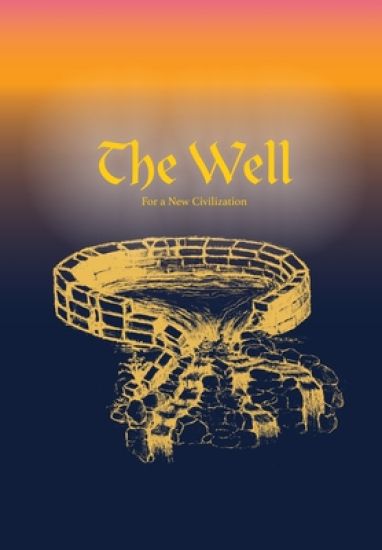
The Well for A New Civilization

The Well for A New Civilization

John Craig

Blue Logic
2022
sidottu
The human species is threatening itself and Earth, its home, with destruction. With our sheer numbers, our garbage and our toxic way of living, and our weaponry and political instability, we have put our own survival in doubt. Our civilization is failing under the stresses we ourselves have brought to bear. It seems some kind of retrenchment must occur, some culling of our population, some retreat to a less exploitative relation with what sustains us. Whether that step back will come in climactic violence, as in nuclear war, or in the relentless grinding of environmental degradation, we cannot say.Now is the time to plant a new civilization, one oriented not merely to survival but to a different human purpose. The acts of human beings derive from their level of consciousness. When our behavior is reflexive and unpiloted, we are functioning at a low level of conscious awareness. When our behavior is crude, selfish, merciless or unmindful, we have allowed the lower elements of our nature to usurp our better consciousness. The first principle of a new civilization must be that that which makes us more conscious is good and that which makes us less conscious is destructive.The definitive element of our best consciousness is a high state of Presence. Presence is not in time; it is a fundamentally different phenomenon from the past and future our minds create. It is not reason or belief. It is the awareness of pure being and thus a portal out of time and mortality. To act from the Present fosters love; only in the Present is the unity of conscious awareness revealed.We must value and build on that which engenders and sustains our highest consciousness. This collection of poems is dedicated to a new civilization of Presence.
Introduction to Robotics, Global Edition

Introduction to Robotics, Global Edition

John Craig

Pearson Education Limited
2021
nidottu
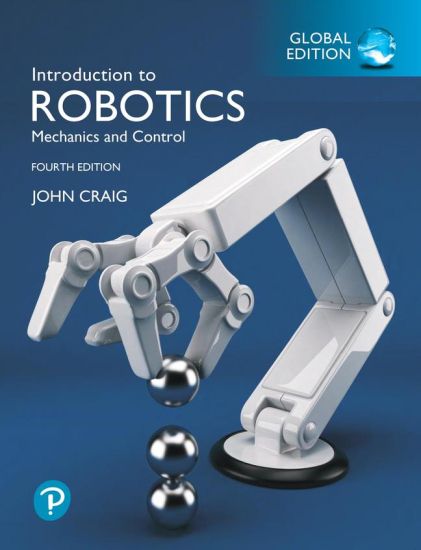
For senior-yearundergraduate and first-year graduate courses in robotics. An intuitiveintroduction to robotic theory and application Since its originalpublication in 1986, Craig’s Introduction to Robotics: Mechanics andControl has been the leading textbook for teaching robotics at theuniversity level. Blending traditional mechanical engineering material withcomputer science and control theoretical concepts, the text covers a range oftopics, including rigid-body transformations, forward and inverse positionalkinematics, velocities and Jacobians of linkages, dynamics, linear andnon-linear control, force control methodologies, mechanical design aspects, androbotic programming. The 4th Edition featuresa balance of application and theory, introducing the science and engineering ofmechanical manipulation—establishing and building on foundational understandingof mechanics, control theory, and computer science. With an emphasis on the computationalaspects of problems, the text aims to present material in a simple, intuitive manner.
Introduction to Robotics

Introduction to Robotics

John Craig

Pearson
2017
sidottu
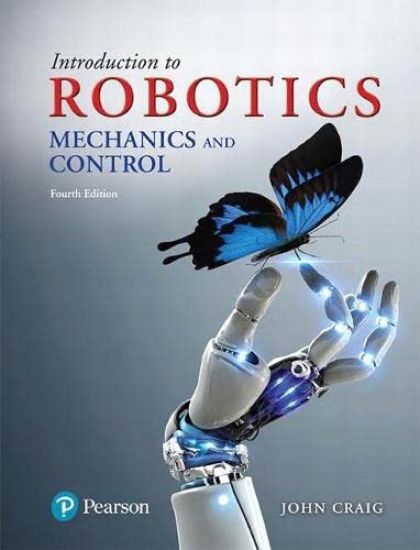
For senior-year undergraduate and first-year graduate courses in robotics. An intuitive introduction to robotic theory and application Since its original publication in 1986, Craig’s Introduction to Robotics: Mechanics and Control has been the leading textbook for teaching robotics at the university level. Blending traditional mechanical engineering material with computer science and control theoretical concepts, the text covers a range of topics, including rigid-body transformations, forward and inverse positional kinematics, velocities and Jacobians of linkages, dynamics, linear and non-linear control, force control methodologies, mechanical design aspects, and robotic programming. The 4th Edition features a balance of application and theory, introducing the science and engineering of mechanical manipulation--establishing and building on foundational understanding of mechanics, control theory, and computer science. With an emphasis on computational aspects of problems, the text aims to present material in a simple, intuitive way.
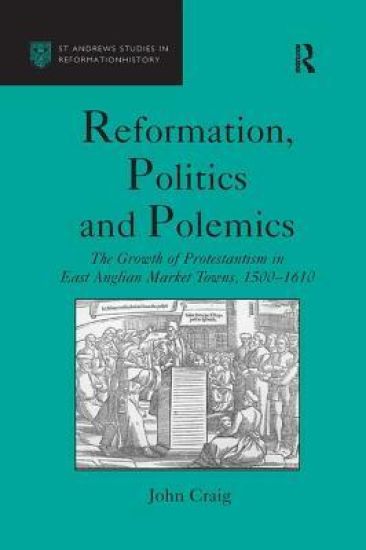
Reformation, Politics and Polemics
Drawing primarily from Suffolk sources, this book explores the development and place of Protestantism in early modern society, defined as much in terms of its practice in local communities as in its more public pronouncements from those in authority. Using detailed analysis of four communities, Mildenhall, Bury St Edmunds, Thetford and Hadleigh, John Craig explores the responses and initiatives of these towns to the question of the Reformation in the 16th century. A fascinating picture emerges of the preoccupations and priorities of particular groups. The political goals and consciousness of townsmen and tradesmen are examined, and the problems of analyzing the evidence for ascribing religious motivations to urban factions are highlighted. The case of Hadleigh addresses some aspects of the connection often made between the growth of Protestantism and the incidence of social division and conflict. These local studies provide the basis for a broader perspective on urban reformation in East Anglia.