Kirjailija
John D. Caputo
Kirjat ja teokset yhdessä paikassa: 41 kirjaa, julkaisuja vuosilta 1982-2026, suosituimpien joukossa Poesía Teológica. Vertaile teosten hintoja ja tarkista saatavuus suomalaisista kirjakaupoista.
Mukana myös kirjoitusasut: John D Caputo
41 kirjaa
Kirjojen julkaisuhaarukka 1982-2026.
What is 'truth' in today's freewheeling, pluralistic world, without certainties or fixed ideas? Does it lie in the Reason of Descartes and Kant? Is it Derrida's idea of an event, still being made? Or, according to Nietzsche, an ensemble of fictions? Internationally renowned philosopher John D. Caputo explores truth in the postmodern age.
The Insistence of God presents the provocative idea that God does not exist, God insists, while God's existence is a human responsibility, which may or may not happen. For John D. Caputo, God's existence is haunted by "perhaps," which does not signify indecisiveness but an openness to risk, to the unforeseeable. Perhaps constitutes a theology of what is to come and what we cannot see coming. Responding to current critics of continental philosophy, Caputo explores the materiality of perhaps and the promise of the world. He shows how perhaps can become a new theology of the gaps God opens.
The William Desmond Reader
William Desmond; John D. Caputo
State University of New York Press
2012
sidottu
Career-spanning selections from the writings of William Desmond.Known especially for his original system of metaphysics in a trilogy of books published between 1995 and 2008, and for his scholarship on Hegel, William Desmond has left his mark on the philosophy of religion, ethics, and aesthetics. The William Desmond Reader provides for the first time in a single book a point of entry into his original and constructive philosophy, including carefully chosen selections of his works that introduce the key ideas, perspectives, and contributions of his philosophy as a whole. Also featured is an original essay by Desmond himself reflecting synthetically on the topics covered, as well as an interview by Richard Kearney.
It has long been assumed that the more modern we become, the less religious we will be. Yet a recent resurrection in faith has challenged the certainty of this belief. In these original essays and interviews, leading hermeneutical philosophers and postmodern theorists John D. Caputo and Gianni Vattimo engage with each other's past and present work on the subject and reflect on our transition from secularism to postsecularism. As two of the figures who have contributed the most to the theoretical reflections on the contemporary philosophical turn to religion, Caputo and Vattimo explore the changes, distortions, and reforms that are a part of our postmodern faith and the forces shaping the religious imagination today. Incisively and imaginatively connecting their argument to issues ranging from terrorism to fanaticism and from politics to media and culture, these thinkers continue to reinvent the field of hermeneutic philosophy with wit, grace, and passion.
Using excerpts from the major texts to explain essential topics, the How to Read series provides a context and an explanation that will facilitate and enrich your understanding of texts vital to the canon.
What Would Jesus Deconstruct? – The Good News of Postmodernism for the Church
John D. Caputo; James Smith; James McLaren
Baker Academic, Div of Baker Publishing Group
2007
nidottu
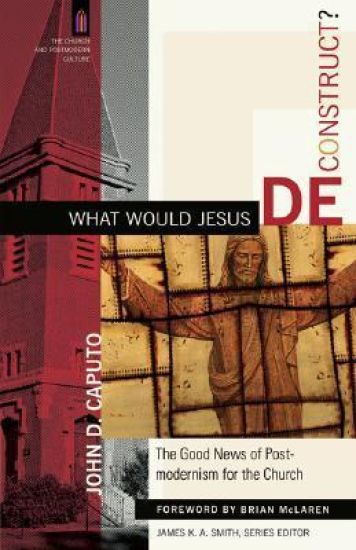
This provocative addition to The Church and Postmodern Culture series offers a lively rereading of Charles Sheldon's In His Steps as a constructive way forward. John D. Caputo introduces the notion of why the church needs deconstruction, positively defines deconstruction's role in renewal, deconstructs idols of the church, and imagines the future of the church in addressing the practical implications of this for the church's life through liturgy, worship, preaching, and teaching. Students of philosophy, theology, religion, and ministry, as well as others interested in engaging postmodernism and the emerging church phenomenon, will welcome this provocative, non-technical work.
It has long been assumed that the more modern we become, the less religious we will be. Yet a recent resurrection in faith has challenged the certainty of this belief. In these original essays and interviews, leading hermeneutical philosophers and postmodern theorists John D. Caputo and Gianni Vattimo engage with each other's past and present work on the subject and reflect on our transition from secularism to postsecularism. As two of the figures who have contributed the most to the theoretical reflections on the contemporary philosophical turn to religion, Caputo and Vattimo explore the changes, distortions, and reforms that are a part of our postmodern faith and the forces shaping the religious imagination today. Incisively and imaginatively connecting their argument to issues ranging from terrorism to fanaticism and from politics to media and culture, these thinkers continue to reinvent the field of hermeneutic philosophy with wit, grace, and passion.
Applying an ever more radical hermeneutics (including Husserlian and Heideggerian phenomenology, Derridian deconstruction, and feminism), John D. Caputo breaks down the name of God in this irrepressible book. Instead of looking at God as merely a name, Caputo views it as an event, or what the name conjures or promises in the future. For Caputo, the event exposes God as weak, unstable, and barely functional. While this view of God flies in the face of most religions and philosophies, it also puts up a serious challenge to fundamental tenets of theology and ontology. Along the way, Caputo's readings of the New Testament, especially of Paul's view of the Kingdom of God, help to support the "weak force" theory. This penetrating work cuts to the core of issues and questions—What is the nature of God? What is the nature of being? What is the relationship between God and being? What is the meaning of forgiveness, faith, piety, or transcendence?—that define the terrain of contemporary philosophy of religion.
This is an engaging essay, which examines the great and classical philosophical questions as they intersect with theology.
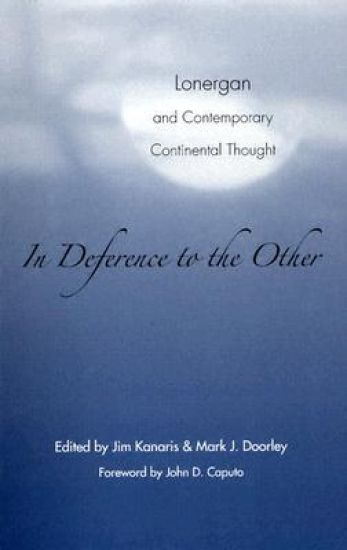
Explores the work of Bernard Lonergan in light of contemporary continental thought.In Deference to the Other brings contemporary continental thought into conversation with that of Bernard Lonergan (1904–1984), the Jesuit philosopher and theologian. This is an opportune moment to open such a dialogue: philosophers and theologians indebted to Lonergan have increasingly found themselves challenged by the insights of thinkers typically dubbed "postmodern," while postmodernists, most notably Jacques Derrida, have begun to ask the "God question." While Lonergan was not a continental philosopher, neither was he an analytic philosopher. Concerned with both epistemology and cognition, his systematic and hermeneutic-like proposals resonate with the concerns of philosophers such as Derrida, Foucault, Levinas, and Kristeva. Contributors to this volume find insight and affiliation between Lonergan's thought and contemporary continental thought in a wide-ranging work that engages the philosophical problems of authenticity, self-appropriation, ethics, and the human subject.
In these spirited essays, John D. Caputo continues the project he launched with Radical Hermeneutics of making hermeneutics and deconstruction work together. Caputo claims that we are not born into this world hard-wired to know Being, Truth, or the Good, and we are not vessels of a Divine or other omnipotent supernatural force. Focusing on how various contemporary philosophers develop aspects of this fragmented view of the life world in areas such as madness, friendship, democracy, gender, science, the "end of ethics," religion, and mysticism, this animated study by one of America's leading continental philosophers shakes the foundations of religion and philosophy, even as it gives them new life.
"Caputo's book is riveting. . . . A singular achievement of stylistic brio and impeccable scholarship, it breaks new ground in making a powerful case for treating Derrida as homo religiosis. . . . There can be no mistaking the importance of Caputo's work." —Edith Wyschogrod "No one interested in Derrida, in Caputo, or in the larger question of postmodernism and religion can afford to ignore this pathbreaking study. Taking full advantage of the most recent and least discussed writings of Derrida, it offers a careful and comprehensive account of the religious dimension of Derrida's thought." —Merold Westphal
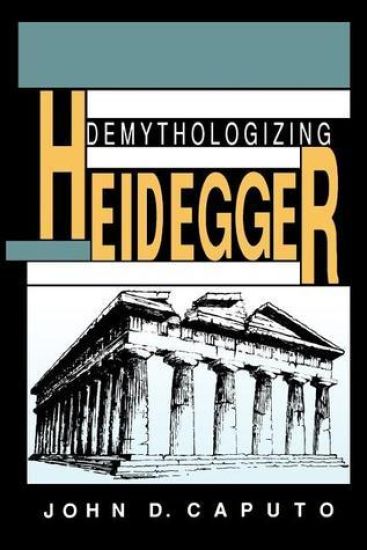
"Caputo offers a compelling plea for a reinterpretation of Heidegger that will make us more humane, and more attuned to the call of justice and mercy than to the call of Being." —Christian Century "There is no other book that focuses on the religious significance of the many 'turnings' in Heidegger's thought, nor that addresses the question of Heidegger's politics textually rather than autobiographically." —Merold Westphal A readable chronological consideration of Heidegger's texts that assesses his achievement as a thinker, while pointing to the sources of his political and ethical failure. Caputo addresses the religious significance of Heidegger's thought.
"Against Ethics is beautifully written, clever, learned, thought-provoking, and even inspiring." —Theological Studies "Writing in the form of his ideas, Caputo offers the reader a truly exquisite reading experience. . . . his iconic style mirrors a truly refreshing honesty that draws the reader in to play." —Quarterly Journal of Speech "Against Ethics is, in my judgment, one of the most important works on philosophical ethics that has been written in recent years. . . . Caputo speaks with a passion and a concern that are rare in academic philosophy. His profound sense of humor deepens the passion of the viewpoints he develops." —Mark C. Taylor "Obligation happens!" declares Caputo in this brilliant and witty postmodern critique of ethics, framed as a contemporary restaging of Kierkegaard's Fear and Trembling.
The introduction by Merold Westphal sets the scene: "Two books, two visions of philosophy, two friends and sometimes colleagues...". Modernity and Its Discontents is a debate between Caputo and Marsh in which each upheld their opposing philosphical positions by critical modernism and post-modernism. The book opens with a critique of each debater of the other's previous work. With its passionate point-counterpoint form, the book recalls the philosphical dialogues of classical times, but the writing style remains lucid and uncluttered. Taking the failure of Englightenment ideals as their common ground, the debaters challenge each other's ideas on the nature of post-foundationalist critique. At the core of the argument lies the timely question of the role that each person can play in creating a truly humane society.
"This is a remarkable book: wide-ranging, resonant, and well-written; it is also reflective and personable, warm and engaging." —Philosophy and Literature "With this book Caputo takes his place firmly as the foremost American, continental post-modernist . . . " —International Philosophical Quarterly "One cannot but be impressed by the scope of Radical Hermeneutics." —Man and World "Caputo's study is stunning in its scope and scholarship." —Robert E. Lauder, St. John's University, The Thomist For John D. Caputo, hermeneutics means radical thinking without transcendental justification: attending to the ruptures and irregularities in existence before the metaphysics of presence has a chance to smooth them over. Radical Hermeneutics forges a closer collaboration between hermeneutics and deconstruction than has previously been attempted.
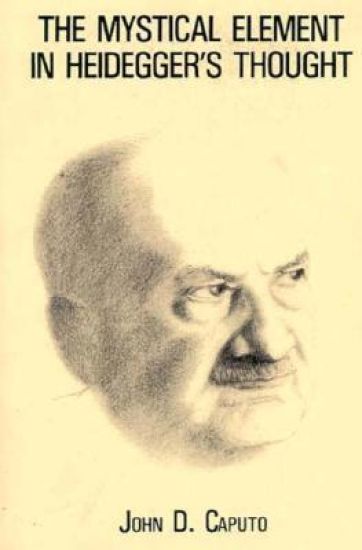
This book is a model of philosophical and Heideggerian scholarship. Avoiding the extremes of abject worship and facile refutation, it moves into the heart of the later Heideggers work. Not only is Caputo faithful to the texts, but he is reflective and critical, inviting the reader to philosophize with and against Heidegger.
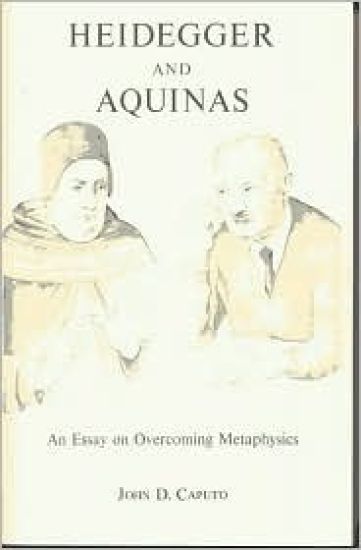
Available in a new digital edition with reflowable text suitable for e-readers The purpose of the present study is to undertake a confrontation of the thought of Martin Heidegger and Thomas Aquinas on the question of Being and the problem of metaphysics. Now, a 'confrontation' which does no more than draw up a catalogue of common traits and points of difference is no more than a curiosity, an idle comparison which bears no fruit.