

Kirjailija
John David Rhodes
Kirjat ja teokset yhdessä paikassa: 7 kirjaa, julkaisuja vuosilta 2007-2026, suosituimpien joukossa Meshes of the Afternoon. Vertaile teosten hintoja ja tarkista saatavuus suomalaisista kirjakaupoista.
7 kirjaa
Kirjojen julkaisuhaarukka 2007-2026.

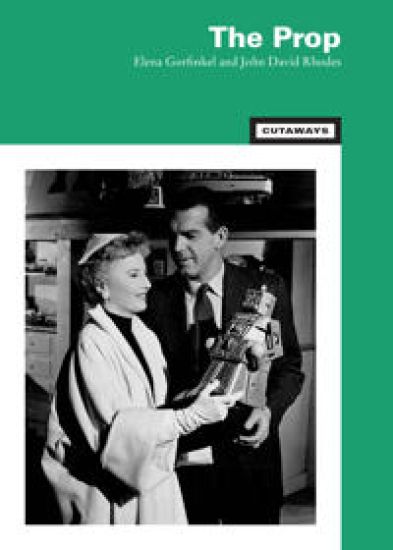
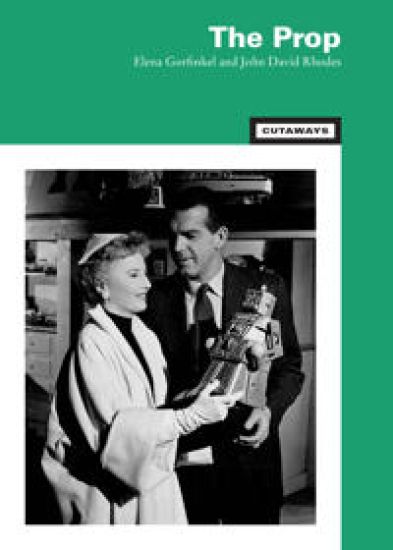
What are film props? What do they do? This book answers these questions by a close attention to those material objects that are used to construct cinematic worlds. The term "prop" is short for property. This truncated term's etymology belies the expansiveness of the concept and indicates the micro and macro scales at which the prop operates. Props are the material—often literal—furniture of cinema's diegetic reality. Props are also narrative agents: think of the animacy of objects in Jean Epstein's account of photogénie, the crystal egg in Risky Business, or the domestic bric-à-brac of Sirk's melodramas. The prop is central to production design and the construction of mise-en-scène. And yet, the prop has rarely—almost never—been taken as an object of analysis and theorization in its own right. This book begins by tracing the prop's curious but unacknowledged role in film theory, before proceeding to a series of theoretical speculations and close readings that bring the prop into focus. Analyses of scenes of "prop mastery" demonstrate the labor that props perform and enable, as well as the interpretive work they make possible. Across a variety of genres, modes, and historical contexts—studio filmmaking, art cinema, adult and avant-garde films—The Prop introduces readers to the notion of "prop value," a quality that puts the prop in proximity to the capitalist commodity, but also provides an ironic distance from the commodity's subjection to exchange value. Gorfinkel and Rhodes argue that the prop is nothing less than a condensation of how labor, subjection, value, and instrumentality underwrite the very conditions of cinema.
What are film props? What do they do? This book answers these questions by a close attention to those material objects that are used to construct cinematic worlds. The term "prop" is short for property. This truncated term's etymology belies the expansiveness of the concept and indicates the micro and macro scales at which the prop operates. Props are the material—often literal—furniture of cinema's diegetic reality. Props are also narrative agents: think of the animacy of objects in Jean Epstein's account of photogénie, the crystal egg in Risky Business, or the domestic bric-à-brac of Sirk's melodramas. The prop is central to production design and the construction of mise-en-scène. And yet, the prop has rarely—almost never—been taken as an object of analysis and theorization in its own right. This book begins by tracing the prop's curious but unacknowledged role in film theory, before proceeding to a series of theoretical speculations and close readings that bring the prop into focus. Analyses of scenes of "prop mastery" demonstrate the labor that props perform and enable, as well as the interpretive work they make possible. Across a variety of genres, modes, and historical contexts—studio filmmaking, art cinema, adult and avant-garde films—The Prop introduces readers to the notion of "prop value," a quality that puts the prop in proximity to the capitalist commodity, but also provides an ironic distance from the commodity's subjection to exchange value. Gorfinkel and Rhodes argue that the prop is nothing less than a condensation of how labor, subjection, value, and instrumentality underwrite the very conditions of cinema.
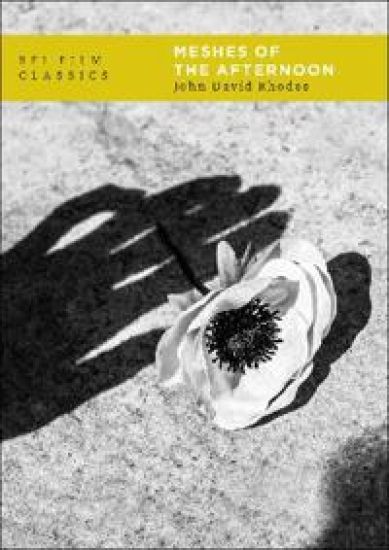
Meshes of the Afternoon (1943), filmed by Maya Deren and her then husband Alexader Hammid in their bungalow above Sunset Boulevard for a mere $274.90, is the most important film in the history of American avant-garde cinema. The artistic collaboration between Deren and Hammid finds its distorted reflection in the vision of the film's tormented female protagonist. Its focus - through a series of intricate and interlocking dream sequences - on female experience and the domestic sphere links Meshes to the Hollywood melodramas of the period, while its unsettling atmosphere of dread, death and doubles makes it a counter-cinematic cousin to film noir. The film has influenced not only the subsequent history of experimental film, but also on the work of Hollywood auteurs. It is a touchstone of women's film-making, of modern cinema and of modern art.John David Rhodes traces the film's history back into the lives of Maya Deren and Alexander Hammid, but in particular that of Deren. He reads the film as a culmination of Deren's abiding interest in modernism and her intense engagement in socialist politics. Rhodes argues that while the film remains a powerful point of reference for feminist film-makers and experimentalists, it is also an example of political art in the broadest terms.In his foreword to this new edition, Rhodes reflects upon the film's continuing importance for and influence upon feminist and avant-garde filmmaking.
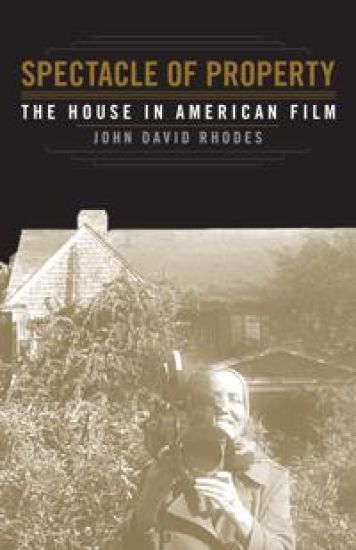
Much of our time at the movies is spent in other people’s homes. Cinema is, after all, often about everyday life. Spectacle of Property is the first book to address the question of the ubiquitous conjuncture of the moving image and its domestic architecture. Arguing that in cinema we pay to occupy spaces we cannot occupy, John David Rhodes explores how the house in cinema both structures and criticizes fantasies of property and ownership.Rhodes tells the story of the ambivalent but powerful pleasure we take in looking at private property onscreen, analyzing the security and ease the house promises along with the horrible anxieties it produces. He begins by laying out a theory of film spectatorship that proposes the concept of the “spectator-tenant,” with reference to films such as Gone with the Wind and The Magnificent Ambersons. The book continues with three chapters that are each occupied with a different architectural style and the films that make use of it: the bungalow, the modernist house, and the shingle style house. Rhodes considers a variety of canonical films rarely analyzed side by side, such as Psycho in relation to Grey Gardens and Meet Me in St. Louis. Among the other films discussed are Meshes of the Afternoon, Mildred Pierce, A Star Is Born, Killer of Sheep, and A Single Man.Bringing together film history, film theory, and architectural history as no book has to date, Spectacle of Property marks a new milestone in examining cinema’s relationship to realism while leaving us vastly more informed about, if less at home inside, the houses we occupy at the movies.
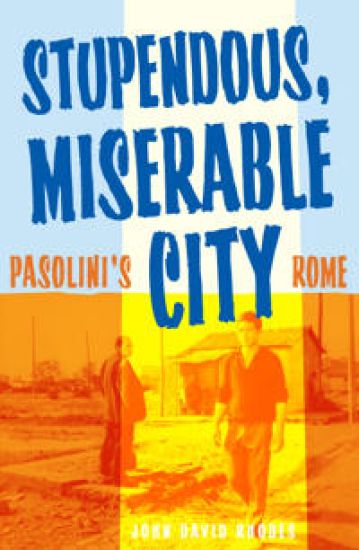
John David Rhodes places the city of Rome at the center of this original and in-depth examination of the work of Italian director Pier Paolo Pasolini-but it’s not the classical Rome you imagine. Stupendous, Miserable City situates Pasolini within the history of twentieth-century Roman urban development. The book focuses first on the Fascist period, when populations were moved out of the urban center and into public housing on the periphery of the city, called the borgate, and then turns to the progressive social housing experiments of the 1950s. These environments were the settings of most of Pasolini’s films of the early to mid-1960s. Discussing films such as Accattone, Mamma Roma, and The Hawks and the Sparrows, Rhodes shows how Pasolini used the borgate to critique Roman urban planning and neorealism and to draw attention to the contemptuous treatment of Rome’s poor. To Pasolini, the borgate, rich in human incident, linguistic difference, and squalor, “were life”-and now his passion can be appreciated fully for the first time. Carefully tracing Pasolini’s surprising engagement with this part of Rome and looking beyond his films to explore the interrelatedness of all of Pasolini’s artistic output in the 1950s and 1960s-including his poetry, fiction, and journalism-Rhodes opens up completely new ways of understanding Pasolini’s work and proves how connected Pasolini was to the political and social upheavals in Italy at the time. John David Rhodes is lecturer in literature and visual culture at the University of Sussex.