
Kirjailija
John Dickson Carr
Kirjat ja teokset yhdessä paikassa: 61 kirjaa, julkaisuja vuosilta 2013-2026, suosituimpien joukossa The Mad Hatter Mystery and Other Stories. Vertaile teosten hintoja ja tarkista saatavuus suomalaisista kirjakaupoista.
61 kirjaa
Kirjojen julkaisuhaarukka 2013-2026.
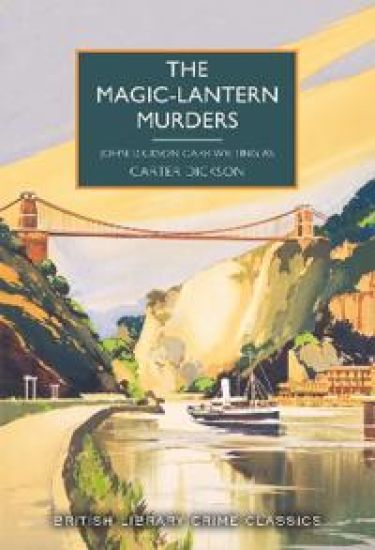
On the eve of his wedding to Evelyn Cheyne, who he met and fell in love with during the course of The Unicorn Murders, former spy Kenwood Blake is summoned to Devon by spymaster Sir Henry Merrivale, and asked to take part in an undercover operation. Despite being assured he’ll be back in London in time for the wedding the following morning, Blake is unconvinced. Once in Torquay, he is sent to investigate Paul Hogenauer, a local scientist of German heritage, who has been dabbling in spiritualism and the occult – a man Merrivale and Devon’s Chief Constable Colonel Charters suspect of anti-British espionage. But, on entering his house, he finds Hogenauer dead in a chair in his sitting room, showing all the signs of strychnine poisoning. When he finds Hogenauer’s friend and confidant Dr Keppel dead in his hotel room in Bristol, also apparently from strychnine poisoning, he has a seemingly impossible mystery to unravel. Can he solve the clues, bring the killer to justice and still get to the church in time to get married in the morning?
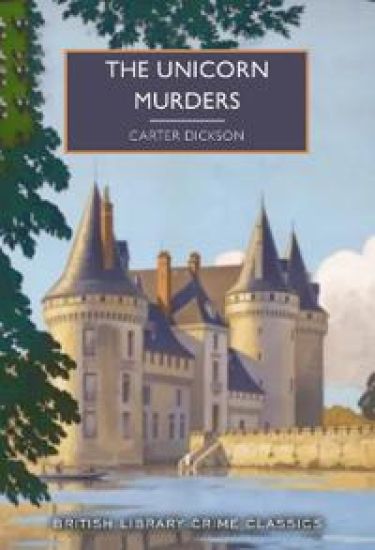
The diplomat Sir George Ramsden is returning to Britain from France with the mysterious "unicorn" in tow. The legendary thief Flamande has declared that he will be on the same flight as Ramsden, in disguise, and that the unicorn will be his. His arch-rival and head of the Srete Nationale, Gasquet, has assured the public that he too will be on the plane to thwart his nemesis. Meanwhile, holidaying in Paris, the ex-spy Kenwood Blake runs into Evelyn Cheyne and is swept into a perilous chase ending at the Chateau de l'Ile on a stormy night. Here, Ramsden's plane has made an emergency landing, and Henry Merrivale has joined the party. When the castle is cut off by the flooding river, the stage is set for a battle of wits between two masters of disguise in Flamande and Gasquet, as a bizarre and seemingly impossible murder among the party casts suspicion in every direction and the mystery of the unicorn is revealed. Carter Dickson's brilliantly intricate mystery was first published in Britain in 1936; it remains a testament to his unique talent for wrangling audacious levels of devilishness into a masterpiece.

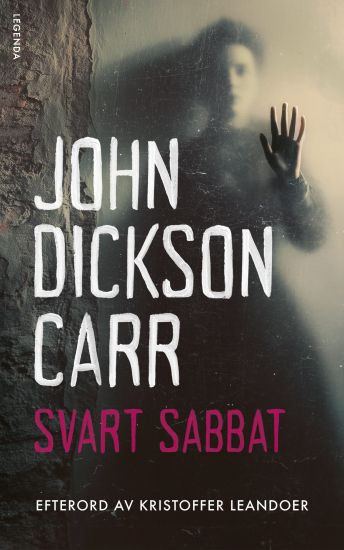
”Ytterst få deckare överraskar mig numera, men mr Carrs gör det alltid.” Agatha Christie ”En lysande, gastkramande berättelse.” Lotta Olsson Svart sabbat från 1937 ligger på många listor över världens bästa deckare. Den som läser ända till det sensationella, tvetydiga slutet förstår varför. Men även början är dramatisk: Förläggaren Edward Stevens sitter på tåget hem till sin fru och bläddrar i ett manus. Plötsligt stöter han på en bild där med bildtexten: ”Marie D’Aubray, halshuggen för mord 1861.” Det är ett foto på hans fru. Därmed släpps en kedja av bisarra händelser lös och som blir desto mörkare genom de nervkittlande övernaturligheterna och den skrämmande avsaknaden av en trygg detektiv som vi vet kommer lösa fallet. Efterord av Kristoffer Leandoer.
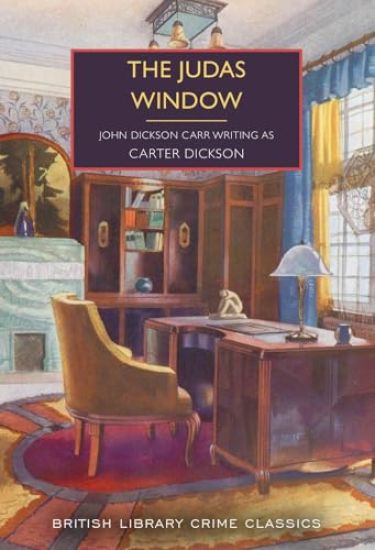
One of the greatest locked-room murder mysteries of all time, hailing from 1938, returns to baffle a new bevy of armchair detectives. James Answell, visiting his father-in-law Avery Hume in his locked study, has the misfortune to wake up from a drugged-Whisky swoon to find his host dead, skewered with an arrow. He is, of course, prime suspect. After setting up this devilish scenario, unravels an ingenious courtroom thriller, in which the razor-sharp amateur detective (and barrister) Sir Henry Merrivale stars in all of his outlandish glory – and the mystery of the ‘Judas Window’ is revealed.
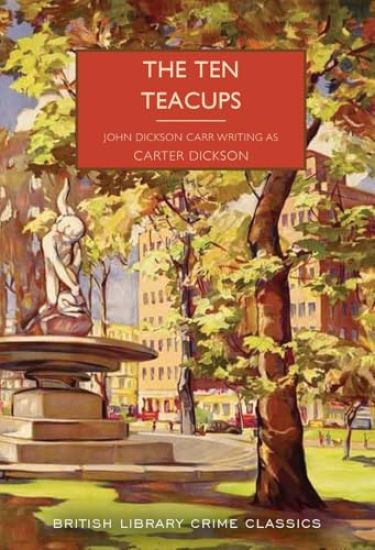
"There will be ten teacups at number 4, Berwick Terrace, W. 8, on Wednesday, July 31, at 5 p.m. precisely. The presence of the Metropolitan Police is respectfully requested."Writing as Carter Dickson, the master of the locked room mystery John Dickson Carr returns to the Crime Classics series, pitching his series amateur detective Henry Merrivale against a seemingly watertight mystery: after the police are sent a note warning them about a forthcoming crime, a man is shot in a room on the top floor of a Kensington townhouse a house watched from all sides during the murder. Surely nobody could have gotten in or out? And yet the man is dead, and just like the last time the police received a note like this, there are ten teacups set out at the scene of the crime. H.M. is drawn to unravel this bizarre crime, as the mysterious significance of the ten teacups in murders past and present pushes the police to their limits.

Professor Charles Grimaud is found dead in his study just moments after his housekeeper watched him greet a mysterious visitor and welcome him into the room. Yet no sign of the murderer or murder weapon can be found. The housekeeper saw no one leave through the door and the snow outside the only window remains unblemished. An equally puzzling murder has occurred outside, in the middle of the street: The illusionist Pierre Fley was walking alone in a snow-covered cul-de-sac when witnesses heard someone shout "The second bullet is for you " followed by a gunshot. He is found dead, with the revolver that killed both Grimaud and himself by his side and no footprints in the surrounding snow but his own. It appears that both murders must have been committed by a specter?someone not only invisible but lighter than air. But if anyone can find a rational explanation, it is brilliant amateur sleuth Dr. Gideon Fell. In a 1981 survey of mystery experts, The Three Coffins (called The Hollow Man in the UK) was voted the best locked room mystery of all time. It is also celebrated for a scene in which Carr's iconic detective Gideon Fell delivers a speech expounding upon the dozens of methods and variations by which apparently impossible murders may be accomplished. Any fan of locked room mysteries and impossible crimes should consider this book required reading.
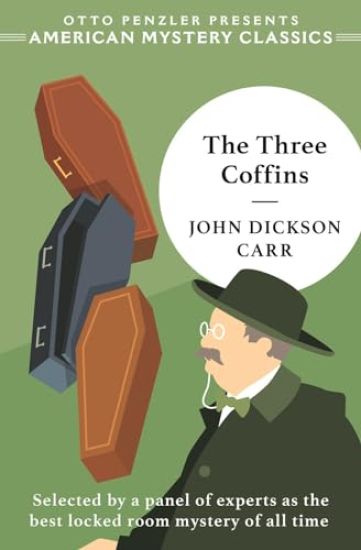
Professor Charles Grimaud is found dead in his study just moments after his housekeeper watched him greet a mysterious visitor and welcome him into the room. Yet no sign of the murderer or murder weapon can be found. The housekeeper saw no one leave through the door and the snow outside the only window remains unblemished. An equally puzzling murder has occurred outside, in the middle of the street: The illusionist Pierre Fley was walking alone in a snow-covered cul-de-sac when witnesses heard someone shout "The second bullet is for you " followed by a gunshot. He is found dead, with the revolver that killed both Grimaud and himself by his side and no footprints in the surrounding snow but his own. It appears that both murders must have been committed by a specter?someone not only invisible but lighter than air. But if anyone can find a rational explanation, it is brilliant amateur sleuth Dr. Gideon Fell. In a 1981 survey of mystery experts, The Three Coffins (called The Hollow Man in the UK) was voted the best locked room mystery of all time. It is also celebrated for a scene in which Carr's iconic detective Gideon Fell delivers a speech expounding upon the dozens of methods and variations by which apparently impossible murders may be accomplished. Any fan of locked room mysteries and impossible crimes should consider this book required reading.
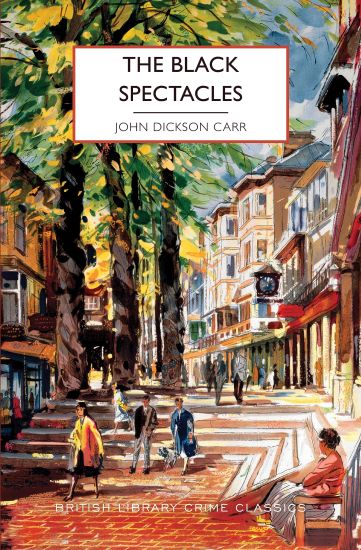
Everything you could ever want in a Golden Age of Detective Fiction novel. -- BooklistAlso known by its US title The Problem of the Green Capsule, this classic novel is widely regarded as one of John Dickson Carr's masterpieces and remains among the greatest impossible crime mysteries of all time.A sinister case of deadly poisoned chocolates from Sodbury Cross's high street shop haunts the group of friends and relatives assembled at Bellegarde, among the orchards of 'peach-fancier' Marcus Chesney. To prove a point about how the sweets could have been poisoned under the nose of the shopkeeper, Chesney stages an elaborate memory game to test whether any of his guests can see beyond their 'black spectacles'; that is, to see the truth without assumptions as witnesses.During the test - which is also being filmed - Chesney is murdered by his accomplice, dressed head to toe in an 'invisible man' disguise. The keen wits of Dr, Gideon Fell are called for to crack this brazen and bizarre murder committed in full view of an audience.
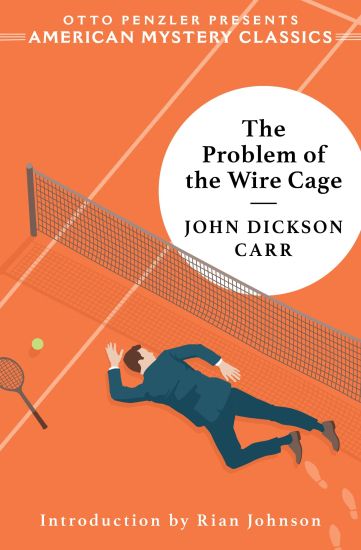
John Dickson Carr is famous for his puzzling "impossible crime" plots, in which corpses are discovered in scenarios that seem to lack any logical explanation, concealing clues as to how the murder was committed and how the body arrived in its current setting. Among all of Carr's ingenious crime scenes, the present case is one of his best known: a dead man is found strangled in the middle of a clay tennis court, just after a storm. In the damp dirt, there is one set of footsteps--his own--leading back to the grass; the court is otherwise untouched. There are no trees above from which the body may have fallen and no other visible means by which it may have been transported to its final resting place. Before determining the perpetrator of the strangulation, the local authorities are first confronted by the utter implausibility of the location--two interlocking questions puzzling enough to stump even the most seasoned inspector. The bafflement is reaching a harried volley by the time amateur sleuth Dr. Gideon Fell gets involved, but he soon shows that the knotted plot is no match for his deductive powers. Before he can serve up a dazzling explanation of whodunnit, though, Fell will have to sort through a confounding set of clues in search of a diabolical killer and a bizarre murder method. Reissued for the first time this century, The Problem of the Wire Cage is an atmospheric and amusing Golden Age mystery with a memorable puzzle at its center. It's sure to please long-time fans of John Dickson Carr and is also a great entry point into his beloved Gideon Fell series.
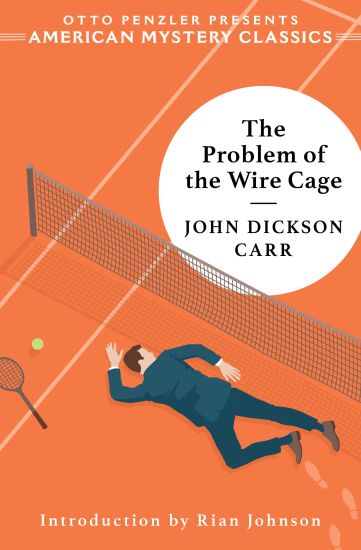
John Dickson Carr is famous for his puzzling "impossible crime" plots, in which corpses are discovered in scenarios that seem to lack any logical explanation, concealing clues as to how the murder was committed and how the body arrived in its current setting. Among all of Carr's ingenious crime scenes, the present case is one of his best known: a dead man is found strangled in the middle of a clay tennis court, just after a storm. In the damp dirt, there is one set of footsteps--his own--leading back to the grass; the court is otherwise untouched. There are no trees above from which the body may have fallen and no other visible means by which it may have been transported to its final resting place. Before determining the perpetrator of the strangulation, the local authorities are first confronted by the utter implausibility of the location--two interlocking questions puzzling enough to stump even the most seasoned inspector. The bafflement is reaching a harried volley by the time amateur sleuth Dr. Gideon Fell gets involved, but he soon shows that the knotted plot is no match for his deductive powers. Before he can serve up a dazzling explanation of whodunnit, though, Fell will have to sort through a confounding set of clues in search of a diabolical killer and a bizarre murder method. Reissued for the first time this century, The Problem of the Wire Cage is an atmospheric and amusing Golden Age mystery with a memorable puzzle at its center. It's sure to please long-time fans of John Dickson Carr and is also a great entry point into his beloved Gideon Fell series.
'It almost seemed that the murder, if it was a murder, must have been committed by someone who could rise up unsupported in the air...' When Miles Hammond is invited to a meeting of the Murder Club in London, he is met instead with just two other guests and is treated to a strange tale of an impossible crime in France from years before; the murder of a man on a tower with only one staircase, under watch at the time at which the murder took place. With theories of levitating vampires abounding, the story comes home to Miles when he realises that the librarian he has just hired for his home is none other than Fay Seton, a woman whose name still echoes from the heart of this bizarre and unsolved murder of the past. First published in 1946, in later years Carr considered this novel one of his finest works. It shows the masterful author at the height of his powers, boasting an ingenious plot delivered with an astounding pace and striking characters including none other than the great detective, Dr Gideon Fell.
" John Dickson Carr] is the supreme conjuror; the king of the art of misdirection...once you begin a book of his, you simply cannot put it down."--Agatha ChristieFirst published in 1942, this reissue is one of Carr's most tense and enjoyable game of cat and mouse pitting detective Gideon Fell against the "chief" suspect.When police arrive at Justice Ireton's holiday bungalow to find a man killed by gunshot and the high court justice brandishing a pistol, the case seems as straightforward as it is scandalous. But, with physical evidence that doesn't add up, the justice's vehement denial of wrong doing, and recent events in his daughter's love life turns the deceptively simple case on its head.Stumped, the local force calls in the larger-than-life sleuth Dr. Gideon Fell, who just yesterday contended with Ireton over a brutally challenging game of chess. With Fell and the judge now facing off as detective and suspect, a new battle of wits begins in this fiendishly plotted masterclass of the mystery genre.
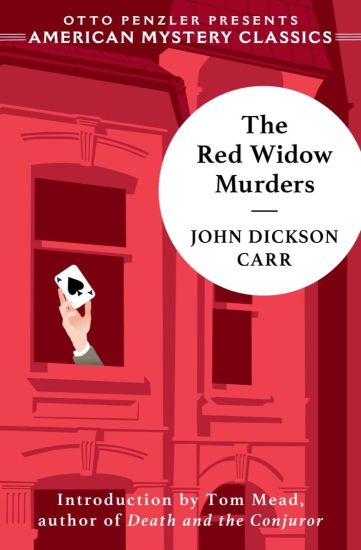
They say that Lord Mantling's mansion is haunted -- at least, one room of it is. Known as the Red Widow's Chamber, the now-sealed quarters once housed the wife of a guillotine operator in the French Revolution, and, since her passing, have been host to a century of unsolved horrors, including the death of a man in 1802, the death of a child in 1895, and a number of mysterious mortalities in the years in between.Now, in 1935, eight men and women join at the manor for a sinister experiment to determine the truth behind the haunting once and for all: they each draw a card, and whoever pulls the Ace of Spades must spend a night in that terrifying room. But the challenge turns fatal when the man selected for the task is found poisoned the next morning when the doors are opened. The locked room was guarded all night, so nobody could have entered or escaped; what's more, the deadly toxin could only have entered through a break in the skin, but no wounds were discovered on the body.Is this evidence, at last, of a nefarious spirit at work, or of a diabolical and ingenious killer? Only Sir Henry Merrivale, called in to take note of the night's proceedings, will be able to examine the clues and deduce the truth.
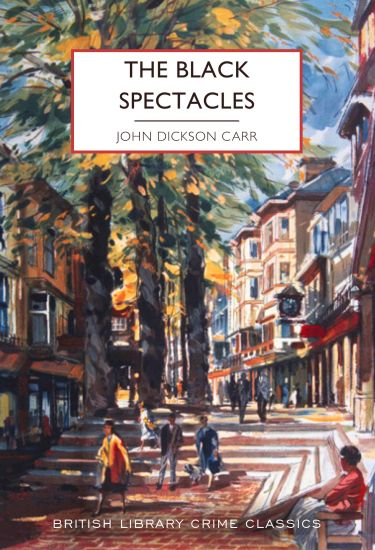
Also known by its US title The Problem of the Green Capsule, this classic novel is widely regarded as one of John Dickson Carrâ??s masterpieces and remains among the greatest impossible crime mysteries of all time.

They say that Lord Mantling's mansion is haunted -- at least, one room of it is. Known as the Red Widow's Chamber, the now-sealed quarters once housed the wife of a guillotine operator in the French Revolution, and, since her passing, have been host to a century of unsolved horrors, including the death of a man in 1802, the death of a child in 1895, and a number of mysterious mortalities in the years in between.Now, in 1935, eight men and women join at the manor for a sinister experiment to determine the truth behind the haunting once and for all: they each draw a card, and whoever pulls the Ace of Spades must spend a night in that terrifying room. But the challenge turns fatal when the man selected for the task is found poisoned the next morning when the doors are opened. The locked room was guarded all night, so nobody could have entered or escaped; what's more, the deadly toxin could only have entered through a break in the skin, but no wounds were discovered on the body.Is this evidence, at last, of a nefarious spirit at work, or of a diabolical and ingenious killer? Only Sir Henry Merrivale, called in to take note of the night's proceedings, will be able to examine the clues and deduce the truth.