

Kirjailija
John Dillon
Kirjat ja teokset yhdessä paikassa: 38 kirjaa, julkaisuja vuosilta 1991-2025, suosituimpien joukossa Ahua's Messenger. Vertaile teosten hintoja ja tarkista saatavuus suomalaisista kirjakaupoista.
38 kirjaa
Kirjojen julkaisuhaarukka 1991-2025.
Philo of Alexandria, On the Life of Abraham
Ellen Birnbaum; John Dillon
Society of Biblical Literature
2025
pokkari

The Pleasures of a Single Life, Or, The Miseries of Matrimony
Edward Ward; John Pomfret; John Dillon
Anson Street Press
2025
pokkari
How does a school of thought, in the area of philosophy, or indeed of religion, from roots that may be initially open-ended and largely informal, come to take on the features that later mark it out as distinctive, and even exclusive? That is the theme which is explored in this book in respect of the philosophical movement known as Platonism, stemming as it does from the essentially open-ended and informal atmosphere of Plato's Academy. John Dillon focuses on a number of key issues, such as monism versus dualism, the metaphysical underpinnings of ethical theory, the theory of Forms, and the reaction to the Sceptical 'deviation' represented by the so-called 'New Academy'. The book is written in the lively and accessible style of the lecture series in Beijing from which it originates.





God's creation is intricate, delicate, magnificent, colorful, majestic, surprising, peaceful, powerful, awe-inspiring, and so much more God loves us so much that he gave his only Son to die on a cross. Jesus willingly accepted God's punishment for our sins, so that we, through faith, might have eternal life with Him. During Jesus's triumphal entry into Jerusalem, the crowds shouted (Luke 19:38), "Blessed is the King who comes in the name of the Lord Peace in heaven and glory in the highest " But the religious leaders could not handle the people honoring Jesus, and so they asked him to correct them. But Jesus said, "I tell you, if these were silent, the very stones would cry out" (Luke 19:40). In this book, John Dillon combines his incredible travel photography with biblical principles and insights from Scripture to point people to God. Each picture will help you appreciate God's creativity and love, and encourage you to worship him, knowing that there is coming a day when God will call an end to this present age. At that time, there will be people in Christ from all races gathered together singing in one voice. This will be history's greatest worship experience
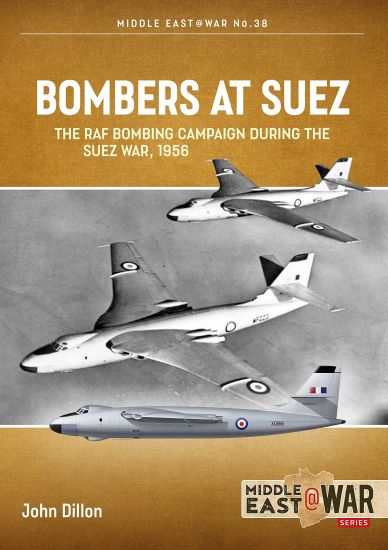
In October 1956 the British government, together with the French and Israelis, launched an attack on Egypt in response to President Nasser's nationalization of the Suez Canal. The agreement between these three governments, the Sèvres Protocol, was a low point in British diplomacy and a factor in the ending of Prime Minister Eden's political career. The military commanders had to plan for and launch Operation Musketeer, some 2,000 miles from the UK, while their political masters gave them only limited information on the arrangement made with France and Israel. The RAF squadrons allocated to the operation came from the UK and Germany where their jet bombers, Canberras and Valiants, were intended for nuclear war against the Warsaw Pact countries rather than conventional war with Second World War bombs in a desert environment. This account uses Cabinet Minutes, Squadron Operation Record Books, reports written by the Commander-in-Chief and personal accounts by aircrew who flew over Egypt, to detail the involvement of the RAF. When Anthony Eden took the decision to launch Operation Musketeer the RAF did not have the forces required in the Mediterranean. At short notice, squadrons had to train for high level, visual bombing using techniques that would have been familiar to Lancaster crews in the Second World War. Also, the navigation aids fitted in the bombers were those required for the European theatre, not the Egyptian desert. The RAF's primary role was to neutralize the Egyptian Air Force by destroying aircraft and denying the EAF the use of its airfields. The bombing accuracy, as the book details, was not good but the RAF did what was asked of them and effectively removed the EAF from the battle space. If the weather had not been so good and if the EAF had been a more determined adversary, Operation Musketeer would not have come to the same successful conclusion, militarily. From the political point of view, the British involvement in Suez was a disaster. It took place at the same time as a presidential election in America and the Russian invasion of Hungary. The Anglo-French intervention and their duplicity at Sèvres came in for international condemnation and led directly to American pressure on the pound.

The Lockdown Papers is a miscellany of satire, reflection and analysis of Irish life over five decades from academic and columnist John Dillon. When Ireland went into lockdown in March 2020, the author availed of the down time provided to compile a selection of his social and political essays, ranging from his first interview with Kenya's Jomo Kenyatta in 1963 to his take on the Greek financial crisis in 2012.Mainly taken from the pages of national newspapers for which he wrote over five decades, it also contains more philosophical reflections and personal essays that deliver a singular and often mischievous view of life that makes this compendium both thought provoking and amusing.A plum read for anybody stuck in 2021's extended Covid lockdown, the author looks back at former dark times in Ireland and gives the reader a fair few laughs along the way. In it, you'll read his irreverent thoughts on GUBU, the various Tribunals, the Right to Life, fatherly bishops and many more issues that fired Irish passions in the eighties and nineties. John Dillon is Regius Professor of Greek (Emeritus) in Trinity College Dublin. Prior to that, after graduating from Oxford, he spent some years in Ethiopia, and was a member of the Classics Department of the University of California, Berkeley until 1980. His chief area of interest is the philosophy of Plato and the tradition deriving from him, but he has always had an interest in more popular forms of writing as well, together with a weakness for practical politics. He has penned and edited many academic books, more about which can be found on his website. His most recent book is a second edition of his literary novel, The Scent of Eucalyptus, published in 2019 by 451 Editions. This is his first book of essays.
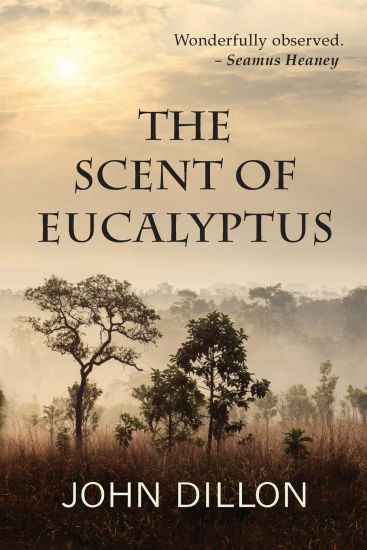
The Scent of Eucalyptusis a coming of age novel set in Ethiopia in the early 1960s. Luke La Touche, freshly graduated from Oxford, resists settling down immediately into a career and heads instead for Africa to seek new experiences and a reprieve from the anxieties of Cold War Britain. Taking a teaching position in Addis Ababa, where his influential cousin James provides all the right introductions, he finds experiences a plenty. He is embraced by an expat community in the last throes of the colonial tradition. He is smitten with Caroline, a fiercely independent British woman, and befriends the rambunctious Simon. Everything changes, however, as he is drawn into the world of Yohannis, a young aristocrat who is part of an emerging generation seeking to transform Africa forever.
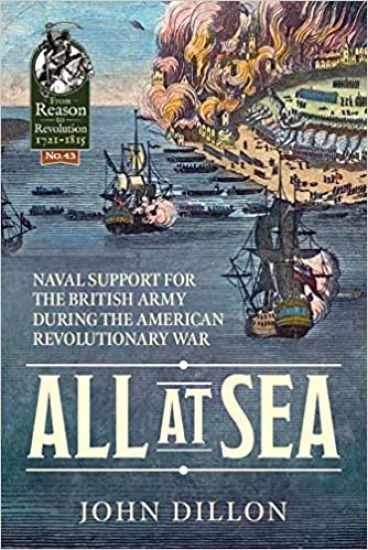
The American Revolutionary War was a conflict that Britain did not want, and for which it was not prepared. The British Army in America at the end of 1774 was only 3,000 strong, with a further 6,000 to arrive by the time that the conflict started in the spring of 1775. The Royal Navy, on which the British depended for the defence of its shores, trade and far-flung colonies, had been much reduced as a result of the economies that followed the Seven Years War. In 1775 the problem facing government ministers, the War Office, and the Admiralty was how to reinforce, maintain and supply an army (that grew to over 90,000 men) while blockading the American coast and defending Britain’s many interests around the world; a problem that got bigger when France entered the war in 1778. With a 3,000 mile supply line, taking six to eight weeks for a passage, the scale of the undertaking was enormous. Too often in military histories the focus is on the clash of arms, with little acknowledgement of the vital role of that neglected stepchild - logistics. In All At Sea, John Dillon concentrates on the role of the Navy in supporting, supplying and transporting the British Army during the war in America. Because of individual egos, other strategic priorities, and the number of ships available, that support was not always at the level the British public expected. However, without the navy the war could not have been fought at all.
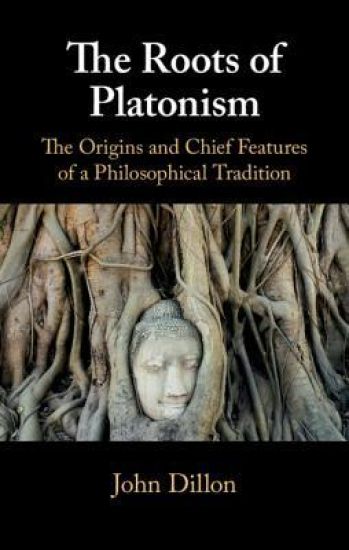
How does a school of thought, in the area of philosophy, or indeed of religion, from roots that may be initially open-ended and largely informal, come to take on the features that later mark it out as distinctive, and even exclusive? That is the theme which is explored in this book in respect of the philosophical movement known as Platonism, stemming as it does from the essentially open-ended and informal atmosphere of Plato's Academy. John Dillon focuses on a number of key issues, such as monism versus dualism, the metaphysical underpinnings of ethical theory, the theory of Forms, and the reaction to the Sceptical 'deviation' represented by the so-called 'New Academy'. The book is written in the lively and accessible style of the lecture series in Beijing from which it originates.
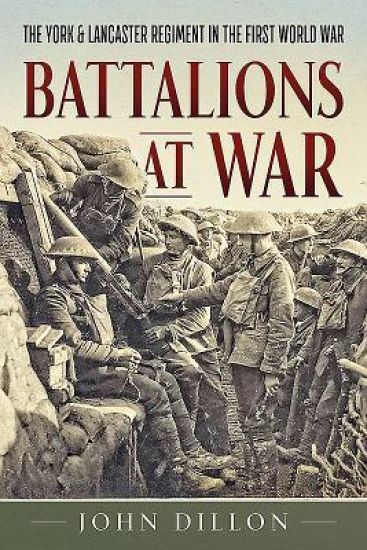
The First World War is history; the last survivors of that conflict are now all dead. Three generations on, public perceptions of the war are formed from books, films and photographs. In the last two decades, revisionist historians have attempted to correct the narrative left to us by the war poets and early diarists; a chronicle of sacrifice, futility and the ‘loss of a generation’ at the hands of the ‘bunglers’ and ‘butchers’. In spite of the efforts of these writers, commentators find it hard to move beyond the losses of 1 July 1916 and the mud of Passchendaele. The history of the war is ‘bookmarked’ by a series of iconic battles, from First Ypres, through the Somme, to Passchendaele and Cambrai and the final victory of the Hundred Days. When reading the accounts of the battles it is easy to overlook the very limited perspective of the individual soldiers. Battalions were moved in and out of the line every few days; most were involved in only a few of the battles, and then for only a short period and on a limited front. The troops who participated would have had little idea of how their unit’s contribution affected the outcome of a particular operation. The York and Lancaster Regiment had one or more battalion in all of the major battles of the war, but each saw only a small part of those operations. This book uses the war diaries of those battalions to trace the history of the conflict through the limited perspective of those whose horizon was little more than their 500 yards of trench line. Private Patrick Dillon (the author’s grandfather) served in three battalions of the regiment. The battalion war diaries show us how limited was the overview of the ordinary soldier and his regimental officers, there is little context to the actions in which they were involved beyond their immediate front and flanks. While this book does outline the broader operations in which the battalions were involved, it is not a ‘history of the war’, rather it is an account of how those units (often at short notice) were fed into the line of battle.
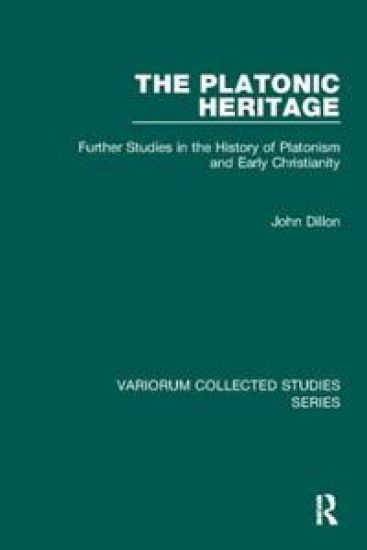
This third collection of articles by John Dillon covers the period 1996-2006, the decade since the appearance of The Great Tradition. Once again, the subjects covered range from Plato himself and the Old Academy, through Philo and Middle Platonism, to the Neoplatonists and beyond. Particular concerns evidenced in the papers are the continuities in the Platonic tradition, and the setting of philosophers in their social and cultural contexts, while at the same time teasing out the philosophical implications of particular texts. Such topics are addressed as atomism in the Old Academy, Philo's concept of immateriality, Plutarch's and Julian's views on theology, and peculiar features of Iamblichus' exegeses of Plato and Aristotle, but also the broader questions of the social position of the philosopher in second century A.D. society, and the nature of ancient biography.
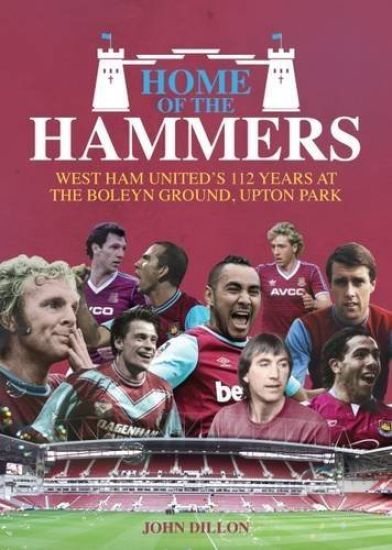
West Ham United's move to the new Olympic Stadium ended a 114-year stay at the Boleyn Ground. The spiritual home of some of football's greatest heroes: Bobby Moore, Billy Bonds, Trevor Brooking and Frank Lampard were just a few who made their name there, and revelled in its close-knit east London atmosphere. With the club anthem 'Bubbles' ringing around the stands, the Boleyn Ground had a raw flavour of its own. There were unforgettable afternoons fashioned by the club's two greatest managers, Ron Greenwood and John Lyall; fabulous nights under the lights, as the tightly-packed confines of the ground made it the most intense of stadiums; wonderful evenings competing against the best in Europe, such as beating Eintracht Frankfurt on a mud-heap of a pitch. Now it is gone, but the magic, the fervour, the triumphs, the disappointments and the special brand of humour which flourished there is captured here in all its glory. With full access to The Times archives and stunning photographic collection, lifelong Hammers fan John Dillon has penned the definitive history of the Home of the Hammers.
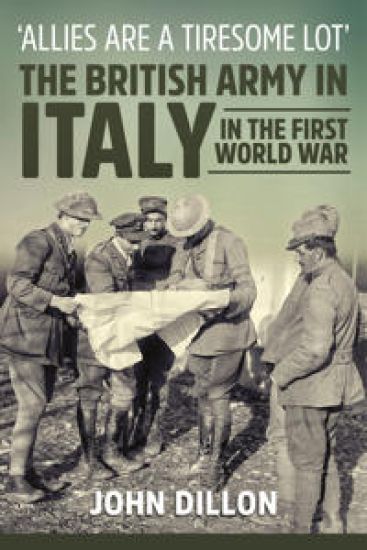
The year 2014 saw the start of four years of centenaries associated with the First World War. In the decades since that conflict ended there have been many books, plays, films and television programmes which have variously characterised the war as ‘senseless’ and ‘futile’. In more recent years revisionist historians have attempted to ‘correct’ this portrayal; it was a war that Britain had to be join to thwart German hegemonic ambitions, and British soldiers were not needlessly sacrificed on the wire of Flanders by Chateau Generals. Whether the reader prefers the Blackadder or the revisionist learning curve narrative of the war, it is invariably viewed through the prism of the Western Front. In so doing the war becomes a north-European event rather than one of global scope, with the mud of Passchendaele as the paradigm for the experience of all British soldiers. Although Italy lost as many men as Britain (as a percentage of the population), its perceived status as the least of the Great Powers may account for its near absence from British histories of the war. This book details the steps by which Italy became a belligerent alongside Britain and France, rather than remain an ally of Germany and Austria-Hungary within the Triple Alliance. However, having elected to fight with the Entente– but not declaring war on Germany until 1916 – Italy effectively waged a ‘separate’ war, much to the frustration of the Allies. Then, in October 1917, the Italians suffered a crushing defeat when the Austro-German assault at Caporetto smashed the Isonzo front; now the British and the French had to send divisions from Flanders to support their southern ally. Using official documents and reports, as well as the personal letters and accounts of individual soldiers, this book draws out the demonstrable differences in the experience of those Tommies who fought on the Western and Italian fronts. But Italian military and political leaders did not make it easy for their allies to work alongside them. In the words of Sir William Robertson,‘Allies are a tiresome lot’, and this account outlines why, for him and Sir Douglas Haig, their Latin ally fell into that camp. Following the war, and the coming to power of Mussolini and the Fascists, Italian military historians were perceived by their British colleagues to have over-emphasised their own country’s achievements, while playing down those of their British and French allies. This, and their alliance on the side of Germany in the Seconf World War, may also account for Italy’s near absence from British histories of the Great War. This book turns a spotlight on a theatre of the war away from the Western Front; it broadens the narrative beyond the mud and flat farmland of Flanders and recognises the experience of those who fought and fell so much closer to Venice than to Ypres.
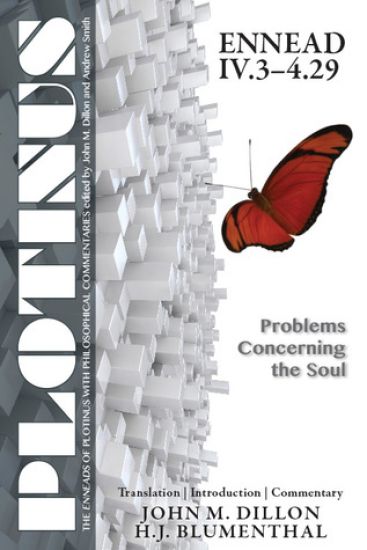
For Plotinus, the nature and status of the human soul is one of the central problems of philosophy. Ennead IV.3–4.29 constitutes his most penetrating enquiry into this topic, addressing the issues of the relation of the individual soul to the World Soul, the descent of the soul into body, its relations with that body, problems of personal identity and the nature of memory, sense perception, and the true seat of the emotions —many of which still have a resonance today.The treatise is an excellent example of Plotinus’ distinctive method of inquiry: not dogmatic (though he is no skeptic), but worrying away at questions until he has uncovered their complexities to the best of his ability. Such a work requires detailed commentary, such as is provided here, to tease out fully the fascinating convolutions of his thought.