Kirjojen hintavertailu. Mukana 12 595 353 kirjaa ja 12 kauppaa.
Kirjailija
John Dixon Hunt
Kirjat ja teokset yhdessä paikassa: 18 kirjaa, julkaisuja vuosilta 1989-2025, suosituimpien joukossa PWP Landscape Architecture. Vertaile teosten hintoja ja tarkista saatavuus suomalaisista kirjakaupoista.
John Dixon Hunt introduces PWP Landscape Architecture: Building Ideas with a discussion of how we read landscapes and, hence, how they are designed with the reader/client in mind and the historical implications of such efforts. Peter Walker, Gary Hilderbrand, and Gina Crandell trace the history of Peter Walker's various firms from the 1950s until 2000, and Jane Gillette discusses some recent projects in terms of using consultants to further design ideas. Twelve finished projects, seven works in progress, and three competitions, from roughly 2000 to 2015, demonstrate the firm's goals and achievements with an emphasis on the expansion of landscape architecture from the surrounds of buildings to self-sufficient entities that express the highest accomplishments of both ecological function and design.
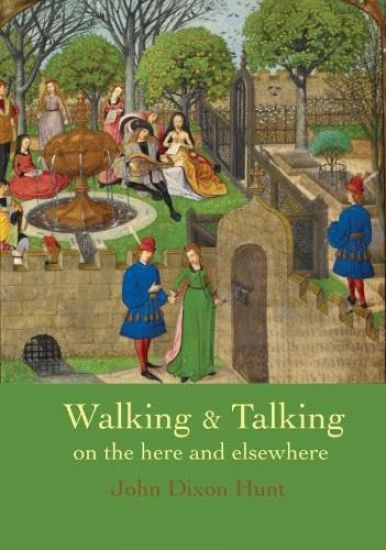
In Walking & Talking John Dixon Hunt explores the here of the earth beneath our feet and, in a hinterland of thought and conversation, the elsewhere of the mind. He takes us on multiple journeys to both worlds in the company of great writers and artists: John Evelyn on his ascent of a lively Vesuvius in 1645; Daniel Defoe on his disappointing visit to Buxton and the Devil’s Arse; John Gay and William Hogarth in London; and Charles Dickens and the ‘inexhaustible food for speculation’ of Victorian street-life. In pursuit of elsewhere, the author follows mysterious, sometimes hidden paths (of the sort that native Australians call ‘dream tracks’), to reveal more malleable landscapes where walking indulges the mind as much as the body. It’s a place where landscape, poetry and thought cohere – sometimes literally in the sculpture of Ian Hamilton Finlay – where carefully plotted gardens invite the walker to enter a world of curated make-believe and city streets have as many stories as there are people. On wild Lakeland fells or in urban wandering, from the land of Wordsworth and Wainwright to the great wall of Teardrop Park by the site of New York’s twin towers, and from the great Picturesque parklands of England to a modern Devon garden of myth and metaphor, Walking & Talking is a beautifully illustrated companion to our simplest – and most complex – of pleasures.
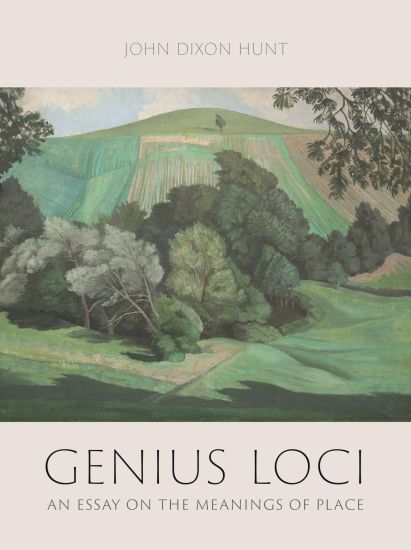
For Romans, genius loci was literally ‘the genius of the place’, the presiding divinity who inhabited a site and gave it meaning; while we are less attuned to divinity today, we still sense that a place has significance. In this book, eminent garden historian John Dixon Hunt explores genius loci in many settings, including contemporary land art, the paintings of Paul and John Nash, the work of the travel writers such as Henry James, Paul Theroux and Lawrence Durrell on Provence, Mexico and Cyprus, and landscape architects who invent new meanings for a site.This is a nuanced, thoughtful exploration of how places become more significant to us through the myriad ways we see, talk about and remember them.
English art critic John Ruskin was one of the great visionaries of his time, and his influential books and letters on the power of art challenged the foundations of Victorian life. He loved looking. Sometimes it informed the things he wrote, but often it provided access to the many topographical and cultural topics he explored – rocks, plants, birds, Turner, Venice, the Alps.In The Art of Ruskin and the Spirit of Place John Dixon Hunt explores for the first time what Ruskin drew, rather than wrote, offering a new perspective on Ruskin’s visual imagination. Through analysis of more than 150 drawings and sketches, he shows how Ruskin’s art shaped his writings, his thoughts and his sense of place.
The work of English writer, gardener and diarist John Evelyn is of great historical value. His most famous work, his Diary, which he kept throughout his life, is considered an invaluable source of information on more than fifty years of social, cultural, religious and political life in seventeenth-century England. But Evelyn's work is often overshadowed by the literary contributions of his contemporary and friend Samuel Pepys. John Dixon Hunt's biography takes a fresh look at the life and work of one of England's greatest diarists, focusing particularly on the seventeenth-century notion of 'domesticity'. He explores Evelyn's domestic life and, more importantly, the domestication of foreign ideas and practices in England. From his early, extensive European travels, Evelyn imbibed ideas above all on the management of estate design and developed an understanding of how to explore English topography. The book puts Evelyn's great accomplishment - making European garden art available in the UK - into context alongside a range of social and ethical ideas. Illustrated with visual material from Evelyn's time and often from his own pen, this is an ideal introduction to a seventeenth-century figure of huge importance in early modern Britain.
Stowe isn’t a garden of flowers or shrubs; it’s a garden of ideas. This important new collection of essays and artwork brings together ideas from some of the leading thinkers on landscape design, exploring the gardens at Stowe as a site of conflict between order and disorder. At Stowe, 250 acres of parkland offer a complex web of views, pathways, statues, inscriptions, urns and ideas. Unlike its French floricultural precursors, Stowe presents sudden shifts of scene, abrupt revelations, as well as spots at which to stop to absorb the visual effect. There is natural beauty in the gardens of Stowe, but they serve a larger purpose than to please the eye. Beneath this facade of bucolic idyll lies a deeply important suggestion of man’s relationship to nature. Accompanying an exhibition of historic and contemporary art at Stowe House, The Garden at War explores the gardens at Stowe, built by a general, as a site of perpetual conflict in which the preconditions of destruction and creation are inescapable. If nature is understood to be original, then the garden is an ordered but un-orderly condition; a re ordered vision of the natural order, a vision of nature disciplined by human action in a attempt to advance and yield control. Starting with works by the preeminent neoclassical painters Nicolas Poussin and Claude Lorrain – whose distinct pictorial visions gave rise to an unmistakable relationship between the garden, the viewer and the natural world – the publication brings together an arrangement of interpretations and theories exploring metaphors and meanings within the very practice of gardening itself. An introduction by the pre-eminent critic Stephen Bann and an essay by the foremost garden historian John Dixon Hunt lead on to newly commissioned illustrations by artist Gary Hincks, a previously unpublished interview with the Scottish conceptual artist and gardener Ian Hamilton Finlay, and a new discussion of conflict in the work of Richard Long.
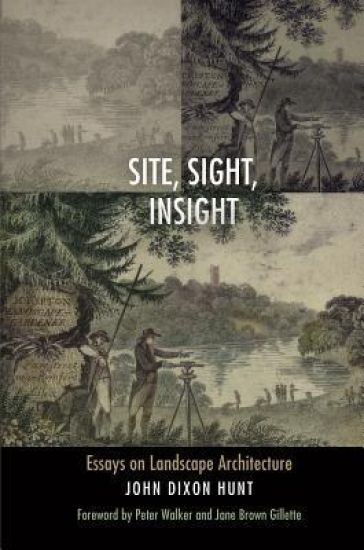
Site, Sight, Insight presents twelve essays by John Dixon Hunt, the leading theorist and historian of landscape architecture. The collection's common theme is a focus on sites, how we see them and what we derive from that looking. Acknowledging that even the most modest landscape encounter has validity, Hunt contends that the more one knows about a site and one's own sight of it (an awareness of how one is seeing), the greater the insight. Employing the concepts, tropes, and rhetorical methods of literary analysis, he addresses the problem of how to discuss, understand, and appreciate places that are experienced through all the senses, over time and through space. Hunt questions our intellectual and aesthetic understanding of gardens and designed landscapes and asks how these sites affect us emotionally. Do gardens have meaning? When we visit a fine garden or designed landscape, we experience a unique work of great complexity in purpose, which has been executed over a number of years-a work that, occasionally, achieves beauty. While direct experience is fundamental, Hunt demonstrates how the ways in which gardens and landscapes are communicated in word and image can be equally important. He returns frequently to a cluster of key sites and writings on which he has based much of his thinking about garden-making and its role in landscape architecture: the gardens of Rousham in Oxfordshire; Thomas Whately's Observations on Modern Gardening (1770); William Gilpin's dialogues on Stowe (1747); Alexander Pope's meditation on genius loci; the DÉsert de Retz; Paolo Burgi's Cardada; and the designs by Bernard Lassus and Ian Hamilton Finlay.
While some gardens are built with a respect towards tradition, others forge new, innovative ways to carve out a space for respite in nature. They can reflect the priorities of modern society, bring new ideas and materials into the world, or seek the reinvention of ancient cultures. In The Making of Place John Dixon Hunt explores the variety of gardens and landscapes found throughout the world today. From towering sculptures strewn amidst green grass to hilly trails crowded with runners, Hunt offers a unique look at the history and makeup of both frequented and hidden gardens. The modern botanical gardens, small parks, university campuses and vernacular gardens the author examines are not centralized, but in fact showcase the differences between cultures and countries around the world, including the United Kingdom, France, Germany, the United States, China and Australia. The Making of Place offers an accessible tour of modern garden landscapes that gives non-designers as well as specialists a new view of the created outdoor world around them.The book will appeal to all those interested in the history and significance of the modern garden and landscape, as well as specialists in the field of garden history and design.
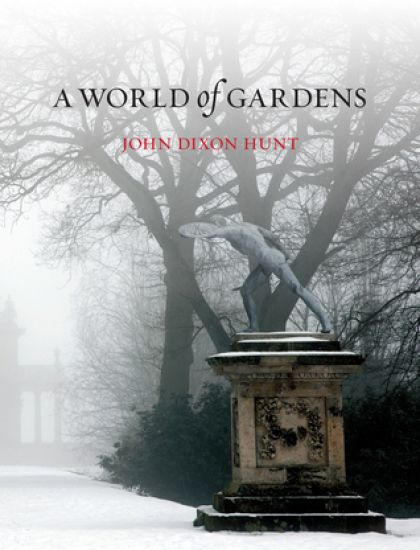
A Japanese garden is immediately distinct to the eye from the traditional gardens of an English manor house, just as the manicured topiaries of Versailles contrast with the sharp cacti of the American Southwest. Though gardening is beloved the world over, the style of gardens themselves varies from region to region, determined as much by culture as climate. In this series of illustrated essays, John Dixon Hunt takes us on a world tour of different periods in the making of gardens. Hunt shows here how cultural assumptions and local geography have shaped gardens and their meaning. He explores our continuing responses to land and reworkings of the natural world, encompassing a broad range of gardens, from ancient Roman times to early Islamic and Mughal gardens, from Venetian gardens to Chinese and Japanese gardens, as well as the invention of the public park and modern landscape architecture. A World of Gardens looks at key chapters in garden history, reviewing their significance in past and present and tracing the recurrence of different themes and motifs in the design and reception of gardens throughout the world. A World of Gardens celebrates the idea that similar experiences of gardens can be found in many different times and places, including sacred landscapes, scientific gardens, urban gardens, secluded gardens and symbolic gardens. Well illustrated and wide-ranging, this book is a treasure trove of ideas and inspiration.
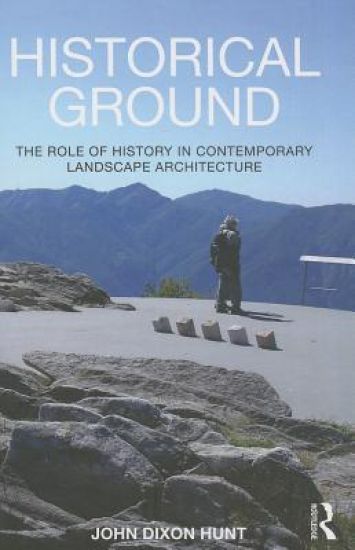
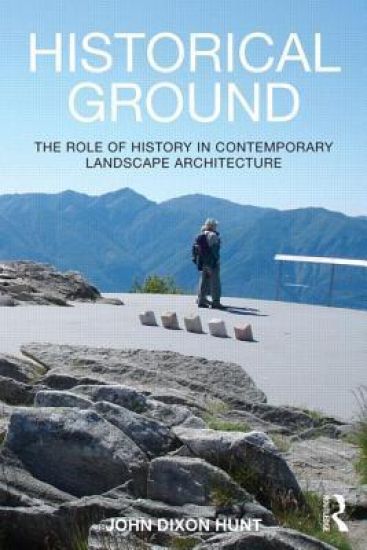
Historical Ground investigates how contemporary landscape architecture invokes and displays the history of a site. In the light of modernism’s neglect of history, these essays by John Dixon Hunt explore how, in fact, designers do attach importance to how a location manifests its past. The process involves, on the one hand, registering how geography, topography and climate determine design and, on the other, how history discovered or even created for a site can structure its design and its reception. History can be evident, exploited, invented or feigned – it can be original or a new history which becomes part of how we view a place. Landscapes discussed in this book come from across Europe and the United States, highlighting the work of designers who have drawn from site history in their design, or have purposefully created their own historical account of the location. The author explores not just the historical past, but how new ground can be given a life and a future.
Historical Ground investigates how contemporary landscape architecture invokes and displays the history of a site. In the light of modernism’s neglect of history, these essays by John Dixon Hunt explore how, in fact, designers do attach importance to how a location manifests its past. The process involves, on the one hand, registering how geography, topography and climate determine design and, on the other, how history discovered or even created for a site can structure its design and its reception. History can be evident, exploited, invented or feigned – it can be original or a new history which becomes part of how we view a place. Landscapes discussed in this book come from across Europe and the United States, highlighting the work of designers who have drawn from site history in their design, or have purposefully created their own historical account of the location. The author explores not just the historical past, but how new ground can be given a life and a future.
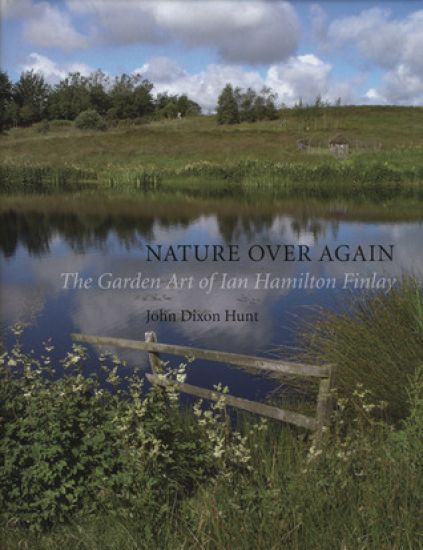
Though Ian Hamilton Finlay's (1925-2006) work "Little Sparta" is, according to Sir Roy Strong, 'the most important garden made in Britain since 1945', his influence - and work - is found worldwide. "Nature Over Again" reveals the story behind the majority of Finlay's renowned garden installations, and is the first study to examine his garden designs and 'interventions' in a consequential way. An accomplished Scottish poet, writer, artist and gardener, Finlay infused his garden designs with a distinct aesthetic philosophy and poetic sensibility.John Dixon Hunt situates his analysis of Finlay's gardens in the context of that broader philosophy and poetic work, drawing on Finlay's books, prints and other written reflections about the art and practice of garden design. From the Max Planck Institute in Stuttgart to the Serpentine Gallery in London to the University of California at San Diego campus, the book documents how Finlay built an oeuvre of international renown, and ultimately argues that Finlay's innovations are best understood in the context of the long tradition of European gardens. Copiously illustrated, "Nature Over Again" brings the work of this distinguished Modernist to vivid life, making it an essential read for horticulturists, landscape designers and historians alike.
Most historical and critical discussions of gardens focus on their design. What happens after the completion of the design, however, is largely ignored, which neglects a much larger part of the site's interest and potential. For gardens, John Dixon Hunt contends, are experienced, often by a succession of visitors at different times and often from different cultures; this experience, though determined by the original design and its subsequent modifications, also augments the site's potentialities, and this "afterlife" of gardens comes to enhance the original moment of creation. One way of exploring the experience of designed landscapes is to adapt literary reception theory to the study of gardens. Hunt argues that such an approach via the reception or experience of gardens enlarges how we should understand their significance and meanings. It is generally assumed that the experience of gardens became a prime ingredient of late eighteenth-century landscapes-picturesque literature especially highlighted how visitors responded to their surroundings, reading inscriptions and recognizing the significance of carefully placed architectural items or fabriques. But there is considerable evidence for a much earlier interest in how experience came to constitute an essential aspect of a site beyond the intentions of the original designer or patron. Among other early examples, Hunt examines the book Hypnerotomachia Polifili (1499) to show how its protagonist is shown exploring and negotiating a series of strange and baffling landscapes. Through other inquiries-particularly into the role of movement in such different situations as Versailles, and Chiswick or along modern highways-The Afterlife of Gardens provides a fresh approach to the study of designed landscapes that goes beyond their production and into how they exist and are understood by their users. In this ambitious new book the author shows how the complete history of a garden must extend beyond the moment of its design and the aims of the designer to record its subsequent reception. He raises questions about the preservation of historical sites, and provides lessons for the contemporary designer, who may perhaps be more attentive to the life of a work after its design and implementation. This book will interest all who have a professional interest in gardens, as well as the wide general audience for gardens and landscapes of past and present.
This is a ground-breaking addition to garden history that considers the way that gardens are experienced, rather than how they were created; it includes many illustrations of gardens from England, Europe, North America and the Far East, including Versailles, Stowe, Moulin-Joli and Yuan Ming Yuan.
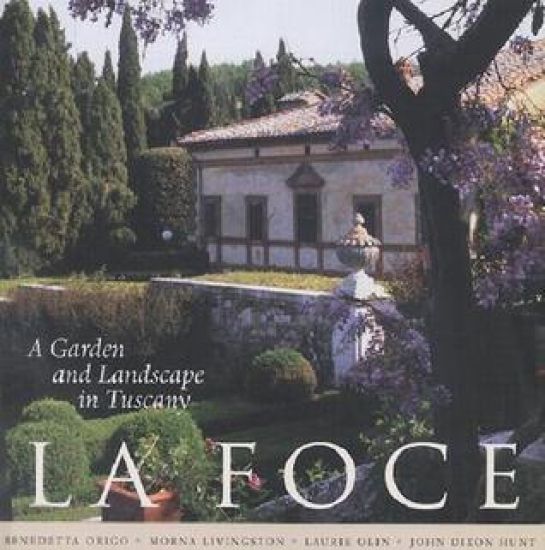
The gardens and estate of La Foce constitute one of the most important and best kept early twentieth-century gardens in Italy. Amid 3,500 acres of farmland in the countryside near Pienza, with sweeping views of the Tuscan landscape, La Foce was the childhood dream garden of the late writer Marchesa Iris Origo. Passionate about the order and symmetry of Florentine gardens, Origo and her husband, Antonio, purchased the dilapidated villa in 1924, soliciting the help of English architect and family friend Cecil Pinsent to reawaken the natural magic of the property. Pinsent designed the structure of simple, elegant, box-edged beds and green enclosures that give shape to the Origos' shrubs, perennials, and vines, and created a garden of soaring cypress walks, native cyclamen, lawns, and wildflower meadows. It is, by all accounts, a remarkable achievement. Today the garden is a place of unusual and striking beauty, a green oasis in the barren Siena countryside. Situated in the Val d'Orcia, a wide valley in southeastern Tuscany that seems to exist on a larger, wilder scale than the rest of the Tuscan landscape, it is run by Benedetta and Donata Origo, and is open to the public one day a week. La Foce: A Garden and Landscape in Tuscany is a contemplative, multifaceted study of the house, gardens, and estate of La Foce. It includes a historical essay and memoir by the daughter of La Foce's creators, Antonio and Iris Origo, along with photographs, sketches, and a critical analysis of the gardens. The volume not only focuses on the beauty of the gardens themselves and their indisputable merit as fascinating works of landscape architecture but also sees them within the context of both the larger Tuscan topography and the wider landscape of geography and history. The book will be a delight to armchair travelers, trade and landscape architects, gardeners, and those interested in Tuscan culture.
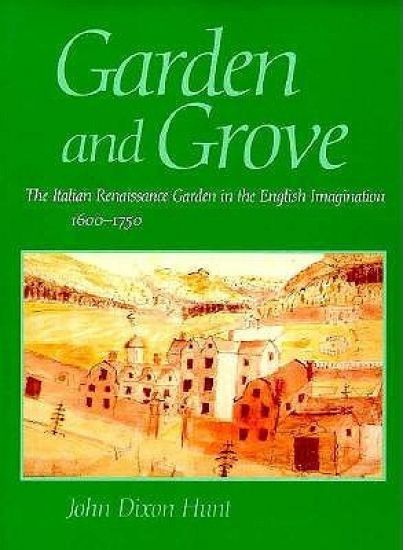
Garden and Grove is a pioneering study of the English fascination with Italian Renaissance gardens. John Dixon Hunt studies reactions of English visitors in their journals and travel books to the exciting world of Italian gardens: its links with classical villas, with Virgil and farming, with Ovid and metamorphosis, its association with theater, its variety, its staged debates between art and nature. Then he looks at what English visitors made of these Italian garden experiences upon their return home and at how they created Italianate gardens on their estates, on their stages, and in their poems. With a wealth of literary and visual materials previously untapped, Hunt provides a new history of an intriguing and vital phase of English garden history. Not only does he suggest the centrality of the garden as a focus for many social, aesthetic, political, and philosophical ideas but he argues that the so-called English landscape garden before "Capability" Brown, in the late eighteenth century, owed much to a long and continuing emulation of Italian Renaissance models.
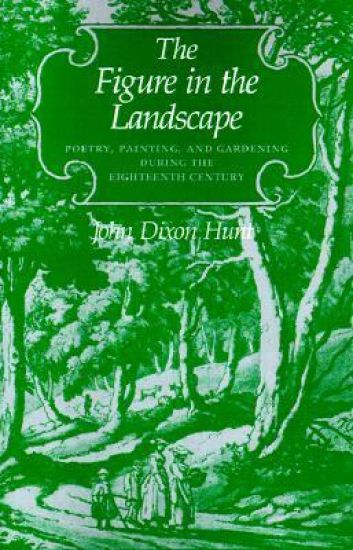
Deepens understanding of eighteenth-century aesthetics and poetry by delving into the psychology and changing designs of landscape gardens and their impact on poetic expression and painting. Bibliogs