Kirjojen hintavertailu. Mukana 12 595 353 kirjaa ja 12 kauppaa.
Kirjailija
John Elder
Kirjat ja teokset yhdessä paikassa: 21 kirjaa, julkaisuja vuosilta 1996-2026, suosituimpien joukossa Archipelago. Vertaile teosten hintoja ja tarkista saatavuus suomalaisista kirjakaupoista.
Andrew McNellie; Norman Ackroyd; John Brannigan; Moya Cannon; Mark Cocker; Peter Davidson; Roger Deakin; Tim Dee; David Douglas; Douglas Dunn; Terry Eagleton; John Eifion Jones; John Elder; Rose Ferraby; Barbara Greg; Ivor Gurney; Alexandra Harris; Seamus Heaney; Geoffrey Hill; Sally Huband; Roger Hutchinson; Mick Imlah; Kathleen Jamie; John Kerrigan; Philip Lancaster; David Lea; Angela Leighton; Gwyneth Lewis; Michael Longley; James Macdonald Lockhart; Robert Macfarlane; Angus Macmillan; Derek Mahon; Gail McNeillie
Archipelago is one of the most important and influential literary magazines of the last twenty years. Running to twelve editions, it was edited by Andrew McNeillie, with the assistance later of James McDonald Lockhart, and began as an attempt to reimagine the relationships between the islands of Ireland and Britain. Archipelago has brought together established and emerging artists in creative conversations that have transformed the study of islands, coasts and waterways. It journeys from the Shetlands to Cornwall, from the Aran Islands to the coast of Yorkshire, tracing the cultures of diverse zones through some of the best in contemporary writing about place and people. This collection gathers poetry, prose and visual art in clusters grouped around the Irish and British archipelago, with contributions from an array of significant artists. It includes newly commissioned work as well as an interview between Andrew McNeillie and Robert Macfarlane on the development of Archipelago across the years.
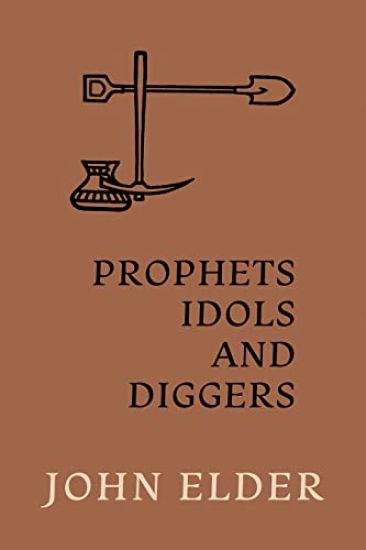
Prophets, Idols and Diggers, published in 1960, describes how the resources of modern science are used by the archeologist to reconstruct the life and times of the ancient world. It is a fascinating account of the way in which archeological discoveries confirm and support Biblical references to people, places and events.Since the discovery of the ancient civilizations of Babylon, Nineveh and Tyre, the science of Biblical archeology has assumed increased importance. Forgotten cities have been unearthed, contemporary records of Biblical events have been found and the uniqueness of Biblical revelation has been confirmed.Dr. Elder offers a rewarding reading experience to everyone interested in archeology, religion or the fabulous past. In reviewing the findings of archeology as they illuminate the Scriptures, Dr. Elder shows how science has enriched our understanding of passages once thought confusing, contradictory or obscure. Although much study remains to be done and doubtless many additional discoveries are to be made, the past is yielding up its secrets.
This book explains the foundational business skills you'll need to deliver business value and grow your career as an analyst or data scientist. Drawing on best practices, published research, case studies and personal anecdotes from two decades of industry experience, David Stephenson lays out a practical and concise overview of foundational skills related to Company, Colleagues, Storytelling, Expectations, Results and Careers--emphasizing how each topic relates to your unique position as an analytics professional within a larger corporation.From the introduction: "The six topics in this book-company, colleagues, communication (storytelling), expectations, results and careers-are covered in six sections. They are presented roughly in the order you'll need them during your career, with project leadership skills coming later in the book. The final topic, careers, will be relevant at all stages of your career, even as you pursue your first job as a data scientist.The first section, company, will help you work within a larger organization. Chapter one discusses how organizations generally view data scientists, why they hire them and what they expect from them. This chapter begins to explain how you as a data scientist can produce business value, a topic that is more fully developed in chapter ten. Chapter two describes how to relate to the diverse range of individuals within your organization. By understanding how various roles and functions differ in their goals and values, you will be better prepared to deliver valuable results to them.The second section, colleagues, covers interpersonal challenges that often present significant problems for data scientists-cultural misunderstandings, negotiating through disagreements, and office politics. Younger data scientists generally perceive these topics as less important, until the day when they suddenly find them extremely important.The third section, storytelling, covers principles and methods key to oral and visual presentations. This section describes how to clarify your message, which is easy in principle but difficult in practice, and how to produce clear slides, graphs and tables. It goes into detail on techniques for decluttering and drawing focus, leveraging principles such as Gestalt and preattentive processing. The two chapters in this section are perhaps the most immediately relevant for data scientists and will provide you with some very quick wins, as I've seen from the responses of my training participants.The fourth section, expectations, covers techniques for setting expectations, kicking off a project, and maintaining the trust of your stakeholders. In particular, I cover ways to build consensus at the start of a project and ways to avoid the common mistake of working hard to build a solution that no one wants to use.The fifth section, results, presents principles, techniques and case studies related to selecting the most beneficial data science projects. It then describes concepts and frameworks that will help you run those projects to successful completion, despite the shifting expectations and lack of clarity that are so prevalent in data science projects.The sixth and final section, careers, addresses questions I'm often asked by data scientists, such as how to choose between job opportunities, how to strengthen your CV, and even whether to start working independently as a freelance data scientist."
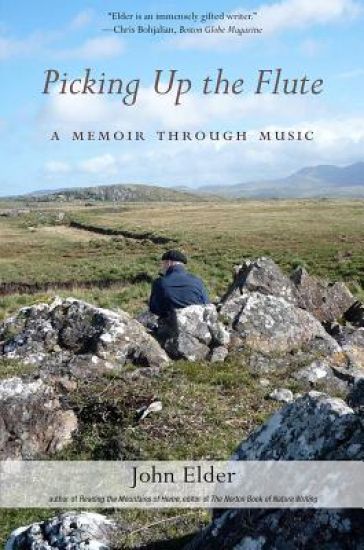
Picking Up the Flute sets to music a former professor’s musings on retirement, marriage, literature, and the natural world. From his home in historic Bristol, Vermont to Ireland’s Connemara coast, travel through John Elder’s exquisite topography and relish his explorations of nature, poetry, and geology. John Elder’s memoir through music is permeated by his unique combination of prose and learning how to play the Irish flute. Elder revisits his time teaching at Middlebury College and explores the next phase of retirement, utilizing texts and memories from his past, whose meanings echo with a new sound now. Picking Up the Flute is an interactive, multimedia memoir that immerses the reader in Elder’s provocative prose, while offering the ability to listen to his spirited playing on his website.
Learning Ruby has never been this fast and easy, or fun Veteran Codemy.com programmer John Elder walks you step by step through the ins and outs of Ruby Programming. Written for the absolute beginner, you don't need any programming experience to dive in and get started with this book. Follow along as John teaches you to set up a development environment and write your first program. You'll learn about Variables, Math, IF/THEN Statements, Array, Hashes, Loops, Methods and much more.By the end, you'll be well on your way to becoming a professional Ruby coder Build on your skills with practice exercises at the end of each chapter and build a math flashcard game using all the skills you've learned throughout the book. It really is this easy to learn Ruby *AUTHOR UPDATE: C9, the development environment we used in the book, was purchased by Amazon and is no longer accepting new users unless you sign up through my education account at Codemy.com/c9
Learning Ruby on Rails has never been this fast and easy, or fun Veteran Codemy.com programmer John Elder walks you step by step through the ins and outs of Rails for Web Development. Written for the absolute beginner, you don't need any programming experience to dive in and get started with this book. Follow along as John builds a Pinterest-style website from start to finish that allows people to sign up, log in and out, edit their profile, upload images to the database and style those images on the screen. By the end, you'll be well on your way to becoming a professional Ruby on Rails coder *AUTHOR UPDTE: C9, the development environment we used in the book, was purchased by Amazon and is no longer accepting new users unless you sign up through my education account at Codemy.com/c9
So Little Time is a revolving door of political activism, spirituality, nature, and humanity. It is a call to action, where urgency meets poetry in no uncertain terms, and asks, What hour are we in? Edited by poet, Irish and U. S. citizen, and Vermont activist, Greg Delanty, it takes its cue from the grassroots sensibility of Vermont, stripping down decades of unwavering ideals to arrive at an interpretive look at what it means to be 'Green' in an evolving world. A work of education and art as invigorating as the poets, teachers, and activists who inspired it, So Little Time addresses what it means to take up action for something as simple as good, healthy, and clean living. It stands on a fundamental set of questions: What are we looking at? What are we seeing? What's really there? Then asks, What's actually there? So Little Time is more than a coffee table book; rather it is a visual platform, a reflection of a state of mind-clear and focused at the center-that becomes something else around the edges. With a Foreword from John Elder, and poems that feature the work of Greg Delanty and a range of poetry selections, along with quotes from such environmentalists, as BIll McKibben, So Little Time is an interactive and interpretive book that will inspire, enrich, and a call to action in an urgent plea to stop global warming. The book merges poetry and quotes with stunning black and white photography by such artists as Mariana Cook, the last surviving disciple of Ansel Adams.
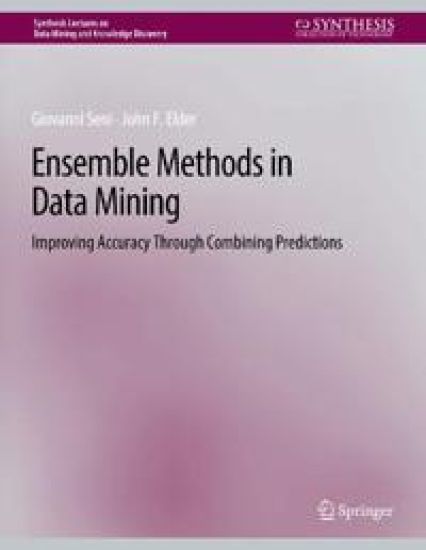
Ensemble methods have been called the most influential development in Data Mining and Machine Learning in the past decade. They combine multiple models into one usually more accurate than the best of its components. Ensembles can provide a critical boost to industrial challenges -- from investment timing to drug discovery, and fraud detection to recommendation systems -- where predictive accuracy is more vital than model interpretability. Ensembles are useful with all modeling algorithms, but this book focuses on decision trees to explain them most clearly. After describing trees and their strengths and weaknesses, the authors provide an overview of regularization -- today understood to be a key reason for the superior performance of modern ensembling algorithms. The book continues with a clear description of two recent developments: Importance Sampling (IS) and Rule Ensembles (RE). IS reveals classic ensemble methods -- bagging, random forests, and boosting -- to be special cases of a single algorithm, thereby showing how to improve their accuracy and speed. REs are linear rule models derived from decision tree ensembles. They are the most interpretable version of ensembles, which is essential to applications such as credit scoring and fault diagnosis. Lastly, the authors explain the paradox of how ensembles achieve greater accuracy on new data despite their (apparently much greater) complexity. This book is aimed at novice and advanced analytic researchers and practitioners -- especially in Engineering, Statistics, and Computer Science. Those with little exposure to ensembles will learn why and how to employ this breakthrough method, and advanced practitioners will gain insight into building even more powerful models. Throughout, snippets of code in R are provided to illustrate the algorithms described and to encourage the reader to try the techniques. The authorsare industry experts in data mining and machine learning who are also adjunct professors and popular speakers. Although early pioneers in discovering and using ensembles, they here distill and clarify the recent groundbreaking work of leading academics (such as Jerome Friedman) to bring the benefits of ensembles to practitioners. Table of Contents: Ensembles Discovered / Predictive Learning and Decision Trees / Model Complexity, Model Selection and Regularization / Importance Sampling and the Classic Ensemble Methods / Rule Ensembles and Interpretation Statistics / Ensemble Complexity
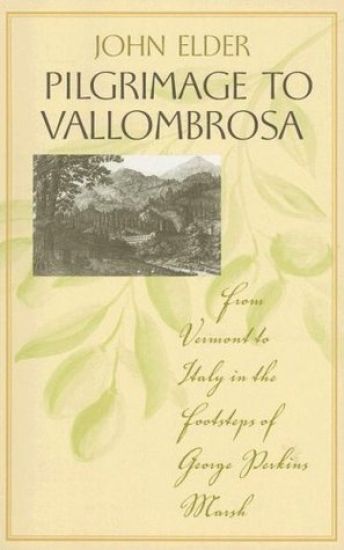
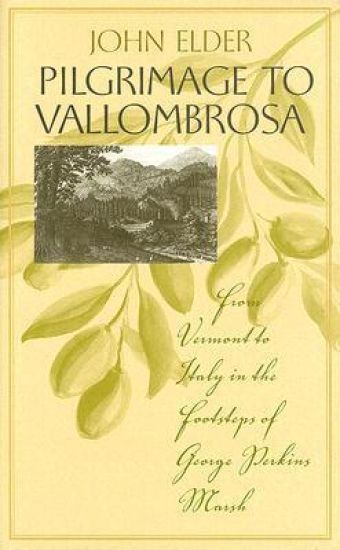
The pivotal figure in ""Pilgrimage to Vallombrosa"" is the nineteenth-century diplomat and writer George Perkins Marsh, generally regarded as America's first environmentalist. Like Elder, Marsh was a Vermonter, and his diplomatic career took him for some years to Italy, where, witnessing the ecological devastation wrought upon the landscape by runaway deforestation and the plundering of other natural resources, he was moved to produce his famous manifesto, ""Man and Nature"". Marsh drew parallels between the despoiled Italian environment and his home landscape of Vermont, warning that the latter was vulnerable to ecological woes of a similar magnitude if not carefully maintained and protected. In short, his was a prescient voice for stewardship.Elder follows in Marsh's footsteps along a trajectory running from Vermont to Italy, and at length fetches up at the managed forest of Vallombrosa. Punctuated throughout with learned and genial considerations of the poetry of Wordsworth, Basho, Dante, and Frost, Elder's narrative takes up issues of sustainability as practiced locally, reports on family doings, and returns finally - as did Marsh's - to Vermont, where he measures traditional stewardship values against more aggressive conservation-oriented measures such as the expansion of wilderness areas.
The pivotal figure in John Elder's latest book - itself a combination of environmental history, travel writing, literary criticism, and memoir - is the nineteenth-century diplomat and writer George Perkins Marsh, generally regarded now as Americais first environmentalist. Like Elder, Marsh was a Vermonter, and his diplomatic career took him for some years to Italy, where, witnessing the ecological devastation wrought upon the landscape by runaway deforestation and the plundering of other natural resources, he was moved to produce his famous manifesto, Man and Nature. Marsh drew parallels between the despoiled Italian environment and his home landscape of Vermont, warning that it was vulnerable to ecological woes of a similar magnitude if not carefully maintained and protected. In short, his was a prescient voice for stewardship. On a Fulbright year, Elder chooses to follow in Marsh's footsteps along a trajectory running from Vermont to Italy, and at length fetches up at the managed forest of Vallombrosa - which, as it happens, boasts a stand of sugar maples planted by Marsh. Punctuated throughout with learned and genial considerations of the poetry of Wordsworth, Basho, Dante, and Frost, Elderis narrative takes up issues of sustainability as practiced locally, reports on family doings (including his wife's reconnecting with Italian relatives), and returns finally - as did Marsh's - to Vermont, where he measures traditional stewardship values against more aggressive conservation-oriented measures such as the expansion of wilderness areas. Elder also extends the idea of sustainability from maintaining a healthy human-environmental balance to maintaining a strong web of social relationships within both the family and the larger community. Here is an exceptional reading experience, the chance to follow two of the finest chroniclers of our place in nature - separated by years, but by surprisingly little else.
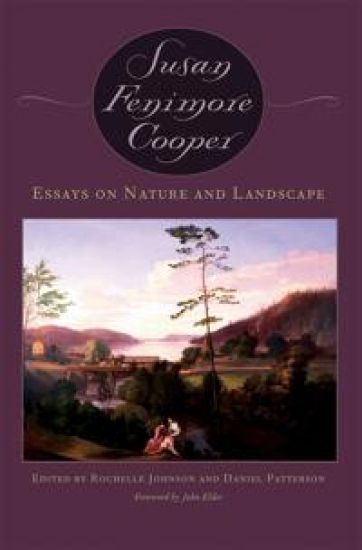
Susan Fenimore Cooper (1813-1894), though often overshadowed by her celebrity father, James Fenimore Cooper, has recently become recognized as both a pioneer of American nature writing and an early advocate for ecological sustainability. Editors Rochelle Johnson and Daniel Patterson have assembled here a collection of ten pieces by Cooper that represent her most accomplished nature writing and the fullest articulation of her environmental principles. With one exception, these essays have not been available in print since their original appearance in Cooper's lifetime.A portrait of her thoughts on nature and how we should live and think in relation to it, this collection both contextualizes Cooper's magnum opus, Rural Hours (1850), and demonstrates how she perceived her work as a nature writer. Frequently her essays are models of how to catch and keep the interest of a reader when writing about plants, animals, and our relationship to the physical environment. By lamenting the decline of bird populations, original forests, and overall biodiversity, she champions preservation and invokes a collective environmental conscience that would not begin to awaken until the end of her life and century.The selections include independent essays, miscellaneous introductions and prefaces, and the first three installments from Cooper's work of literary ornithology, "Otsego Leaves," arguably her most mature and fully realized contribution to American environmental writing. In addition to a foreword by John Elder, one of the nation's leading environmental educators, an introduction analyzes each essay in various cultural contexts. Brief but handy textual notes supplement the essays. Perfect for nature-writing aficionados, environmental historians, and environmental activists, this collection will radically expand Cooper's importance to the history of American environmental thought.
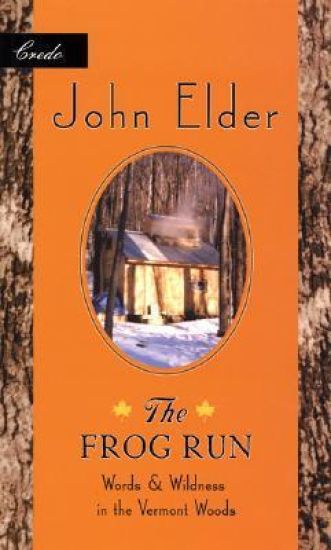
The North Woods tradition of making maple syrup serves as an illuminating backdrop for John Elder’s reflections on nature, literature, playfulness, and fatherhood, as he builds a sugaring house with his sons. The tail end of the sugaring season in New England is called the “frog run,” when pools of snowmelt teem with frogs and the last run of sap good for making syrup flows from the maple trees. For John Elder, a longtime resident of Vermont, a professor of English, and a man at midlife, this moment is a metaphor of loss and resurgence. In The Frog Run, Elder describes how he found a way to balance his passions for literature and for the outdoors by building a sugarhouse with his sons in the Vermont woods. For Elder, who also writes in this book about the resurgence of New England forests and about his life as a reader—moving from the game of Go to the Psalms and Basho—the frog run is a time to savor and celebrate the fleeting beauties of his family’s place on earth. Moving and elegant, The Frog Run is a testimony to the value of embracing what seems lost.