Kirjojen hintavertailu. Mukana 12 242 802 kirjaa ja 12 kauppaa.

Kirjailija

John F. Hoffecker

Kirjat ja teokset yhdessä paikassa: 6 kirjaa, julkaisuja vuosilta 1988-2017, suosituimpien joukossa Dry Creek. Vertaile teosten hintoja ja tarkista saatavuus suomalaisista kirjakaupoista.

6 kirjaa

Kirjojen julkaisuhaarukka 1988-2017.

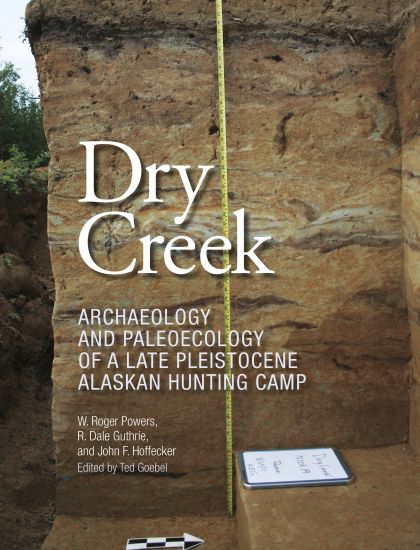
Dry Creek

Dry Creek

Roger Powers; Dale Guthrie; John F. Hoffecker

Texas A M University Press
2017
sidottu
With cultural remains dated unequivocally to 13,000 calendar years ago, Dry Creek assumed major importance upon its excavation and study by W. Roger Powers. The site was the first to conclusively demonstrate a human presence that could be dated to the same time as the Bering Land Bridge. As Powers and his team studied the site, their work verified initial expectations. Unfortunately, the research was never fully published. Dry Creek: The Archaeology and Paleoecology of a Late Pleistocene Alaskan Hunting Camp is ready to take its rightful place in the ongoing research into the peopling of the Americas. Containing the original research, this book also updates and reconsiders Dry Creek in light of more recent discoveries and analysis.
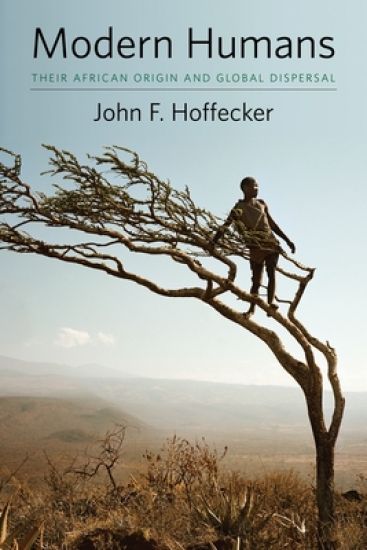
Modern Humans

Modern Humans

John F. Hoffecker

Columbia University Press
2017
sidottu
Modern Humans is about the most recent-and perhaps the most important-phase of human evolution: the appearance of anatomically modern people (Homo sapiens) in Africa less than a quarter of a million years ago and their subsequent spread throughout the world. Most of the features that render living human beings unique among all forms of life evolved or developed with Homo sapiens, and in Modern Humans, John F. Hoffecker argues that humans represent a "major transition" in evolution with respect to the storage, transmission, and translation of information, as well as a quantum leap in living-system complexity. Modern Humans synthesizes data from genetics (including the rapidly growing body of ancient DNA), the human fossil record, and archaeology relating to the African origins and global dispersal of anatomically modern people. The book begins by placing humans into the broad context of the evolution of life, emphasizing the fundamental role of genetic and nongenetic forms of information in living systems, and how changes in information are tied to "major transitions" in evolution. For more than a hundred thousand years, a diverse "near modern" human population, characterized by the retention of some archaic skeletal traits and possibly lacking the full suite of cognitive faculties found in living people, occupied the African continent and expanded briefly into the adjoining Arabian Peninsula and Levant. The immediate ancestors of all living maternal and paternal lineages possibly emerged from within this population, spreading initially throughout Africa before beginning a second-and ultimately global-dispersal no later than 60,000 years ago. The later chapters of this book recount their rapid expansion into southern Asia and Australia, northern Eurasia and Beringia, and throughout the Americas.
Human Ecology of Beringia

Human Ecology of Beringia

John F. Hoffecker; Scott A. Elias

Columbia University Press
2007
sidottu
Twenty-five thousand years ago, sea level fell more than 400 feet below its present position as a consequence of the growth of immense ice sheets in the Northern Hemisphere. A dry plain stretching 1,000 miles from the Arctic Ocean to the Aleutians became exposed between northeast Asia and Alaska, and across that plain, most likely, walked the first people of the New World. This book describes what is known about these people and the now partly submerged land, named Beringia, which they settled during the final millennia of the Ice Age. Humans first occupied Beringia during a twilight period when rising sea levels had not yet caught up with warming climates. Although the land bridge between northeast Asia and Alaska was still present, warmer and wetter climates were rapidly transforming the Beringian steppe into shrub tundra. This volume synthesizes current research-some previously unpublished-on the archaeological sites and rapidly changing climates and biota of the period, suggesting that the absence of woody shrubs to help fire bone fuel may have been the barrier to earlier settlement, and that from the outset the Beringians developed a postglacial economy similar to that of later northern interior peoples. The book opens with a review of current research and the major problems and debates regarding the environment and archaeology of Beringia. It then describes Beringian environments and the controversies surrounding their interpretation; traces the evolving adaptations of early humans to the cold environments of northern Eurasia, which set the stage for the settlement of Beringia; and provides a detailed account of the archaeological record in three chapters, each of which is focused on a specific slice of time between 15,000 and 11,500 years ago. In conclusion, the authors present an interpretive summary of the human ecology of Beringia and discuss its relationship to the wider problem of the peopling of the New World.
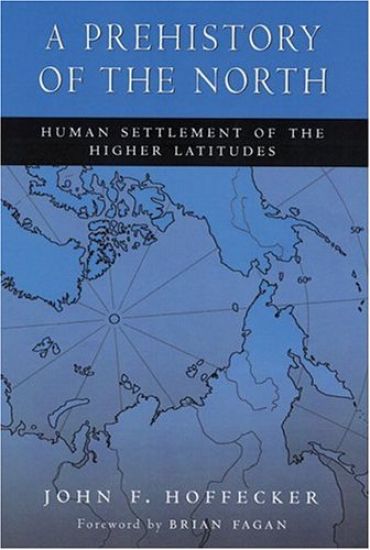
A Prehistory of the North

A Prehistory of the North

John F. Hoffecker

Rutgers University Press
2004
nidottu
Early humans did not simply drift northward from their African origins as their abilities to cope with cooler climates evolved. The initial settlement of places like Europe and northern Asia, as well as the later movement into the Arctic and the Americas, actually occurred in relatively rapid bursts of expansion. A Prehistory of the North is the first full-length study to tell the complex story, spanning almost two million years, of how humans inhabited some of the coldest places on earth.In an account rich with illustrations, John Hoffecker traces the history of anatomical adaptations, diet modifications, and technological developments, such as clothing and shelter, which allowed humans the continued ability to push the boundaries of their habitation. The book concludes by showing how in the last few thousand years, peoples living in the circumpolar zone—with the exception of western and central Siberia—developed a thriving maritime economy.Written in nontechnical language, A Prehistory of the North provides compelling new insights and valuable information for professionals and students.
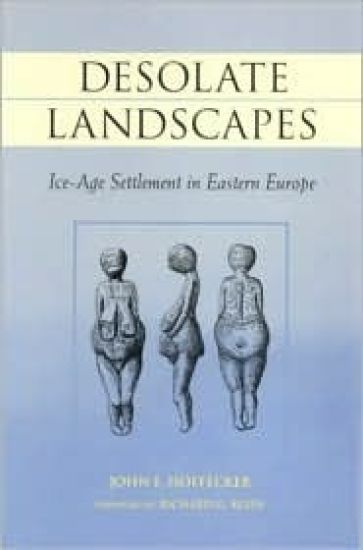
Desolate Landscapes

Desolate Landscapes

John F. Hoffecker

Rutgers University Press
2002
nidottu
Ice-Age Eastern Europe was an inhospitable place, isolated from the moderating influence of oceans. Unlike Western Europe, which was settled over half a million years ago, Eastern Europe remained largely unoccupied until the appearance of the cold-adapted Neanderthals. When modern humans arrived from southern latitudes, they were anatomically less suited to colder climates, but successfully colonized Eastern Europe with the aid of innovative technologies that their Neanderthal predecessors lacked. John F. Hoffecker provides an overview of Pleistocene or Ice-Age settlement in Eastern Europe with a heavy focus on the adaptations of Neanderthals and modern humans to this harsh environmental setting. Hoffecker argues that the Eastern European record reveals a stark contrast between Neanderthals and modern humans with respect to technology and social organization, both of which are tied to the development of language and the use of symbols. Desolate Landscapes will bring readers up to date with the rich archaeological record in this significant region and its contribution to our understanding of one of our most important events in human evolution - the rise of modern humans and the extinction of the Neanderthals. The book is divided into seven chapters. The first discusses general anthropological principles and theories pertaining to human adaptation and development in cold environments. The second outlines the environmental conditions of the specific area under study in the book. The next two chapters focus on Neanderthal finds in the area. The following two chapters discuss the replacement of the local Neanderthal population by the Cro-magnons, and the development of their way of life in the cold Loess Steppe environment. The final chapter summarizes the discussion and is followed by an extremely valuable and extensive bibliography, more than half of which consists of non-English (primarily Russian) sources.