Kirjojen hintavertailu. Mukana 12 595 353 kirjaa ja 12 kauppaa.

Kirjailija

John F. Schank

Kirjat ja teokset yhdessä paikassa: 26 kirjaa, julkaisuja vuosilta 1995-2015, suosituimpien joukossa The United Kingdom's Nuclear Submarine Industrial Base. Vertaile teosten hintoja ja tarkista saatavuus suomalaisista kirjakaupoista.

Mukana myös kirjoitusasut: John F Schank

26 kirjaa

Kirjojen julkaisuhaarukka 1995-2015.

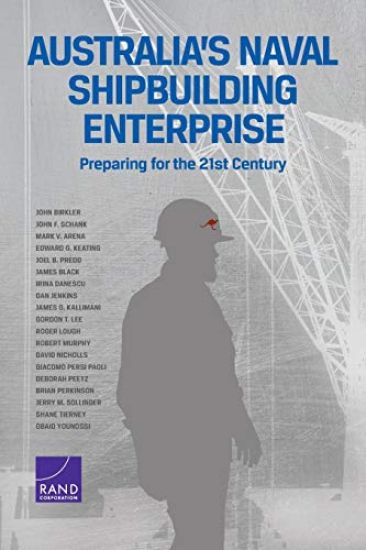
Australia's Naval Shipbuilding Enterprise

Australia's Naval Shipbuilding Enterprise

John Birkler; John F. Schank; Mark V. Arena; Edward G. Keating; Joel B. Predd; James Black; Irina Danescu; Dan Jenkins; James G. Kallimani; Gordon T. Lee; Roger Lough; Robert Murphy; David Nicholls; Deborah Peetz; Brian Perkinson; Jerry M. Sollinger; Shane Tierney; Obaid Younossi

RAND
2015
pokkari
To prepare for its next Defence White Paper, Australia is examining an enterprise-level naval shipbuilding plan. To support this effort, RAND researchers explore the feasibility of Australia sustaining a domestic naval shipbuilding industry compared with buying ships from foreign shipbuilders. The authors outline the complex consequences and trade-offs of both options.
Learning from Experience

Learning from Experience

John F. Schank; Cesse Ip; Kristy N. Kamarck; Robert E. Murphy; Mark V. Arena; Frank W. Lacroix; Gordon T. Lee

RAND
2012
nidottu
This volume presents a set of lessons learned from Australia's Collins submarine program that could help inform future program managers. Collins was the first submarine built in Australia. RAND investigated how operational requirements were set for the Collins class; explored the acquisition, contracting, design, and build processes that the program employed; and assessed the activities surrounding integrated logistics support for the class.
Learning from Experience

Learning from Experience

John F. Schank; Frank W. Lacroix; Robert E. Murphy; Mark V. Arena; Gordon T. Lee

RAND
2012
nidottu
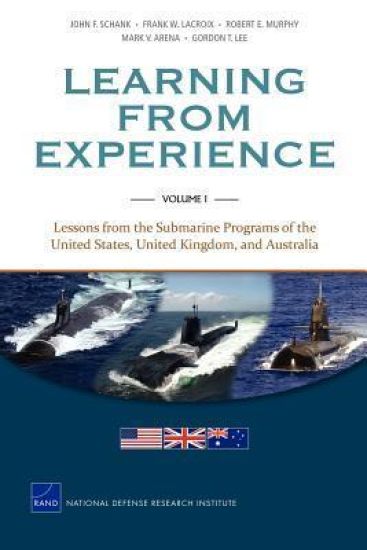
The United States, the United Kingdom, and Australia asked the RAND Corporation to develop a set of lessons learned from previous submarine programs that could help inform future program managers. This volume presents an overview of five submarine programs in the three countries - the UK's Astute program; the U.S. Navy's Ohio, Seawolf, and Virginia programs; and Australia's Collins program - and identifies lessons that apply to all of them.
Learning from Experience

Learning from Experience

John F. Schank; Frank W. Lacroix; Robert E. Murphy; Cesse Ip; Mark V. Arena; Gordon T. Lee

RAND
2012
nidottu
This volume presents a set of lessons learned from the United Kingdom's Astute submarine program that could help inform future program managers. Designing and building a submarine requires careful management and oversight and a delegation of roles and responsibilities that recognizes which party - the shipbuilder or the government - is best positioned to manage risks.
Learning from Experience

Learning from Experience

John F. Schank; Cesse Ip; Frank W. Lacroix; Robert E. Murphy; Mark V. Arena; Kristy N. Kamarck; Gordon T. Lee

RAND
2012
nidottu
The U.S. Navy asked the RAND Corporation to develop a set of lessons learned from previous submarine programs that could help inform future program managers. This volume presents lessons from three U.S. submarine programs. The RAND team looked at how the programs were managed, the issues that affected management decisions, and the outcomes of those decisions. An overarching lesson from the three programs is the importance of program stability. One-liner: This volume presents an overview of lessons learned from three U.S. Navy submarine programs that could help inform future program managers.
The United Kingdom's Nuclear Submarine Industrial Base

The United Kingdom's Nuclear Submarine Industrial Base

John F. Schank; Cynthia R. Cook; Robert Murphy; James Chiesa; Hans Pung; John Birkler

RAND
2005
nidottu
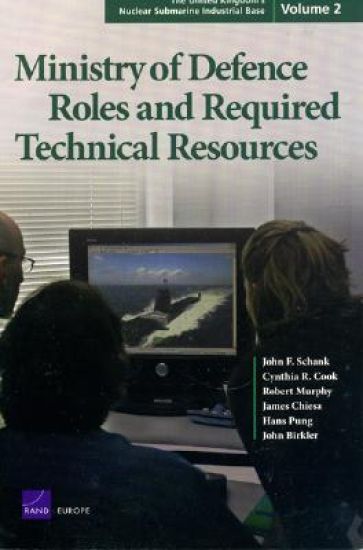
The United Kingdom's Ministry of Defence (MOD) moved from a position of significant authority and responsibility in submarine design and development to one in which its acquisition responsibilities were largely transferred to a prime contractor. Now it is trying to re-engage. This book recommends measures and structures the UK Ministry of Defence can adopt to better manage its risks and responsibilities in the acquisition of nuclear submarines.
Keeping Major Naval Ship Acquisitions on Course

Keeping Major Naval Ship Acquisitions on Course

John F. Schank; Mark V. Arena; Kristy N. Kamarck; Gordon T. Lee; John Birkler; Robert E. Murphy; Roger Lough

RAND
2015
pokkari
This study provides a program overview of acquisition options available for the Commonwealth of Australia s next generation naval surface combatant and identifies internal and external factors that can influence a major ship acquisition program. The authors address questions relating to available ship design and build options; various phases, options, and decisions; and aspects that can contribute to the success of an acquisition program."
Shared Modular Build of Warships

Shared Modular Build of Warships

Laurence Smallman; Tang Hanlin; John F. Schank; Stephanie Pezard

RAND
2011
pokkari
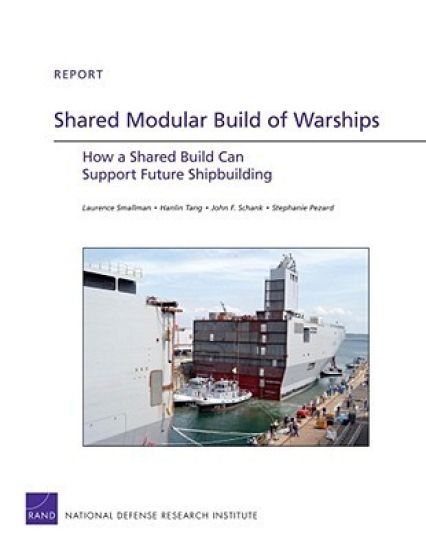
Some recent shipbuilding programs in the United States and Europe have involved multiple shipyards constructing major modules of each ship for final integration and testing at one shipyard. The Navy needs to decide what it wants from a shared-build strategy, then monitor and manage the program to ensure that it delivers the required outcome, as well as the vessels called for in the program.
Controlling the Cost of C4I Upgrades on Naval Ships
C4I systems have evolved rapidly over the last few decades, and the cost of keeping these products up-to-date on new and in-service U.S. Navy ships is high due to configuration, integration, testing, and other challenges. Looking across a specific set of completed C4I upgrades, the authors found evidence of cost improvement, a high level of variability in costs, and a trend toward overestimating the installation-labor costs of certain upgrades.
U.S. Navy Shipyards

U.S. Navy Shipyards

Jessie Riposo; Brien Alkire; John F Schank; Mark V Arena; James G Kallimani

RAND
2009
pokkari
RAND investigated cost-effective workforce-management strategies, alternative workload allocations, and the relevant best practices of comparable organizations to assist the Navy in managing the public shipyards. The Navy uses many practices common in other organizations, but reducing planned levels of overtime and increasing the permanent journeyman staff at the public shipyards could cost-effectively hedge against future workload growth.
Sustaining Key Skills in the UK Naval Industry

Sustaining Key Skills in the UK Naval Industry

Hans Pung; Laurence Smallman; Mark V. Arena; James G. Kallimani; Gordon T. Lee; Samir Puri; John F. Schank

RAND
2008
pokkari
Building on prior RAND research, this monograph explores the need for and retention of technical skills in the UK's maritime industry, particularly among designers and engineers involved with surface ship and submarine acquisition and support. The results reveal that the UK's future naval programme likely will have to be modified or augmented to sustain these technical skills in the long term.
Using the Steel-vessel Material-cost Index to Mitigate Shipbuilder Risk

Using the Steel-vessel Material-cost Index to Mitigate Shipbuilder Risk

Edward G. Keating; Robert Murphy; John F. Schank; John Birkler

RAND
2008
pokkari
The more accurately a cost index captures a shipbuilder's risk, the less the Navy should have to pay its shipbuilders. The Navy uses such indexes to correct for significant cost risks outside its shipbuilders' control. A longtime material-cost index in Navy shipbuilding is the steel-vessel index, but it is outdated and volatile. The authors urge the Navy to develop a modern-vessel index that more appropriately represents the materials used today.
Increasing Aircraft Carrier Forward Presence

Increasing Aircraft Carrier Forward Presence

Roland J. Yardley; James G. Kallimani; John F. Schank; Clifford A. Grammich

RAND
2008
pokkari
The U.S. Navy's aircraft carrier fleet must meet the forward presence requirements of theater commanders. With a decreasing fleet size, planners must balance the timing of maintenance, training, and deployment with presence and surge demands. Evaluating multiple one- and two-deployment scenarios per cycle, RAND examines the feasibility of different cycle lengths, their effect on carrier forward presence, and their impact on shipyard workloads.
A Methodology for Estimating the Effect of Aircraft Carrier Operational Cycles on the Maintenance Industrial Base

A Methodology for Estimating the Effect of Aircraft Carrier Operational Cycles on the Maintenance Industrial Base

Roland J Yardley; John F Schank; James G Kallimani; Raj Raman; Clifford A Grammich

RAND
2007
pokkari
The Fleet Response Plan is a U.S. Navy program to enhance the operational availability of the aircraft carrier fleet. This report describes program modeling that varies the time between depot availabilities and the size of the depot work packages, to estimate its effect on the maintenance industrial base and the operational availability of the aircraft carrier fleet.
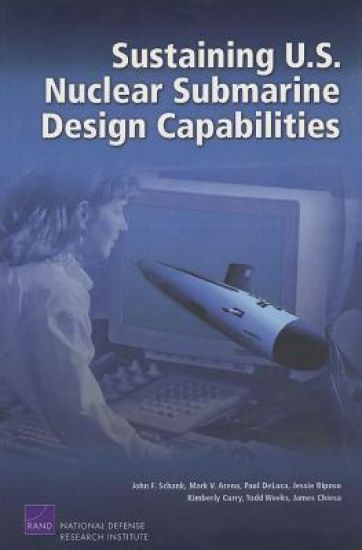
Sustaining U.S. Nuclear Submarine Design Capabilities
Nuclear submarine design resources at the shipyards, their suppliers, and the Navy may erode for lack of demand. Analysis of alternative workforce and workload management options suggests that the U.S. Navy should stretch out the design of the next submarine class and start it early or sustain design resources above the current demand, so that the next class may be designed on time, on budget, and with low risk.
Impacts of the Fleet Response Plan on Surface Combatant Maintenance

Impacts of the Fleet Response Plan on Surface Combatant Maintenance

Roland J Yardley; Raj Raman; Jessie Riposo; James Chiesa; John F Schank

RAND
2006
pokkari
To achieve a more responsive and more readily deployable fleet of surface combatants, the Navy adopted the Fleet Response Plan (FRP) in 2003 to replace its traditional two-year ship maintenance cycle. The authors of this report look at the effects the FRP has had thus far and determine whether maintenance resources are meeting maintenance demands and whether related industry resources have been coordinated effectively.
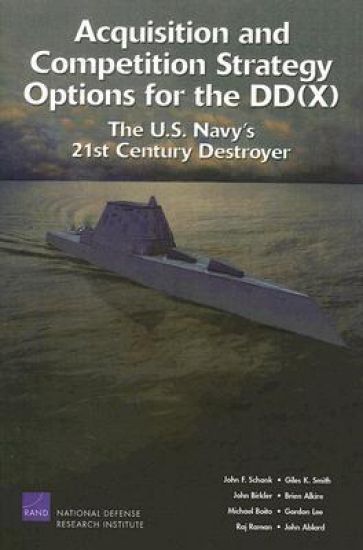
Acquisition and Competition Strategy Options for the DD(X)
RAND was assigned to assess alternative acquisition strategies for the Navy's new family of destroyers. The authors drew on the history of competition in acquisition programs to examine a rich array of options. They concluded that for the program that existed in 2003 competition among primes would be impractical, that splitting the work should sustain the industrial base, and that a mixed strategy using different contract forms would work best.
Outsourcing and Outfitting Practices

Outsourcing and Outfitting Practices

John F. Schank; Hans Pung; Gordon T. Lee; Mark V. Arena; John Birkler

RAND
2005
pokkari
Advises how the United Kingdom should best use modern outsourcing and outfitting practices for shipbuilding in the years to come. The United Kingdom's Ministry of Defence (MOD) is preparing for the construction of the Royal Navy's two new Future Aircraft Carriers (CVFs), slated to enter service in 2012 and 2015, respectively. The CVFs will be the largest warships built in the United Kingdom in decades. At the request of the MOD, the RAND Corporation looked at the risks of current contractor plans and estimated the cost implications of using alternative manufacturing options in the coming years.
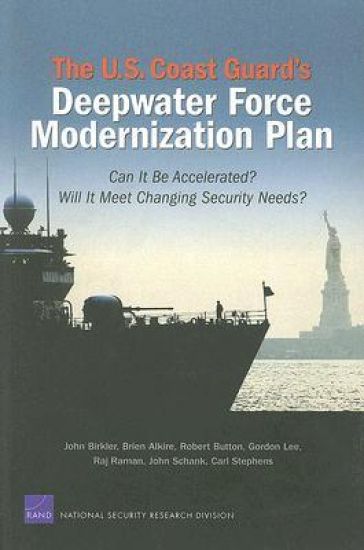
The U.S. Coast Guard's Deepwater Force Modernization Plan

The U.S. Coast Guard's Deepwater Force Modernization Plan

John Birkler; Brien Alkire; Robert Button; Gordon Lee; Rajkumar Raman; John F. Schank; Carl Stephens

RAND
2004
pokkari
Explores acceleration of the pace at which the U.S. Coast Guard can acquire surface and air assets that it will operate in the deepwater environment (50 or more nautical miles from shore) and whether the original Integrated Deepwater System program to modernize its aging cutters and aircraft will provide the Coast Guard with a force structure to meet the demands of its traditional missions and emerging responsibilities. 450-character abstract: Explores whether the pace at which the U.S. Coast Guard can acquire surface and air assets that it will operate in the deepwater environment (50 or more nautical miles from shore) can be accelerated and whether the original Integrated Deepwater System program to modernize its aging ships and aircraft will provide the Coast Guard with a force structure to meet the demands of its traditional missions and emerging responsibilities as part of the new Department of Homeland Security.