Kirjojen hintavertailu. Mukana 12 253 807 kirjaa ja 12 kauppaa.

Kirjailija

John F.X. Knasas

Kirjat ja teokset yhdessä paikassa: 6 kirjaa, julkaisuja vuosilta 1994-2023, suosituimpien joukossa Thomism and Tolerance. Vertaile teosten hintoja ja tarkista saatavuus suomalaisista kirjakaupoista.

Mukana myös kirjoitusasut: John F. X. Knasas

6 kirjaa

Kirjojen julkaisuhaarukka 1994-2023.

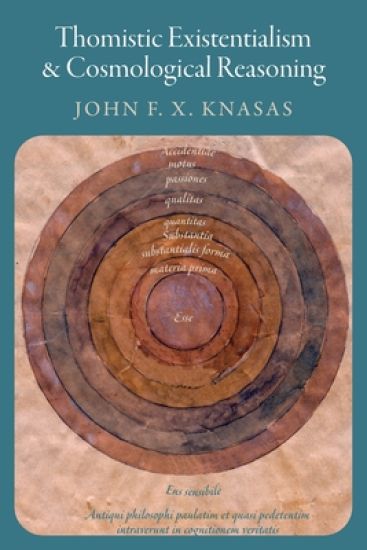
Thomistic Existentialism and Cosmological Reasoning

Thomistic Existentialism and Cosmological Reasoning

John F.X. Knasas

THE CATHOLIC UNIVERSITY OF AMERICA PRESS
2023
nidottu
Cosmological reasoning is an important facet of classical arguments for the existence of God, but these arguments have been subject to may criticisms. The thesis of this book is that Thomas Aquinas can dodge many of the classic objections brought against cosmological reasoning. These objections criticize cosmological reasoning for its use of the Principle of Sufficient Reason; its notion of existence as a predicate; its use of ontological reasoning; its reliance on sense realism; its ignoring of the problem of evil; and its susceptibility to the critique of "ontotheology" as famously put forward by Heidegger. All of these objections receive a reply, showing that Aquinas's De Ente et Essentia reasoning for God as esse tantum employs a more nuanced understanding of a thing's existence than is found in Leibniz's classic cosmological arguments.Secondly, the book proposes that the kind of reasoning found in Aquinas's De Ente can be formulated in a more robust version. Prompted by Aquinas's admissions that philosophical knowledge of God is the prerogative of metaphysics, the second main portion of the book extensively illustrates how the more robust version of the De Ente is the interpretive key for Aquinas's many arguments for God. Hence, the book should be of interest both to philosophers engaged in cosmological reasoning discussion and to Thomists interested in understanding Aquinas's viae to God.Finally, the deep purpose of the book is to reawaken interest in Thomistic Existentialism, an interpretation of Aquinas that flourished in the 1950's in the works of Etienne Gilson, Jacques Maritain, and Joseph Owens. In this interpretation, a particular thing's existence is the actuality of the thing in the sense of a distinctive actus not translatable into something else, for example, the fact of the thing or the thing having form. This book clearly explains how this interpretation looks at Thomas's metaphysics, and why it helps illuminate metaphysical realities.
Aquinas and the Cry of Rachel

Aquinas and the Cry of Rachel

John F.X. Knasas

THE CATHOLIC UNIVERSITY OF AMERICA PRESS
2021
nidottu
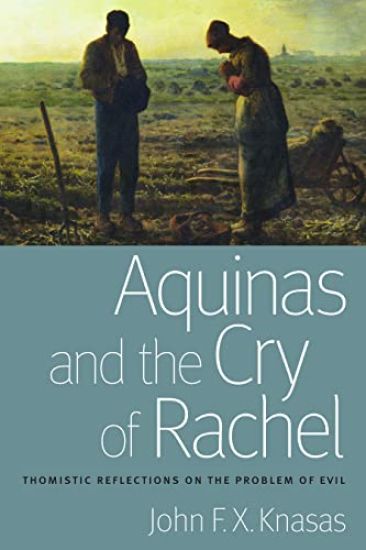
In Aquinas and the Cry of Rachel , John F. X. Knasas explores Thomas Aquinas's philosophical thinking about evil, and brings the results into discussion with the contemporary theodicies - philosophies of the problem of evil. It examines the relation of the human person and human nature to nature as a whole.Generally speaking, possible philosophical accounts for evil are two kinds: cosmological or personal. The cosmological account has evils rebounding to the perfection of creation. The personal account would have evils suffered rebounding to the good of the sufferer. Knasas argues that for Aquinas no philosophical resolution of these two kinds of accountsis possible. This argument is based upon Aquinas's understanding of the human as an intellector of analogical being. Such an understanding establishes two truths. First, the human is by nature only a principal part of the created whole. Second, there is the philosophically discernible possibility of supernatural elevation by the creator.Hence, as far as philosophy can discern, evil may have a natural explanation or it may have a supernatural one. The Thomistic philosopher has no answer as to why evil exists because that philosopher discerns too many possible ones. In that respect, Aquinas's thinking on evil is similar to his thinking about the philosophical knowledge of the biblicaltruth of the world's creation in time. Such a creation is one metaphysical possibility among others. Some authors that Aquinas and the Cry of Rachel considers are: Anthony Flew and Albert Camus, Jacques Maritain and Charles Journet, William Rowe, Marily McCord Adams, William Hasker, John Hick, David Ray Griffin, David Hume, Diogenes Allen, J. L. Mackie, Alvin Plantinga, Richard Swinburne, Bruce Reichenbach, Brian Davies, and Eleonore Stump.
Aquinas and the Cry of Rachel

Aquinas and the Cry of Rachel

John F.X. Knasas

The Catholic University of America Press
2013
sidottu
In Aquinas and the Cry of Rachel, John F. X. Knasas explores Thomas Aquinas’s philosophical thinking about evil, and brings the results into discussion with the contemporary theodicies - philosophies of the problem of evil. It examines the relation of the human person and human nature to nature as a whole.Generally speaking, possible philosophical accounts for evil are two kinds: cosmological or personal. The cosmological account has evils rebounding to the perfection of creation. The personal account would have evils suffered rebounding to the good of the sufferer. Knasas argues that for Aquinas no philosophical resolution of these two kinds of accounts is possible. This argument is based upon Aquinas’s understanding of the human as an intellector of analogical being. Such an understanding establishes two truths. First, the human is by nature only a principal part of the created whole. Second, there is the philosophically discernible possibility of supernatural elevation by the creator.Hence, as far as philosophy can discern, evil may have a natural explanation or it may have a supernatural one. The Thomistic philosopher has no answer as to why evil exists because that philosopher discerns too many possible ones. In that respect, Aquinas’s thinking on evil is similar to his thinking about the philosophical knowledge of the biblical truth of the world’s creation in time. Such a creation is one metaphysical possibility among others. Some authors that Aquinas and the Cry of Rachel considers are Anthony Flew and Albert Camus, Jacques Maritain and Charles Journet, William Rowe, Marily McCord Adams, William Hasker, John Hick, David Ray Griffin, David Hume, Diogenes Allen, J. L. Mackie, Alvin Plantinga, Richard Swinburne, Bruce Reichenbach, Brian Davies, and Eleonore Stump.
Thomism and Tolerance

Thomism and Tolerance

John F. X. Knasas

University of Scranton Press,U.S.
2011
nidottu
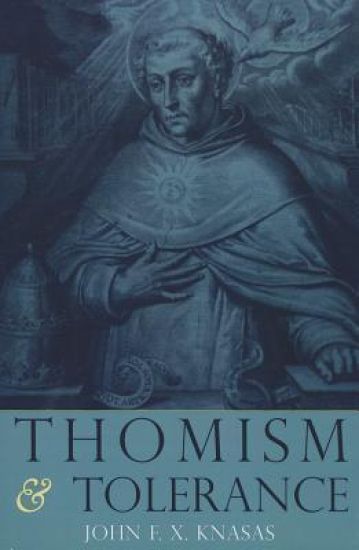
In this incisive study, John F. X. Knasas grounds the ideal of tolerance in Aquinas' natural law ethics and connects the virtue of civic tolerance to the concept of being. If God is the source of being, argues Knasas, then we are the articulation of being, and it is in this capacity that we recognize our bond with other people and thus acknowledge our duty to be tolerant of one another. An important contribution to practical metaphysics and the philosophical foundations of political theory, "Thomism and Tolerance" will appeal to philosophy scholars and students at the undergraduate and graduate level.
Thomistic Papers VI

Thomistic Papers VI

John F.X. Knasas

University of Notre Dame Press
1994
nidottu
The essays in this volume offer a critique of From Unity to Pluralism: The Internal Evolution of Thomism by Gerald McCool, SJ. Twelve philosophers in this collection analyse key aspects of McCool's interpretation of Aquinas, which stands opposed to the motivating ideals found in One Hundred Years of Thomism: Aeterni Patris and Afterwards, a symposium published in 1981 to celebrate the centenary of Pope Leo XIII's encyclical Aeterni Patris.
Thomistic Papers VI

Thomistic Papers VI

John F.X. Knasas

University of Notre Dame Press
1994
sidottu
The essays in this volume offer a critique of From Unity to Pluralism: The Internal Evolution of Thomism by Gerald McCool, SJ. Twelve philosophers in this collection analyse key aspects of McCool's interpretation of Aquinas, which stands opposed to the motivating ideals found in One Hundred Years of Thomism: Aeterni Patris and Afterwards, a symposium published in 1981 to celebrate the centenary of Pope Leo XIII's encyclical Aeterni Patris.