Kirjojen hintavertailu. Mukana 12 390 323 kirjaa ja 12 kauppaa.

Kirjailija

John France

Kirjat ja teokset yhdessä paikassa: 15 kirjaa, julkaisuja vuosilta 1996-2022, suosituimpien joukossa How to Win on the Battlefield. Vertaile teosten hintoja ja tarkista saatavuus suomalaisista kirjakaupoista.

15 kirjaa

Kirjojen julkaisuhaarukka 1996-2022.

Warfare, Crusade and Conquest in the Middle Ages
This volume brings together a series of articles by John France, published over a span of more than forty years, covering a number of aspects of the military and crusading history of the Middle Ages, both in Europe and the Near East. An interest in understanding how war worked and why informs a first group of articles, ranging from Carolingian armies to the organisation of war in the 13th century. The focus then turns to the Crusades, the most ambitious conquests of the era, with a set of studies on the First Crusade and others on the manner and conduct of warfare in the territories of the Latin East. The volume also includes a major unpublished analysis, co-authored with Nicholas Morton, of the problems faced by the local Islamic powers in the early Crusading period, reminding us that an army is only as strong as its enemies permit, and suggesting that the crusaders should be seen in this light.
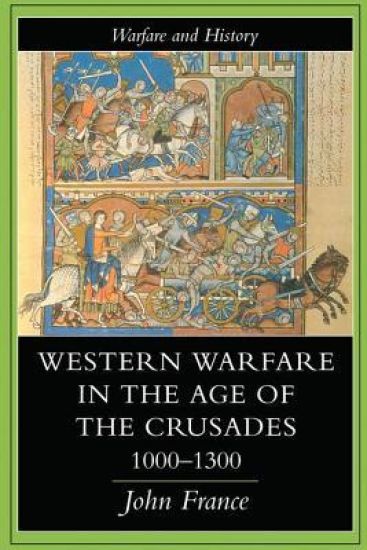
Western Warfare In The Age Of The Crusades, 1000-1300
In 1095 the First Crusade was launched, establishing a great military endeavour which was a central preoccupation of Europeans until the end of the thirteenth century. In Western warfare in the age of the Crusades, 1000-1300 John France offers a wide-ranging and challenging survey of war and warfare and its place in the development of European Society, culture and economy in the period of the Crusades. Placing the crusades in a wider context, this book brings together the wealth of recent scholarly research on such issues as knighthood, siege warfare, chivalry and fortifications into an accessible form. Western warfare in the age of the Crusades, 1000-1300 examines the nature of war in the period 1000-1300 and argues that it was primarily shaped by the people who conducted war - the landowners. John France illuminates the role of property concerns in producing the characteristic instruments of war: the castle and the knight. This authoritative study details the way in which war was fought and the reasons for it as well as reflecting on the society which produced the crusades.
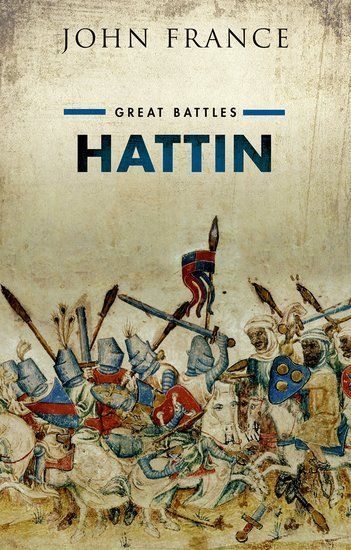
Hattin

Hattin

John France

Oxford University Press
2015
sidottu
On 4 July 1187 the legendary Muslim leader Saladin destroyed the Crusader army of the Latin Kingdom of Jerusalem with a terrible slaughter at the battle of Hattin - and went on to restore the Holy City of Jerusalem to Islamic rule. The carnage at Hattin was the culmination of almost a century of religious wars between Christian and Muslim in the Holy Land. It had enormous consequences for the whole medieval world because it produced an intensification of holy war between Islam and Europe for over another century - and in retrospect marked the beginning of the end for the Crusader presence in the Middle East. In the 20th century memory of the battle was revived as a symbol of Arab hope for liberation from Crusader-Imperialism, and in the 21st it has become a rallying cry for radical Muslim fundamentalists in their struggle for the soul of Islam. In this new volume in the Great Battles series, John France analyses the origins and course of this pivotal battle, illuminating the roots of the bitter hatred which underlay it, and explains its significance in world history - from medieval times to the present.
Warfare, Crusade and Conquest in the Middle Ages
This volume brings together a series of articles by John France, published over a span of more than forty years, covering a number of aspects of the military and crusading history of the Middle Ages, both in Europe and the Near East. An interest in understanding how war worked and why informs a first group of articles, ranging from Carolingian armies to the organisation of war in the 13th century. The focus then turns to the Crusades, the most ambitious conquests of the era, with a set of studies on the First Crusade and others on the manner and conduct of warfare in the territories of the Latin East. The volume also includes a major unpublished analysis, co-authored with Nicholas Morton, of the problems faced by the local Islamic powers in the early Crusading period, reminding us that an army is only as strong as its enemies permit, and suggesting that the crusaders should be seen in this light.
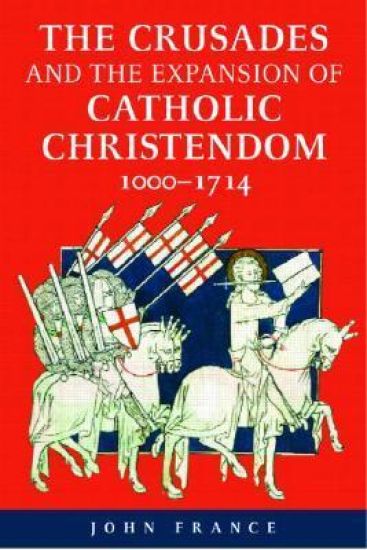
The Crusades and the Expansion of Catholic Christendom, 1000-1714
The Crusades and the Expansion of Catholic Christendom, 1000-1714 is a fascinating and accessible survey that places the medieval Crusades in their European context, and examines, for the first time, their impact on European expansion. Taking a unique approach that focuses on the motivation behind the Crusades, John France chronologically examines the whole crusading movement, from the development of a ‘crusading impulse’ in the eleventh century through to an examination of the relationship between the Crusades and the imperialist imperatives of the early modern period.France provides a detailed examination of the first Crusade, the expansion and climax of crusading during the twelfth and thirteenth centuries and the failure and fragmentation of such practices in the fourteenth and fifteenth centuries. Concluding with an assessment of the influence of the Crusades across history, and replete with illustrations, maps, timelines, guides for further reading, and a detailed list of rulers across Europe and the Muslim world, this study provides students with an essential guide to a central aspect of medieval history.
The Crusades and the Expansion of Catholic Christendom, 1000-1714
The Crusades and the Expansion of Catholic Christendom, 1000-1714 is a fascinating and accessible survey that places the medieval Crusades in their European context, and examines, for the first time, their impact on European expansion. Taking a unique approach that focuses on the motivation behind the Crusades, John France chronologically examines the whole crusading movement, from the development of a ‘crusading impulse’ in the eleventh century through to an examination of the relationship between the Crusades and the imperialist imperatives of the early modern period.France provides a detailed examination of the first Crusade, the expansion and climax of crusading during the twelfth and thirteenth centuries and the failure and fragmentation of such practices in the fourteenth and fifteenth centuries. Concluding with an assessment of the influence of the Crusades across history, and replete with illustrations, maps, timelines, guides for further reading, and a detailed list of rulers across Europe and the Muslim world, this study provides students with an essential guide to a central aspect of medieval history.
Western Warfare in the Age of the Crusades, 1000–1300
This authoritative and concise work surveys the range of warfare in the high Middle Ages while reflecting on the society that produced these military struggles. The book brings together for the first time a wealth of information on such topics as knighthood, military organization, weaponry and fortifications, and warfare in the East. In 1095 with the launching of the First Crusade, Europeans established a great military endeavour to save the Holy Land, an undertaking that remained a central preoccupation until the end of the thirteenth century. While the expeditions that went forth to fight the Muslims involved armies of exceptional size, much of the warfare within western Europe itself was conducted by small armies on behalf of landowners who were often neighbours and kin. In his approach to his subject, John France considers political, social, and economic development in the age of the crusades. He emphasizes the significance of four factors in shaping medieval warfare: the dominance of land as a form of wealth, the limited competence of government, the state of technology that favoured defence over attack, and the geography and climate of western Europe. His coverage of the castle and the knight in armour depicts the role of landowners in producing these characteristic medieval instruments of war. In addition, France provides an extensive analysis of battles in which he reconstructs a series of encounters in superb detail.
Western Warfare in the Age of the Crusades, 1000–1300
This authoritative and concise work surveys the range of warfare in the high Middle Ages while reflecting on the society that produced these military struggles. The book brings together for the first time a wealth of information on such topics as knighthood, military organization, weaponry and fortifications, and warfare in the East. In 1095 with the launching of the First Crusade, Europeans established a great military endeavour to save the Holy Land, an undertaking that remained a central preoccupation until the end of the thirteenth century. While the expeditions that went forth to fight the Muslims involved armies of exceptional size, much of the warfare within western Europe itself was conducted by small armies on behalf of landowners who were often neighbours and kin. In his approach to his subject, John France considers political, social, and economic development in the age of the crusades. He emphasizes the significance of four factors in shaping medieval warfare: the dominance of land as a form of wealth, the limited competence of government, the state of technology that favoured defence over attack, and the geography and climate of western Europe. His coverage of the castle and the knight in armour depicts the role of landowners in producing these characteristic medieval instruments of war. In addition, France provides an extensive analysis of battles in which he reconstructs a series of encounters in superb detail.
Western Warfare In The Age Of The Crusades, 1000-1300
In 1095 the First Crusade was launched, establishing a great military endeavour which was a central preoccupation of Europeans until the end of the thirteenth century. In Western warfare in the age of the Crusades, 1000-1300 John France offers a wide-ranging and challenging survey of war and warfare and its place in the development of European Society, culture and economy in the period of the Crusades. Placing the crusades in a wider context, this book brings together the wealth of recent scholarly research on such issues as knighthood, siege warfare, chivalry and fortifications into an accessible form. Western warfare in the age of the Crusades, 1000-1300 examines the nature of war in the period 1000-1300 and argues that it was primarily shaped by the people who conducted war - the landowners. John France illuminates the role of property concerns in producing the characteristic instruments of war: the castle and the knight. This authoritative study details the way in which war was fought and the reasons for it as well as reflecting on the society which produced the crusades.
Victory in the East

Victory in the East

John France

Cambridge University Press
1996
pokkari
The success of the First Crusade, and its capture of Jerusalem in 1099, has been conventionally explained in terms of its ideological and political motivation. This book looks at the First Crusade primarily as a military campaign and asks why it was so successful. Modern writing about the crusade has tended to emphasise the moral dimension and the development of the idea of the crusade, but its fate was ultimately decided on the field of battle. Victory in the East looks at the nature of war at the end of the eleventh century and the military experience of all the contending parties in order to explain its extraordinary success. It is the first such examination, taking into account all other factors but emphasising the military.