Kirjojen hintavertailu. Mukana 12 595 353 kirjaa ja 12 kauppaa.

Kirjailija

John Franceschina

Kirjat ja teokset yhdessä paikassa: 23 kirjaa, julkaisuja vuosilta 1997-2021, suosituimpien joukossa David Braham. Vertaile teosten hintoja ja tarkista saatavuus suomalaisista kirjakaupoista.

23 kirjaa

Kirjojen julkaisuhaarukka 1997-2021.

Eight Obscene Plays from the French Erotic Theatre of the 18th and 19th Centuries (hardback)
The eight obscene plays in this collection are notable examples of French erotic theatre from the eighteenth and nineteenth centuries. The first series of five plays comes from the two-volume Le Th tre gaillard, revu et augment , 1776-1865 (Bawdy Theatre, revised and expanded, 1776-1865): from volume one, the three-act comedy, The Bordello, and the three-act verse tragedy, Vasta, Queen of Bordelleo; from volume two, the one-act verse tragedy, The New Messaline, the free-verse three-act comedy, The Pleasures of the Cloister, and the one-act vaudeville (with songs), The Intrigue at the Brothel. The remaining plays were found in Le Th tre Erotique de la rue de la Sant son histoire (The Erotic Theatre in the street called la Sant its story) (1864-1866): the three-act vaudeville, Dollar Sign, the comedy of manners, The Games of Love and the Marketplace, and the one-act comedy, The Grisette and the Student. These three plays and Vasta are the only works in this collection that appear to have been performed, and production details are included with the translations of the plays. The four other dramatic pieces, though intended for performance, were not produced (for reasons that will become apparent when reading the plays). Obscene plays offer an unapologetically coarse commodification of sex, though the reader will find that in several cases, the author found it necessary to defend his work by way of an apologetic introduction, or by distancing himself from the claims of authorship. Whatever the case, the social and sexual mores of France between 1730 and 1865 are inherently reflected in the sexual discourse of every play.
Eight Obscene Plays from the French Erotic Theatre of the 18th and 19th Centuries
The eight obscene plays in this collection are notable examples of French erotic theatre from the eighteenth and nineteenth centuries. The first series of five plays comes from the two-volume Le Th tre gaillard, revu et augment , 1776-1865 (Bawdy Theatre, revised and expanded, 1776-1865): from volume one, the three-act comedy, The Bordello, and the three-act verse tragedy, Vasta, Queen of Bordelleo; from volume two, the one-act verse tragedy, The New Messaline, the free-verse three-act comedy, The Pleasures of the Cloister, and the one-act vaudeville (with songs), The Intrigue at the Brothel. The remaining plays were found in Le Th tre Erotique de la rue de la Sant son histoire (The Erotic Theatre in the street called la Sant its story) (1864-1866): the three-act vaudeville, Dollar Sign, the comedy of manners, The Games of Love and the Marketplace, and the one-act comedy, The Grisette and the Student. These three plays and Vasta are the only works in this collection that appear to have been performed, and production details are included with the translations of the plays. The four other dramatic pieces, though intended for performance, were not produced (for reasons that will become apparent when reading the plays). Obscene plays offer an unapologetically coarse commodification of sex, though the reader will find that in several cases, the author found it necessary to defend his work by way of an apologetic introduction, or by distancing himself from the claims of authorship. Whatever the case, the social and sexual mores of France between 1730 and 1865 are inherently reflected in the sexual discourse of every play.
Ross Alexander

Ross Alexander

John Franceschina

BearManor Media
2020
sidottu
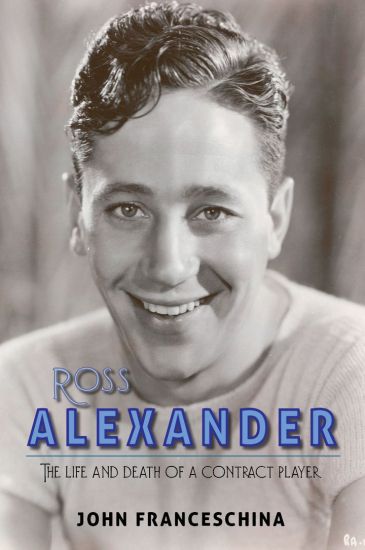
Of all the screen juveniles groomed for stardom by Warner Brothers in the 1930s, few were touted as highly by Hal Wallis and Jack Warner as Ross Alexander. Strikingly handsome, with a sensuality that appealed to women (and men) of all ages, and possessed of a Puck-like good humor that endeared him to columnists, co-stars, and virtually everyone else in the Hollywood film community, Ross quickly became the golden boy of scene-stealers at Warners, after appearing in Flirtation Walk, with Dick Powell, Ruby Keeler, and Pat O'Brien, and Gentlemen Are Born, with Franchot Tone, Jean Muir, and Ann Dvorak. Like many of the actors in Hollywood at that time, Ross was recruited from Broadway where he played high-spirited juveniles in Let Us Be Gay, starring Charlotte Granville, Francine Larrimore and Warren William; That's Gratitude, with Frank Craven, Thelma Marsh, and George Barbier; and After Tomorrow, with Donald Meek and Barbara Robbins--all produced by song-writer, producer-director, John Golden, who "discovered" Ross performing with Antoinette Perry (the "Tony" of Broadway theatre awards), in the long-run flop, The Ladder. While Alexander's career at Warner's was in the ascendant in films like A Midsummer Night's Dream, Captain Blood, and Shipmates Forever, his marriage to actress (and New Jersey socialite) Aleta Freel had disintegrated, leading to Aleta's suicide in December 1935. Ross's best friend, Henry Fonda, believed that Alexander never recovered from his wife's death, even though he continued to appear onscreen in well-regarded roles until his own suicide in January 1937. According to contemporary reports, after Alexander's death, Warner Brothers purged his home of any and everything he might have written--poems, letters, script-notes, the works--in order to protect the studio from scandals related to Alexander's closeted homosexuality and other idiosyncrasies, including his alleged obsessive infatuation with Bette Davis. Surprisingly, in the 80 years that have passed since Alexander's death, no full-length study of the actor so beloved, but so quickly forgotten by Warner Brothers had existed until Ross Alexander: The life and death of a contract player, an investigation of Broadway and Hollywood during the 1920s and 1930s, from Prohibition through the Great Depression and the Production Code, with previously unpublished documents, and nearly 100 illustrations.
Ross Alexander

Ross Alexander

John Franceschina

BearManor Media
2020
pokkari
Of all the screen juveniles groomed for stardom by Warner Brothers in the 1930s, few were touted as highly by Hal Wallis and Jack Warner as Ross Alexander. Strikingly handsome, with a sensuality that appealed to women (and men) of all ages, and possessed of a Puck-like good humor that endeared him to columnists, co-stars, and virtually everyone else in the Hollywood film community, Ross quickly became the golden boy of scene-stealers at Warners, after appearing in Flirtation Walk, with Dick Powell, Ruby Keeler, and Pat O'Brien, and Gentlemen Are Born, with Franchot Tone, Jean Muir, and Ann Dvorak. Like many of the actors in Hollywood at that time, Ross was recruited from Broadway where he played high-spirited juveniles in Let Us Be Gay, starring Charlotte Granville, Francine Larrimore and Warren William; That's Gratitude, with Frank Craven, Thelma Marsh, and George Barbier; and After Tomorrow, with Donald Meek and Barbara Robbins--all produced by song-writer, producer-director, John Golden, who "discovered" Ross performing with Antoinette Perry (the "Tony" of Broadway theatre awards), in the long-run flop, The Ladder. While Alexander's career at Warner's was in the ascendant in films like A Midsummer Night's Dream, Captain Blood, and Shipmates Forever, his marriage to actress (and New Jersey socialite) Aleta Freel had disintegrated, leading to Aleta's suicide in December 1935. Ross's best friend, Henry Fonda, believed that Alexander never recovered from his wife's death, even though he continued to appear onscreen in well-regarded roles until his own suicide in January 1937. According to contemporary reports, after Alexander's death, Warner Brothers purged his home of any and everything he might have written--poems, letters, script-notes, the works--in order to protect the studio from scandals related to Alexander's closeted homosexuality and other idiosyncrasies, including his alleged obsessive infatuation with Bette Davis. Surprisingly, in the 80 years that have passed since Alexander's death, no full-length study of the actor so beloved, but so quickly forgotten by Warner Brothers had existed until Ross Alexander: The life and death of a contract player, an investigation of Broadway and Hollywood during the 1920s and 1930s, from Prohibition through the Great Depression and the Production Code, with previously unpublished documents, and nearly 100 illustrations.
David Braham

David Braham

John Franceschina

Routledge
2019
nidottu
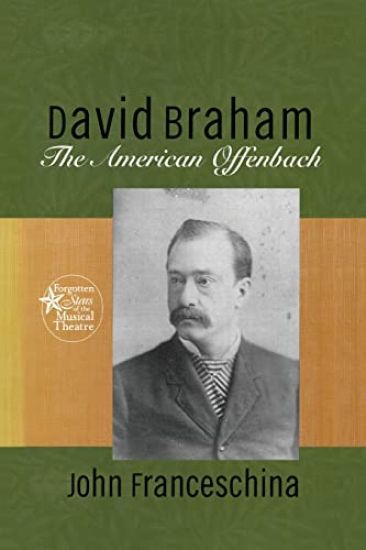
David Braham (1834-1905) was the musical director for the famous vaudeville team of Harrigan and Hart, writing music for many of their comic songs, including The Mulligan Guards, Paddie Duffy's Cart, and many more. His long career as a theatrical composer in New York helped establish a new style of Broadway musical. He came from a family well-entrenched in the music and theater worlds, and his story touches upon nearly all aspects of the history of American musical theater of this era.
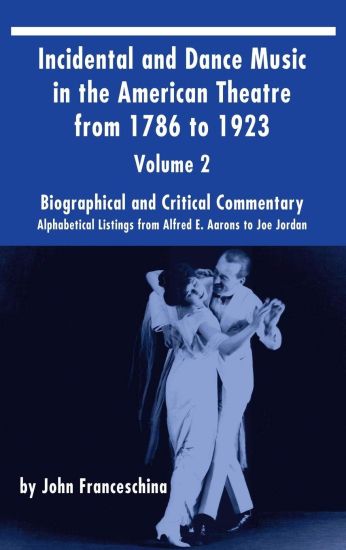
Incidental and Dance Music in the American Theatre from 1786 to 1923
Incidental and Dance Music in the American Theatre from 1786 to 1923 constitutes the first three volumes of a critical survey of incidental and dance music arrangers in the American theatre: what they did and how they did it from the early days of the American musical theatre through the musicals of the millennium. Since no book currently exists that chronicles the art of arranging incidental and dance music in the American theatre, it is the aim of this text to fill an important gap in musical theatre scholarship in language that is easily accessible yet rich in descriptive analysis. In addition, since many successful dance music arrangers were also film composers, it is the hope that this book might appeal to a readership that extends beyond libraries, musical theatre aficionados and students.The first series, from 1786 through 1923 treats incidental and dance music through the emergence of jazz on the Broadway stage. Future series include Incidental and Dance Music in the American Theatre from 1924 (No, No, Nanette) to 1966 (Cabaret) and Incidental and Dance Music in the American Theatre from 1967 (Hair) to 2015 (Hamilton). Each three-volume series includes introductory essays, chronologies, biographical and critical commentaries, and musical examples drawn from published and manuscript sources.
Incidental and Dance Music in the American Theatre from 1786 to 1923
Incidental and Dance Music in the American Theatre from 1786 to 1923 constitutes the first three volumes of a critical survey of incidental and dance music arrangers in the American theatre: what they did and how they did it from the early days of the American musical theatre through the musicals of the millennium. Since no book currently exists that chronicles the art of arranging incidental and dance music in the American theatre, it is the aim of this text to fill an important gap in musical theatre scholarship in language that is easily accessible yet rich in descriptive analysis. In addition, since many successful dance music arrangers were also film composers, it is the hope that this book might appeal to a readership that extends beyond libraries, musical theatre aficionados and students.The first series, from 1786 through 1923 treats incidental and dance music through the emergence of jazz on the Broadway stage. Future series include Incidental and Dance Music in the American Theatre from 1924 (No, No, Nanette) to 1966 (Cabaret) and Incidental and Dance Music in the American Theatre from 1967 (Hair) to 2015 (Hamilton). Each three-volume series includes introductory essays, chronologies, biographical and critical commentaries, and musical examples drawn from published and manuscript sources.
Incidental and Dance Music in the American Theatre from 1786 to 1923
Incidental and Dance Music in the American Theatre from 1786 to 1923 constitutes the first three volumes of a critical survey of incidental and dance music arrangers in the American theatre: what they did and how they did it from the early days of the American musical theatre through the musicals of the millennium. Since no book currently exists that chronicles the art of arranging incidental and dance music in the American theatre, it is the aim of this text to fill an important gap in musical theatre scholarship in language that is easily accessible yet rich in descriptive analysis. In addition, since many successful dance music arrangers were also film composers, it is the hope that this book might appeal to a readership that extends beyond libraries, musical theatre aficionados and students.The first series, from 1786 through 1923 treats incidental and dance music through the emergence of jazz on the Broadway stage. Future series include Incidental and Dance Music in the American Theatre from 1924 (No, No, Nanette) to 1966 (Cabaret) and Incidental and Dance Music in the American Theatre from 1967 (Hair) to 2015 (Hamilton). Each three-volume series includes introductory essays, chronologies, biographical and critical commentaries, and musical examples drawn from published and manuscript sources.
Incidental and Dance Music in the American Theatre from 1786 to 1923
Incidental and Dance Music in the American Theatre from 1786 to 1923 constitutes the first three volumes of a critical survey of incidental and dance music arrangers in the American theatre: what they did and how they did it from the early days of the American musical theatre through the musicals of the millennium. Since no book currently exists that chronicles the art of arranging incidental and dance music in the American theatre, it is the aim of this text to fill an important gap in musical theatre scholarship in language that is easily accessible yet rich in descriptive analysis. In addition, since many successful dance music arrangers were also film composers, it is the hope that this book might appeal to a readership that extends beyond libraries, musical theatre aficionados and students.The first series, from 1786 through 1923 treats incidental and dance music through the emergence of jazz on the Broadway stage. Future series include Incidental and Dance Music in the American Theatre from 1924 (No, No, Nanette) to 1966 (Cabaret) and Incidental and Dance Music in the American Theatre from 1967 (Hair) to 2015 (Hamilton). Each three-volume series includes introductory essays, chronologies, biographical and critical commentaries, and musical examples drawn from published and manuscript sources.
Incidental and Dance Music in the American Theatre from 1786 to 1923 Vol. 2
Incidental and Dance Music in the American Theatre from 1786 to 1923 constitutes the first three volumes of a critical survey of incidental and dance music arrangers in the American theatre: what they did and how they did it from the early days of the American musical theatre through the musicals of the millennium. Since no book currently exists that chronicles the art of arranging incidental and dance music in the American theatre, it is the aim of this text to fill an important gap in musical theatre scholarship in language that is easily accessible yet rich in descriptive analysis. In addition, since many successful dance music arrangers were also film composers, it is the hope that this book might appeal to a readership that extends beyond libraries, musical theatre aficionados and students.The first series, from 1786 through 1923 treats incidental and dance music through the emergence of jazz on the Broadway stage. Future series include Incidental and Dance Music in the American Theatre from 1924 (No, No, Nanette) to 1966 (Cabaret) and Incidental and Dance Music in the American Theatre from 1967 (Hair) to 2015 (Hamilton). Each three-volume series includes introductory essays, chronologies, biographical and critical commentaries, and musical examples drawn from published and manuscript sources.This is volume 2 of 3.
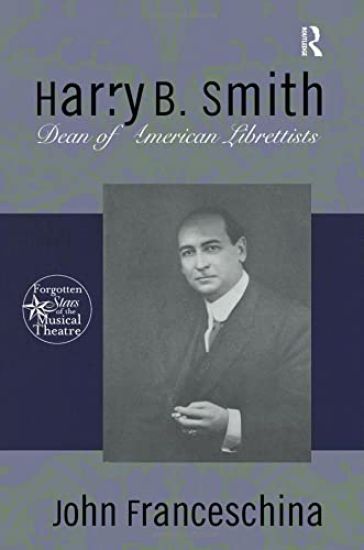
Harry B. Smith

Harry B. Smith

John Franceschina

Routledge
2016
nidottu
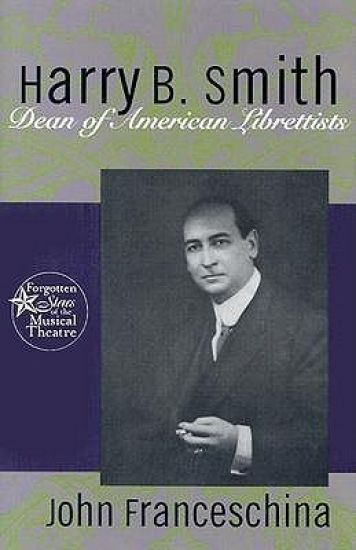
Harry B. Smith was the most prolific writer of librettos for the American musical theatre in history, with nearly half of his 300 works actually opening in New York City. In addition, Smith was instrumental in adapting and popularizing foreign musicals in America, significantly influencing writing and composing styles of American shows. He worked with every major composer in America between 1880 and 1920, and consequently this examination of his work and process is highly instructive of the history of the American musical.
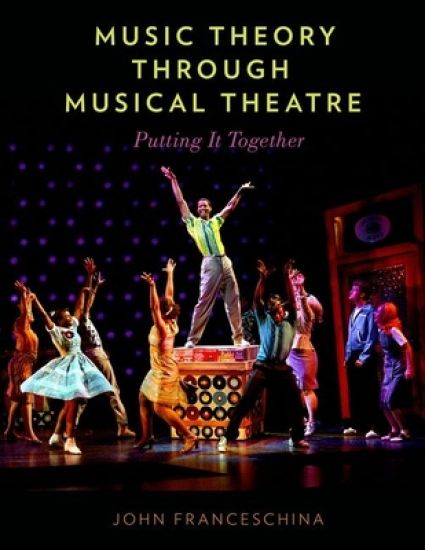
Music Theory through Musical Theatre

Music Theory through Musical Theatre

John Franceschina

Oxford University Press Inc
2015
sidottu
Music Theory through Musical Theatre takes a new and powerful approach to music theory. Written specifically for students in music theatre programs, it offers music theory by way of musical theatre. Not a traditional music theory text, Music Theory through Musical Theatre tackles the theoretical foundations of musical theatre and musical theatre literature with an emphasis on what students will need to master in preparation for a professional career as a performer. Veteran music theatre musician John Franceschina brings his years of experience to bear in a book that offers musical theatre educators an important tool in equipping students with what is perhaps the most important element of being a performer: the ability to understand the language of music in the larger dramatic context to which it contributes. The book uses examples exclusively from music theater repertoire, drawing from well-known and more obscure shows and songs. Musical sight reading is consistently at the forefront of the lessons, teaching students to internalize notated music quickly and accurately, a particularly necessary skill in a world where songs can be added between performances. Franceschina consistently links the concepts of music theory and vocal coaching, showing students how identifying the musical structure of and gestures within a piece leads to better use of their time with vocal coaches and ultimately enables better dramatic choices. Combining formal theory with practical exercises, Music Theory through Musical Theatre will be a lifelong resource for students in musical theatre courses, dog-eared and shelved beside other professional resource volumes.
Music Theory through Musical Theatre

Music Theory through Musical Theatre

John Franceschina

Oxford University Press Inc
2015
nidottu
Music Theory through Musical Theatre takes a new and powerful approach to music theory. Written specifically for students in music theatre programs, it offers music theory by way of musical theatre. Not a traditional music theory text, Music Theory through Musical Theatre tackles the theoretical foundations of musical theatre and musical theatre literature with an emphasis on what students will need to master in preparation for a professional career as a performer. Veteran music theatre musician John Franceschina brings his years of experience to bear in a book that offers musical theatre educators an important tool in equipping students with what is perhaps the most important element of being a performer: the ability to understand the language of music in the larger dramatic context to which it contributes. The book uses examples exclusively from music theater repertoire, drawing from well-known and more obscure shows and songs. Musical sight reading is consistently at the forefront of the lessons, teaching students to internalize notated music quickly and accurately, a particularly necessary skill in a world where songs can be added between performances. Franceschina consistently links the concepts of music theory and vocal coaching, showing students how identifying the musical structure of and gestures within a piece leads to better use of their time with vocal coaches and ultimately enables better dramatic choices. Combining formal theory with practical exercises, Music Theory through Musical Theatre will be a lifelong resource for students in musical theatre courses, dog-eared and shelved beside other professional resource volumes.
Hermes Pan

Hermes Pan

John Franceschina

Oxford University Press Inc
2012
sidottu
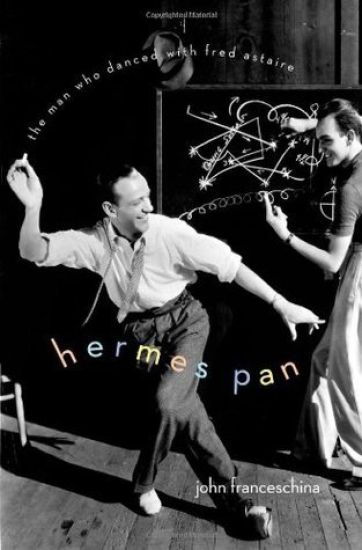
Hermes Pan: The Man who Danced with Fred Astaire is a rags-to-riches story about a boy from Tennessee who, armed with only an 8th grade education, an inexhaustible imagination, and an innate talent for dancing, becomes the most prolific and popular choreographer of the glory days of the Hollywood musical. As luck would have it, Pan's movie career began and ended working with Fred Astaire, the most famous dancer on film. The pair made nearly two dozen movies and television shows together and in Astaire, Pan found an artistic soul mate with whom he would develop a symbiotic relationship for the rest of his life. A devout Roman Catholic, Hermes was interested in perfecting the souls as well as the physical technique of his dancers and the book explores the profound effect he had on the lives of stars such as June Haver, Ann Miller, Rita Hayworth, Linda Darnell, Ginger Rogers, and Betty Grable. The book examines each of Pan's eighty-nine films offering a panoramic view of Pan's choreography from "Flying Down to Rio" in 1933 to "Aiutami a sognare" (Help Me Dream) in 1980 and comments on the development of Pan's art throughout his fifty-year career. Although Pan lived what many considered a life without scandal or controversy, as a Catholic and homosexual gentleman living as one of the "A-List" of Hollywood's elite, Pan had many personal conflicts and doubts. The book explores these in full along with his unease with the film community, his spiritual vocation as well as his artistic philosophies. The self-made choreographer of films such as "Top Hat", "Swing Time", "Moon Over Miami", "Kiss Me Kate", "Can-Can", "My Fair Lady", "Porgy and Bess", and "Cleopatra", Hermes Pan is proof that the American Dream is still alive.
Harry B. Smith

Harry B. Smith

John Franceschina

Routledge
2003
sidottu
Harry B. Smith was the most prolific writer of librettos for the American musical theatre in history, with nearly half of his 300 works actually opening in New York City. In addition, Smith was instrumental in adapting and popularizing foreign musicals in America, significantly influencing writing and composing styles of American shows. He worked with every major composer in America between 1880 and 1920, and consequently this examination of his work and process is highly instructive of the history of the American musical.