Kirjojen hintavertailu. Mukana 12 390 323 kirjaa ja 12 kauppaa.

Kirjailija

John Freeman

Kirjat ja teokset yhdessä paikassa: 77 kirjaa, julkaisuja vuosilta 1991-2026, suosituimpien joukossa Down Deep: Captain Charles R. MacVean, U.S. Navy (Ret.), PhD: Courage - Leadership - Hijinks. Vertaile teosten hintoja ja tarkista saatavuus suomalaisista kirjakaupoista.

77 kirjaa

Kirjojen julkaisuhaarukka 1991-2026.

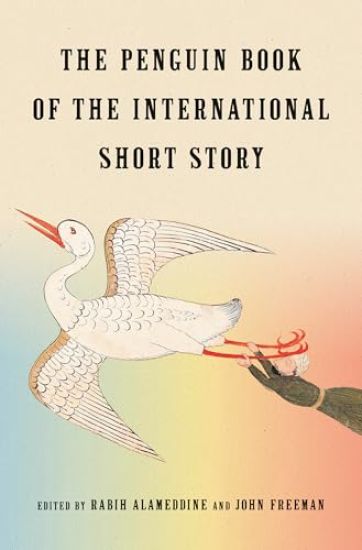
The Penguin Book of the International Short Story

The Penguin Book of the International Short Story

Rabih Alameddine; John Freeman

Penguin Putnam Inc
2026
sidottu
The best in short fiction from around the world, from celebrated anthologist and author John Freeman and award-winning novelist Rabih Alameddine In The Penguin Book of the International Short Story, writers from different nations, languages, and sensibilities come together in a globe-spanning and long overdue tour of modern fiction. In "Super-Frog Saves Tokyo," Haruki Murakami brings us a man who believes a giant amphibian is enlisting him to protect his city from an impending earthquake. In "War of the Clowns," Mozambique's Mia Couto sketches a perfect allegory for our divided culture. In the predecessor story to her iconic novel The Vegetarian, Han Kang depicts a protagonist quietly undergoing an unlikely transformation. A Colm T ib n character thinks, "I do not even believe in Ireland," while Carol Bensimon reflects from Brazil, "All great ideas seem like bad ones at some point." Salman Rushdie brings us to unsettled rural India, Olga Tokarczuk to an ugly woman exhibit at the circus, Abdellah Ta a to the queer Arab world, Ted Chiang to a far-off galaxy. The United States is far from the center of the literary universe. This anthology is reminiscent of iconic director Bong Joon Ho's line about overcoming "the one-inch-tall barrier of subtitles" to enter a new world of film--the work of thoughtful and accomplished translators opens the door wide for those curious about what lies beyond the Western canon and classroom. Writers from six continents, ranging from new voices to literary icons, each offer a window into a distinct point of view, both transcending and illuminating their place of origin. They offer not only captivating prose, but a reminder of the power of the imagination across space and time.
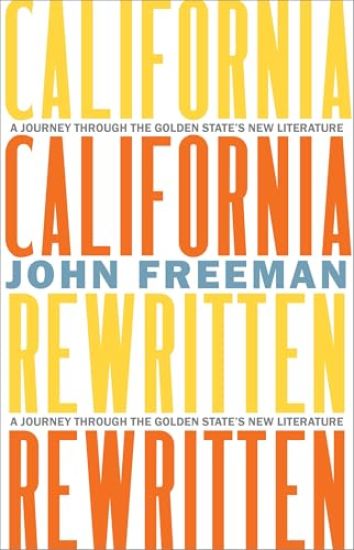
California Rewritten

California Rewritten

John Freeman

Heyday Books
2025
sidottu
Dive into the revelatory worlds of California's most exciting writers, and discover how their books uncover our history and can help us imagine our shared future."In Freeman's hands, California is a literary mecca, and each essay a revelation." —Ingrid Rojas Contreras, author of The Man Who Could Move CloudsPercival Everett, Rebecca Solnit, Tommy Orange, Michael Connelly, Julie Otsuka: As John Freeman writes in California Rewritten, "Literature of so many kinds and so many genres from so many different types of people—at the highest level—has been coming out of California and from Californians for decades now." Freeman, one of the sharpest editors working today, has followed the evolution of California's literary life since his teenage years in Sacramento. In over fifty essays inspired by his hosting of Alta Journal's popular California Book Club, he offers an essential road map to California literature now. He shows us how the state's most exciting writers can unlock our understanding of the past, and how they can deepen our imaginations as we confront the most pressing issues that face our society: labor and inequality, migration and citizenship, technology and its limits, changing landscapes and climate catastrophe. Incisive and compulsively readable, California Rewritten will be a source of empowering discovery for any book lover who cares about the Golden State.
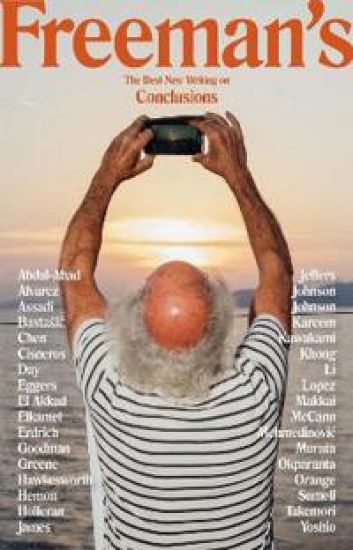
Freeman's: Conclusions

Freeman's: Conclusions

John Freeman

GROVE PRESS / ATLANTIC MONTHLY PRESS
2023
nidottu
Featuring new work from Rebecca Makkai, Aleksandar Hemon, Rachel Khong, Louise Erdrich, and more, the tenth and final installment of the boundary-pushing literary journal Freeman's, which explores all the ways of coming to an endOver the course of ten years, Freeman's has introduced the English-speaking world to countless writers of international import and acclaim, from Olga Tokarczuk to Valeria Luiselli, while also spotlighting brilliant writers working in English, from Tommy Orange to Tess Gunty. Now, in its last issue, this unique literary project ponders all the ways of reaching a fitting conclusion.For Sayaka Murata, keeping up with the comings and goings of fashion and its changing emotional landscapes can mean being left behind, and in her poem "Amenorrhea," Julia Alverez experiences the end of the line as menopause takes hold. Yet sometimes an end is merely a beginning, as Barry Lopez meditates while walking through the snowy Oregonian landscapes. While Chinelo Okparanta's story "Fatu" confronts the end of a relationship under the specter of new life, other writers look towards aging as an opportunity for rebirth, such as Honor e Fanonne Jeffers, who takes on the role of being her own elder, comforting herself in the ways that her grandmother used to. Finally, in his comic story "Everyone at Dinner Has a Max Von Sydo Story," Dave Eggers suggests that sometimes stories don't have neat or clean endings--that sometimes the middle is enough.With new writing from Sandra Cisneros, Colum McCann, Omar El Akkad, and Mieko Kawakami, Freeman's: Conclusions is a testament to the startling power of literature to conclude in a state of beauty, fear, and promise.
Freeman's Conclusions

Freeman's Conclusions

John Freeman

Atlantic Books
2023
nidottu
Over the course of ten years, Freeman's has introduced the English-speaking world to countless writers of international import and acclaim, from Olga Tokarczuk to Valeria Luiselli, while also spotlighting brilliant writers working in English, from Tommy Orange to Tess Gunty. Now, in its last issue, this unique literary project ponders all the ways of reaching a fitting conclusion.For Sayaka Murata, keeping up with the comings and goings of fashion and its changing emotional landscapes can mean being left behind, and in her poem 'Amenorrhea' Julia Alverez experiences the end of the line as menopause takes hold. Yet sometimes an end is merely a beginning, as Barry Lopez meditates while walking through the snowy Oregonian landscapes. While Chinelo Okparanta's story 'Fatu' confronts the end of a relationship under the spectre of new life, other writers look towards aging as an opportunity for rebirth, such as Honorée Fanonne Jeffers, who takes on the role of being her own elder, comforting herself in the ways that her grandmother used to. Finally, in his comic story 'Everyone at Dinner Has a Max Von Sydow Story,' Dave Eggers suggests that sometimes stories don't have neat or clean endings - that sometimes the middle is enough.With new writing from Sandra Cisneros, Colum McCann, Omar El Akkad and Mieko Kawakami, Freeman's: Conclusions is a testament to the startling power of literature to conclude in a state of beauty, fear and promise.
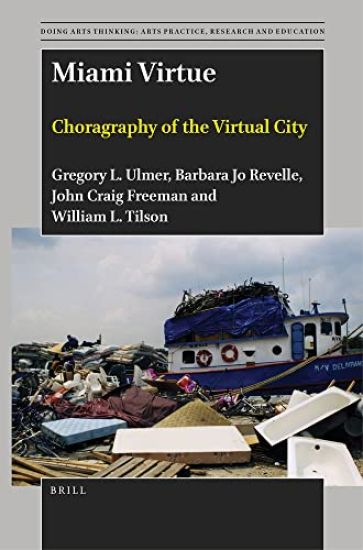
Miami Virtue

Miami Virtue

Gregory Ulmer; Barbara Revelle; John Freeman; William Tilson

BRILL
2022
sidottu
The Florida Research Ensemble (Ulmer, Revelle, Freeman and Tilson) is an interdisciplinary collaborative arts and research group developing choragraphy, a method of inquiry which applies modernist arts practices and poststructural theory to the design and testing of image as category. The authors argue that image categories functions for networked digital media the way Aristotle's word categories functioned for literate concepts. “Chora” was retrieved for contemporary philosophy by Jacques Derrida, in the context of his deconstruction of Western metaphysics. Grounded in grammatology (the history and theory of writing), Derrida’s critique of Being and Becoming as primary concepts of reality is that the category or classification system invented within literacy is not adequate for the apparatus of electracy that has developed since the industrial revolution. The FRE project in Miami designed and tested a prototype for a choral category, capable of coordinating real places, cultural collective information, digital technologies, and personal experience. Miami Virtue tested choragraphy as a method for adopting a particular region (the Miami River), including primary discourses organizing its lifeworld, and articulating it as a category of thought. The designed and recorded virtual site functions for electracy the way concepts function for literacy: as a navigable set supporting holistic intelligence and public discourse.
Miami Virtue

Miami Virtue

Gregory Ulmer; Barbara Revelle; John Freeman; William Tilson

BRILL
2022
nidottu
The Florida Research Ensemble (Ulmer, Revelle, Freeman and Tilson) is an interdisciplinary collaborative arts and research group developing choragraphy, a method of inquiry which applies modernist arts practices and poststructural theory to the design and testing of image as category. The authors argue that image categories functions for networked digital media the way Aristotle's word categories functioned for literate concepts. “Chora” was retrieved for contemporary philosophy by Jacques Derrida, in the context of his deconstruction of Western metaphysics. Grounded in grammatology (the history and theory of writing), Derrida’s critique of Being and Becoming as primary concepts of reality is that the category or classification system invented within literacy is not adequate for the apparatus of electracy that has developed since the industrial revolution. The FRE project in Miami designed and tested a prototype for a choral category, capable of coordinating real places, cultural collective information, digital technologies, and personal experience. Miami Virtue tested choragraphy as a method for adopting a particular region (the Miami River), including primary discourses organizing its lifeworld, and articulating it as a category of thought. The designed and recorded virtual site functions for electracy the way concepts function for literacy: as a navigable set supporting holistic intelligence and public discourse.
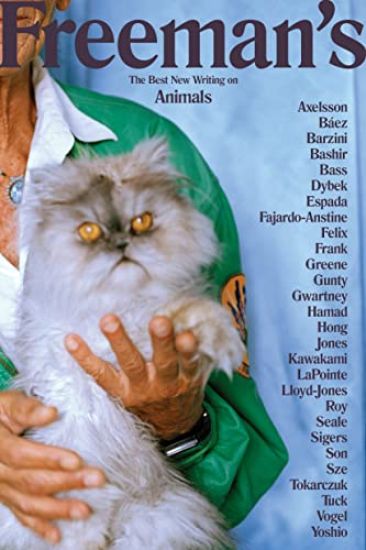
Freeman's Animals

Freeman's Animals

John Freeman

GROVE PRESS / ATLANTIC MONTHLY PRESS
2022
nidottu
Over a century ago, Rilke went to the Jardin des Plantes in Paris, where he watched a pair of flamingos. A flock of other birds screeched by, and, as he describes in a poem, the great red-pink birds sauntered on, unphased, then 'stretched amazed and singly march into the imaginary.' This encounter - so strange, so typical of flamingos with their fabulous posture - is also still typical of how we interact with animals. Even as our actions threaten their very survival, they are still symbolic, captivating and captive, caught in a drama of our framing.This issue of Freeman's tells the story of that interaction, its costs, its tendernesses, the mythological flex of it. From lovers in a Chiara Barzini story, falling apart as a group of wild boars roams in their Roman neighbourhood, to the soppen emergency birth of a cow on a Wales farm, stunningly described by Cynan Jones, no one has the moral high ground here. Nor is this a piece of mourning. There's wonder, humour, rage and relief, too.Featuring pigeons, calves, stray dogs, mascots, stolen cats, and bears, to the captive, tortured animals who make up our food supply, powerfully described in Nobel Prize winner Olga Tokarczuk's essay, this wide-ranging issue of Freeman's will stimulate discussion and dreams alike.
Freeman's: Animals

Freeman's: Animals

John Freeman

GROVE PRESS / ATLANTIC MONTHLY PRESS
2022
nidottu
Featuring new work from Mieko Kawakami, Mart n Espada, Kali Fajardo-Anstine, Arthur Sze, Camonghne Felix, and more, the latest installment of the acclaimed literary journal Freeman's explores the irrevocably intertwined lives of animals and the humans that exist alongside themOver a century ago, Rilke went to the Jardin des Plantes in Paris, where he watched a pair of flamingos. A flock of other birds screeched by, and, as he describes in a poem, the great red-pink birds sauntered on, unphased, then "stretched amazed and singly march into the imaginary." This encounter--so strange, so typical of flamingos, with their fabulous posture--is also still typical of how we interact with animals. Even as our actions threaten their very survival, they are still symbolic, captivating and captive, caught in a drama of our framing This issue of Freeman's tells the story of that interaction, its costs, its tendernesses, the mythological flex of it. From lovers in a Chiara Barzini story, falling apart as a group of wild boars roams in their Roman neighborhood, to the soppen emergency birth of a cow on a Wales farm, stunningly described by Cynan Jones, no one has the moral high ground here. Nor is this a piece of mourning. There's wonder, humor, rage, and relief, too.Featuring pigeons, calves, stray dogs, mascots, stolen cats, and bears, to the captive, tortured animals who make up our food supply, powerfully described in Nobel Prize winner Olga Tokarczuk's essay, this wide-ranging issue of Freeman's will stimulate discussion and dreams alike.
The Penguin Book Of The Modern American Short Story
A selection of the best and most representative contemporary American short fiction from 1970 to 2020, including such authors as Ursula K. LeGuin, Toni Cade Bambara, Jhumpa Lahiri, Sandra Cisneros, and Ted Chiang, hand-selected by celebrated editor and anthologist John FreemanIn the past fifty years, the American short story has changed dramatically. New voices, forms, and mixtures of styles have brought this unique genre a thrilling burst of energy. The Penguin Book of the Modern American Short Story celebrates this avalanche of talent. This rich anthology begins in 1970 and brings together a half century of powerful American short stories from all genres, including--for the first time in a collection of this scale--science fiction, horror, and fantasy, placing writers such as Ursula K. Le Guin, Ken Liu, and Stephen King next to some beloved greats of the literary form: Raymond Carver, Grace Paley, Chimamanda Ngozi Adichie, and Denis Johnson. Culling widely, John Freeman, the former editor of Granta and now editor of his own literary annual, brings forward some astonishing work to be regarded in a new light. Often overlooked tales by Dorothy Allison, Percival Everett, and Charles Johnson will recast the shape and texture of today's enlarging atmosphere of literary dialogue. Stories by Lauren Groff and Ted Chiang raise the specter of engagement in ecocidal times. Short tales by Tobias Wolff, George Saunders, and Lydia Davis rub shoulders with near novellas by Susan Sontag and Andrew Holleran. This book will be a treasure trove for readers, writers, and teachers alike.
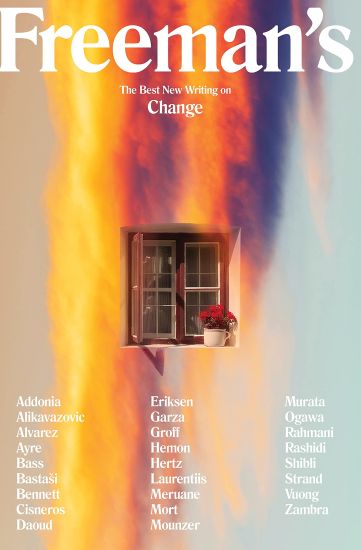
Freeman's Change

Freeman's Change

John Freeman

Grove Press / Atlantic Monthly Press
2021
nidottu
The Covid-19 pandemic forced many of us to reimagine our homes, work, relationships and adapt to a new way of life - one with far fewer possibilities for interaction. And yet, in this period of intense isolation, we've faced dilemmas which are nearly universal. How to love, to care for aging parents, to find a home, attend to a planet in flux, fight for justice. This vast range of experiences is captured by our greatest storytellers, essayists and poets in Freeman's: Change.Some pieces explore the small moments that serve as new routines in a life lived at home, as in Joshua Bennett's essay, where a Coltrane playlist sets the stage for early morning dances with his newborn son. Sometimes, it's the absence of change that drives us to the edge. In Lina Mounzer's 'The Gamble,' a father's incessant hope for a better life festers and sinks the whole family after they leave Lebanon during the Civil War. And in 'Final Days,' Sayaka Murata imagines a future without aging, where people must choose how and when they want to die, consulting guidebooks like Let's Die Naturally! Super Deaths for Adults & The Best Spots.With new writing from Julia Alvarez, Sandra Cisneros, Zahia Rahman, Yoko Ogawa, Yasmine El Rashidi, Lina Meruane and Aleksandar Hemon, and featuring work from never-before-published writers like Elizabeth Ayre, Freeman's: Change opens a window into the many-sided ways we adapt.
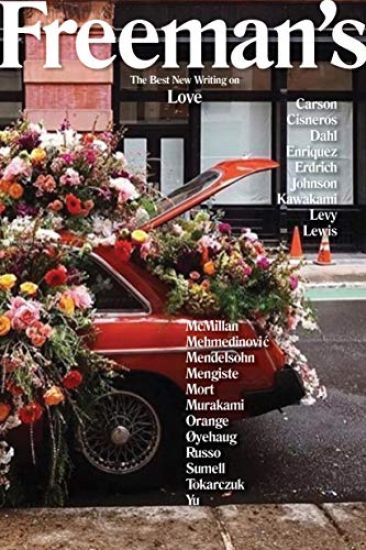
Freeman's Love

Freeman's Love

John Freeman

Grove Press / Atlantic Monthly Press
2020
nidottu
Day by day, tweet by tweet, it often feels like our world is run on hate. Invective. Cruelty and sadism. But is it possible the greatest and most powerful force is love? In the newest issue of this acclaimed series, Freeman's Love asks this question, bringing together literary heavyweights like Richard Russo, Anne Carson, Sandra Cisneros, Louise Erdrich, Haruki Murakami, Tommy Orange and Nobel Prize winner Olga Tokarczuk alongside emerging writers such as Andres Felipe Solano and Semezdin Mehmedinovic.Together, the pieces comprise a stunning exploration of the complexities of love, tracing it from its earliest stirrings, to the forbidden places where it emerges against reason, to loss so deep it changes the color of perception. In a time of contentiousness and flagrant abuse, this issue promises what only love can bring: a balm of complexity and warmth.
Freeman's: Love

Freeman's: Love

John Freeman

Black Cat
2020
nidottu
In a time of contentiousness and flagrant abuse, it often feels as if our world is run on hate. Invective. Cruelty and sadism. But is it possible the greatest and most powerful force is love? In the newest issue of this acclaimed series, Freeman's Love asks this question, bringing together literary heavyweights like Tommy Orange, Anne Carson, Louise Erdrich, and Nobel Prize winner Olga Tokarczuk alongside emerging writers such as Gunnhild Oyehaug and Semezdin Mehmedinovic.Mehmedinovic contributes a breathtaking book-length essay on the aftermath of his wife's stroke, describing how the two reassembled their lives outside their home country of Bosnia. Richard Russo's charming and painful "Good People" introduces us to two sets of married professors who have been together for decades, and for whom love still exists, but between the wrong pair. Haruki Murakami tells the tale of a one-night stand that feels like a dying sun.Together, the pieces comprise a stunning exploration of the complexities of love, tracing it from its earliest stirrings, to the forbidden places where it emerges against reason, to loss so deep it changes the color of perception. In a time when we need it the most, this issue promises what only love can bring: a solace of complexity and warmth.
Tales Of Two Planets

Tales Of Two Planets

John Freeman; Margaret Atwood; Arundhati Roy

Penguin Putnam Inc
2020
nidottu
In the course of John Freeman's editorial work one major theme has come up repeatedly: how climate change is making inequalities much worse. Freeman has engaged with some of today's most eloquent writers on this issue, resulting in a collection of fiction, essays, poems, and reportage. Margaret Atwood conjures with a dystopian future in three remarkable poems. Lauren Groff takes us to Florida; Edwidge Danticat to Haiti; Tahmima Anam to Bangladesh. Eka Kurniawan takes us to Indonesia and Chinelo Okparanta to Nigeria. These are news stories, with the emphasis on story, about the most important crisis of our times.