Kirjojen hintavertailu. Mukana 12 116 002 kirjaa ja 12 kauppaa.

Kirjailija

John Fry

Kirjat ja teokset yhdessä paikassa: 44 kirjaa, julkaisuja vuosilta 1983-2022, suosituimpien joukossa The Legend of Mary, Queen of Scots [By T. Wenman?] and Other Ancient Poems, Now First Published from Mss. of the Sixteenth Century. with an Introduction, Notes, and an Appendix [By the Editor J. F., i.e. John Fry]. L.P.. Vertaile teosten hintoja ja tarkista saatavuus suomalaisista kirjakaupoista.

44 kirjaa

Kirjojen julkaisuhaarukka 1983-2022.

The Legend of Mary, Queen of Scots [By T. Wenman?] and Other Ancient Poems, Now First Published from Mss. of the Sixteenth Century. with an Introduction, Notes, and an Appendix [By the Editor J. F., i.e. John Fry]. L.P.
Title: The Legend of Mary, Queen of Scots by T. Wenman?] and other ancient poems, now first published from MSS. of the sixteenth century. With an introduction, notes, and an appendix by the editor J. F., i.e. John Fry]. L.P.Publisher: British Library, Historical Print EditionsThe British Library is the national library of the United Kingdom. It is one of the world's largest research libraries holding over 150 million items in all known languages and formats: books, journals, newspapers, sound recordings, patents, maps, stamps, prints and much more. Its collections include around 14 million books, along with substantial additional collections of manuscripts and historical items dating back as far as 300 BC.The POETRY & DRAMA collection includes books from the British Library digitised by Microsoft. The books reflect the complex and changing role of literature in society, ranging from Bardic poetry to Victorian verse. Containing many classic works from important dramatists and poets, this collection has something for every lover of the stage and verse. ++++The below data was compiled from various identification fields in the bibliographic record of this title. This data is provided as an additional tool in helping to insure edition identification: ++++ British Library Wenman, Thomas; Fry, John; 1810. xix. 159 p.; 8 . G.1286.
Quantitative Methods in Finance using R

Quantitative Methods in Finance using R

John Fry; Matthew Burke

OPEN UNIVERSITY PRESS
2022
nidottu
“The book will form a solid foundation to support the transition of students into the world of work or further research.”Professor Jane M Binner, Chair of Finance, Department of Finance, University of Birmingham, UK“In over 20 years of teaching quantitative methods, I have rarely come across a book such as this which meets/exceeds all the expectations of its intended audience so well”Tuan Yu, Lecturer, Kent Business School, Canterbury, UK“This is a fantastic book for anyone wanting to understand, learn and apply quantitative methods in finance using R” Professor Raphael Markellos, Professor of Finance, Norwich Business School, UKQuantitative Methods in Finance Using R draws on the extensive teaching and research expertise of John Fry and Matt Burke, covering a wide range of quantitative methods in Finance that utilise the freely downloadable R software. With software playing an increasingly important role in finance, this book is a must-have introduction for finance students who want to explore how they can undertake their own quantitative analyses in dissertation and project work.Assuming no prior knowledge, and taking a holistic approach, this brand new title guides you from first principles and help to build your confidence in tackling large data sets in R. Complete with examples and exercises with worked solutions, Fry and Burke demonstrate how to use the R freeware for regression and linear modelling, with attention given to presentation and the importance of good writing and presentation skills in project work and data analysis more generally.Through this book, you will develop your understanding of:•Descriptive statistics•Inferential statistics•Regression•Analysis of variance•Probability regression models•Mixed models•Financial and non-financial time seriesJohn Fry is a senior lecturer in Applied Mathematics at the University of Hull. Fry has a PhD in Mathematical Finance from the University of Sheffield. His main research interests span mathematical finance, econophysics, statistics and operations research. Matt Burke is a senior lecturer in Finance at Sheffield Hallam University. He holds a PhD in Finance from the University of East Anglia. Burke’s main research interests lie in asset pricing and climate finance.
With the Dogstar as My Witness

With the Dogstar as My Witness

John Fry

Orison Books
2018
nidottu
Organized around the Catholic canonical prayer hours, beginning in the evening and moving into morning (vespers, compline, vigils, lauds), and set in an ethereal South Texas landscape, the poems in John Fry's debut collection, ''With the Dogstar as My Witness,'' wrestle with theological and deeply personal concerns in language that is wrenched almost to breaking, but which holds after all and forms a tapestry of (sometimes tortured) prayer.
A Serious and Affectionate Address to the People Called Quakers; Containing Some Remarks on the Present State of That People, and Some Seasonable Advice Relating Thereto; ... By John Fry
The 18th century was a wealth of knowledge, exploration and rapidly growing technology and expanding record-keeping made possible by advances in the printing press. In its determination to preserve the century of revolution, Gale initiated a revolution of its own: digitization of epic proportions to preserve these invaluable works in the largest archive of its kind. Now for the first time these high-quality digital copies of original 18th century manuscripts are available in print, making them highly accessible to libraries, undergraduate students, and independent scholars.The Age of Enlightenment profoundly enriched religious and philosophical understanding and continues to influence present-day thinking. Works collected here include masterpieces by David Hume, Immanuel Kant, and Jean-Jacques Rousseau, as well as religious sermons and moral debates on the issues of the day, such as the slave trade. The Age of Reason saw conflict between Protestantism and Catholicism transformed into one between faith and logic -- a debate that continues in the twenty-first century.++++The below data was compiled from various identification fields in the bibliographic record of this title. This data is provided as an additional tool in helping to insure edition identification: ++++British LibraryT068075 Dublin]: London: printed, and Dublin reprinted by Isaac Jackson, 1768. vi, iii-35, 1]p.; 8
Ellipsis and wa-marking in Japanese Conversation
This book investigates the operation of two linguistic mechanisms, ellipsis and wa-marking, in a corpus of colloquial Japanese speech. Its data set is the CallHome Japanese (CHJ) corpus, a collection of transcripts and digitized speech data for 120 telephone conversations between native speakers of Japanese. To make the CHJ data useful for linguistic research, John Fry annotates the original transcripts with a comprehensive set of acoustic, phonetic, syntactic, and semantic tags. John Fry demonstrates that Japanese conversation obeys certain principles of argument ellipsis that appear to be language universal: namely, the tendency to omit transitive and human subjects and the tendency to express at most one argument per clause. He identifies a set of syntactic and semantic factors that correlate significantly with the ellipsis of grammatical particles following a noun phrase. These factors include the grammatical construction type (question, idiom), length of the NP, utterance length, proximity of the NP to the predicate, and the animacy and definiteness of the NP. The animacy and definiteness constrains are of particular interest because these too seem to reflect language-universal principles. Analyzing the CHJ data further, Fry investigates the use and function of the topic-marking particle wa. His study identifies a set of semantic and prosodic properties that tend to distinguish wa from the subject-marking particle ga. This book shows that wa-phrases exhibit more prominent intonation, as measured by peak F0, than ga-phrases in the CHJ speech data, contradicting accounts which predict that ga-phrases, because they are associated with new information, should be more prominent.
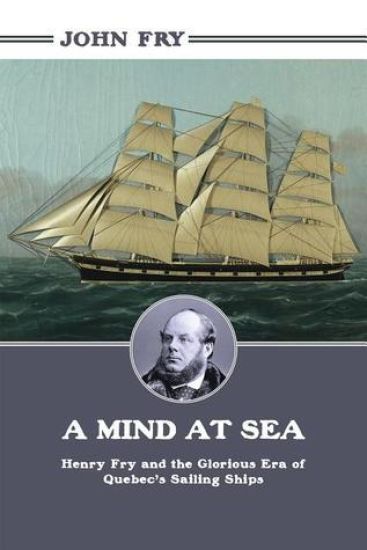
A Mind at Sea

A Mind at Sea

John Fry

Dundurn Group Ltd
2014
pokkari
The trials and tribulations of a Canadian business titan during a fascinating period in 19th-century Quebec. A Mind at Sea is an intimate window into a vanished time when Canada was among the world’s great maritime countries. Between 1856 and 1877, Henry Fry was the Lloyd’s agent for the St. Lawrence River, east of Montreal. The harbour coves below his home in Quebec were crammed with immense rafts of cut wood, the river’s shoreline sprawled with yards where giant square-rigged ships – many owned by Fry – were built. As the president of Canada’s Dominion Board of Trade, Fry was at the epicentre of wealth and influence. His home city of Quebec served as the capital of the province of Canada, while its port was often the scene of raw criminality. He fought vigorously against the kidnapping of sailors and the dangerous practice of deck loading. He also battled against and overcame his personal demon – mental depression – going on to write many ship histories and essays on U.S.-Canada relations. Fry was a colourful figure and a reformer who interacted with the famous figures of the day, including Lord and Lady Dufferin, Sir John A. Macdonald, Wilfrid Laurier, and Sir Narcisse-Fortunat Belleau, Quebec’s lieutenant-governor.
Almost Pioneers

Almost Pioneers

John Fry

TwoDot Books
2013
pokkari
In the fall of 1913, Laura and Earle Smith, a young Iowa couple, made the gutsy—some might say foolhardy—decision to homestead in Wyoming. There, they built their first house, a claim shanty half dug out of the ground, hauled every drop of their water from a spring over a half-mile away, and fought off rattlesnakes and boredom on a daily basis. Soon, other families moved to nearby homesteads, and the Smiths built a house closer to those neighbors. The growing community built its first public schoolhouse and celebrated the Fourth of July together—although the festivities were cut short because of snow.By 1917, however, the Smiths had moved back to Iowa, leasing their land to a local rancher and using the proceeds to fund Earle's study of law. The Smiths lived in Iowa for most of the rest of their lives, and sometime after the mid-1930s, Laura wrote this clear, vivid, witty, and self-deprecating memoir of their time in Wyoming, a book that captures the pioneer spirit of the era and of the building of community against daunting odds.
Colour Atlas of Minor Surgery in General Practice

Colour Atlas of Minor Surgery in General Practice

John Fry; I. Higton; John Stephenson

Springer
2012
nidottu
The New Contract which came into force on April 1st 1990 includes proposals for the provision of minor surgery services by the General Practitioner. The aim of this book is to assist those doctors undertaking minor surgery in their Practices. It is intended to present a practical, clear and concise text. This is accompanied by easy to follow illustrations. The contents of the book are governed by two considerations. Firstly, it covers only those procedures which are safe for the patient. Secondly, it only includes minor surgery which it is possible for the ordinary General Practitioner in a busy practice to undertake. Vll Chapter One The Advantages of Minor Surgery in General Practice Minor Surgery:- Despite this descriptive term, no surgery can be considered "minor" no matter where it is carried out! It requires a knowledge of anatomy and basic surgical principles. There must be an understanding of the procedures and technical skills required. Careful planning is needed at all stages.Arrangements must also be made to deal with any complications and disasters which may occur. Having stated these provisos, however, surgical procedures can and should be an important part of general practice within the British National Health Service (NHS). There are many advantages to be gained, both for patient and doctor, when minor surgery is undertaken by the general practitioner.
The MRCGP Study Book

The MRCGP Study Book

T. A. I. Bouchier Hayes; John Fry; Eric Gambrill; Alistair Moulds; K. Young

Springer
2012
nidottu
The Membership examination of the Royal College of General Practitioners has evolved and matured as a seal and a test on completion of vocational training. More than 1000 candidates are taking the examination each year and an increasing majority are trainees who have completed their three­ year training period. The whole concept and philosophy of the MRCGP has been questioned by critical cynics who refuse to accept general practice as a field of medical practice worthy of recognition as a specialty with its own core of know­ ledge, skills and expertise and with its own special epidemiology, pathology, clinical presentations and management. These cynical critics are being answered by the growth of the examination and its recognition within the profession as an important and necessary goal to be achieved. The MRCGP exam has arrived, it is here to stay and it will continue to grow and evolve. The exam is no easy obstacle to negotiate. It has a regular failure rate of I in 3 and it requires special preparation and study of its examinees if they are to understand its aims, contents and methods. It must not be assumed that even the brightest trainee can walk off the street, enter the examin­ ation hall and be confident of passing. It requires a few months of careful and guided preparation.
A New Approach to Medicine
Medicine is news. There is constant public interest in health and disease; in medical miracles and in breakthroughs; in medical disasters, failures and malpraxis ; in deficiencies and defects ofhealth services; and in the rising costs ofhealth care. Medicine is 'big business'. Physicians co me out near the top money earners in most medical care systems. In the Uni ted Kingdom the National Health Service (NHS) now costs over [6000 million a year ($ ro 800 million), a free service that costs every British man, woman and child [120 a year ($216) in direct and indirect taxes. But this is less than the [500 ($900) a year that medical care costs each person in USA and West Germany. In developed countries health care costs are approaching ro% ofthe gross national product (GNP). It is big business also in that in Britain the NHS is one of the largest employers; about I million Britons work as employees of the NHS, caring for the other 54 millions and in the USA the numbers are 5 million caring for 2. 5 millions. The provision of health services is full of problems and dilemmas. These problems and dilemmas cross all' national boundaries. All countries share the same problems and dilemmas. Problems of objectives, of standards, of effectiveness and efficiency, and problems of relations between the medical profession, the public and govern­ ment. Medical care still is full of mystique.
The Beecham Manual for Family Practice
This third edition of the Beecham Manual has its origins in a manual produced by Selwyn Carson for his general practice in Christchurch, New Zealand. He produced loose-leaf sets of instructions for his practice team and colleagues. Beecham Research Laboratories of New Zealand did a great service for the medical profession by publishing and distributing Dr Carson's manual there. The British version of the Beecham Manual had different objectives. The vocational training programme needed basic resources and the British Manual was created as an easy to read reference book on common prob­ lems and methods in general practice. The first and second editions met with enthusiastic approval from princi­ pals, trainers and trainees. This third edition follows the same general format but has been completely revised and updated and includes many new additions. The five sections are: o planned care of definable population and other groups o principles of teaching and learning o emergencies and their management o psychiatry o clinical care of common conditions We have kept to simple, clear and brief presentations of our conjoint views based on our experiences in our own practices. We dedicate this third edition to our colleagues involved in caring, learning and teaching. They may not agree with us completely but we hope that we will make them consider our suggestions and use them for thought, debate and discussion. We hope also that it will be used as a work book for the whole practice team.
The Family Good Health Guide

The Family Good Health Guide

John Fry; E. Gambrill; A. Moulds; G. Strube

Springer
2012
nidottu
Although we have no good definition of 'health', all people have their own ideas of whether they are healthy or not. Based on personal experience and knowledge each person comes to accept that within themselves there is a normal range of feelings and performance, departure from which could be considered abnormal or unhealthy. Despite the many amazing technological advances made over recent decades it cannot be said that access to advanced medical care is the main determining factor in the healthiness or otherwise of a society. Even in these modern times most diseases and health problems are non-curable in the strict sense, and the scope for effective prevention of disease is more limited than some enthusiasts suggest. Individuals must appreciate the limitations of modern medical care and, while seeking to use the care available to best possible effect, accept that the responsibility for trying to prevent major disease rests in their own hands. In this book we have tried to present a balanced and realistic picture of the many factors that must be taken into account if optimum disease prevention and health maintenance are to be achieved. The health of your family is your responsibility. An understanding of what can go wrong, how it can be prevented or how it can best be coped with can only be helpful to you.
Principles of Practice Management

Principles of Practice Management

W.E. Fabb; John Fry

Springer
2012
nidottu
One of the few real and lasting benefits of international medical meetings is the opportunity to meet, talk, gossip and get to know colleagues from other countries. So it was that we met, talked and planned at WONCA (World Organization of National Colleges and Academies and Academic Associa­ tions of General Practitioners/Family Physicians) meetings at Montreux and New Orleans. We realized that although we worked in different places and in different practices 'primary health care' was essentially the same the world over. Our roles, our problems, our clinical content, our challenges and objectives were similar whether we work in Europe, North America, Australasia, South Africa or developing countries. With such similarities we asked ourselves - 'why not share our common experiences for mutual benefits?' The question developed into an idea and the idea into this book. We started by selecting what we considered were important topics and then we invited friends and colleagues to join us in putting our experiences and beliefs from years of practice to readers from all over the world to demonstrate our common concerns and to learn from one another.
Commonsense Paediatrics

Commonsense Paediatrics

M. Pollak; John Fry

Springer
2012
nidottu
As 'seasoned campaigners' we offer our readers more than 60 joint practice years of commonsense experience on children and their prob­ lems. Child care is a large and fascinating part of general family practice. More than any other discipline it is a mix of understanding the wide range of normal and abnormal development, of skilful diagnosis and treatment of treatable conditions, of long-term care for handicapped children, and of organizing and carrying out prevention. F or all this and more the physician has to rely on sound knowledge and understanding of the child, parents, family, social and community conditions, available services and the likely natural history of the condition - and to dispense all this with humanity, sense and sensi­ bility. We have divided the book logically into 6 sections: (I) Factual background. (2) Universal problems of behaviour and development. (3) Common clinical disorders, so frequent and yet often so dif­ ficult to manage. (4) Social,family and community factors that create and influ­ ence many problems of childhood. (5) How to use available services and resources with discrimina­ tion and sensitivity. (6) The importance of understanding and managing the whole child. We have no single group of readers in mind. We hope that our views will be appreciated, for example, by parents, nurses, health visitors, general practitioners, community physicians and paedia­ tricians - in fact all who care for children.
Medicine in Three Societies
This book is a personal testimony of faith in the future and in the progression to better health and a better life. It is the testament of a rough and ready measuring device - a practising physician who sought to compare and contrast three systems of medical care to see what can be distilled from them to help us all in achieving better services for medical care. Medical care as a human and civic right is the con­ cern of us all. Seeking to live longer and in good health we depend on medical, social and welfare services to attain this goal. Yet it is quite obvious that there are limits and dilemmas that prevent anything but an unsatisfactory compromise. The resources that are available cannot meet all the calls. How then can we make the best use of the resources that we have? This must be the theme for this book. What can we learn from each other for the com­ mon good? Since we all are facing the same common prob­ lems, how do we go about resolving them? For example, how do the medical care services in the USSR, USA and UK cope with an acute heart attack, with a middle-aged woman with depression, with a brain-damaged child, with a road accident or with a case of measles? These are the common human factors involved.
NHS Data Book

NHS Data Book

John Fry; D. Brooks

Springer
2011
nidottu
Administering the National Health Service (NHS) is asking to navigate without reliable and sufficient information. It is amazing how a national service costing more than £15,OOOM (1984) and employing more than 1 million has existed since 1948. It is likely that with better appropriate data there could be economies and great efficiency and effectiveness. Paradoxically there is much data on the NHS, published and unpublished, that has remained unexploited and unused. In this book we have taken up the challenges of showing the availability of data and its presentation so that clinicians, adminis­ trators, committee members and politicians can better understand the state and needs of the NHS. Why this book? Because it is not possible to make decisions without facts. There is too much data around that is unrelated to the needs of clinicians, administrators, committee members and politicians. It can be brought together to provide bases for de­ cisions and, more important, to show the gaps that exist and the need for more information. What does it contain? It includes social and demographic data, NHS facts and figures, manpower data on the use of the NHS and some examples of how quality can be assessed and promoted.
Common Diseases

Common Diseases

John Fry

Springer
2011
nidottu
This fourth edition of Common Diseases comes just over 10 years after the first. There has been change and counterchange in the primary health care (PHC) field. One change has been the tendency to replace 'general practice' by 'PHC'. Vocational training has become compulsory. With larger group practices have come formalized teams and teamwork, increasing con­ cern with the business side of general practice and attempts to achieve best values for money and maximal profits. On the clinical side there have been enthusiasms for prevention, early diagnosis, anticipatory care, screening and quality initiatives. As a counterchange it is necessary to remind ourselves that the real essence of general practice, PHC, or whatever title we give it, is 'personal doctoring' of people as individuals in family units. All the changes mentioned will achieve less than expected without good continuing doctor/ patient personal care. But even this is not enough. Good general practice demands a sound knowledge of the nature of disease in the community. Not only are traditional diagnostic and therapeutic skills necessary, but also application of an understanding of the frequency and distribution of the diseases and an awareness of their likely natural history - their course and outcome.
Respiratory Diseases

Respiratory Diseases

G. Jariwalla; John Fry

Springer
2011
nidottu
DDDDDDDDDDDDD Effective management logically follows accurate diagnosis. Such logic often is difficult to apply in practice. Absolute diagnostic accuracy may not be possible, particularly in the field of primary care, when management has to be on analysis of symptoms and on knowledge of the individual patient and family. This series follows that on Problems in Practice which was concerned more with diagnosis in the widest sense and this series deals more definitively with general care and specific treatment of symptoms and diseases. Good management must include knowledge of the nature, course and outcome of the conditions, as well as prominent clinical features and assessment and investigations, but the emphasis is on what to do best for the patient. Family medical practitioners have particular difficulties and advantages in their work. Because they often work in professional isolation in the community and deal with relatively small numbers of near-normal patients their experience with the more serious and more rare conditions is restricted. They find it difficult to remain up-to-date with medical advances and even more difficult to decide on the suitability and application of new and relatively untried methods compared with those that are 'old' and well proven. Their ad vantages are that because of long -term continuous care for their patients they have come to know them and their families well and are able to become familiar with the more common and less serious diseases of their communities.