Kirjojen hintavertailu. Mukana 12 595 353 kirjaa ja 12 kauppaa.

Kirjailija

John Gillingham

Kirjat ja teokset yhdessä paikassa: 15 kirjaa, julkaisuja vuosilta 1991-2016, suosituimpien joukossa Conquests, Catastrophe and Recovery. Vertaile teosten hintoja ja tarkista saatavuus suomalaisista kirjakaupoista.

15 kirjaa

Kirjojen julkaisuhaarukka 1991-2016.

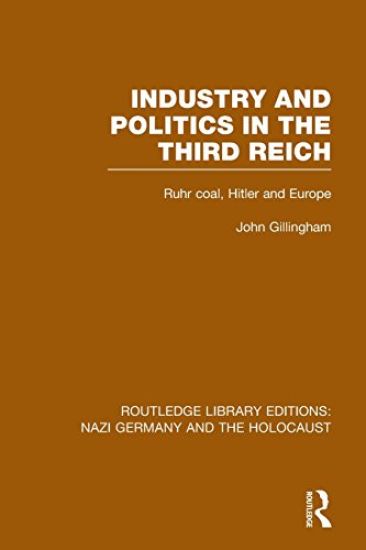
Industry and Politics in the Third Reich (RLE Nazi Germany & Holocaust)
When originally published in 1985 this was the first detailed study of business in Nazi Germany. Drawing on a wealth of new evidence from government and private archives, the book throws light on the important role played by Germany heavy industry in preserving traditions valuable for the post-Nazi future. Contrary to widely held beliefs, the industrialists of the Ruhr did not master-mind the economic strategy of the third Reich, nor were they the helpless victims of Hitler’s tyranny. In this penetrating study, the author reveals that while the management of the coal industry in the Ruhr certainly cooperated with Hitler, they did so only to the extent that it served their own purposes, which were far less destructive than those of the regime.
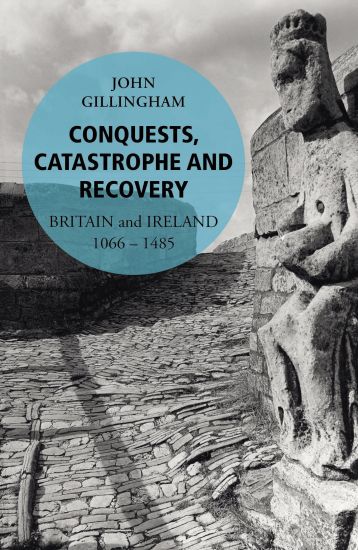
Conquests, Catastrophe and Recovery
Beginning with the Norman Conquest of England, these tumultuous centuries and their invasions shaped the languages and political geography of present-day Britain and Ireland. Tracing the political, religious and material cultures of the period, the author seeks to define the ways in which lives changed during these turbulent times.
Industry and Politics in the Third Reich (RLE Nazi Germany & Holocaust)
When originally published in 1985 this was the first detailed study of business in Nazi Germany. Drawing on a wealth of new evidence from government and private archives, the book throws light on the important role played by Germany heavy industry in preserving traditions valuable for the post-Nazi future. Contrary to widely held beliefs, the industrialists of the Ruhr did not master-mind the economic strategy of the third Reich, nor were they the helpless victims of Hitler’s tyranny. In this penetrating study, the author reveals that while the management of the coal industry in the Ruhr certainly cooperated with Hitler, they did so only to the extent that it served their own purposes, which were far less destructive than those of the regime.
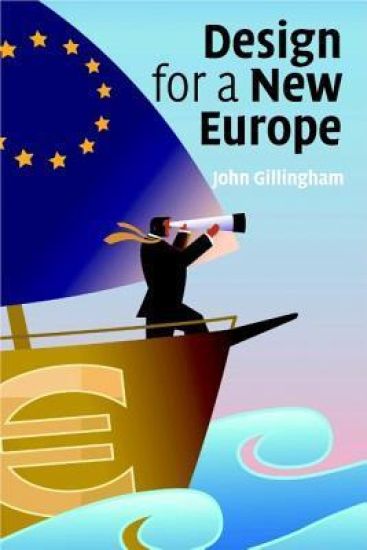
Design for a New Europe

Design for a New Europe

John Gillingham

Cambridge University Press
2006
pokkari
How did the process of European integration break down; how can it be repaired? In European Integration, 1950–2003, John Gillingham reviewed the history of the European project and predicted the rejection of the European constitution. Now the world's leading expert on the EU maps out a route to save the Union. The four chapters of this penetrating, fiercely-argued and often witty book subject today's dysfunctional European Union to critical scrutiny in an attempt to show how it is stunting economic growth, sapping the vitality of national governments, and undermining competitiveness. It explains how the attempt to revive the EU by turning it into a champion of research and development will backfire and demonstrates how Europe's great experiment in political and economic union can succeed only if the wave of liberal reform now under way in the historically downtrodden east is allowed to sweep away the prosperous and complacent west.
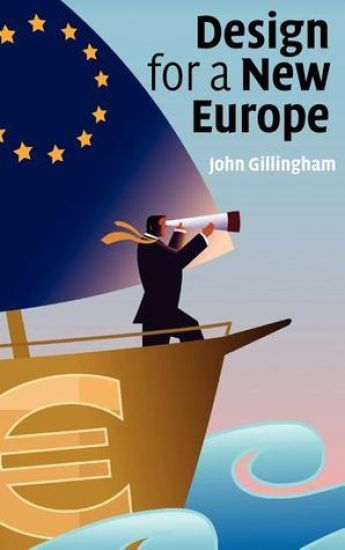
Design for a New Europe

Design for a New Europe

John Gillingham

Cambridge University Press
2006
sidottu
How did the process of European integration break down; how can it be repaired? In European Integration, 1950–2003, John Gillingham reviewed the history of the European project and predicted the rejection of the European constitution. Now the world's leading expert on the EU maps out a route to save the Union. The four chapters of this penetrating, fiercely-argued and often witty book subject today's dysfunctional European Union to critical scrutiny in an attempt to show how it is stunting economic growth, sapping the vitality of national governments, and undermining competitiveness. It explains how the attempt to revive the EU by turning it into a champion of research and development will backfire and demonstrates how Europe's great experiment in political and economic union can succeed only if the wave of liberal reform now under way in the historically downtrodden east is allowed to sweep away the prosperous and complacent west.
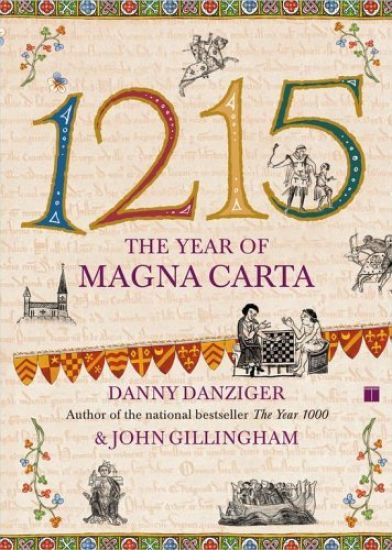
1215: The Year of Magna Carta

1215: The Year of Magna Carta

Danny Danziger; John Gillingham

Atria Books
2005
nidottu
From bestselling author Danny Danziger and medieval expert John Gillingham comes a vivid look at the signing of the Magna Carta and how this event illuminates one of the most compelling and romantic periods in history. Surveying a broad landscape through a narrow lens, 1215 sweeps readers back eight centuries in an absorbing portrait of life during a time of global upheaval, the ripples of which can still be felt today. At the center of this fascinating period is the document that has become the root of modern freedom: the Magna Carta. It was a time of political revolution and domestic change that saw the Crusades, Richard the Lionheart, King John, and--in legend--Robin Hood all make their marks on history. The events leading up to King John's setting his seal to the famous document at Runnymede in June 1215 form this rich and riveting narrative that vividly describes everyday life from castle to countryside, from school to church, and from hunting in the forest to trial by ordeal. For instance, women wore no underwear (though men did), the average temperatures were actually higher than they are now, and the austere kitchen at Westminster Abbey allowed each monk two pounds of meat and a gallon of ale per day. Broad in scope and rich in detail, 1215 ingeniously illuminates what may have been the most important year of our history.
Coal, Steel, and the Rebirth of Europe, 1945–1955

Coal, Steel, and the Rebirth of Europe, 1945–1955

John Gillingham

Cambridge University Press
2004
pokkari
This is the first large-scale historical investigation of the critical first stage of European integration, the creation of the European Coal and Steel Community (ECSC). John Gillingham discusses the thirty year Franco-German struggle for heavy industry mastery in Western Europe, describes the dreams and schemes of Jean Monnet, who designed the heavy industry pool, reveals the American vision that inspired his work, and discloses how his transatlantic partners used their great authority to assure its completion. Gillingham also lays bare the operating mechanisms of the coal-steel pool, showing that contrary to the hopes of Monnet and his supporters, the ECSC restored rather than reformed the European economy, leaving as a legacy not a detrustified industry, but one still dominated by the giant producers of the Ruhr.
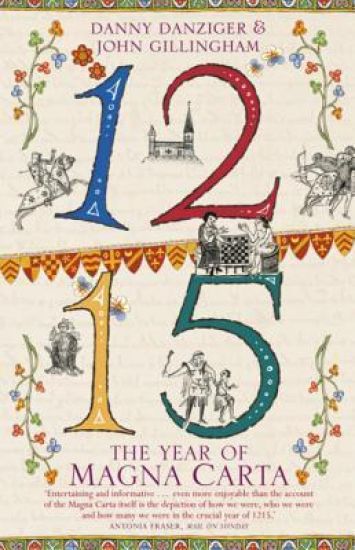
1215: The Year of Magna Carta

1215: The Year of Magna Carta

Danny Danziger; John Gillingham

Hodder Paperback
2004
pokkari
On 15 June 1215, rebel barons forced King John to meet them at Runnymede. They did not trust the King, so he was not allowed to leave until his seal was attached to the charter in front of him.This was Magna Carta. It was a revolutionary document. Never before had royal authority been so fundamentally challenged. Nearly 800 years later, two of the charter's sixty-three clauses are still a ringing expression of freedom for mankind: 'To no one will we sell, to no one will we deny or delay right or justice'. And: 'No free man shall be taken or imprisoned or in any way ruined, except by the lawful judgement of his peers or by the law of the land'.1215 - THE YEAR OF THE MAGNA CARTA explores what it was like to be alive in that momentous year. Political power struggles are interwoven with other issues - fashion, food, education, medicine, religion, sex. Whether describing matters of state or domestic life, this is a treasure house of a book, rich in detail and full of enthralling insights into the medieval world.
European Integration, 1950–2003

European Integration, 1950–2003

John Gillingham

Cambridge University Press
2003
pokkari
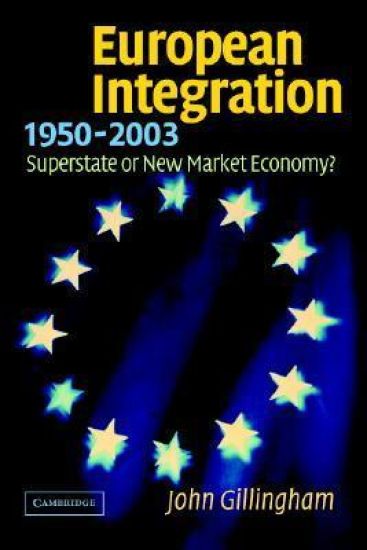
Integration is the most significant European historical development in the past fifty years, eclipsing in importance even the collapse of the USSR. Yet, until now, no satisfactory explanation is to be found in any single book as to why integration is significant, how it originated, how it has changed Europe, and where it is headed. Professor Gillingham’s work corrects the inadequacies of the existing literature by cutting through the genuine confusion that surrounds the activities of the European Union, and by looking at his subject from a truly historical perspective. The late-twentieth century has been an era of great, though insufficiently appreciated, accomplishment that intellectually and morally is still emerging from the shadow of an earlier one of depression, and modern despotism. This is a work, then, that captures the historical distinctiveness of Europe in a way that transcends current party political debate.
European Integration, 1950–2003

European Integration, 1950–2003

John Gillingham

Cambridge University Press
2003
sidottu
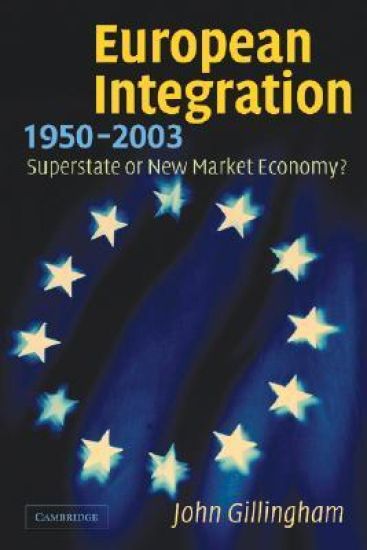
Integration is the most significant European historical development in the past fifty years, eclipsing in importance even the collapse of the USSR. Yet, until now, no satisfactory explanation is to be found in any single book as to why integration is significant, how it originated, how it has changed Europe, and where it is headed. Professor Gillingham’s work corrects the inadequacies of the existing literature by cutting through the genuine confusion that surrounds the activities of the European Union, and by looking at his subject from a truly historical perspective. The late-twentieth century has been an era of great, though insufficiently appreciated, accomplishment that intellectually and morally is still emerging from the shadow of an earlier one of depression, and modern despotism. This is a work, then, that captures the historical distinctiveness of Europe in a way that transcends current party political debate.
Richard I

Richard I

John Gillingham

Yale University Press
2002
pokkari
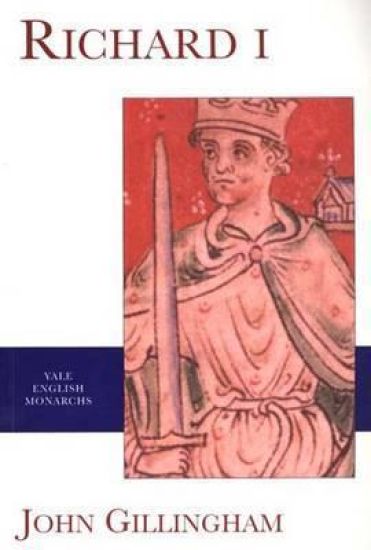
Neither a feckless knight-errant nor a king who neglected his kingdom, Richard I was in reality a masterful and businesslike ruler. In this wholly rewritten version of a classic account of the reign of Richard The Lionheart, John Gillingham scrutinizes the reasons for the King’s fluctuating reputation over successive centuries and provides a convincing new interpretation of the significance of the reign. This edition includes a complete annotation and expanded bibliography.
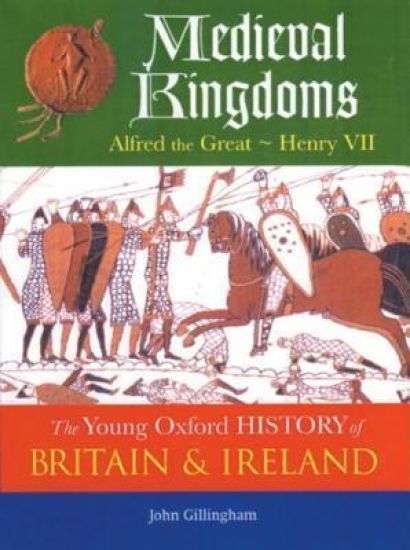
Medieval Kingdoms

Medieval Kingdoms

John Gillingham

Oxford University Press
2001
nidottu
Helps to find out how the "Magna Carta" came about, what it was like to work in a medieval town, and how the Black Death reached the British Isles. This work explores the everyday lives of people across the centuries charting the moments of social change and of discovery and invention.
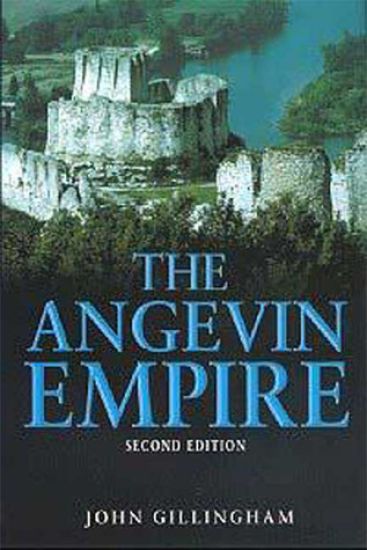
The Angevin Empire

The Angevin Empire

John Gillingham

Hodder Arnold
2000
nidottu
At its greatest extent, the Angevin Empire stretched from the Scottish border to the Pyrenees. For fifty years it was the dominant political entity and "English" and "French" history were inextricably woven together. This study looks at how these disparate territories came together, how they were ruled, and whether they truly constituted an empire.
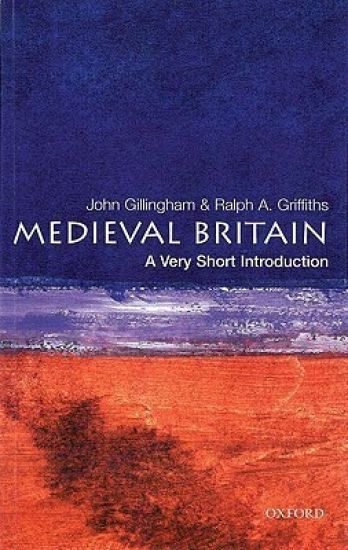
Medieval Britain

Medieval Britain

John Gillingham; Ralph A. Griffiths

Oxford University Press
2000
nidottu
First published as part of the best-selling The Oxford Illustrated History of Britain, John Gillingham and Ralph A. Griffiths' Very Short Introduction to Medieval Britain covers the establishment of the Anglo-Norman monarchy in the early Middle Ages, through to England's failure to dominate the British Isles and France in the later Middle Ages. Out of the turbulence came stronger senses of identity in Scotland, Wales, and Ireland. Yet this was an age, too, of growing definition of Englishness and of a distinctive English cultural tradition. ABOUT THE SERIES: The Very Short Introductions series from Oxford University Press contains hundreds of titles in almost every subject area. These pocket-sized books are the perfect way to get ahead in a new subject quickly. Our expert authors combine facts, analysis, perspective, new ideas, and enthusiasm to make interesting and challenging topics highly readable.
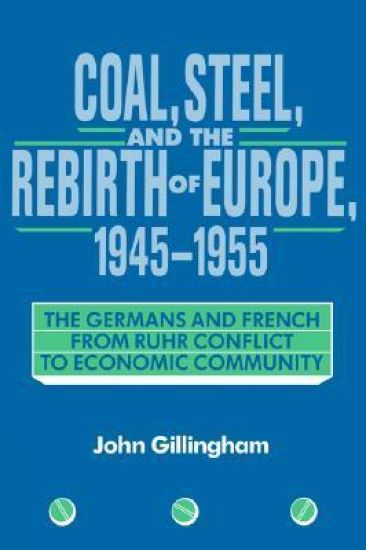
Coal, Steel, and the Rebirth of Europe, 1945–1955

Coal, Steel, and the Rebirth of Europe, 1945–1955

John Gillingham

Cambridge University Press
1991
sidottu
This is the first large-scale historical investigation of the critical first stage of European integration, the creation of the European Coal and Steel Community (ECSC). John Gillingham discusses the thirty year Franco-German struggle for heavy industry mastery in Western Europe, describes the dreams and schemes of Jean Monnet, who designed the heavy industry pool, reveals the American vision that inspired his work, and discloses how his transatlantic partners used their great authority to assure its completion. Gillingham also lays bare the operating mechanisms of the coal-steel pool, showing that contrary to the hopes of Monnet and his supporters, the ECSC restored rather than reformed the European economy, leaving as a legacy not a detrustified industry, but one still dominated by the giant producers of the Ruhr.