Kirjailija
John Greenwood
Kirjat ja teokset yhdessä paikassa: 28 kirjaa, julkaisuja vuosilta 2001-2023, suosituimpien joukossa The Writings of John Greenwood and Henry Barrow 1591-1593. Vertaile teosten hintoja ja tarkista saatavuus suomalaisista kirjakaupoista.
28 kirjaa
Kirjojen julkaisuhaarukka 2001-2023.
Volumes five and six contain c. 25 pieces of manuscript material, or rare tracts many of which have been available for the first time.
Do you want to understand and manage your home's hvac systems, but need a starting point?Are you looking to optimize the comfort and energy savings of your home?Hiring professionals to install or manage hvac systems can be very costly.Working with these technologies might seem complicated, but with the right guide, no task can't be accomplished safely, saving money, and achieving great results Inside you will find: Step-by-step guidance with photos and diagramsThe process of heating, ventilation, and air conditioning explainedCostly and common maintenance errors you need to know and avoid.Different types of systems and explanation of how they workKey maintenance considerationsAnd much more If these challenges hit home, you've just landed on the perfect solution Historically, gaining proficiency in hvac has been challenging. It not only required a significant investment in professional training and ample time for hands-on experience, but the only resources available were complex guides written in technical language, which were largely understandable only to industry experts.
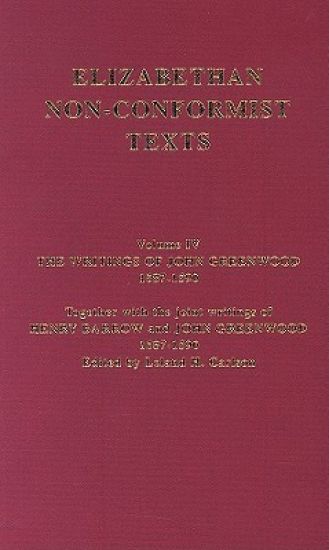
The Writings of John Greenwood 1587-1590, together with the joint writings of Henry Barrow and John Greenwood 1587-1590
John Greenwood
Routledge
2017
nidottu
Henry Barrow and John Greenwood are the fathers of Elizabethan Separatism. Unlike Robert Browne, they refused to compromise their beliefs or conform to Anglicanism and as a consequence they died in 1593 - as martyrs for their steadfast adherence to the principles of English Congregationalism. Volumes three and four include c. 40 items derived from manuscripts, surreptitiously printed books and very rare pamphlets and documents which allow evaluation of the teachings of the Separatists, in relation to the activities of the Elizabethan hierarchy, to the Puritans, to the Pilgrims in the Netherlands and the New World and to the Independents and Congregationalists. (16 of the pieces are by Barrow, 6 by Greenwood and 5 by both men, in addition to 13 related Barrowist items in the Appendix).
After seventeen years, Brenda Thwaites Cryer returns to Parson’s Fold with a shadowy past and the shadowy fortune. Now, she lay dead in Jackman’s Cottage. And the only possible witness—her invalid mother—is missing. For Inspector Mosley, this case is a radical departure from locating missing turkeys or thwarting orange thieves. But HQ has no one else available – no one, but whiz-kid Sergeant Beamish, whose task it becomes to keep a close eye on unpredictable Mosley. Yet how could Beamish fulfil his duty when Mosley dispatches him on ridiculous research missions from a Yorkshire castle, to a prestigious law firm, to a dentist in Ember Bay – only to discover Mosley poking about on the scene when he arrives? For Beamish, it is infuriating – until these haphazard leads net important clues that help quietly ingenious Mosley bag his very first killer. ‘Mosley and Beamish are an appealing odd couple as cops, both likeable human beings. If this is the beginning of a new series, may there be more!’ Washington Post John Greenwood is the pseudonym of John Buxton Hilton, writer of both the Inspector Simon Kenworthy and Inspector Thomas Brunt series.
They’re rustling sheep on Mosley’s patch—the hill country of the Yorkshire-Lancashire border. Young Sergeant Beamish is in love. And Reuben Tunnicliffe of Upper Crudshaw has committed suicide by hanging himself with his braces in the earth closet at the bottom of his yard. Then his eighty-year-old widow Anna reports a theft of 500 pounds . . . Curious beyond the call of duty, unorthodox in his methods, and unwilling to leave matters in the hands of his nemesis Chief Inspector Marsters, the imperturbable Mosley sets a trap before departing on vacation. Before matters are sorted out, vicar Wilfred Weskitt is accused of running a brothel, Mosley publishes poetry under the name of local poetess laureate Millicent Millicheap, and the CIA, the KGB and Special Branch are baffled. But once again, Mosley triumphs in a manner that leaves his superiors and neighbours in states varying from bewilderment to near-apoplexy. John Greenwood is the pseudonym of John Buxton Hilton, writer of both the Inspector Simon Kenworthy and Inspector Thomas Brunt series.
“Witchcraft,” the Assistant Chief Constable said. “I beg your pardon?” “A witches’ coven in Marldale.” The tiny village of Upper Marldale is being overwhelmed—by a mischievous coven of witches. Neither believers nor non-believers can explain why the church clock winds itself up without assistance, why a row of winter cabbages is suddenly struck down in the night, or why not one cat in the village will venture forth after dusk. Marldale is the territory of the deceptively brilliant Inspector Jack Mosley, and his exasperated superiors wish he would get on with solving these nagging little incidents. But nagging soon becomes nightmarish when a sculptor is found hanging from her ceiling beam. A whiff of local corruption tickles Mosley’s nose, and he and his sidekick set off into the bracing northern air to seek the reasons and parties behind both the supernatural and the homicidal. John Greenwood is the pseudonym of John Buxton Hilton, writer of both the Inspector Simon Kenworthy and Inspector Thomas Brunt series.
Narrative of the Late Victorious Campaign in Affghanistan, Under General Pollock. with Recollections of Seven Years' Service in India. Second Edition.
John Greenwood
British Library, Historical Print Editions
2011
pokkari
Title: Narrative of the late victorious campaign in Affghanistan, under General Pollock. With recollections of seven years' service in India. Second edition.Publisher: British Library, Historical Print EditionsThe British Library is the national library of the United Kingdom. It is one of the world's largest research libraries holding over 150 million items in all known languages and formats: books, journals, newspapers, sound recordings, patents, maps, stamps, prints and much more. Its collections include around 14 million books, along with substantial additional collections of manuscripts and historical items dating back as far as 300 BC.The MILITARY HISTORY & WARFARE collection includes books from the British Library digitised by Microsoft. This series offers titles on warfare from ancient to modern times. It includes detailed accounts of campaigns, battles, weapons, as well as the soldiers and commanders who devised, initiated, and supported war efforts throughout history. Specific analyses discuss the impact of war on societies, cultures, economies, and changing international relationships. ++++The below data was compiled from various identification fields in the bibliographic record of this title. This data is provided as an additional tool in helping to insure edition identification: ++++ British Library Greenwood, John; 1844. 12 . 1434.f.12.
The Writings of John Greenwood 1587-1590, together with the joint writings of Henry Barrow and John Greenwood 1587-1590
John Greenwood
Routledge
2003
sidottu
Henry Barrow and John Greenwood are the fathers of Elizabethan Separatism. Unlike Robert Browne, they refused to compromise their beliefs or conform to Anglicanism and as a consequence they died in 1593 - as martyrs for their steadfast adherence to the principles of English Congregationalism. Volumes three and four include c. 40 items derived from manuscripts, surreptitiously printed books and very rare pamphlets and documents which allow evaluation of the teachings of the Separatists, in relation to the activities of the Elizabethan hierarchy, to the Puritans, to the Pilgrims in the Netherlands and the New World and to the Independents and Congregationalists. (16 of the pieces are by Barrow, 6 by Greenwood and 5 by both men, in addition to 13 related Barrowist items in the Appendix).
A new edition of the authoritative economic history exploring why Hong Kong decided to peg its currency to the US dollar. Hong Kong's Link to the US Dollar covers the origins of the city's currency crisis in 1983, the initial resolution of the crisis by the creation of a traditional currency board, the subsequent problems leading to the Asian financial crisis of 1997-98, and the later reforms. This edition also includes a new final chapter that traces monetary developments in Hong Kong between 2005 and 2020. This valuable compendium of articles, originally written for Asian Monetary Monitor includes the key article that formed the basis for the Hong Kong government's decision in 1983 to peg the currency to the US dollar, as well as other important documents of historical record. The book also offers a detailed monetary analysis of Hong Kong's unique financial system before and after the currency crisis of 1983. The book explains the collapse of the floating Hong Kong dollar under the pressure of capital outflows during the Sino-British negotiations over the future of Hong Kong, the fascinating story of the introduction of the linked rate system pegging the Hong Kong dollar to the US dollar, and the subsequent gradual process of reform and refinement of the currency board mechanism. It will enable readers to obtain a comprehensive picture of why the linked rate system was put in place, how it works, and how it has been strengthened over the years.
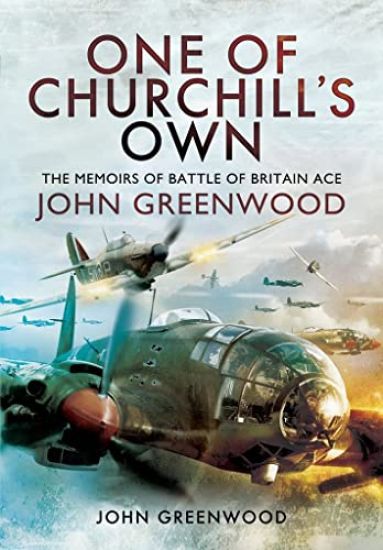
John Greenwood was born in East London on 3 April 1921\. At the age of eighteen, in February 1939, he forged his fathers signature and joined the RAF on a short service commission. Seven months later, Britain declared war on Germany and his squadron, 253, was formed. In May 1940, John and his fellow pilots were sent to France with 24 hours notice where he shot down a Dornier 17 and a Messerschmitt 109 the very next day. This terrific start heralded a sorry return to England, with only four pilots and three aircraft remaining. The squadron were sent to Kirton-in-Lindsey to reform, having lost half the Squadron in France, including the CO and both Flight Commanders. At the end of August 1940, the reformed Squadron flew down to Kenley to join the tumult of the Battle of Britain. The next day, John shot down a Heinkel III, before subsequently being credited with 1/2 a Junkers 88 and a Messerschmitt 109\. An impressive tally, yet despite being credited with 5 and half victories in France and The Battle of Britain, he was, controversially, one of the few aces never to be awarded a DFC. Although he emigrated to Australia in the 1950s, he returned to London for the 25th, 50th and 60th Battle of Britain Anniversaries, then again in 2005 for the unveiling of the Battle of Britain monument, before passing away in 2014\. He was the last surviving member of 253 Squadron and his voice records a unique perspective on just what it meant to be a member of Churchills illustrious Few. This is his story.
This title was first published in 2000: Serving the State is an invaluable two-volume exploration of global trends in public administration education and training. Volume 2 of this important reference work explores traditions and contexts. Included for examination are the French and Islamic traditions, The Netherlands, Scandinavia, Latin America, Small Island States and former communist countries such as Poland and the Ukraine as well as other countries undergoing rapid economic change.
A Catalogue of the Remaining Part of This Collection of Prints Being Matchless Both for Number, Variety, Beauty, and Scarcity; ... Which Will be Sold by Mr. Greenwood, ... on Tuesday the 21st day of February, 1786,
John Greenwood
Gale Ecco, Print Editions
2018
sidottu
The 18th century was a wealth of knowledge, exploration and rapidly growing technology and expanding record-keeping made possible by advances in the printing press. In its determination to preserve the century of revolution, Gale initiated a revolution of its own: digitization of epic proportions to preserve these invaluable works in the largest archive of its kind. Now for the first time these high-quality digital copies of original 18th century manuscripts are available in print, making them highly accessible to libraries, undergraduate students, and independent scholars.This collection reveals the history of English common law and Empire law in a vastly changing world of British expansion. Dominating the legal field is the Commentaries of the Law of England by Sir William Blackstone, which first appeared in 1765. Reference works such as almanacs and catalogues continue to educate us by revealing the day-to-day workings of society.++++The below data was compiled from various identification fields in the bibliographic record of this title. This data is provided as an additional tool in helping to insure edition identification: ++++British LibraryT028790The catalogue continues the pagination and the register of the first part. Also issued as the third part was 'A continuation, of a most curious, scarce, .. collection of all those persons who, .. are entitled to a place in the English school', covering t London: Logographic Press, 1786]. 2],83-158p.; 8
This title was first published in 2000: Serving the State is an invaluable two-volume exploration of global trends in public administration education and training. Volume 2 of this important reference work explores traditions and contexts. Included for examination are the French and Islamic traditions, The Netherlands, Scandinavia, Latin America, Small Island States and former communist countries such as Poland and the Ukraine as well as other countries undergoing rapid economic change.
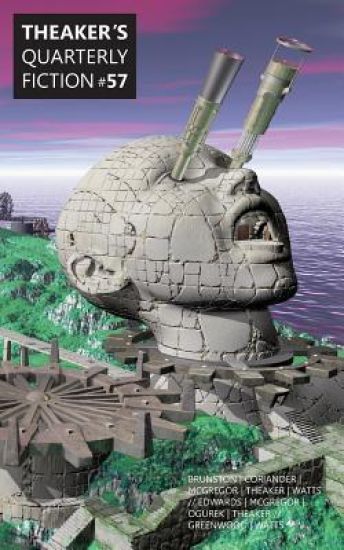
Issue fifty-seven of Theaker's Quarterly Fiction is one hundred and sixty-eight pages long, and features five tales of fantasy, horror and science fiction: "The Elder Secret's Lair" by Rafe McGregor, "Nold" by Stephen Theaker, "On Loan" by Howard Watts, "The Battle Word" by Antonella Coriander, and "With Echoing Feet He Threaded" by Walt Brunston. The spectacular wraparound cover is by Howard Watts, and the editorial includes exciting news about the magazine's plans for 2017. The issue also includes forty pages of reviews, and some sneaky interior art from John Greenwood. In the Quarterly Review, Stephen Theaker, Douglas J. Ogurek, Jacob Edwards and Rafe McGregor consider audios written by Colin Brake, Jonathan Morris, Justin Richards and Marc Platt, books by Cate Gardner, Erika L. Satifka, Harun Siljak, Joe Dever and Karl Edward Wagner, and comics from Joshua Williamson and Fernando Dagnino, G. Willow Wilson and Adrian Alphona, and Erik Larsen, plus the films Don't Breathe, Ghostbusters: Answer the Call, Ouija: Origin of Evil and Suicide Squad, and the television programmes Preacher season one and The X-Files season ten.
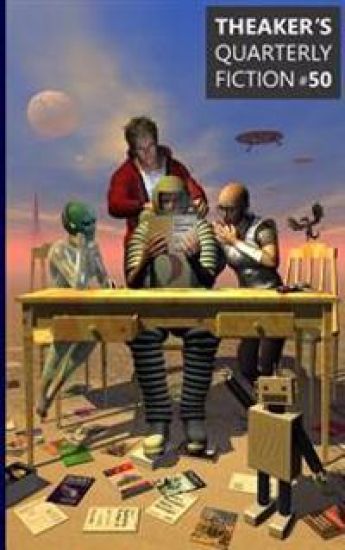
Theaker's Quarterly Fiction #50
John Greenwood; Rafe McGregor
THEAKER'S PAPERBACK LIBRARY
2015
nidottu
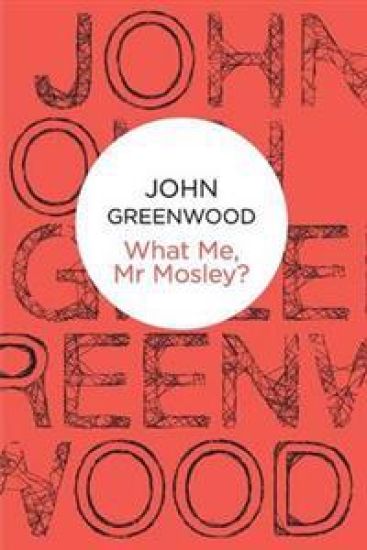
Ever since television’s “Antiques Road Show” passed by that way, the inhabitants of Mr Mosley’s patch—the hill country of the Yorkshire-Lancashire border—have become avid collectors of bric-a-brac. And Dickie Holgate, with a junk-cum-antique stall in the market-place of the little town of Bagshawe Broome, is doing very well as a result. That is, until Mosley spots one or two items of doubtful provenance among the chromium-plated teapots and bone-handled cutlery. Reducing his superiors—especially Detective-Superintendent Tom Grimshaw—to a state of nervous prostration, and accompanied by an admiring, if uncomprehending, Sergeant Beamish, Mosley, in his black homburg and overcoat, strolls through scenes of ever-increasing comic confusion to a final satisfying denouement. What, Me, Mr Mosley? is the sixth, and sadly, the last, of John Greenwood’s Inspector Mosley novels. In its humour, wit, and nicely judged North-of-England atmosphere, this is a fitting and worthy conclusion to the series. John Greenwood is the pseudonym of John Buxton Hilton, writer of both the Inspector Simon Kenworthy and Inspector Thomas Brunt series.